Chiến lược thời điểm dựa trên chỉ báo kép động lượng siêu xu hướng và biến động

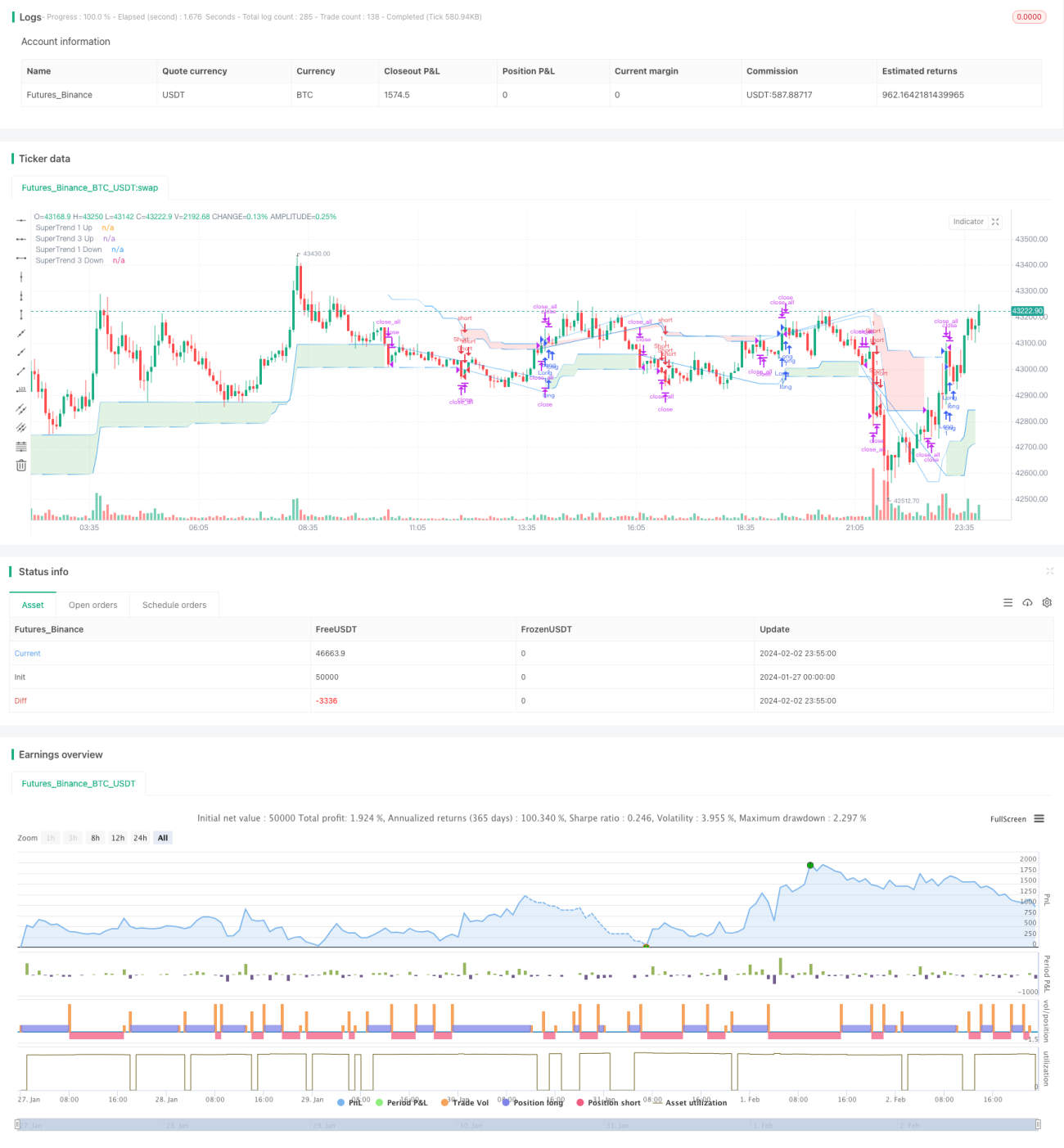
Tổng quan
Chiến lược này kết hợp chỉ báo Siêu Xu hướng (SuperTrend) và lý thuyết sóng Elliott, xây dựng một công cụ giao dịch kỹ thuật vững chắc. Nó sử dụng phân tích xu hướng đa cấp độ để cung cấp góc nhìn thị trường toàn diện hơn, có thể Phát hiện sớm các đảo chiều xu hướng tiềm năng và biến động giá quan trọng.
Nguyên lý chiến lược
Ý tưởng cốt lõi nằm ở phương pháp đa cấp:
- Sử dụng 4 chỉ báo Siêu Xu hướng, mỗi chỉ báo có độ dài ATR và hệ số nhân khác nhau, để đánh giá xu hướng từ ngắn hạn đến dài hạn
- Thông qua sự kết hợp của các chỉ báo, có thể xác định các tín hiệu mua/bán mạnh mẽ
- Tham khảo phương pháp nhận dạng mẫu hình sóng Elliott, nhận diện các hành vi thị trường tương tự, xác nhận tín hiệu giao dịch
Bằng cách này, vừa tận dụng nhiều chỉ báo, vừa bổ sung nhận dạng mẫu hình, giúp chiến lược trở nên vững chắc hơn.
Phân tích ưu điểm
- Thiết kế đa chỉ báo, cung cấp đánh giá toàn diện
- Lấy cảm hứng từ lý thuyết sóng, nhận dạng mẫu hình tăng độ ổn định
- Điều chỉnh hướng theo thời gian thực, thích ứng với biến động thị trường
- Tham số có thể cấu hình, phù hợp với nhiều loại tài sản và khung thời gian khác nhau
Phân tích rủi ro
- Việc thiết lập tham số phụ thuộc vào kinh nghiệm, cần điều chỉnh để xác định bộ tham số tối ưu
- Thiết kế đa chỉ báo khá phức tạp, làm tăng tải tính toán
- Không thể tránh hoàn toàn việc phát sinh tín hiệu sai
Có thể thông qua tối ưu hóa tham số, từng bước xác định tham số tối ưu; sử dụng điện toán đám mây để nâng cao hiệu suất tính toán; đặt lệnh dừng lỗ để kiểm soát rủi ro.
Hướng tối ưu hóa
Có thể tối ưu hóa từ các khía cạnh sau:
- Thêm mô-đun điều chỉnh tham số thích ứng, điều chỉnh tham số linh hoạt theo tình hình thị trường
- Thêm mô hình học máy, hỗ trợ đánh giá độ tin cậy của tín hiệu giao dịch
- Kết hợp các yếu tố bên ngoài như chỉ báo tâm lý, sự kiện tin tức để đánh giá mô hình thị trường
- Hỗ trợ mẫu tham số đa tài sản, giảm khối lượng công việc kiểm tra
Điều này sẽ làm cho tham số chiến lược thông minh hơn, đánh giá chính xác hơn và ứng dụng thực tế thuận tiện hơn.
Tổng kết
Chiến lược này xem xét toàn diện hai khía cạnh xu hướng và mô hình, vừa đảm bảo tính vững chắc của đánh giá, vừa tăng tính linh hoạt của chiến lược. Việc sử dụng đa chỉ báo và cài đặt tham số đảm bảo khả năng áp dụng trên toàn thị trường. Nếu tiếp tục đưa vào các phương pháp thông minh, tự động hóa, sẽ tăng cường đáng kể trình độ thực chiến của chiến lược. Nó cung cấp những gợi ý và tham khảo hữu ích cho sự phát triển của giao dịch kỹ thuật.
/*backtest
start: 2024-01-27 00:00:00
end: 2024-02-03 00:00:00
period: 5m
basePeriod: 1m
exchanges: [{"eid":"Futures_Binance","currency":"BTC_USDT"}]
*/

//@version=5
strategy("Elliott's Quadratic Momentum - Strategy [presentTrading]",shorttitle = "EQM Strategy [presentTrading]", overlay=true )

// Inputs for selecting trading direction- 1