Chiến lược đường trung bình động giao cắt kép

Tổng quan
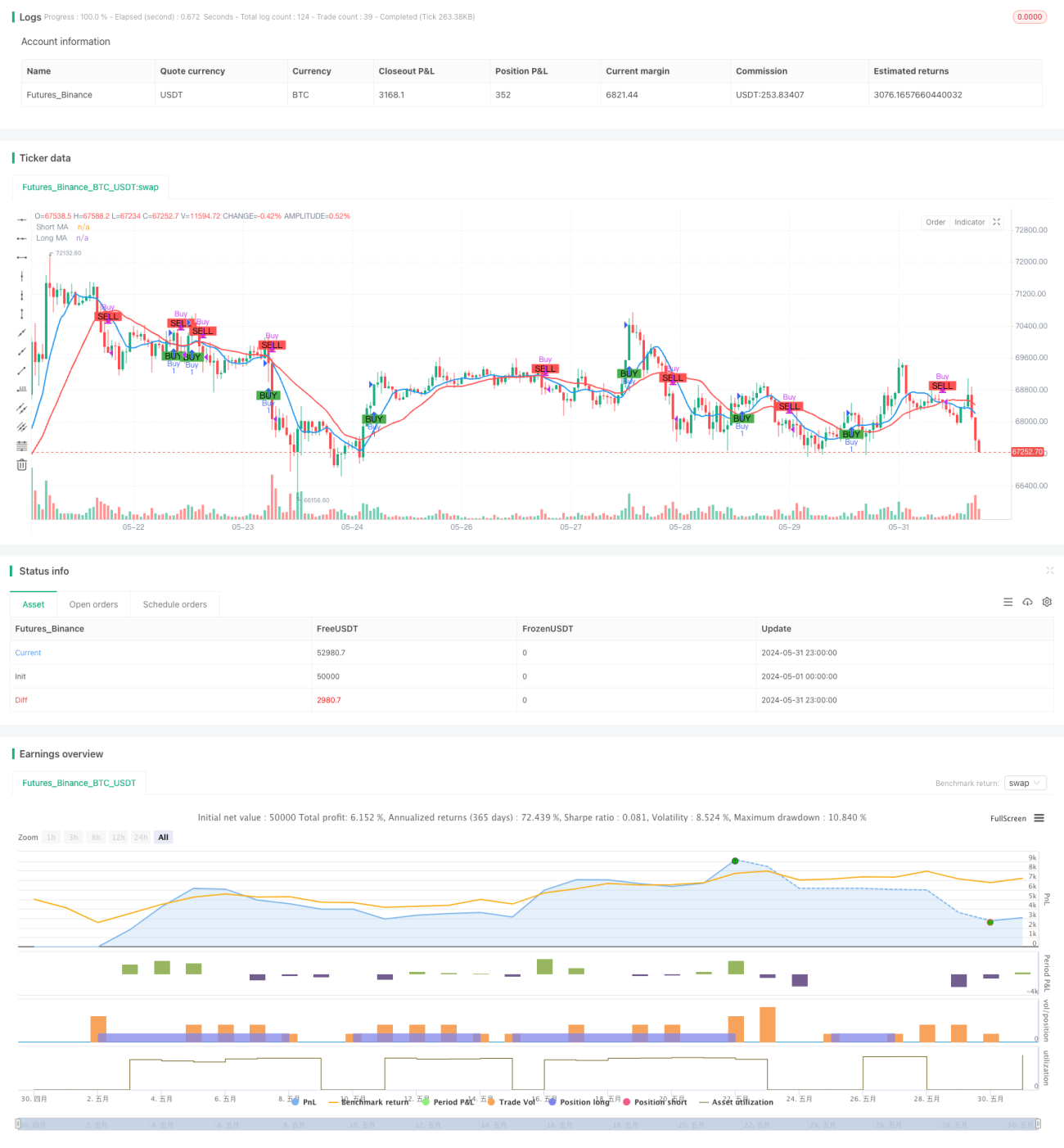
Chiến lược đường trung bình động dựa trên giao cắt hai đường trung bình là một phương pháp giao dịch trong ngày đơn giản nhưng hiệu quả, nhằm xác định các cơ hội mua và bán tiềm năng trên thị trường bằng cách phân tích mối quan hệ giữa hai đường trung bình động có chu kỳ khác nhau. Chiến lược này sử dụng một đường trung bình động đơn giản (SMA) ngắn hạn và một đường trung bình động đơn giản dài hạn. Khi đường trung bình ngắn hạn cắt lên trên đường trung bình dài hạn, nó cho thấy tín hiệu tăng giá, gợi ý cơ hội mua tiềm năng. Ngược lại, khi đường trung bình ngắn hạn cắt xuống dưới đường trung bình dài hạn, nó cho thấy tín hiệu giảm giá, gợi ý cơ hội bán tiềm năng. Phương pháp giao cắt này giúp nhà giao dịch bắt kịp xu hướng thị trường đồng thời giảm thiểu nhiễu thị trường.
Nguyên lý chiến lược
Nguyên lý cốt lõi của chiến lược này là sử dụng đặc tính xu hướng và độ trễ của các đường trung bình động với chu kỳ khác nhau. Bằng cách so sánh vị trí tương đối giữa đường trung bình ngắn hạn và đường trung bình dài hạn, nó xác định hướng xu hướng thị trường hiện tại và đưa ra quyết định giao dịch tương ứng. Khi thị trường hình thành xu hướng tăng, giá sẽ phá vỡ đường trung bình dài hạn trước, sau đó đường trung bình ngắn hạn cắt lên trên đường trung bình dài hạn tạo thành giao cắt vàng, phát sinh tín hiệu mua. Khi thị trường hình thành xu hướng giảm, giá sẽ phá vỡ xuống dưới đường trung bình dài hạn trước, sau đó đường trung bình ngắn hạn cắt xuống dưới đường trung bình dài hạn tạo thành giao cắt tử thần, phát sinh tín hiệu bán. Trong cài đặt tham số của chiến lược này, chu kỳ của đường trung bình ngắn hạn được đặt là 9, chu kỳ của đường trung bình dài hạn được đặt là 21. Hai tham số này có thể được điều chỉnh dựa trên đặc điểm thị trường và sở thích cá nhân. Đồng thời, chiến lược này cũng giới thiệu khái niệm quản lý vốn, thông qua việc thiết lập vốn ban đầu và tỷ lệ rủi ro mỗi giao dịch, sử dụng điều chỉnh vị thế để kiểm soát mức độ rủi ro của mỗi giao dịch.
Ưu điểm của chiến lược
- Dễ hiểu: Chiến lược này dựa trên lý thuyết đường trung bình động cổ điển, logic rõ ràng, dễ hiểu và triển khai.
- Tính thích ứng cao: Chiến lược này có thể áp dụng cho nhiều thị trường và các công cụ giao dịch khác nhau. Bằng cách điều chỉnh cài đặt tham số, nó có thể linh hoạt thích ứng với các đặc điểm thị trường khác nhau.
- Bắt xu hướng: Sử dụng giao cắt hai đường trung bình để xác định hướng xu hướng, giúp nhà giao dịch theo kịp xu hướng chính kịp thời, tăng cơ hội sinh lời.
- Kiểm soát rủi ro: Chiến lược này giới thiệu khái niệm quản lý rủi ro, thông qua điều chỉnh vị thế để kiểm soát mức độ rủi ro của mỗi giao dịch, quản lý hiệu quả các khoản lỗ tiềm năng.
- Giảm nhiễu: Sử dụng đặc tính độ trễ của đường trung bình, lọc hiệu quả các nhiễu ngẫu nhiên trong thị trường, nâng cao độ tin cậy của tín hiệu giao dịch.
Rủi ro của chiến lược
- Lựa chọn tham số: Các cài đặt tham số khác nhau có ảnh hưởng quan trọng đến hiệu suất của chiến lược. Lựa chọn không phù hợp có thể dẫn đến chiến lược không hiệu quả hoặc hoạt động kém.
- Xu hướng thị trường: Trong thị trường đi ngang hoặc tại các điểm đảo chiều xu hướng, chiến lược này có thể gặp hiện tượng thua lỗ liên tiếp.
- Chi phí trượt giá: Giao dịch thường xuyên có thể tạo ra chi phí trượt giá cao, ảnh hưởng đến lợi nhuận tổng thể của chiến lược.
- Sự kiện thiên nga đen: Chiến lược này có khả năng thích ứng kém với các biến động cực đoan. Sự kiện thiên nga đen có thể gây ra tổn thất lớn cho chiến lược.
- Rủi ro quá khớp: Nếu việc tối ưu hóa tham số phụ thuộc quá nhiều vào dữ liệu lịch sử, có thể dẫn đến hiệu suất chiến lược kém trong giao dịch thực tế.
Hướng tối ưu hóa chiến lược
- Tối ưu hóa tham số động: Điều chỉnh tham số chiến lược một cách linh hoạt dựa trên sự thay đổi trạng thái thị trường, nâng cao khả năng thích ứng.
- Xác nhận xu hướng: Sau khi phát sinh tín hiệu giao dịch, đưa vào các chỉ báo khác hoặc mô hình hành vi giá để xác nhận xu hướng, nâng cao độ tin cậy của tín hiệu.
- Cắt lỗ và chốt lời: Đưa vào cơ chế cắt lỗ và chốt lời hợp lý để kiểm soát thêm mức độ rủi ro của mỗi giao dịch.
- Quản lý vị thế: Tối ưu hóa phương pháp điều chỉnh vị thế, ví dụ đưa vào chỉ báo biến động, điều chỉnh vị thế linh hoạt dựa trên mức độ biến động của thị trường.
- Đánh giá sức mạnh đa không: Đánh giá mối tương quan sức mạnh giữa phe mua và phe bán, can thiệp vào giai đoạn đầu của xu hướng, nâng cao độ chính xác trong việc nắm bắt xu hướng.
Tổng kết
Chiến lược đường trung bình động dựa trên giao cắt hai đường trung bình là một phương pháp giao dịch trong ngày đơn giản và thực tế. Bằng cách so sánh vị trí của các đường trung bình với chu kỳ khác nhau, nó xác định hướng xu hướng thị trường và phát sinh tín hiệu giao dịch. Chiến lược này có logic rõ ràng, tính thích ứng cao, có thể bắt kịp xu hướng thị trường hiệu quả, đồng thời đưa vào các biện pháp quản lý rủi ro để kiểm soát tổn thất tiềm năng. Tuy nhiên, chiến lược này cũng tồn tại các rủi ro tiềm tàng như lựa chọn tham số, đảo chiều xu hướng, giao dịch thường xuyên, v.v. Cần thông qua tối ưu hóa động, xác nhận tín hiệu, quản lý vị thế, v.v. để nâng cao hơn nữa tính bền vững và khả năng sinh lời của chiến lược. Nhìn chung, đường trung bình động như một chỉ báo phân tích kỹ thuật cổ điển, các nguyên lý cơ bản và giá trị ứng dụng thực tế của nó đã được thị trường xác nhận rộng rãi, là một chiến lược giao dịch đáng nghiên cứu sâu và tối ưu hóa không ngừng.
Overview
The Moving Average Crossover Strategy based on dual moving averages is a straightforward and effective intraday trading approach designed to identify potential buy and sell opportunities in the market by analyzing the relationship between two moving averages of different periods. This strategy utilizes a short-term simple moving average (SMA) and a long-term simple moving average. When the short-term moving average crosses above the long-term moving average, it indicates a bullish signal, suggesting a potential buying opportunity. Conversely, when the short-term moving average crosses below the long-term moving average, it indicates a bearish signal, suggesting a potential selling opportunity. This crossover method helps traders capture trending moves in the market while minimizing market noise interference.
Strategy Principle
The core principle of this strategy is to utilize the trend characteristics and lag of moving averages with different periods. By comparing the relative position relationship between the short-term moving average and the long-term moving average, it determines the current market trend direction and makes corresponding trading decisions. When an upward trend emerges in the market, the price will first break through the long-term moving average, and the short-term moving average will subsequently cross above the long-term moving average, forming a golden cross and generating a buy signal. When a downward trend emerges in the market, the price will first break below the long-term moving average, and the short-term moving average will subsequently cross below the long-term moving average, forming a death cross and generating a sell signal. In the parameter settings of this strategy, the period of the short-term moving average is set to 9, and the period of the long-term moving average is set to 21. These two parameters can be adjusted based on market characteristics and personal preferences. Additionally, this strategy introduces the concept of money management by setting the initial capital and risk percentage per trade, using position sizing to control the risk exposure of each trade.
Ưu điểm của Chiến lược
- Đơn giản: Chiến lược này dựa trên lý thuyết đường trung bình động cổ điển, logic rõ ràng, dễ hiểu và dễ triển khai.
- Tính thích ứng: Chiến lược có thể áp dụng cho nhiều thị trường và các công cụ giao dịch khác nhau. Bằng cách điều chỉnh thiết lập tham số, nó có thể linh hoạt thích ứng với các đặc điểm thị trường khác nhau.
- Bắt Xu hướng: Sử dụng giao cắt của hai đường trung bình động để xác định hướng xu hướng, giúp nhà giao dịch kịp thời theo dõi xu hướng chính, gia tăng cơ hội lợi nhuận.
- Kiểm soát Rủi ro: Chiến lược này đưa ra khái niệm quản lý rủi ro, sử dụng việc xác định quy mô vị thế để kiểm soát mức độ rủi ro của mỗi giao dịch, quản lý hiệu quả các khoản lỗ tiềm ẩn.
- Giảm Nhiễu: Tận dụng đặc tính trễ của đường trung bình động, lọc hiệu quả nhiễu ngẫu nhiên trên thị trường, cải thiện độ tin cậy của tín hiệu giao dịch.
Rủi ro của Chiến lược
- Lựa chọn Tham số: Các thiết lập tham số khác nhau có thể ảnh hưởng đáng kể đến hiệu suất chiến lược. Lựa chọn không phù hợp có thể dẫn đến thất bại hoặc hiệu suất kém của chiến lược.
- Xu hướng Thị trường: Trong thị trường đi ngang hoặc tại các điểm đảo chiều xu hướng, chiến lược này có thể trải qua các khoản lỗ liên tiếp.
- Chi phí Trượt giá: Giao dịch thường xuyên có thể dẫn đến chi phí trượt giá cao hơn, ảnh hưởng đến lợi nhuận tổng thể của chiến lược.
- Sự kiện Thiên nga đen: Chiến lược này có khả năng thích ứng kém với các điều kiện thị trường cực đoan, và các sự kiện thiên nga đen có thể gây ra tổn thất lớn cho chiến lược.
- Rủi ro Quá khớp: Nếu việc tối ưu hóa tham số phụ thuộc quá nhiều vào dữ liệu lịch sử, có thể dẫn đến hiệu suất kém của chiến lược trong giao dịch thực tế.
Hướng Tối ưu hóa Chiến lược
- Tối ưu hóa Tham số Động: Điều chỉnh linh hoạt các tham số chiến lược dựa trên sự thay đổi của điều kiện thị trường để cải thiện khả năng thích ứng.
- Xác nhận Xu hướng: Sau khi tín hiệu giao dịch được tạo ra, giới thiệu các chỉ báo khác hoặc mô hình hành vi giá để xác nhận xu hướng, nâng cao độ tin cậy của tín hiệu.
- Cắt lỗ và Chốt lời: Giới thiệu các cơ chế cắt lỗ và chốt lời hợp lý để kiểm soát thêm mức độ rủi ro của mỗi giao dịch.
- Quản lý Vị thế: Tối ưu hóa phương pháp xác định quy mô vị thế, chẳng hạn như giới thiệu các chỉ báo biến động để điều chỉnh vị thế một cách linh hoạt dựa trên mức độ biến động của thị trường.
- Đánh giá Sức mạnh Tăng/Giảm: Đánh giá mối quan hệ so sánh giữa sức mạnh tăng giá và giảm giá, tham gia vào giai đoạn đầu của xu hướng để cải thiện độ chính xác của việc bắt xu hướng.
Tổng kết
Chiến lược Giao cắt Đường trung bình động dựa trên hai đường trung bình động là một phương pháp giao dịch trong ngày đơn giản và thực tế. Bằng cách so sánh mối quan hệ vị trí của các đường trung bình động với các chu kỳ khác nhau, nó xác định hướng xu hướng thị trường và tạo ra tín hiệu giao dịch. Chiến lược này có logic rõ ràng, khả năng thích ứng cao, có thể nắm bắt hiệu quả các xu hướng thị trường đồng thời đưa ra các biện pháp quản lý rủi ro để kiểm soát tổn thất tiềm ẩn. Tuy nhiên, chiến lược này cũng tồn tại các rủi ro tiềm ẩn như lựa chọn tham số, đảo chiều xu hướng, giao dịch thường xuyên, v.v. Cần được cải thiện thêm thông qua tối ưu hóa động, xác nhận tín hiệu, quản lý vị thế và các phương pháp khác để nâng cao độ mạnh mẽ và khả năng sinh lời của chiến lược. Nhìn chung, với tư cách là một chỉ báo phân tích kỹ thuật cổ điển, các nguyên tắc cơ bản và giá trị ứng dụng thực tế của đường trung bình động đã được thị trường kiểm chứng rộng rãi. Đây là một chiến lược giao dịch đáng để nghiên cứu sâu và tối ưu hóa liên tục.
- 1