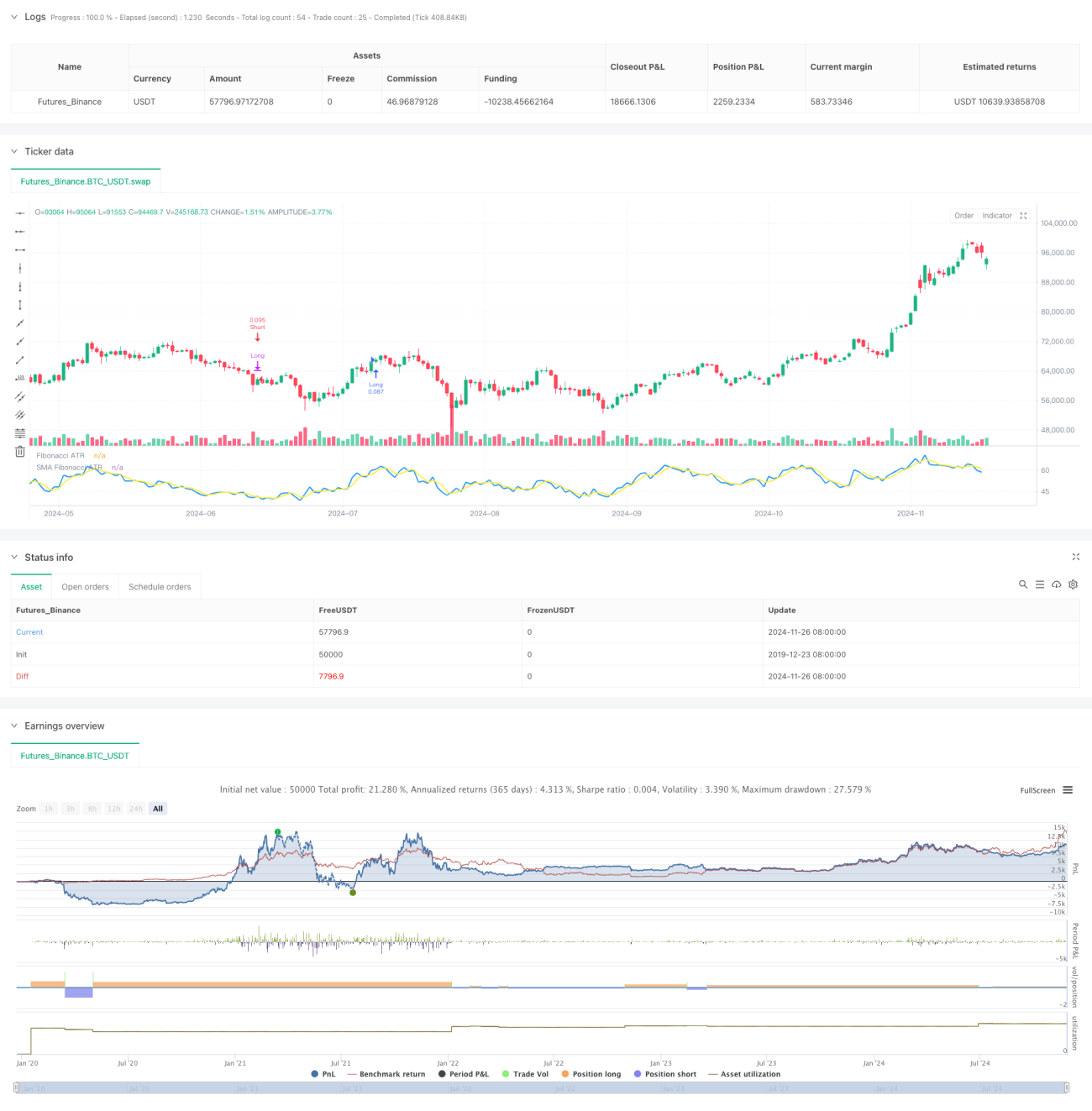
Chiến lược mô hình tối ưu hóa xu hướng ATR Fusion

ATR SMA TP BP TR SL
Ngày tạo: 2024-11-28 17:06:21 sửa đổi lần cuối: 2024-11-28 17:06:21
sao chép: 0 Số nhấp chuột: 403
1
tập trung vào
1617
Người theo dõi

Chiến lược mô hình tối ưu hóa xu hướng ATR Fusion

Tổng quan

Chiến lược này là một hệ thống theo dõi xu hướng cao cấp dựa trên ATR và số Fibonacci. Nó xây dựng một mô hình giao dịch nhạy cảm, thích ứng bằng cách kết hợp phân tích biến động của nhiều chu kỳ thời gian với trung bình Fibonacci.

Nguyên tắc chiến lược

Chiến lược sử dụng phương pháp kết hợp các chỉ số kỹ thuật nhiều cấp: đầu tiên tính toán phạm vi biến động thực tế ((TR) và áp lực mua ((BP), sau đó tính toán tỷ lệ áp lực cho từng chu kỳ dựa trên chu kỳ thời gian của chuỗi Fibonacci ((8,13,21,34,55)). Xây dựng trung bình trọng số bằng cách áp dụng trọng lượng khác nhau cho các chu kỳ khác nhau ((5,4,3,2,1), và tiếp tục áp dụng xử lý phẳng SMA 3 chu kỳ.

Lợi thế chiến lược

  1. Phân tích đa chiều: kết hợp dữ liệu từ nhiều giai đoạn thời gian để cung cấp cái nhìn toàn diện hơn về thị trường
  2. Phong trào thích ứng: Thích ứng với biến động thị trường thông qua ATR để tăng sự ổn định chiến lược
  3. Lợi nhuận thông minh: Cơ chế lợi nhuận bốn bước có thể được điều chỉnh linh hoạt trong các môi trường thị trường khác nhau
  4. Kiểm soát rủi ro: Điều kiện nhập cảnh và xuất cảnh rõ ràng, giảm rủi ro do phán đoán chủ quan
  5. Hoạt động có hệ thống: logic chiến lược rõ ràng, dễ dàng thực hiện và kiểm tra lại

Rủi ro chiến lược

  1. Nhận thức tham số: Nhiều tham số giá trị thả và trọng lượng cần điều chỉnh cẩn thận
  2. Rủi ro về sự chậm trễ: Sự trơn tru của SMA có thể gây ra sự chậm trễ tín hiệu
  3. Sự phụ thuộc vào môi trường thị trường: có thể tạo ra tín hiệu sai trong thị trường bất ổn
  4. Thích hợp các tham số: Các tham số cần được tối ưu hóa lại cho các điều kiện thị trường khác nhau Giải pháp: Đề xuất tối ưu hóa và kiểm tra lại các tham số đầy đủ và điều chỉnh các tham số theo các giai đoạn thị trường khác nhau.

Hướng tối ưu hóa chiến lược

  1. Tự thích ứng tham số: Phát triển cơ chế điều chỉnh tham số tự thích ứng, nâng cao khả năng thích ứng của chiến lược
  2. Chọn thị trường: thêm mô-đun nhận diện môi trường thị trường, thực hiện giao dịch trong điều kiện thị trường phù hợp
  3. Tối ưu hóa tín hiệu: giới thiệu các chỉ số xác nhận trợ giúp để tăng độ tin cậy tín hiệu
  4. Tăng cường điều khiển gió: thêm mô-đun quản lý lỗ hổng động và vị trí
  5. Kiểm soát rút lui: Thêm giới hạn rút lui tối đa để tăng sự ổn định chiến lược

Tóm tắt

Chiến lược này xây dựng một hệ thống theo dõi xu hướng toàn diện bằng cách tích hợp công nghệ trung bình trọng lượng ATR và Fibonacci. Ưu điểm của nó là khả năng phân tích đa chiều và khả năng thích ứng động, nhưng cũng cần chú ý đến tối ưu hóa tham số và lọc môi trường thị trường.

Mã nguồn chiến lược
/*backtest
start: 2019-12-23 08:00:00
end: 2024-11-27 00:00:00
period: 1d
basePeriod: 1d
exchanges: [{"eid":"Futures_Binance","currency":"BTC_USDT"}]
*/

// This Pine Script™ code is subject to the terms of the Mozilla Public License 2.0 at https://mozilla.org/MPL/2.0/
// © PresentTrading

// The Fibonacci ATR Fusion Strategy is an advanced trading methodology that uniquely integrates Fibonacci-based weighted averages with the Average True Range (ATR) to 
// identify and exploit significant market trends. Unlike traditional strategies that rely on single indicators or fixed parameters, this approach leverages multiple timeframes and 
// dynamic volatility measurements to enhance accuracy and adaptability. 

//@version=5
strategy("Fibonacci ATR Fusion - Strategy [presentTrading]", overlay=false, precision=3, commission_value= 0.1, commission_type=strategy.commission.percent, slippage= 1, currency=currency.USD, default_qty_type = strategy.percent_of_equity, default_qty_value = 10, initial_capital=10000)

// Calculate True High and True Low
tradingDirection = input.string(title="Trading Direction", defval="Both", options=["Long", "Short", "Both"])

// Trading Condition Thresholds
long_entry_threshold = input.float(58.0, title="Long Entry Threshold")
short_entry_threshold = input.float(42.0, title="Short Entry Threshold")
long_exit_threshold = input.float(42.0, title="Long Exit Threshold")
short_exit_threshold = input.float(58.0, title="Short Exit Threshold")

// Enable or Disable 4-Step Take Profit
useTakeProfit = input.bool(false, title="Enable 4-Step Take Profit")

// Take Profit Levels (as multiples of ATR)
tp1ATR = input.float(3.0, title="Take Profit Level 1 ATR Multiplier")
tp2ATR = input.float(8.0, title="Take Profit Level 2 ATR Multiplier")
tp3ATR = input.float(14.0, title="Take Profit Level 3 ATR Multiplier")

// Take Profit Percentages
tp1_percent = input.float(12.0, title="TP Level 1 Percentage", minval=0.0, maxval=100.0)
tp2_percent = input.float(12.0, title="TP Level 2 Percentage", minval=0.0, maxval=100.0)
tp3_percent = input.float(12.0, title="TP Level 3 Percentage", minval=0.0, maxval=100.0)

true_low = math.min(low, close[1])
true_high = math.max(high, close[1])

// Calculate True Range
true_range = true_high - true_low

// Calculate BP (Buying Pressure)
bp = close - true_low

// Calculate ratios for different periods
calc_ratio(len) =>
    sum_bp = math.sum(bp, len)
    sum_tr = math.sum(true_range, len)
    100 * sum_bp / sum_tr

// Calculate weighted average of different timeframes
weighted_avg = (5 * calc_ratio(8) + 4 * calc_ratio(13) + 3 * calc_ratio(21) + 2 * calc_ratio(34) + calc_ratio(55)) / (5 + 4 + 3 + 2 + 1)
weighted_avg_sma = ta.sma(weighted_avg,3)

// Plot the indicator
plot(weighted_avg, "Fibonacci ATR", color=color.blue, linewidth=2)
plot(weighted_avg_sma, "SMA Fibonacci ATR", color=color.yellow, linewidth=2)

// Define trading conditions
longCondition = ta.crossover(weighted_avg_sma, long_entry_threshold)  // Enter long when weighted average crosses above threshold
shortCondition = ta.crossunder(weighted_avg_sma, short_entry_threshold) // Enter short when weighted average crosses below threshold
longExit = ta.crossunder(weighted_avg_sma, long_exit_threshold)
shortExit = ta.crossover(weighted_avg_sma, short_exit_threshold)


atrPeriod = 14
atrValue = ta.atr(atrPeriod)

if (tradingDirection == "Long" or tradingDirection == "Both")
    if (longCondition)
        strategy.entry("Long", strategy.long)
        // Set Take Profit levels for Long positions
        if useTakeProfit
            tpPrice1 = strategy.position_avg_price + tp1ATR * atrValue
            tpPrice2 = strategy.position_avg_price + tp2ATR * atrValue
            tpPrice3 = strategy.position_avg_price + tp3ATR * atrValue
            // Close partial positions at each Take Profit level
            strategy.exit("TP1 Long", from_entry="Long", qty_percent=tp1_percent, limit=tpPrice1)
            strategy.exit("TP2 Long", from_entry="Long", qty_percent=tp2_percent, limit=tpPrice2)
            strategy.exit("TP3 Long", from_entry="Long", qty_percent=tp3_percent, limit=tpPrice3)
    if (longExit)
        strategy.close("Long")

if (tradingDirection == "Short" or tradingDirection == "Both")
    if (shortCondition)
        strategy.entry("Short", strategy.short)
        // Set Take Profit levels for Short positions
        if useTakeProfit
            tpPrice1 = strategy.position_avg_price - tp1ATR * atrValue
            tpPrice2 = strategy.position_avg_price - tp2ATR * atrValue
            tpPrice3 = strategy.position_avg_price - tp3ATR * atrValue
            // Close partial positions at each Take Profit level
            strategy.exit("TP1 Short", from_entry="Short", qty_percent=tp1_percent, limit=tpPrice1)
            strategy.exit("TP2 Short", from_entry="Short", qty_percent=tp2_percent, limit=tpPrice2)
            strategy.exit("TP3 Short", from_entry="Short", qty_percent=tp3_percent, limit=tpPrice3)
    if (shortExit)
        strategy.close("Short")