Chiến lược giao dịch kết hợp Bollinger Bands và RSI

Tổng quan
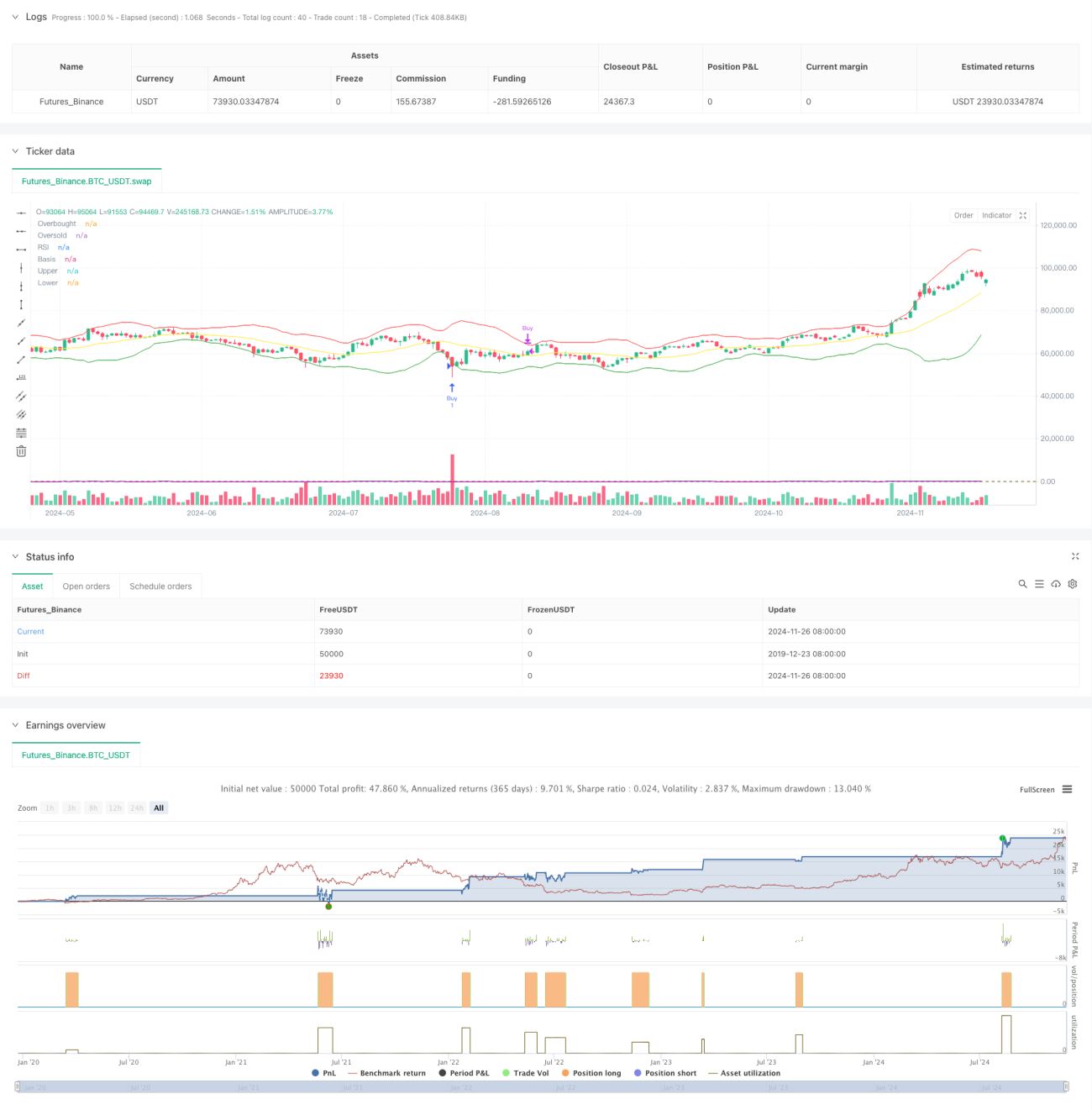
Chiến lược này kết hợp hai chỉ báo kỹ thuật kinh điển là Bollinger Bands và RSI (Relative Strength Index) để hình thành một hệ thống giao dịch hoàn chỉnh. Chiến lược chủ yếu tìm kiếm cơ hội giao dịch bằng cách nắm bắt biến động thị trường và sự thay đổi động lượng, đặc biệt phù hợp với các nhà giao dịch trong ngày. Bằng cách sử dụng Bollinger Bands để đo lường biến động thị trường, kết hợp với chỉ báo RSI để xác nhận trạng thái quá mua/quá bán của giá, chiến lược này tạo ra các tín hiệu giao dịch đáng tin cậy hơn.
Nguyên lý chiến lược
Logic cốt lõi của chiến lược là kết hợp chỉ báo biến động giá với chỉ báo động lượng. Bollinger Bands bao gồm đường trung bình động đơn giản 20 ngày làm dải giữa, dải trên và dải dưới là đường trung bình cộng/trừ 2,5 lần độ lệch chuẩn. Khi giá chạm dải dưới và RSI dưới 30, hệ thống sẽ phát tín hiệu mua; khi giá phá vỡ dải trên và RSI vượt quá 70, hệ thống sẽ phát tín hiệu thoát lệnh. Ngoài ra, chiến lược còn thiết lập điều kiện thoát lệnh bổ sung khi RSI hồi phục lên trên 50, giúp chốt lời kịp thời. Thiết kế của chiến lược đã tính toán đầy đủ các đặc điểm biến động của thị trường và quy luật thay đổi động lượng giá.
Ưu điểm chiến lược
- Độ tin cậy tín hiệu cao: Kết hợp hai chỉ báo kỹ thuật ở các chiều khác nhau giúp cải thiện đáng kể độ tin cậy của tín hiệu giao dịch
- Kiểm soát rủi ro hoàn thiện: Các điều kiện vào/ra lệnh rõ ràng giúp giảm hiệu quả tác động của giao dịch cảm tính
- Khả năng thích ứng mạnh mẽ: Tham số chiến lược có thể linh hoạt điều chỉnh theo các điều kiện thị trường khác nhau
- Logic vận hành rõ ràng: Quy tắc giao dịch minh bạch, dễ thực hiện và backtest
- Tỷ lệ lợi nhuận/rủi ro hợp lý: Thiết lập điều kiện chốt lời và cắt lỗ hợp lý đảm bảo tỷ lệ lợi nhuận/rủi ro tốt
Rủi ro chiến lược
- Rủi ro thị trường dao động mạnh: Có thể tạo ra tín hiệu giả trong môi trường thị trường biến động dữ dội
- Rủi ro thị trường xu hướng: Trong thị trường xu hướng mạnh, có thể bỏ lỡ một phần diễn biến
- Nhạy cảm với tham số: Hiệu quả chiến lược nhạy cảm với việc thiết lập tham số, cần tối ưu hóa liên tục
- Ảnh hưởng của trượt giá: Có thể đối mặt với trượt giá lớn ở thị trường có thanh khoản kém
- Rủi ro hệ thống: Các sự kiện bất ngờ trên thị trường có thể khiến chiến lược thất bại
Hướng tối ưu hóa chiến lược
- Tối ưu hóa tham số động: Có thể xem xét điều chỉnh động tham số Bollinger Bands dựa trên biến động thị trường
- Thêm bộ lọc xu hướng: Đưa vào các chỉ báo xác định xu hướng để tránh tín hiệu sai trong thị trường xu hướng mạnh
- Hoàn thiện cơ chế cắt lỗ: Thiết kế chiến lược cắt lỗ linh hoạt hơn, nâng cao hiệu quả sử dụng vốn
- Tối ưu hóa xác nhận tín hiệu: Bổ sung các chỉ báo phụ trợ như khối lượng giao dịch để cải thiện độ tin cậy tín hiệu
- Cải thiện chiến lược thoát lệnh: Thiết kế mục tiêu lợi nhuận và điều kiện cắt lỗ chi tiết hơn
Tổng kết
Chiến lược này kết hợp khéo léo Bollinger Bands và chỉ báo RSI để xây dựng một hệ thống giao dịch có logic chặt chẽ và tính khả thi cao. Ưu điểm chính của chiến lược là độ tin cậy tín hiệu cao, kiểm soát rủi ro hoàn thiện, đồng thời có khả năng thích ứng mạnh mẽ. Mặc dù có thể gặp một số thách thức trong những môi trường thị trường nhất định, nhưng thông qua tối ưu hóa và cải tiến liên tục, hiệu suất tổng thể của chiến lược vẫn có giá trị ứng dụng tốt. Khuyến nghị các nhà giao dịch chú ý đến sự thay đổi của môi trường thị trường khi áp dụng thực tế, linh hoạt điều chỉnh tham số chiến lược và luôn thực hiện kiểm soát rủi ro.
Overview
This strategy combines Bollinger Bands and Relative Strength Index (RSI) to form a comprehensive trading system. It primarily seeks trading opportunities by capturing market volatility and momentum changes, particularly suitable for intraday traders. The strategy uses Bollinger Bands to measure market volatility while incorporating RSI to confirm overbought and oversold conditions, generating more reliable trading signals.
Strategy Principles
The core logic combines volatility and momentum indicators. Bollinger Bands consist of a 20-day simple moving average as the middle band, with upper and lower bands set at 2.5 standard deviations. Buy signals are generated when price touches the lower band and RSI is below 30, while exit signals occur when price breaks above the upper band and RSI exceeds 70. Additionally, the strategy includes an extra exit condition when RSI rises above 50, helping to secure profits. The design thoroughly considers market volatility characteristics and price momentum patterns.
Strategy Advantages
- High Signal Reliability: Combining two different technical indicators significantly improves trading signal reliability
- Comprehensive Risk Control: Clear entry and exit conditions effectively reduce emotional trading
- Strong Adaptability: Strategy parameters can be flexibly adjusted for different market conditions
- Clear Operational Logic: Trading rules are explicit, easy to execute and backtest
- Reasonable Risk-Reward Ratio: Appropriate profit-taking and stop-loss conditions ensure a favorable risk-reward ratio
Strategy Risks
- Choppy Market Risk: May generate false signals in highly volatile market conditions
- Trend Market Risk: Might miss some opportunities in strong trending markets
- Parameter Sensitivity: Strategy performance is sensitive to parameter settings, requiring continuous optimization
- Slippage Impact: May face significant slippage in markets with poor liquidity
- Systematic Risk: Market emergencies may cause strategy failure
Strategy Optimization Directions
- Dynamic Parameter Optimization: Consider dynamically adjusting Bollinger Bands parameters based on market volatility
- Add Trend Filters: Introduce trend identification indicators to avoid false signals in strong trending markets
- Improve Stop Loss Mechanism: Design more flexible stop-loss strategies to enhance capital efficiency
- Optimize Signal Confirmation: Add volume and other auxiliary indicators to improve signal reliability
- Enhance Exit Strategy: Design more detailed profit targets and stop-loss conditions
Tóm tắt
Chiến lược này kết hợp một cách khéo léo các chỉ báo Bollinger Bands và RSI để xây dựng một hệ thống giao dịch có logic chặt chẽ và khả năng vận hành cao. Ưu điểm chính của nó nằm ở độ tin cậy tín hiệu cao và khả năng kiểm soát rủi ro toàn diện, đồng thời duy trì tính thích ứng mạnh mẽ. Mặc dù có thể đối mặt với thách thức trong một số môi trường thị trường nhất định, chiến lược này vẫn giữ được giá trị thực tiễn tốt thông qua việc tối ưu hóa và cải tiến liên tục. Các nhà giao dịch cần chú ý đến sự thay đổi của điều kiện thị trường, linh hoạt điều chỉnh các tham số chiến lược, và luôn duy trì kiểm soát rủi ro phù hợp trong ứng dụng thực tế.
- 1