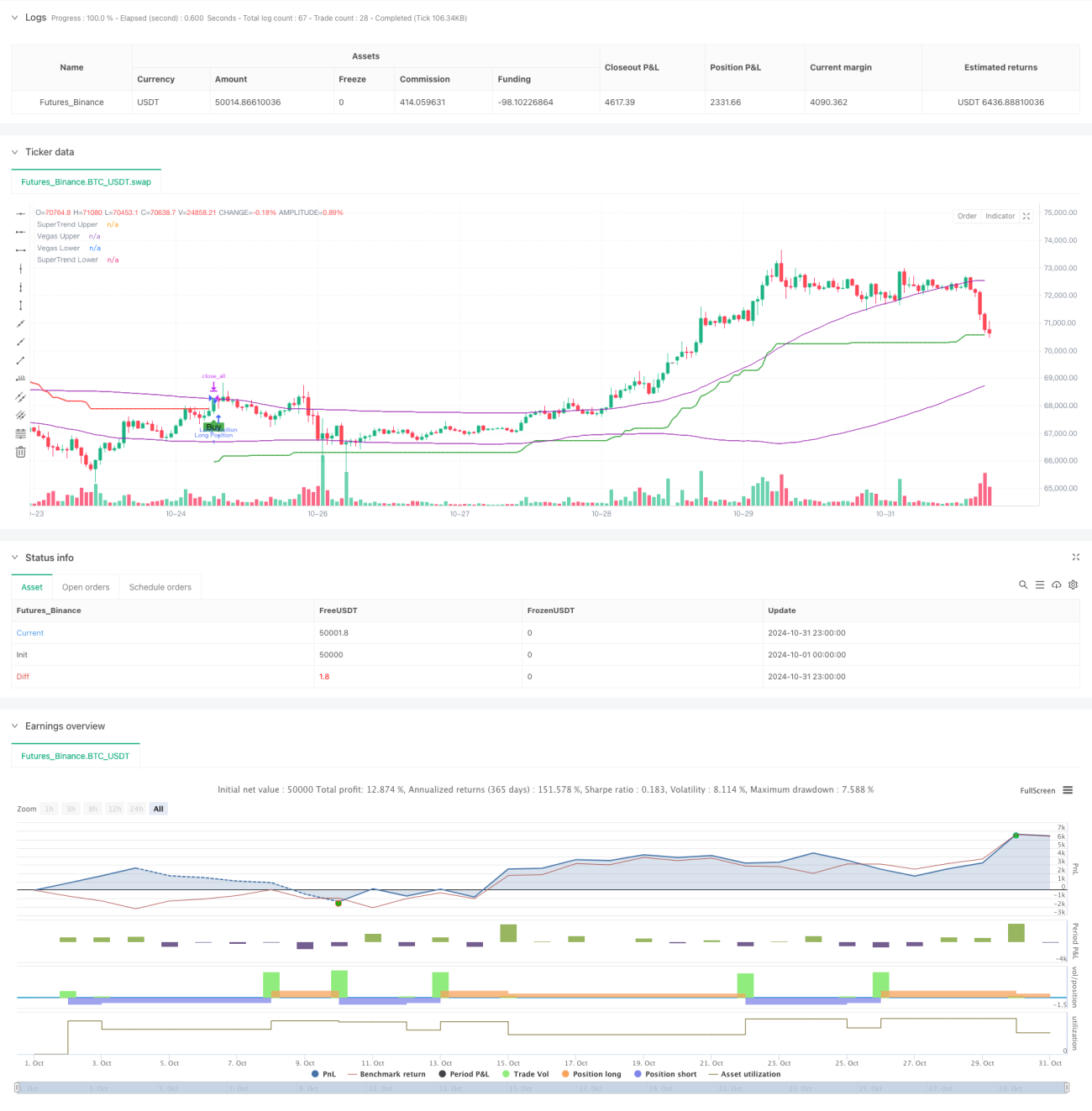
Chiến lược siêu xu hướng động thích ứng với biến động nhiều bước

ATR SMA STD TP
Ngày tạo: 2024-11-29 16:57:19 sửa đổi lần cuối: 2024-11-29 16:57:19
sao chép: 0 Số nhấp chuột: 439
1
tập trung vào
1617
Người theo dõi

Chiến lược siêu xu hướng động thích ứng với biến động nhiều bước

Tổng quan

Chiến lược siêu xu hướng tự điều chỉnh biến động của nhiều bước là một hệ thống giao dịch sáng tạo kết hợp các chỉ số Vegas Channel và SuperTrend. Điều đặc biệt của chiến lược này là khả năng thích ứng động với biến động của thị trường và sử dụng cơ chế dừng nhiều bước để tối ưu hóa tỷ lệ lợi nhuận rủi ro. Chiến lược này cung cấp tín hiệu giao dịch chính xác hơn bằng cách kết hợp phân tích biến động của Vegas Channel với tính năng theo dõi xu hướng của SuperTrend, tự động điều chỉnh các tham số của nó khi điều kiện thị trường thay đổi.

Nguyên tắc chiến lược

Chiến lược hoạt động dựa trên ba thành phần cốt lõi: tính toán kênh Vegas, phát hiện xu hướng và cơ chế dừng nhiều bước. Cổng Vegas sử dụng đường trung bình di chuyển đơn giản (SMA) và chênh lệch chuẩn (STD) để xác định phạm vi biến động giá, và chỉ số SuperTrend xác định hướng xu hướng dựa trên giá trị ATR được điều chỉnh.

Lợi thế chiến lược

  1. Tính thích ứng động: Chiến lược có thể tự động thích ứng với các điều kiện thị trường khác nhau bằng cách điều chỉnh các yếu tố biến động.
  2. Quản lý rủi ro: Cơ chế ngăn chặn nhiều bước cung cấp các giải pháp có lợi nhuận có hệ thống.
  3. Tính tùy chỉnh: cung cấp nhiều tùy chọn cài đặt tham số để đáp ứng phong cách giao dịch khác nhau.
  4. Tiếp cận thị trường toàn diện: hỗ trợ giao dịch hai chiều đa luồng.
  5. Trả lời trực quan: cung cấp giao diện đồ họa rõ ràng để phân tích và đưa ra quyết định.

Rủi ro chiến lược

  1. Tính nhạy cảm của tham số: Sự kết hợp các tham số khác nhau có thể dẫn đến sự khác biệt lớn trong hiệu suất của chiến lược.
  2. Sự chậm trễ: Các chỉ số dựa trên trung bình di chuyển bị chậm trễ.
  3. Rủi ro phá vỡ giả: Có thể tạo ra tín hiệu sai trong thị trường ngang.
  4. Trọng lượng của thiết lập dừng: dừng quá sớm có thể bỏ lỡ xu hướng lớn, dừng quá muộn có thể mất lợi nhuận.

Hướng tối ưu hóa chiến lược

  1. Tham gia bộ lọc môi trường thị trường, điều chỉnh các tham số chiến lược theo các điều kiện thị trường khác nhau.
  2. Tăng phân tích lưu lượng và tăng độ tin cậy tín hiệu.
  3. Phát triển các cơ chế tự điều chỉnh, điều chỉnh mức độ dừng theo biến động của thị trường.
  4. Kết hợp các chỉ số kỹ thuật khác để cung cấp tín hiệu xác nhận.
  5. Thực hiện quản lý vị trí động, điều chỉnh quy mô giao dịch theo rủi ro thị trường.

Tóm tắt

Chiến lược biến động tự điều chỉnh theo xu hướng vượt quá động của tỷ lệ dao động nhiều bước đại diện cho một phương pháp giao dịch định lượng tiên tiến, cung cấp cho các nhà giao dịch một hệ thống giao dịch toàn diện bằng cách kết hợp nhiều chỉ số kỹ thuật và cơ chế ngăn chặn sáng tạo. Tính linh hoạt và khả năng quản lý rủi ro của nó làm cho nó đặc biệt phù hợp để hoạt động trong các môi trường thị trường khác nhau, và có khả năng mở rộng và tối ưu hóa tốt. Với sự cải tiến và tối ưu hóa liên tục, chiến lược này có khả năng cung cấp hiệu suất giao dịch ổn định hơn trong tương lai.

Mã nguồn chiến lược
/*backtest
start: 2024-10-01 00:00:00
end: 2024-10-31 23:59:59
period: 1h
basePeriod: 1h
exchanges: [{"eid":"Futures_Binance","currency":"BTC_USDT"}]
*/

//@version=5
strategy("Multi-Step Vegas SuperTrend - strategy [presentTrading]", shorttitle="Multi-Step Vegas SuperTrend - strategy [presentTrading]", overlay=true, precision=3, commission_value=0.1, commission_type=strategy.commission.percent, slippage=1, currency=currency.USD)

// Input settings allow the user to customize the strategy's parameters.
tradeDirectionChoice = input.string(title="Trade Direction", defval="Both", options=["Long", "Short", "Both"]) // Option to select the trading direction
atrPeriod = input(10, "ATR Period for SuperTrend") // Length of the ATR for volatility measurement
vegasWindow = input(100, "Vegas Window Length") // Length of the moving average for the Vegas Channel
superTrendMultiplier = input(5, "SuperTrend Multiplier Base") // Base multiplier for the SuperTrend calculation
volatilityAdjustment = input.float(5, "Volatility Adjustment Factor") // Factor to adjust the SuperTrend sensitivity to the Vegas Channel width

// User inputs for take profit settings
useTakeProfit = input.bool(true, title="Use Take Profit", group="Take Profit Settings")
takeProfitPercent1 = input.float(3.0, title="Take Profit % Step 1", group="Take Profit Settings")
takeProfitPercent2 = input.float(6.0, title="Take Profit % Step 2", group="Take Profit Settings")
takeProfitPercent3 = input.float(12.0, title="Take Profit % Step 3", group="Take Profit Settings")
takeProfitPercent4 = input.float(21.0, title="Take Profit % Step 4", group="Take Profit Settings")

takeProfitAmount1 = input.float(25, title="Take Profit Amount % Step 1", group="Take Profit Settings")
takeProfitAmount2 = input.float(20, title="Take Profit Amount % Step 2", group="Take Profit Settings")
takeProfitAmount3 = input.float(10, title="Take Profit Amount % Step 3", group="Take Profit Settings")
takeProfitAmount4 = input.float(15, title="Take Profit Amount % Step 4", group="Take Profit Settings")

numberOfSteps = input.int(4, title="Number of Take Profit Steps", minval=1, maxval=4, group="Take Profit Settings")

// Calculate the Vegas Channel using a simple moving average and standard deviation.
vegasMovingAverage = ta.sma(close, vegasWindow)
vegasChannelStdDev = ta.stdev(close, vegasWindow)
vegasChannelUpper = vegasMovingAverage + vegasChannelStdDev
vegasChannelLower = vegasMovingAverage - vegasChannelStdDev

// Adjust the SuperTrend multiplier based on the width of the Vegas Channel.
channelVolatilityWidth = vegasChannelUpper - vegasChannelLower
adjustedMultiplier = superTrendMultiplier + volatilityAdjustment * (channelVolatilityWidth / vegasMovingAverage)

// Calculate the SuperTrend indicator values.
averageTrueRange = ta.atr(atrPeriod)
superTrendUpper = hlc3 - (adjustedMultiplier * averageTrueRange)
superTrendLower = hlc3 + (adjustedMultiplier * averageTrueRange)
var float superTrendPrevUpper = na
var float superTrendPrevLower = na
var int marketTrend = 1

// Update SuperTrend values and determine the current trend direction.
superTrendPrevUpper := nz(superTrendPrevUpper[1], superTrendUpper)
superTrendPrevLower := nz(superTrendPrevLower[1], superTrendLower)
marketTrend := close > superTrendPrevLower ? 1 : close < superTrendPrevUpper ? -1 : nz(marketTrend[1], 1)
superTrendUpper := marketTrend == 1 ? math.max(superTrendUpper, superTrendPrevUpper) : superTrendUpper
superTrendLower := marketTrend == -1 ? math.min(superTrendLower, superTrendPrevLower) : superTrendLower
superTrendPrevUpper := superTrendUpper
superTrendPrevLower := superTrendLower

// Enhanced Visualization
// Plot the SuperTrend and Vegas Channel for visual analysis.
plot(marketTrend == 1 ? superTrendUpper : na, "SuperTrend Upper", color=color.green, linewidth=2)
plot(marketTrend == -1 ? superTrendLower : na, "SuperTrend Lower", color=color.red, linewidth=2)
plot(vegasChannelUpper, "Vegas Upper", color=color.purple, linewidth=1)
plot(vegasChannelLower, "Vegas Lower", color=color.purple, linewidth=1)

// Apply a color to the price bars based on the current market trend.
barcolor(marketTrend == 1 ? color.green : marketTrend == -1 ? color.red : na)

// Detect trend direction changes and plot entry/exit signals.
trendShiftToBullish = marketTrend == 1 and marketTrend[1] == -1
trendShiftToBearish = marketTrend == -1 and marketTrend[1] == 1

plotshape(series=trendShiftToBullish, title="Enter Long", location=location.belowbar, color=color.green, style=shape.labelup, text="Buy")
plotshape(series=trendShiftToBearish, title="Enter Short", location=location.abovebar, color=color.red, style=shape.labeldown, text="Sell")

// Define conditions for entering long or short positions, and execute trades based on these conditions.
enterLongCondition = marketTrend == 1
enterShortCondition = marketTrend == -1

// Check trade direction choice before executing trade entries.
if enterLongCondition and (tradeDirectionChoice == "Long" or tradeDirectionChoice == "Both")
    strategy.entry("Long Position", strategy.long)

if enterShortCondition and (tradeDirectionChoice == "Short" or tradeDirectionChoice == "Both")
    strategy.entry("Short Position", strategy.short)

// Close all positions when the market trend changes.
if marketTrend != marketTrend[1]
    strategy.close_all()

// Multi-Stage Take Profit Logic
if (strategy.position_size > 0)
    entryPrice = strategy.opentrades.entry_price(strategy.opentrades - 1)
    if numberOfSteps >= 1
        strategy.exit("Take Profit 1", from_entry="Long Position", qty_percent=takeProfitAmount1, limit=entryPrice * (1 + takeProfitPercent1 / 100))
    if numberOfSteps >= 2
        strategy.exit("Take Profit 2", from_entry="Long Position", qty_percent=takeProfitAmount2, limit=entryPrice * (1 + takeProfitPercent2 / 100))
    if numberOfSteps >= 3
        strategy.exit("Take Profit 3", from_entry="Long Position", qty_percent=takeProfitAmount3, limit=entryPrice * (1 + takeProfitPercent3 / 100))
    if numberOfSteps >= 4
        strategy.exit("Take Profit 4", from_entry="Long Position", qty_percent=takeProfitAmount4, limit=entryPrice * (1 + takeProfitPercent4 / 100))

if (strategy.position_size < 0)
    entryPrice = strategy.opentrades.entry_price(strategy.opentrades - 1)
    if numberOfSteps >= 1
        strategy.exit("Take Profit 1", from_entry="Short Position", qty_percent=takeProfitAmount1, limit=entryPrice * (1 - takeProfitPercent1 / 100))
    if numberOfSteps >= 2
        strategy.exit("Take Profit 2", from_entry="Short Position", qty_percent=takeProfitAmount2, limit=entryPrice * (1 - takeProfitPercent2 / 100))
    if numberOfSteps >= 3
        strategy.exit("Take Profit 3", from_entry="Short Position", qty_percent=takeProfitAmount3, limit=entryPrice * (1 - takeProfitPercent3 / 100))
    if numberOfSteps >= 4
        strategy.exit("Take Profit 4", from_entry="Short Position", qty_percent=takeProfitAmount4, limit=entryPrice * (1 - takeProfitPercent4 / 100))