Chiến lược giao dịch động lượng biến động thông minh đa mục tiêu

SMA RSI TP SL
Ngày tạo: 2024-12-12 14:45:04 sửa đổi lần cuối: 2024-12-12 14:45:04
sao chép: 2 Số nhấp chuột: 350
1
tập trung vào
1617
Người theo dõi

Chiến lược giao dịch động lượng biến động thông minh đa mục tiêu

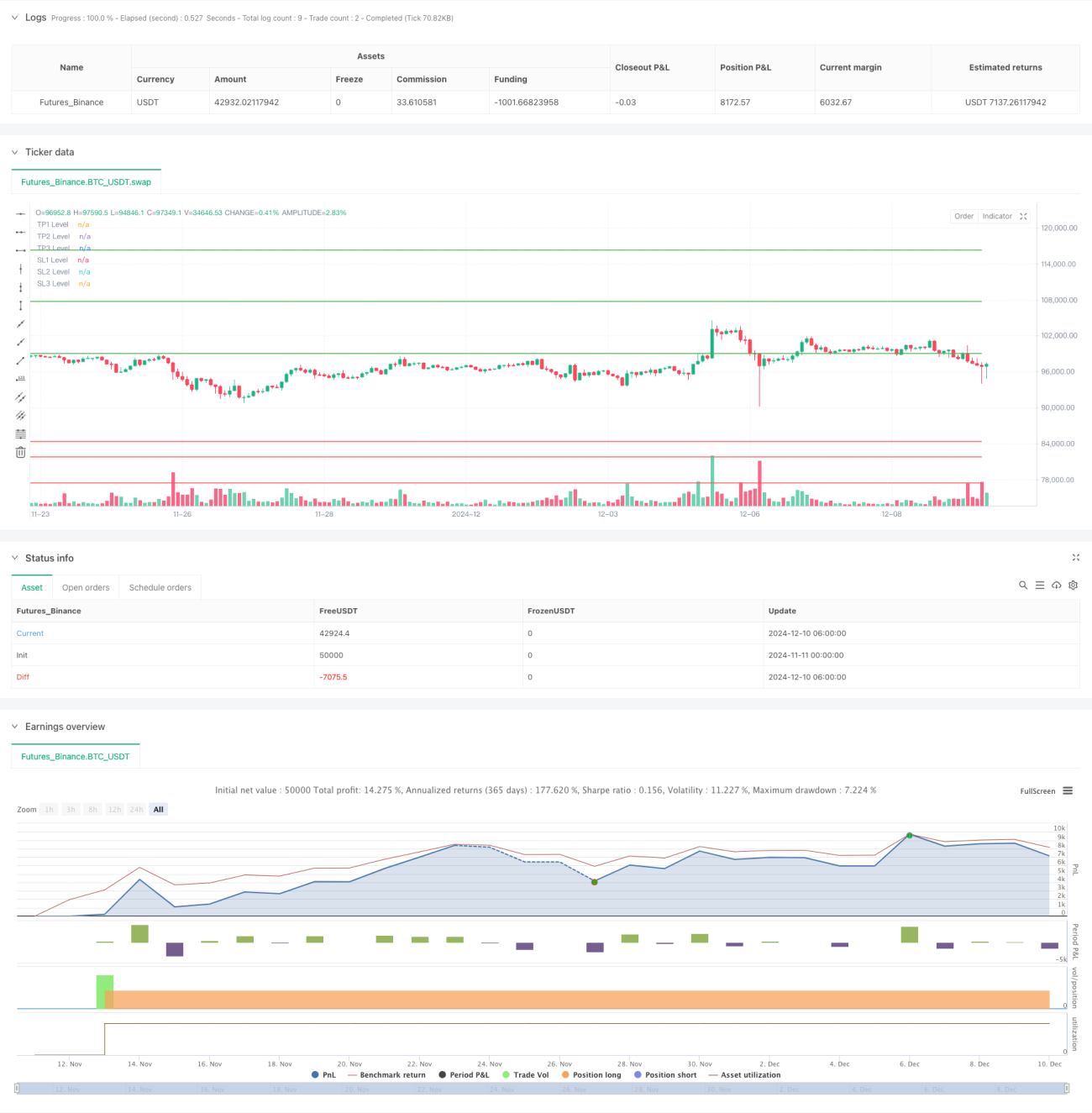
Chiến lược này là một hệ thống giao dịch thông minh kết hợp khối lượng giao dịch, động lực giá và nhiều điểm dừng. Nó xác định các cơ hội giao dịch tiềm năng bằng cách giám sát sự biến động bất thường của khối lượng giao dịch, giá tăng và sự kết hợp của các chỉ số động lực và sử dụng quản lý điểm dừng phân tầng để tối ưu hóa tỷ lệ lợi nhuận rủi ro.

Nguyên tắc chiến lược

Chiến lược này dựa trên ba tín hiệu giao dịch cốt lõi: 1) khối lượng giao dịch đột phá - khối lượng giao dịch hiện tại vượt quá 2 lần so với trung bình giao dịch trong 20 chu kỳ qua; 2) giá tăng - mức tăng giá gần đây vượt quá ngưỡng thấp được đặt; 3) xác nhận động lực - RSI lớn hơn 55 và giá nằm trên đường trung bình chu kỳ 50. Khi ba điều kiện này được đáp ứng cùng lúc, hệ thống sẽ phát hành nhiều hơn. Chiến lược tín hiệu sử dụng ba điểm dừng ((15%, 25%, 35%) và ba điểm dừng ((-2%, -5%, -10%) để quản lý vị trí, tỷ lệ vị trí cho mỗi vị trí giá thô cũng có thể được thiết lập một cách linh hoạt.

Lợi thế chiến lược

  1. Xác nhận đa tín hiệu giúp tăng độ chính xác của giao dịch
  2. Các chương trình dừng lỗ phân tầng có thể khóa lợi nhuận và kiểm soát rủi ro
  3. Các tham số có thể điều chỉnh mạnh mẽ để thích ứng với các môi trường thị trường khác nhau
  4. Kết hợp các chỉ số kỹ thuật và phân tích khối lượng giao dịch, tín hiệu đáng tin cậy hơn
  5. Tính năng cảnh báo thời gian thực giúp nắm bắt cơ hội kịp thời

Rủi ro chiến lược

  1. Thiết lập tham số không đúng có thể dẫn đến giao dịch quá mức
  2. Có thể gây ra lỗ hổng thường xuyên khi thị trường biến động mạnh
  3. Có thể khó khăn trong thị trường thiếu thanh khoản và dừng lỗ theo thời gian
  4. Không xem xét các yếu tố cơ bản có thể bỏ qua những ảnh hưởng quan trọng
  5. Sự phụ thuộc quá nhiều vào các chỉ số kỹ thuật có thể không hiệu quả trong thị trường ngang

Hướng tối ưu hóa chiến lược

  1. Nhập các phán đoán về môi trường thị trường, sử dụng các tham số khác nhau trong các tình huống khác nhau
  2. Thêm phân tích chất lượng giao dịch, lọc tín hiệu phát thải giả
  3. Thêm chỉ số cường độ xu hướng để tăng khả năng theo dõi xu hướng
  4. Tối ưu hóa khoảng dừng lỗ để phù hợp hơn với đặc điểm biến động của thị trường
  5. Xem xét thêm kiểm soát rút tiền để tăng sự ổn định của đường cong tài chính

Tóm tắt

Đây là một chiến lược giao dịch trưởng thành kết hợp nhiều yếu tố phân tích kỹ thuật. Bằng cách lọc tín hiệu nghiêm ngặt và quản lý vị trí linh hoạt, rủi ro được kiểm soát tốt trong khi nắm bắt các cơ hội xu hướng. Mặc dù vẫn còn không gian tối ưu hóa, thiết kế tổng thể hợp lý và đáng để xác minh và sử dụng trong thực tế.

Mã nguồn chiến lược
/*backtest
start: 2024-11-11 00:00:00
end: 2024-12-10 08:00:00
period: 2h
basePeriod: 2h
exchanges: [{"eid":"Futures_Binance","currency":"BTC_USDT"}]
*/

//@version=5
strategy("Volume Spike & Momentum Strategy with Alerts", overlay=true)

// Inputs for customization
priceGainPercent = input.float(5, title="Minimum Price Gain (%)", minval=1)
volumeLookback = input.int(20, title="Volume Lookback Period (Bars)", minval=1)
momentumSmaLength = input.int(50, title="SMA Length for Momentum (Bars)", minval=1)
rsiThreshold = input.float(55, title="RSI Threshold for Momentum", minval=1)

// Take Profit percentages
tp1Percent = input.float(15, title="Take Profit 1 (%)", minval=1)
tp2Percent = input.float(25, title="Take Profit 2 (%)", minval=1)
tp3Percent = input.float(35, title="Take Profit 3 (%)", minval=1)

// Percentage of position to close at each take-profit
tp1ClosePercent = input.float(30, title="Close % at TP1", minval=1, maxval=100)
tp2ClosePercent = input.float(40, title="Close % at TP2", minval=1, maxval=100)
tp3ClosePercent = input.float(30, title="Close % at TP3", minval=1, maxval=100)

// Stop-loss percentages
sl1Percent = input.float(2, title="Stop Loss 1 (%)", minval=0.1)
sl2Percent = input.float(5, title="Stop Loss 2 (%)", minval=0.1)
sl3Percent = input.float(10, title="Stop Loss 3 (%)", minval=0.1)

// Percentage of position to close at each stop-loss
sl1ClosePercent = input.float(30, title="Close % at SL1", minval=1, maxval=100)
sl2ClosePercent = input.float(40, title="Close % at SL2", minval=1, maxval=100)
sl3ClosePercent = input.float(30, title="Close % at SL3", minval=1, maxval=100)

// Detect volume spikes
avgVolume = ta.sma(volume, volumeLookback)   // Average volume over the last X bars (customizable)
volumeSpike = volume > avgVolume * 2         // Spike in volume if current volume is 2x the average

// Detect price gain over the recent period (e.g., 5-10% gain over the last X bars)
priceChangePercent = (close - ta.lowest(close, 5)) / ta.lowest(close, 5) * 100
priceGainCondition = priceChangePercent >= priceGainPercent

// Check for overall momentum using an SMA and RSI
longTermSma = ta.sma(close, momentumSmaLength)
rsi = ta.rsi(close, 14)
momentumCondition = close > longTermSma and rsi >= rsiThreshold

// Store the entry price on a new trade
var float entryPrice = na
if (strategy.opentrades == 0 and (volumeSpike and priceGainCondition and momentumCondition))
    entryPrice := close  // Capture the entry price on a new trade

// Calculate take-profit levels based on the entry price
tp1Price = entryPrice * (1 + tp1Percent / 100)
tp2Price = entryPrice * (1 + tp2Percent / 100)
tp3Price = entryPrice * (1 + tp3Percent / 100)

// Calculate stop-loss levels based on the entry price
sl1Price = entryPrice * (1 - sl1Percent / 100)
sl2Price = entryPrice * (1 - sl2Percent / 100)
sl3Price = entryPrice * (1 - sl3Percent / 100)

// Exit conditions for multiple take-profits
tp1Condition = high >= tp1Price  // Exit partial if price hits take-profit 1
tp2Condition = high >= tp2Price  // Exit partial if price hits take-profit 2
tp3Condition = high >= tp3Price  // Exit full if price hits take-profit 3

// Exit conditions for multiple stop-losses
sl1Condition = low <= sl1Price  // Exit partial if price hits stop-loss 1
sl2Condition = low <= sl2Price  // Exit partial if price hits stop-loss 2
sl3Condition = low <= sl3Price  // Exit full if price hits stop-loss 3

// Buy Condition: When volume spike, price gain, and momentum conditions are met
if (volumeSpike and priceGainCondition and momentumCondition)
    strategy.entry("Buy", strategy.long)

// Alerts for conditions
alertcondition(volumeSpike and priceGainCondition and momentumCondition, title="Entry Alert", message="Entry conditions met: Volume spike, price gain, and momentum detected!")

alertcondition(tp1Condition, title="Take Profit 1", message="Take Profit 1 hit!")
alertcondition(tp2Condition, title="Take Profit 2", message="Take Profit 2 hit!")
alertcondition(tp3Condition, title="Take Profit 3", message="Take Profit 3 hit!")

alertcondition(sl1Condition, title="Stop Loss 1", message="Stop Loss 1 hit!")
alertcondition(sl2Condition, title="Stop Loss 2", message="Stop Loss 2 hit!")
alertcondition(sl3Condition, title="Stop Loss 3", message="Stop Loss 3 hit!")

// Exit conditions: Multiple take-profits and stop-losses
if (tp1Condition)
    strategy.exit("Take Profit 1", "Buy", limit=tp1Price, qty_percent=tp1ClosePercent)

if (tp2Condition)
    strategy.exit("Take Profit 2", "Buy", limit=tp2Price, qty_percent=tp2ClosePercent)

if (tp3Condition)
    strategy.exit("Take Profit 3", "Buy", limit=tp3Price, qty_percent=tp3ClosePercent)

// Stop-loss exits
if (sl1Condition)
    strategy.exit("Stop Loss 1", "Buy", stop=sl1Price, qty_percent=sl1ClosePercent)

if (sl2Condition)
    strategy.exit("Stop Loss 2", "Buy", stop=sl2Price, qty_percent=sl2ClosePercent)

if (sl3Condition)
    strategy.exit("Stop Loss 3", "Buy", stop=sl3Price, qty_percent=sl3ClosePercent)

// Plotting take-profit and stop-loss levels on the chart
plot(tp1Price, color=color.green, style=plot.style_linebr, title="TP1 Level")
plot(tp2Price, color=color.green, style=plot.style_linebr, title="TP2 Level")
plot(tp3Price, color=color.green, style=plot.style_linebr, title="TP3 Level")

plot(sl1Price, color=color.red, style=plot.style_linebr, title="SL1 Level")
plot(sl2Price, color=color.red, style=plot.style_linebr, title="SL2 Level")
plot(sl3Price, color=color.red, style=plot.style_linebr, title="SL3 Level")