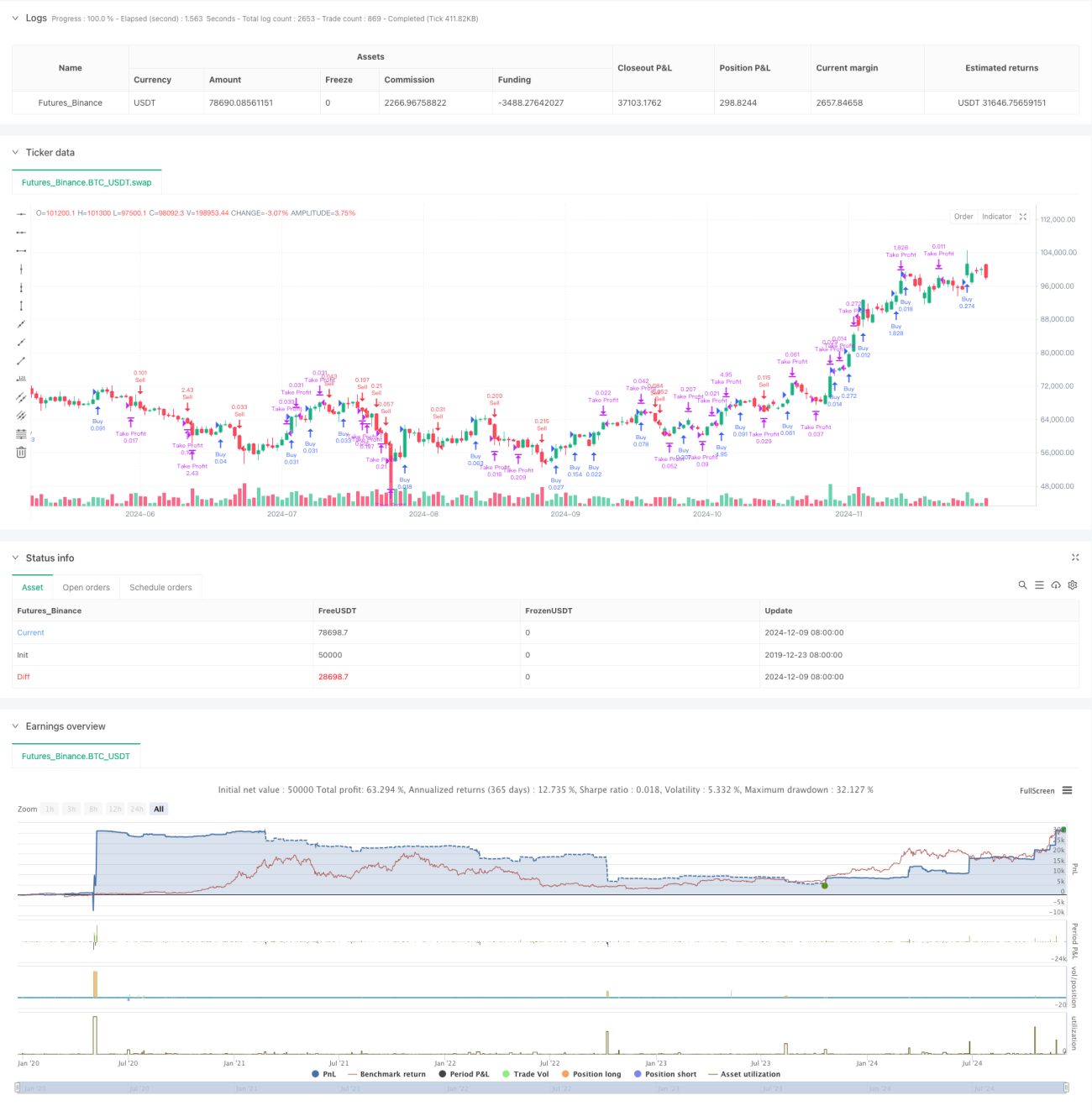
Chiến lược giao dịch đàm thoại định lượng tần suất cao: hệ thống quản lý vị thế động thích ứng dựa trên các tín hiệu đột phá


Ngày tạo: 2024-12-12 14:59:28 sửa đổi lần cuối: 2024-12-12 14:59:28
sao chép: 1 Số nhấp chuột: 437
1
tập trung vào
1617
Người theo dõi

Chiến lược giao dịch đàm thoại định lượng tần suất cao: hệ thống quản lý vị thế động thích ứng dựa trên các tín hiệu đột phá

Tổng quan

Chiến lược này là một hệ thống giao dịch định lượng tần số cao chuyên về việc nắm bắt các cơ hội phá vỡ giá trong thời gian giao dịch ở London và Hoa Kỳ. Nó mang lại lợi nhuận giao dịch ổn định thông qua thời gian giao dịch tùy chỉnh (Kill Zones), quản lý vị trí động và quản lý đơn đặt hàng chính xác.

Nguyên tắc chiến lược

Chiến lược này hoạt động dựa trên các nguyên tắc cốt lõi sau:

  1. Lựa chọn giai đoạn: Chiến lược tập trung vào các giai đoạn giao dịch của London và Mỹ, thường có tính thanh khoản và biến động cao.
  2. Tín hiệu phá vỡ: Xác định cơ hội phá vỡ tiềm năng bằng cách phân tích mối quan hệ giữa giá đóng cửa hiện tại và giá mở cửa, và so sánh với các điểm cao và thấp trong giai đoạn trước.
  3. Vị trí động: Kích thước vị trí của mỗi giao dịch được tính toán động dựa trên quyền lợi tài khoản, phần trăm rủi ro và khoảng cách dừng lỗ.
  4. Quản lý đơn đặt hàng: Có cơ chế tự động hủy đơn đặt hàng, tránh rủi ro tiềm ẩn của đơn đặt hàng hết hạn.
  5. Tỷ lệ lợi nhuận rủi ro: cho phép các nhà giao dịch đặt tỷ lệ lợi nhuận rủi ro theo sở thích rủi ro cá nhân.

Lợi thế chiến lược

  1. Quản lý thời gian chính xác: Đảm bảo giao dịch trong thời gian có tính thanh khoản nhất bằng cách tùy chỉnh thời gian giao dịch.
  2. Quản lý vị trí thông minh: Tính năng động tính toán kích thước vị trí, kiểm soát hiệu quả các lỗ hổng rủi ro cho mỗi giao dịch.
  3. Thiết lập tham số linh hoạt: Các nhà giao dịch có thể điều chỉnh các tham số theo nhu cầu cá nhân.
  4. Kiểm soát rủi ro tốt: bao gồm các cơ chế kiểm soát rủi ro đa dạng như dừng lỗ, dừng và hủy lệnh quá hạn.
  5. Mức độ tự động hóa cao: Tự động hóa toàn bộ quy trình từ phát tín hiệu đến quản lý đơn đặt hàng, giảm sự can thiệp của con người.

Rủi ro chiến lược

  1. Rủi ro biến động thị trường: có thể gây ra tín hiệu phá vỡ sai trong thời gian biến động cao.
  2. Rủi ro trượt: Trượt trong giao dịch tần số cao có thể ảnh hưởng đến hiệu suất chiến lược.
  3. Rủi ro phá vỡ giả mạo: thị trường có thể bị phá vỡ giả mạo dẫn đến tổn thất giao dịch.
  4. Rủi ro thanh khoản: Thiếu thanh khoản trong một khoảng thời gian nhất định có thể ảnh hưởng đến việc thực hiện đơn đặt hàng.

Hướng tối ưu hóa chiến lược

  1. Tham gia bộ lọc biến động: Tối ưu hóa thời gian nhập cảnh bằng cách phân tích biến động của thị trường.
  2. Thêm bộ lọc xu hướng: kết hợp với các chỉ số xu hướng dài hơn để tăng độ chính xác của hướng giao dịch.
  3. Tối ưu hóa cửa sổ thời gian: Điều chỉnh thời gian giao dịch dựa trên phân tích dữ liệu lịch sử.
  4. Cải thiện quản lý vị thế: Xem xét thêm cơ chế điều chỉnh vị thế động dựa trên biến động.

Tóm tắt

Chiến lược này xây dựng một hệ thống giao dịch tần số cao hoàn chỉnh bằng cách quản lý nhiều chiều như thời gian, giá cả và vị trí bằng cách sử dụng tổng hợp. Điểm mạnh cốt lõi của nó là nắm bắt chính xác thời gian giao dịch và cơ chế quản lý rủi ro tốt, nhưng đồng thời cũng đòi hỏi các nhà giao dịch phải theo dõi chặt chẽ sự thay đổi của môi trường thị trường và điều chỉnh các thiết lập tham số kịp thời.

Mã nguồn chiến lược
/*backtest
start: 2019-12-23 08:00:00
end: 2024-12-10 08:00:00
period: 1d
basePeriod: 1d
exchanges: [{"eid":"Futures_Binance","currency":"BTC_USDT"}]
*/

//@version=6
strategy("ENIGMA ENDGAME Strategy", overlay=true, margin_long=100, margin_short=100)

// Description: 
// The ENIGMA ENDGAME strategy leverages price action breakouts within specific kill zones (London and US sessions) to capture profitable opportunities. 
// The strategy uses dynamic position sizing based on account equity, precise entry logic via buy-stop and sell-stop orders, and robust risk management to achieve consistent profitability. 
// Features include:
// - Customizable kill zones for session-specific trading.
// - Risk management with dynamic position sizing based on user-defined percentages.
// - Multiple entry opportunities with lookback-based high/low tracking.
// - Automatic pending order cancellation to avoid stale trades.
// - Adjustable risk-reward ratios for optimal profit-taking.

// Define customizable kill zones for London and US sessions
london_start_hour = input.int(2, minval=0, maxval=23, title="London Start Hour (UTC)")
london_end_hour = input.int(5, minval=0, maxval=23, title="London End Hour (UTC)")
us_start_hour = input.int(8, minval=0, maxval=23, title="US Start Hour (UTC)")
us_end_hour = input.int(11, minval=0, maxval=23, title="US End Hour (UTC)")

// Risk management parameters
risk_percentage = input.float(0.1, title="Risk Percentage per Trade (%)", step=0.01)
account_balance = strategy.equity

// Define lookback parameters
lookback_period = 3
cancel_after_bars = input.int(5, title="Cancel Pending Orders After Bars")

// User-defined risk-reward ratio
risk_reward_ratio = input.float(1.0, title="Risk-Reward Ratio", minval=0.1, step=0.1)

// Kill zone function
in_kill_zone = (hour(time) >= london_start_hour and hour(time) < london_end_hour) or (hour(time) >= us_start_hour and hour(time) < us_end_hour)

// Calculate Position Size Based on Risk
calc_position_size(entry_price, stop_loss) =>
    // This function calculates the position size based on the account equity, risk percentage, and stop-loss distance.
    risk = account_balance * (risk_percentage / 100)
    stop_loss_distance = math.abs(entry_price - stop_loss)
    // Validate stop-loss distance
    stop_loss_distance := stop_loss_distance < syminfo.mintick * 10 ? syminfo.mintick * 10 : stop_loss_distance
    position_size = risk / stop_loss_distance
    // Clamp position size
    math.min(position_size, 10000000000.0) // Limit to Pine Script max qty

// Initialize arrays to store high/low levels
var float[] buy_highs = array.new_float(0)
var float[] sell_lows = array.new_float(0)
var int[] pending_orders = array.new_int(0)

// Buy and Sell Arrow Conditions
bullish_arrow = close > open and close > high[1] and in_kill_zone // Triggers buy logic when price action breaks out in the upward direction within a kill zone.
bearish_arrow = close < open and close < low[1] and in_kill_zone // Triggers sell logic when price action breaks out in the downward direction within a kill zone.

// Store Highs and Place Buy-Stops
if bullish_arrow
    array.clear(buy_highs) // Clears previous data to store new highs.
    for i = 1 to lookback_period
        array.push(buy_highs, high[i]) // Tracks highs from the lookback period.
    
    // Place buy-stop orders
    for high_level in buy_highs
        stop_loss = low - syminfo.mintick * 10 // 1 pip below the low
        take_profit = high_level + (high_level - stop_loss) * risk_reward_ratio // Calculate take-profit based on the risk-reward ratio.
        strategy.entry("Buy", strategy.long, stop=high_level, qty=calc_position_size(high_level, stop_loss))
        strategy.exit("Take Profit", "Buy", limit=take_profit, stop=stop_loss)

// Store Lows and Place Sell-Stops
if bearish_arrow
    array.clear(sell_lows) // Clears previous data to store new lows.
    for i = 1 to lookback_period
        array.push(sell_lows, low[i]) // Tracks lows from the lookback period.
    
    // Place sell-stop orders
    for low_level in sell_lows
        stop_loss = high + syminfo.mintick * 10 // 1 pip above the high
        take_profit = low_level - (stop_loss - low_level) * risk_reward_ratio // Calculate take-profit based on the risk-reward ratio.
        strategy.entry("Sell", strategy.short, stop=low_level, qty=calc_position_size(low_level, stop_loss))
        strategy.exit("Take Profit", "Sell", limit=take_profit, stop=stop_loss)

// Cancel Pending Orders After Defined Bars
if array.size(pending_orders) > 0
    for i = 0 to array.size(pending_orders) - 1
        if bar_index - array.get(pending_orders, i) >= cancel_after_bars
            array.remove(pending_orders, i) // Removes outdated pending orders.

// Alerts for debugging
alertcondition(bullish_arrow, title="Buy Alert", message="Buy signal generated.")
alertcondition(bearish_arrow, title="Sell Alert", message="Sell signal generated.")