
Tổng quan
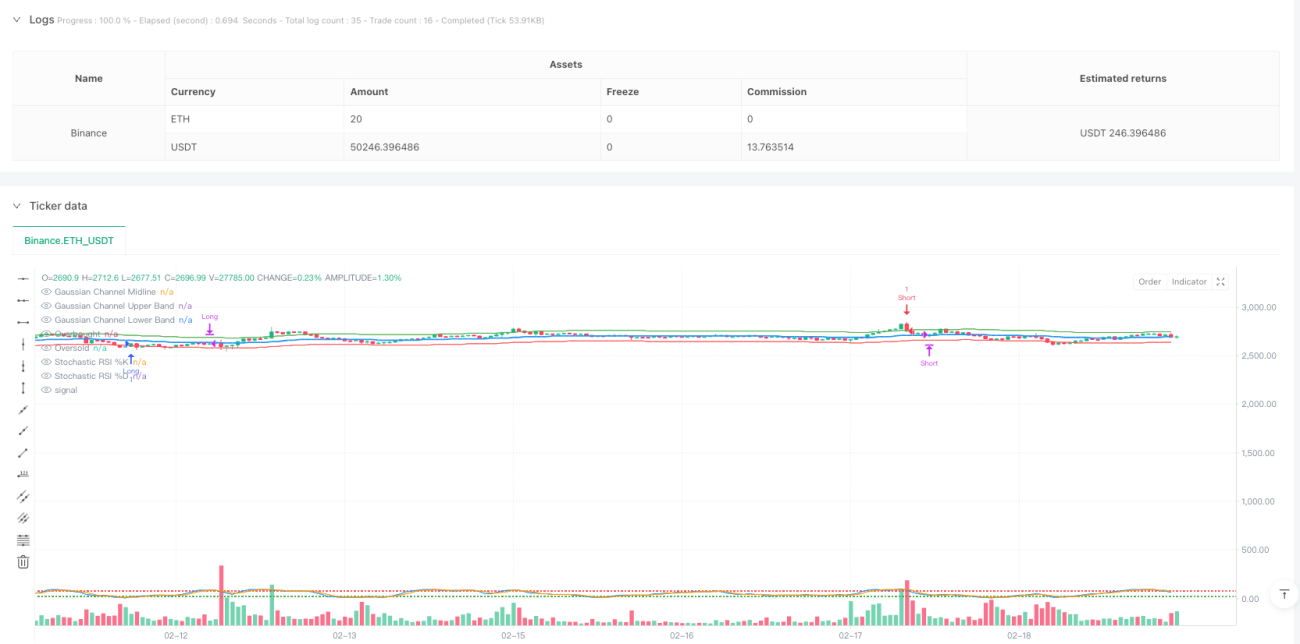
Chiến lược này là một hệ thống giao dịch theo xu hướng kết hợp Kênh Gaussian và Stochastic RSI (Chỉ số sức mạnh tương đối ngẫu nhiên). Kênh Gaussian được sử dụng để xác định xu hướng giá và phạm vi biến động, trong khi Stochastic RSI đóng vai trò là bộ lọc để xác nhận các điều kiện quá mua/quá bán, từ đó nâng cao độ chính xác của tín hiệu giao dịch. Chiến lược tạo ra tín hiệu giao dịch bằng cách quan sát sự giao cắt giữa giá với ranh giới của Kênh Gaussian và vị trí của Stochastic RSI.
Nguyên lý chiến lược
Logic cốt lõi của chiến lược dựa trên các thành phần chính sau:
- Tính toán Kênh Gaussian: Sử dụng bộ lọc Gaussian để tính toán đường trung tâm, và thiết lập dải trên và dải dưới dựa trên hệ số nhân. Bộ lọc Gaussian sử dụng phương pháp làm mịn theo cấp số nhân, giúp giảm nhiễu giá một cách hiệu quả.
- Chỉ báo Stochastic RSI: Kết hợp ưu điểm của Stochastic và RSI, sử dụng hai đường làm mịn %K và %D để xác định trạng thái quá mua/quá bán.
- Điều kiện vào lệnh:
- Vị thế mua: Giá phá vỡ dải dưới của Kênh Gaussian và Stochastic RSI nằm trong vùng quá bán.
- Vị thế bán: Giá phá vỡ dải trên của Kênh Gaussian và Stochastic RSI nằm trong vùng quá mua.
- Điều kiện thoát lệnh:
- Khi giá cắt qua đường trung tâm của Kênh Gaussian.
- Hoặc Stochastic RSI đạt đến mức quá mua/quá bán ngược lại.
Ưu điểm của chiến lược
- Độ tin cậy tín hiệu cao: Kết hợp các chỉ báo xu hướng và động lượng, giúp lọc hiệu quả các tín hiệu nhiễu.
- Kiểm soát rủi ro hoàn thiện: Sử dụng Kênh Gaussian làm mức hỗ trợ/kháng cự động, cung cấp khuôn khổ quản lý rủi ro tốt.
- Tính linh hoạt cao trong tham số: Có thể điều chỉnh độ rộng kênh và tham số RSI tùy theo đặc điểm thị trường khác nhau.
- Hiệu suất tính toán cao: Bộ lọc Gaussian có khối lượng tính toán nhỏ, phù hợp với giao dịch thời gian thực.
- Khả năng thích ứng cao: Có thể sử dụng trên nhiều khung thời gian và điều kiện thị trường khác nhau.
Rủi ro của chiến lược
- Rủi ro thị trường đi ngang: Trong thị trường sideway có thể phát sinh nhiều tín hiệu phá vỡ giả tần suất cao.
- Rủi ro độ trễ: Quá trình làm mịn chỉ báo dẫn đến độ trễ tín hiệu nhất định.
- Nhạy cảm với tham số: Các tổ hợp tham số khác nhau có thể dẫn đến kết quả giao dịch khác biệt đáng kể.
- Phụ thuộc vào môi trường thị trường: Hoạt động tốt trong thị trường xu hướng mạnh, nhưng có thể gây sụt giảm lớn trong thị trường đảo chiều nhanh.
Hướng tối ưu hóa chiến lược
- Tối ưu hóa tham số động:
- Tự động điều chỉnh độ rộng kênh dựa trên biến động thị trường.
- Điều chỉnh tham số Stochastic RSI linh hoạt dựa trên đặc điểm chu kỳ thị trường.
- Cơ chế xác nhận tín hiệu:
- Thêm chỉ báo xác nhận khối lượng giao dịch.
- Đưa vào bộ lọc cường độ xu hướng.
- Tăng cường quản lý rủi ro:
- Triển khai cắt lỗ/chốt lời động.
- Thêm mô-đun quản lý vị thế.
- Nhận dạng môi trường thị trường:
- Phát triển bộ phân loại trạng thái thị trường.
- Điều chỉnh tham số chiến lược theo từng trạng thái thị trường khác nhau.
Tổng kết
Chiến lược này xây dựng một hệ thống giao dịch kết hợp cả đặc tính theo xu hướng và động lượng thông qua việc kết hợp Kênh Gaussian và Stochastic RSI. Thiết kế chiến lược hợp lý, có tính mở rộng và thích ứng tốt. Thông qua các hướng tối ưu hóa được đề xuất, có thể nâng cao hơn nữa tính ổn định và lợi nhuận của chiến lược. Trong ứng dụng thực tế, khuyến nghị kiểm tra đầy đủ các tổ hợp tham số khác nhau và tối ưu hóa phù hợp dựa trên đặc điểm cụ thể của thị trường.
- 1