Chiến lược giao dịch theo xu hướng với sự giao nhau của các Dải Bollinger đa chu kỳ

Tổng quan
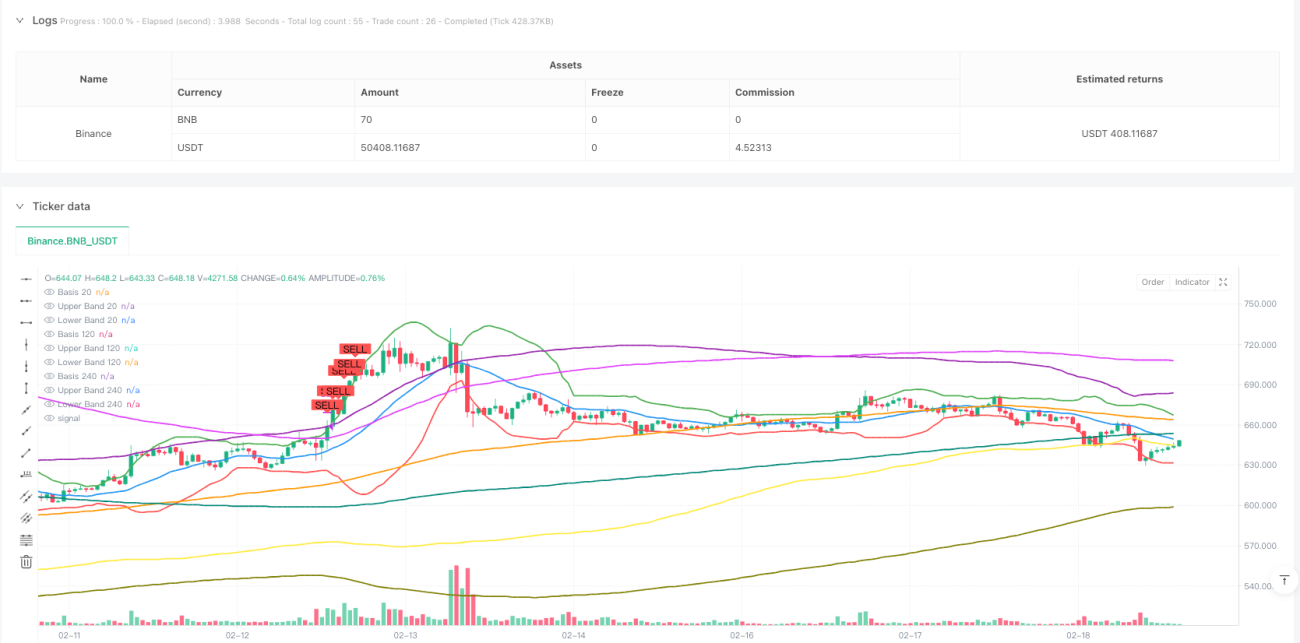
Đây là chiến lược giao dịch theo xu hướng dựa trên ba dải Bollinger. Chiến lược kết hợp các dải Bollinger với chu kỳ khác nhau (20, 120 và 240) để xác định trạng thái quá mua/quá bán của thị trường, đồng thời phát tín hiệu giao dịch khi giá phá vỡ cả ba dải Bollinger. Sự kết hợp đa chu kỳ dải Bollinger này có thể lọc hiệu quả các tín hiệu nhiễu, nâng cao độ chính xác của giao dịch.
Nguyên lý chiến lược
Chiến lược sử dụng ba dải Bollinger với các chu kỳ khác nhau (20, 120 và 240). Mỗi dải Bollinger bao gồm đường giữa (SMA) và dải trên/dưới (2 lần độ lệch chuẩn). Khi giá cùng lúc phá vỡ dải dưới của cả ba dải Bollinger, điều này cho thấy thị trường có khả năng đang quá bán, hệ thống phát tín hiệu mua lên; khi giá cùng lúc phá vỡ dải trên của cả ba dải Bollinger, điều này cho thấy thị trường có khả năng đang quá mua, hệ thống phát tín hiệu đóng vị thế. Bằng cách quan sát dải Bollinger ở nhiều khung thời gian, có thể xác nhận tốt hơn cường độ và tính bền vững của xu hướng thị trường.
Ưu điểm của chiến lược
- Cơ chế xác nhận nhiều lớp: Sử dụng ba dải Bollinger với các chu kỳ khác nhau làm bộ lọc, giúp giảm thiểu hiệu quả các tín hiệu nhiễu.
- Khả năng bám xu hướng: Nhờ đặc tính điều chỉnh động của dải Bollinger, chiến lược có thể thích ứng với các điều kiện thị trường khác nhau.
- Kiểm soát rủi ro rõ ràng: Bản thân dải Bollinger có ý nghĩa thống kê, cung cấp vị trí tham chiếu rõ ràng cho việc vào và thoát lệnh.
- Khả năng điều chỉnh tham số: Chiến lược cung cấp cài đặt tham số cho chu kỳ và bội số của dải Bollinger, có thể tối ưu hóa theo đặc điểm thị trường khác nhau.
Rủi ro của chiến lược
- Rủi ro thị trường đi ngang: Trong thị trường dao động (sideways) có thể phát sinh nhiều tín hiệu nhiễu, dẫn đến giao dịch quá mức.
- Rủi ro độ trễ: Do sử dụng đường trung bình động chu kỳ dài, có thể bỏ lỡ thời điểm vào lệnh tốt nhất tại các điểm đảo chiều xu hướng.
- Rủi ro quản lý vốn: Nếu không đặt vị trí stop loss phù hợp, có thể chịu tổn thất lớn khi biến động mạnh.
- Phụ thuộc vào tham số: Các tham số tối ưu có thể khác biệt đáng kể trong các điều kiện thị trường khác nhau, cần được tối ưu hóa định kỳ.
Hướng tối ưu hóa chiến lược
- Đưa vào chỉ báo giá-trị khối lượng: Có thể thêm khối lượng giao dịch làm chỉ báo phụ trợ, nâng cao độ tin cậy của tín hiệu.
- Tối ưu hóa cơ chế stop loss: Đề xuất bổ sung trailing stop hoặc stop loss dựa trên ATR để kiểm soát rủi ro tốt hơn.
- Thêm chỉ báo xác nhận xu hướng: Có thể kết hợp các chỉ báo xu hướng khác (như MACD, DMI, v.v.) để xác nhận chéo.
- Điều chỉnh tham số động: Có thể tự động điều chỉnh tham số dải Bollinger dựa trên biến động thị trường, nâng cao khả năng thích ứng của chiến lược.
- Cải thiện bộ lọc tín hiệu: Có thể thêm các điều kiện lọc như thời gian giao dịch, lọc biến động, v.v. để giảm tín hiệu giả.
Tổng kết
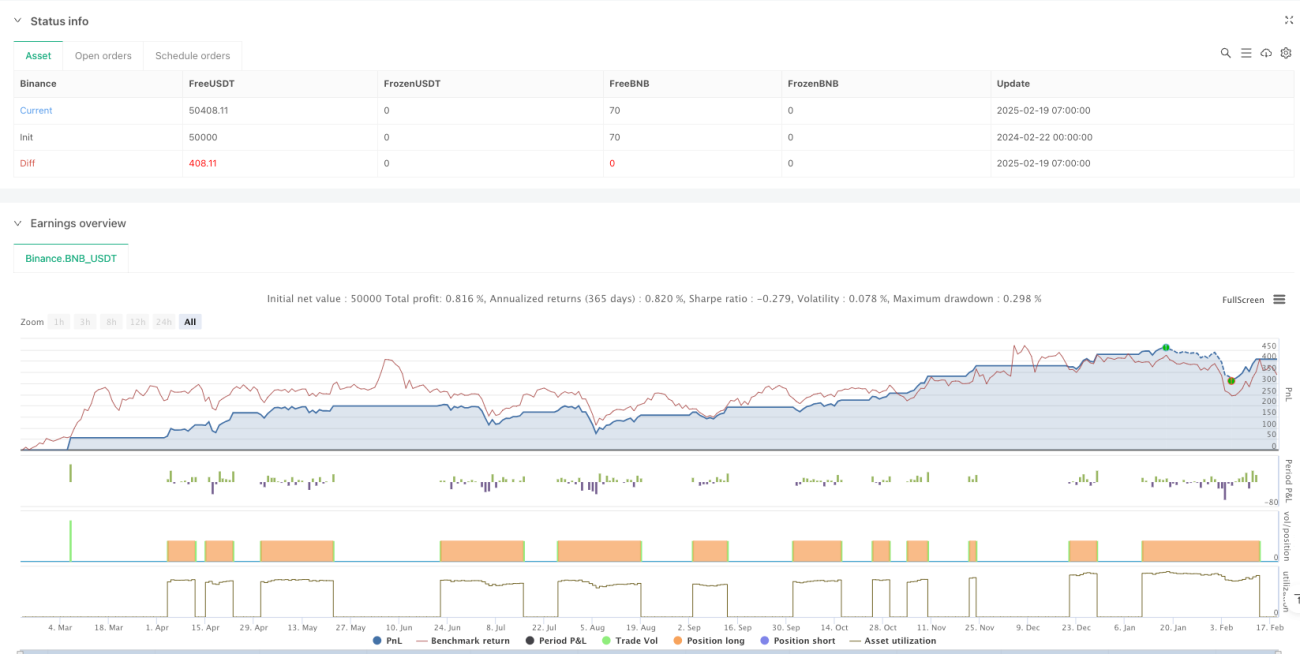
Đây là chiến lược giao dịch theo xu hướng dựa trên dải Bollinger đa chu kỳ, xác nhận tín hiệu giao dịch thông qua sự giao nhau của ba dải Bollinger, có độ tin cậy và khả năng thích ứng cao. Ưu điểm cốt lõi của chiến lược nằm ở cơ chế xác nhận nhiều lớp và hệ thống kiểm soát rủi ro rõ ràng, nhưng cũng cần chú ý đến hiệu suất trong thị trường dao động và vấn đề tối ưu hóa tham số. Bằng cách bổ sung các hướng tối ưu hóa như phân tích giá-trị khối lượng, cải thiện cơ chế stop loss và điều chỉnh tham số động, có thể nâng cao hơn nữa tính ổn định và khả năng sinh lời của chiến lược.
- 1