
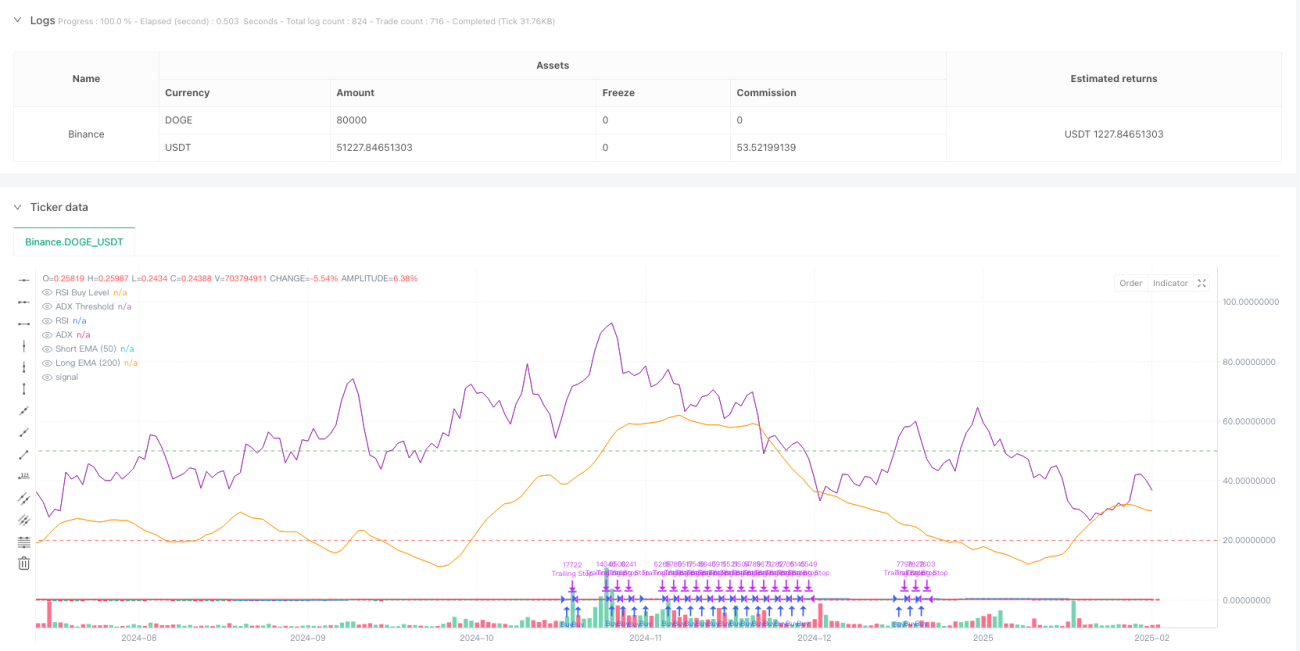
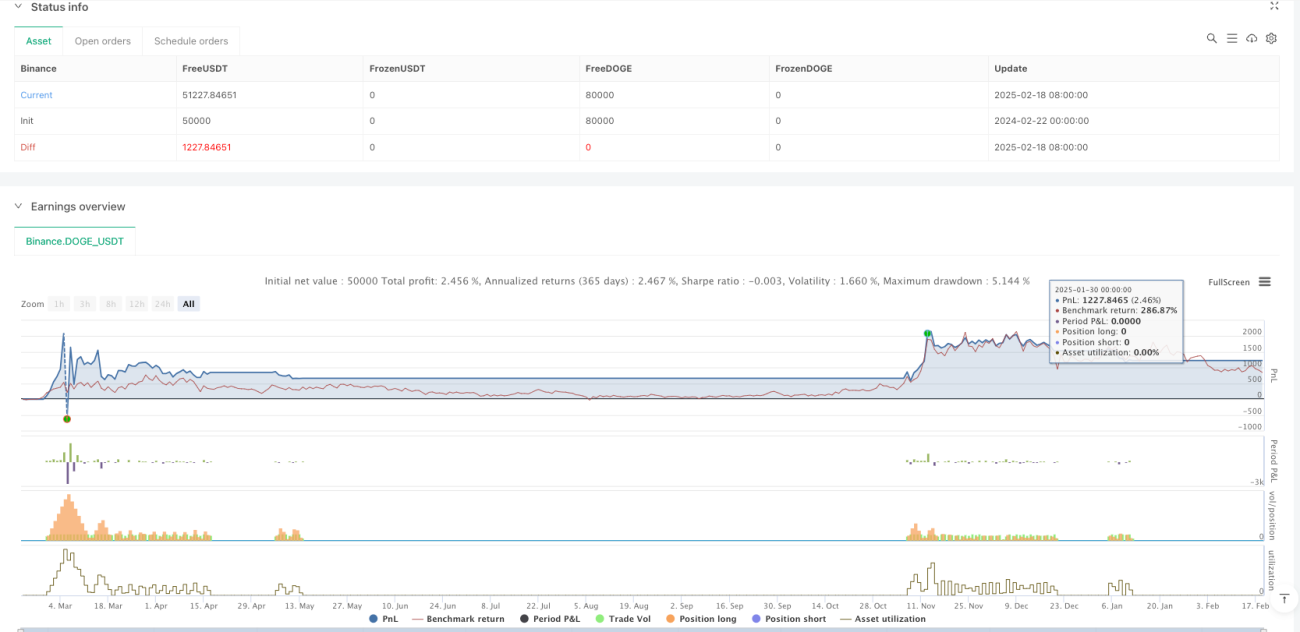
Tổng quan
Chiến lược này là một hệ thống theo dõi xu hướng kết hợp nhiều đường trung bình động, chỉ báo động lượng và kiểm soát rủi ro động. Chiến lược xác định cơ hội giao dịch bằng cách phân tích xu hướng giá, động lượng thị trường và biến động giá, đồng thời áp dụng cơ chế quản lý vị thế và dừng lỗ chặt chẽ để kiểm soát rủi ro. Logic cốt lõi xoay quanh giao cắt của đường trung bình động hàm mũ (EMA) ngắn hạn và dài hạn kết hợp với chỉ số sức mạnh tương đối (RSI), sử dụng Khoảng biến động trung bình thực tế (ATR) để điều chỉnh vị trí dừng lỗ một cách động.
Nguyên lý chiến lược
Chiến lược sử dụng cơ chế xác minh nhiều lớp để xác nhận tín hiệu giao dịch:
- Xác nhận xu hướng: Sử dụng hai đường EMA 50 ngày và 200 ngày để đánh giá xu hướng trung và dài hạn, yêu cầu đường trung bình ngắn hạn nằm trên đường trung bình dài hạn trong hơn 10 kỳ.
- Xác minh động lượng: Sử dụng chỉ báo RSI để xác minh động lượng giá, khi giá trị RSI vượt quá ngưỡng thiết lập (mặc định 50) thì xác nhận động lượng tăng.
- Cường độ xu hướng: Đưa vào Chỉ số định hướng trung bình (ADX) để đo lường cường độ xu hướng, ADX lớn hơn 20 cho thấy xu hướng đáng kể.
- Kiểm soát rủi ro động: Thiết kế dừng lỗ động dựa trên ATR, khoảng cách dừng lỗ gấp 2,5 lần ATR, đồng thời thiết lập cơ chế dừng lỗ theo sau.
- Quản lý vị thế thông minh: Tính toán linh hoạt số lượng mở vị thế dựa trên vốn chủ sở hữu tài khoản và tỷ lệ rủi ro đặt trước, kết hợp với ATR.
Lợi thế chiến lược
- Xác minh tín hiệu đa chiều: Cải thiện độ tin cậy của tín hiệu thông qua xác nhận ở nhiều khía cạnh bao gồm đường trung bình, động lượng và cường độ xu hướng.
- Quản lý rủi ro động: Sử dụng dừng lỗ động và dừng lỗ theo sau dựa trên biến động giá, có thể tự động thích ứng theo điều kiện thị trường.
- Kiểm soát vị thế thông minh: Điều chỉnh vị thế linh hoạt dựa trên quy mô tài khoản và biến động thị trường, kiểm soát hiệu quả rủi ro từng giao dịch đơn lẻ.
- Yêu cầu về tính bền vững của xu hướng: Tránh các đột phá giả bằng cách đặt ra yêu cầu về thời gian duy trì xu hướng.
- Cảnh báo giao dịch có hệ thống: Tích hợp chức năng nhắc nhở tín hiệu giao dịch, thuận tiện cho thao tác thời gian thực.
Rủi ro chiến lược
- Rủi ro đảo chiều xu hướng: Có thể xảy ra sụt giảm lớn khi xu hướng mạnh kết thúc, khuyến nghị điều chỉnh dựa trên tình hình vĩ mô thị trường.
- Hiệu suất trong thị trường đi ngang: Có thể phát sinh giao dịch thường xuyên trong thị trường dao động ngang, làm tăng chi phí giao dịch.
- Nhạy cảm với tham số: Hiệu suất chiến lược bị ảnh hưởng bởi việc thiết lập nhiều tham số chỉ báo, cần tối ưu hóa qua backtest.
- Ảnh hưởng của trượt giá: Có thể đối mặt với trượt giá lớn khi thanh khoản thị trường thấp, ảnh hưởng đến lợi nhuận của chiến lược.
Hướng tối ưu hóa chiến lược
- Thích ứng với môi trường thị trường: Có thể đưa vào các chỉ báo biến động (như VIX) để điều chỉnh tham số chiến lược một cách động, nâng cao khả năng thích ứng trong các môi trường thị trường khác nhau.
- Lọc tín hiệu: Xem xét thêm xác minh chỉ báo khối lượng giao dịch để cải thiện chất lượng tín hiệu.
- Cơ chế chốt lời: Có thể thiết kế cơ chế chốt lời động dựa trên biến động thị trường, tối ưu hóa tỷ lệ lợi nhuận trên mức sụt giảm.
- Tối ưu hóa khung thời gian: Xem xét xác minh tính nhất quán của tín hiệu trên các khung thời gian khác nhau để tăng tính ổn định giao dịch.
- Tối ưu hóa bằng học máy: Có thể đưa vào thuật toán học máy để tối ưu hóa tham số một cách động, nâng cao khả năng thích ứng của chiến lược.
Kết luận
Chiến lược này xây dựng một hệ thống giao dịch theo dõi xu hướng hoàn chỉnh thông qua việc kết hợp toàn diện nhiều chỉ báo kỹ thuật. Chiến lược thể hiện xuất sắc trong kiểm soát rủi ro, kiểm soát sụt giảm hiệu quả thông qua dừng lỗ động và quản lý vị thế. Chiến lược có khả năng mở rộng cao và dự trữ nhiều hướng tối ưu hóa. Khuyến nghị nhà giao dịch khi sử dụng thực tế nên điều chỉnh tham số dựa trên đặc điểm thị trường cụ thể và khẩu vị rủi ro của bản thân.
Hướng Tối Ưu Hóa
- Thích ứng môi trường thị trường: Cân nhắc đưa vào các chỉ báo biến động (như VIX) để điều chỉnh tham số động, nhằm cải thiện khả năng thích ứng trong các điều kiện thị trường khác nhau.
- Lọc tín hiệu: Cân nhắc thêm xác minh chỉ báo khối lượng để cải thiện chất lượng tín hiệu.
- Cơ chế chốt lời: Thiết kế cơ chế chốt lời dựa trên biến động thị trường, nhằm tối ưu tỷ lệ lợi nhuận trên drawdown.
- Tối ưu khung thời gian: Cân nhắc kiểm chứng tính nhất quán của tín hiệu trên các khung thời gian khác nhau, nâng cao độ ổn định giao dịch.
- Tối ưu bằng học máy: Cân nhắc đưa vào các thuật toán học máy để tối ưu hóa tham số động, nâng cao khả năng thích ứng của chiến lược.
Tổng Kết
Chiến lược này xây dựng một hệ thống giao dịch theo xu hướng hoàn chỉnh thông qua việc sử dụng tổng hợp nhiều chỉ báo kỹ thuật. Nó thể hiện hiệu suất vượt trội trong kiểm soát rủi ro nhờ cơ chế cắt lỗ động và quản lý vị thế. Chiến lược cho thấy khả năng mở rộng mạnh mẽ với nhiều hướng tối ưu hóa dự phòng. Nhà giao dịch nên điều chỉnh tham số dựa trên đặc điểm thị trường cụ thể và khẩu vị rủi ro cá nhân khi triển khai giao dịch thực tế.
- 1