
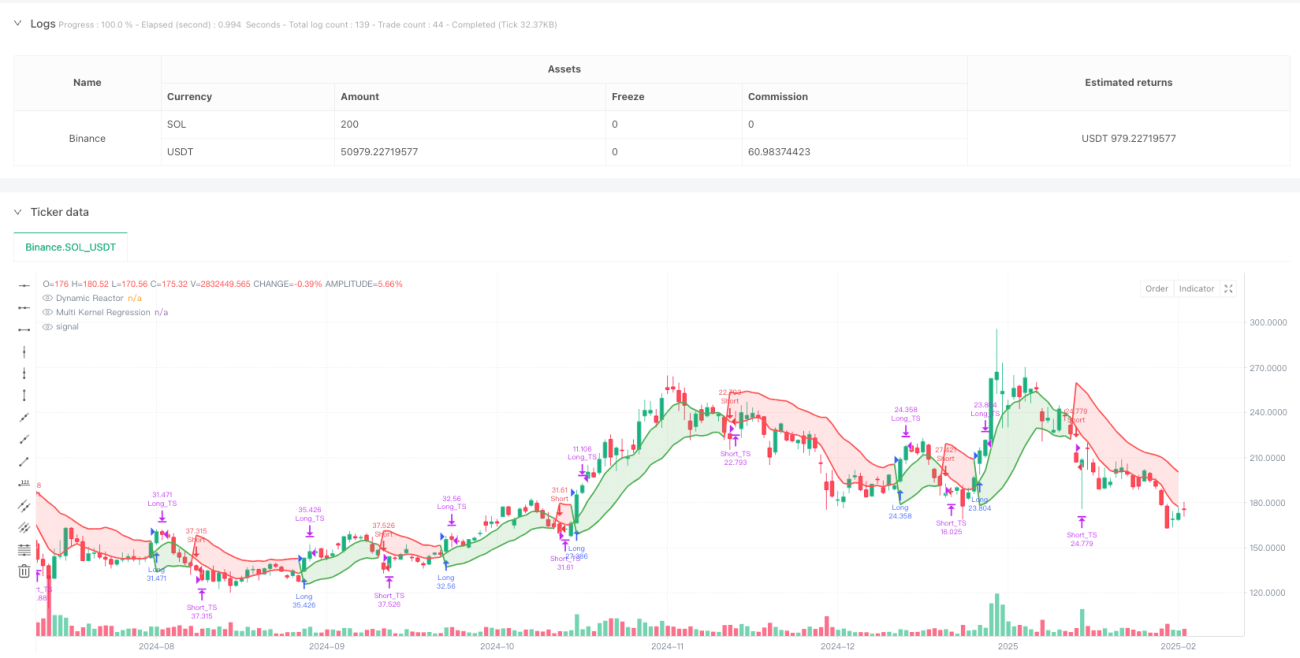
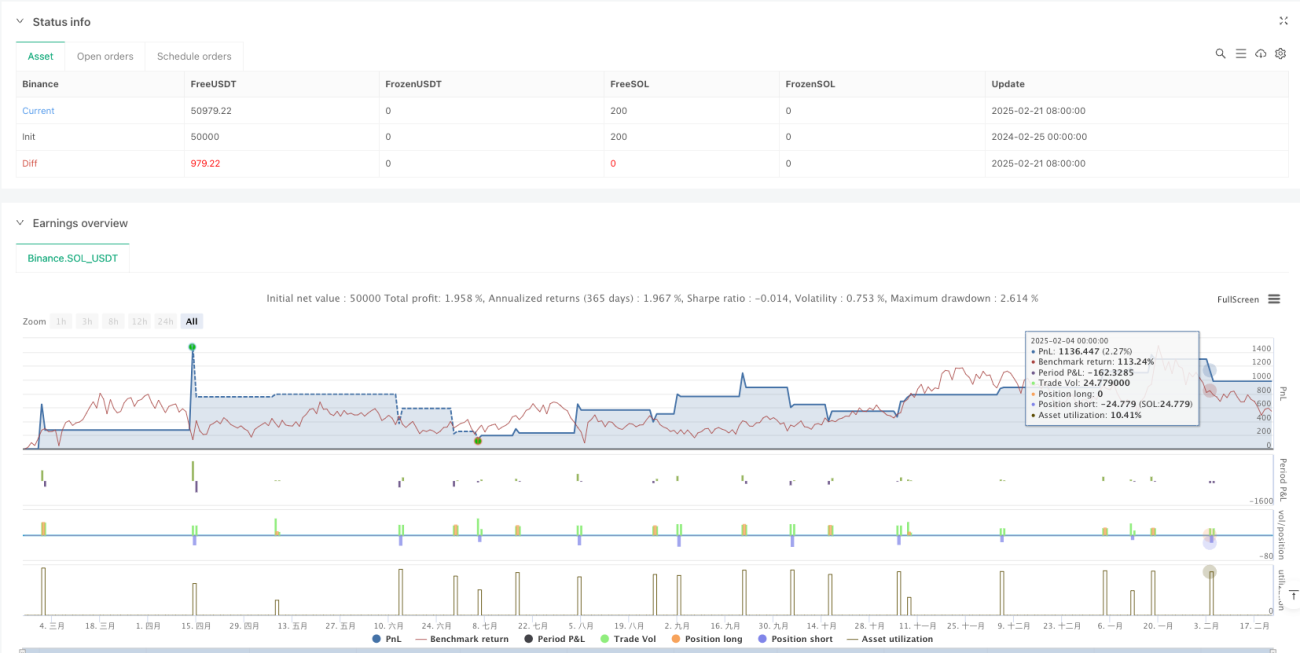
Tổng quan
Chiến lược này là một hệ thống theo dõi xu hướng kết hợp Dynamic Reactor (Bộ phản ứng động) và Multi-Kernel Regression (Hồi quy đa nhân). Nó nắm bắt xu hướng thị trường bằng cách kết hợp kênh ATR, đường trung bình SMA, hồi quy Gaussian kernel và hồi quy Epanechnikov kernel, đồng thời sử dụng chỉ báo RSI để lọc tín hiệu. Chiến lược cũng bao gồm hệ thống quản lý vị thế hoàn chỉnh với các chức năng như dừng lỗ động, nhiều mục tiêu chốt lời và trailing stop.
Nguyên lý chiến lược
Cốt lõi của chiến lược bao gồm hai phần chính. Phần thứ nhất là Dynamic Reactor (DR), xây dựng một kênh giá thích ứng dựa trên ATR và SMA. Độ rộng của kênh được xác định bởi bội số của ATR, còn vị trí kênh điều chỉnh theo sự di chuyển của SMA. Khi giá phá vỡ kênh, hệ thống sẽ cập nhật hướng xu hướng. Phần thứ hai là Multi-Kernel Regression (MKR), kết hợp hai hàm nhân khác nhau là Gaussian kernel và Epanechnikov kernel. Bằng cách thiết lập các tham số băng thông và trọng số khác nhau, hệ thống có thể khớp tốt hơn với biến động giá. Tín hiệu giao dịch được tạo ra từ sự giao cắt giữa đường MKR và đường DR, sau đó được lọc bởi chỉ báo RSI để tránh giao dịch ở vùng quá mua/quá bán.
Ưu điểm chiến lược
- Khả năng thích ứng cao: Nhờ sự kết hợp giữa Dynamic Reactor và Multi-Kernel Regression, chiến lược có thể tự động thích ứng với các môi trường thị trường và điều kiện biến động khác nhau.
- Quản lý rủi ro hoàn chỉnh: Bao gồm nhiều cơ chế kiểm soát rủi ro như dừng lỗ động, chốt lời theo từng phần và trailing stop.
- Chất lượng tín hiệu cao: Nhờ bộ lọc RSI và sự xác nhận giao cắt giữa hai đường, giúp giảm thiểu hiệu quả các tín hiệu nhiễu.
- Hiệu suất tính toán cao: Mặc dù sử dụng thuật toán hồi quy kernel phức tạp, nhưng thông qua tối ưu hóa phương pháp tính toán, đảm bảo hiệu năng thời gian thực của chiến lược.
Rủi ro chiến lược
- Nhạy cảm với tham số: Hiệu quả của chiến lược phụ thuộc nhiều vào việc thiết lập các tham số như bội số ATR, băng thông kernel, v.v. Tham số không phù hợp có thể dẫn đến giao dịch quá mức hoặc bỏ lỡ cơ hội.
- Độ trễ: Do sử dụng đường trung bình động và thuật toán hồi quy, chiến lược có thể có độ trễ nhất định trong điều kiện thị trường biến động nhanh.
- Khả năng thích ứng thị trường: Chiến lược hoạt động tốt trong thị trường xu hướng, nhưng có thể tạo ra nhiều tín hiệu nhiễu trong thị trường đi ngang (sideways).
- Độ phức tạp tính toán: Phần hồi quy đa nhân có độ phức tạp tính toán khá cao, cần chú ý tối ưu hiệu năng trong môi trường giao dịch tần suất cao.
Hướng tối ưu hóa chiến lược
- Tự động hóa tham số: Có thể đưa vào cơ chế thích ứng để điều chỉnh động bội số ATR và băng thông kernel dựa trên biến động thị trường.
- Tối ưu tín hiệu: Cân nhắc bổ sung các chỉ báo phụ trợ như khối lượng giao dịch, mô hình giá, để nâng cao độ tin cậy của tín hiệu.
- Kiểm soát rủi ro: Có thể điều chỉnh động tỷ lệ dừng lỗ và mục tiêu chốt lời dựa trên độ biến động thị trường.
- Lọc thị trường: Thêm mô-đun nhận dạng môi trường thị trường, sử dụng các chiến lược giao dịch khác nhau trong các điều kiện thị trường khác nhau.
Tổng kết
Đây là một hệ thống giao dịch hoàn chỉnh kết hợp các phương pháp thống kê hiện đại và phân tích kỹ thuật truyền thống. Thông qua sự kết hợp sáng tạo giữa Dynamic Reactor và Multi-Kernel Regression, cùng với cơ chế quản lý rủi ro hoàn chỉnh, chiến lược này thể hiện khả năng thích ứng và ổn định tốt. Mặc dù còn một số điểm cần tối ưu, nhưng thông qua cải tiến liên tục và tinh chỉnh tham số, chiến lược này hứa hẹn duy trì hiệu suất ổn định trong các môi trường thị trường khác nhau.
/*backtest
start: 2024-07-20 00:00:00
end: 2025-07-19 08:00:00
period: 1d
basePeriod: 1d
exchanges: [{"eid":"Binance","currency":"ETH_USDT","balance":2000000}]
*/

//@version=5
strategy("DR+MKR Signals – Band SL, Multiple TP & Trailing Stop", overlay=true, default_qty_value=10)

// =====================================================================- 1