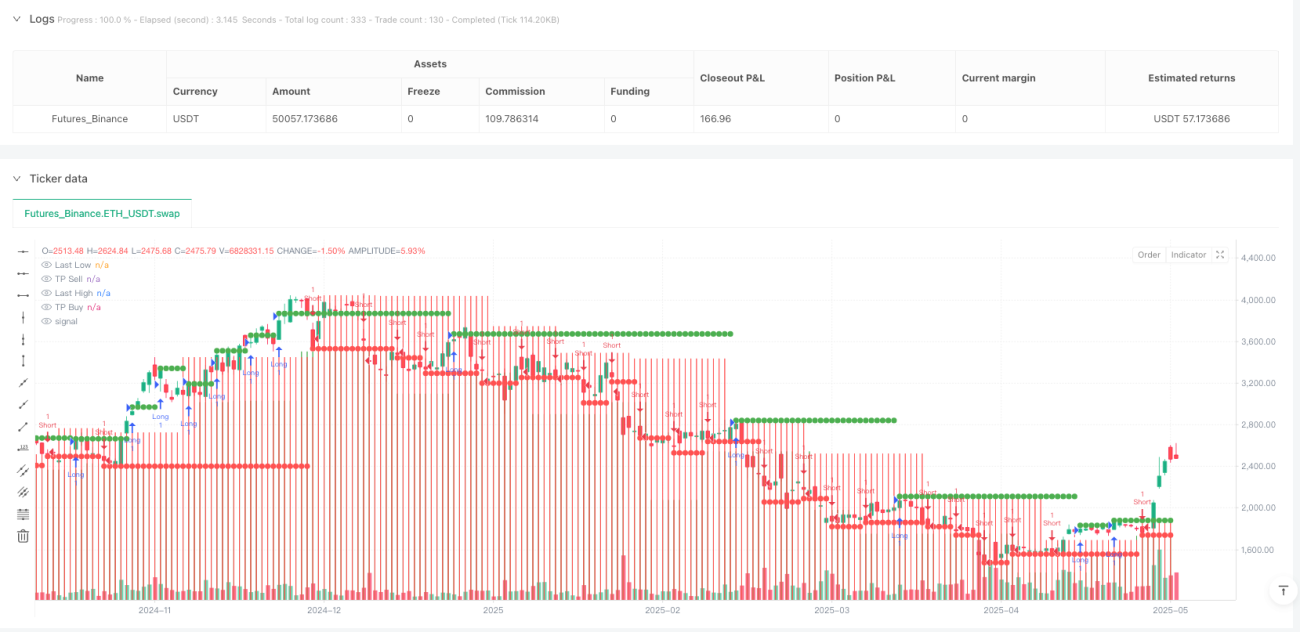
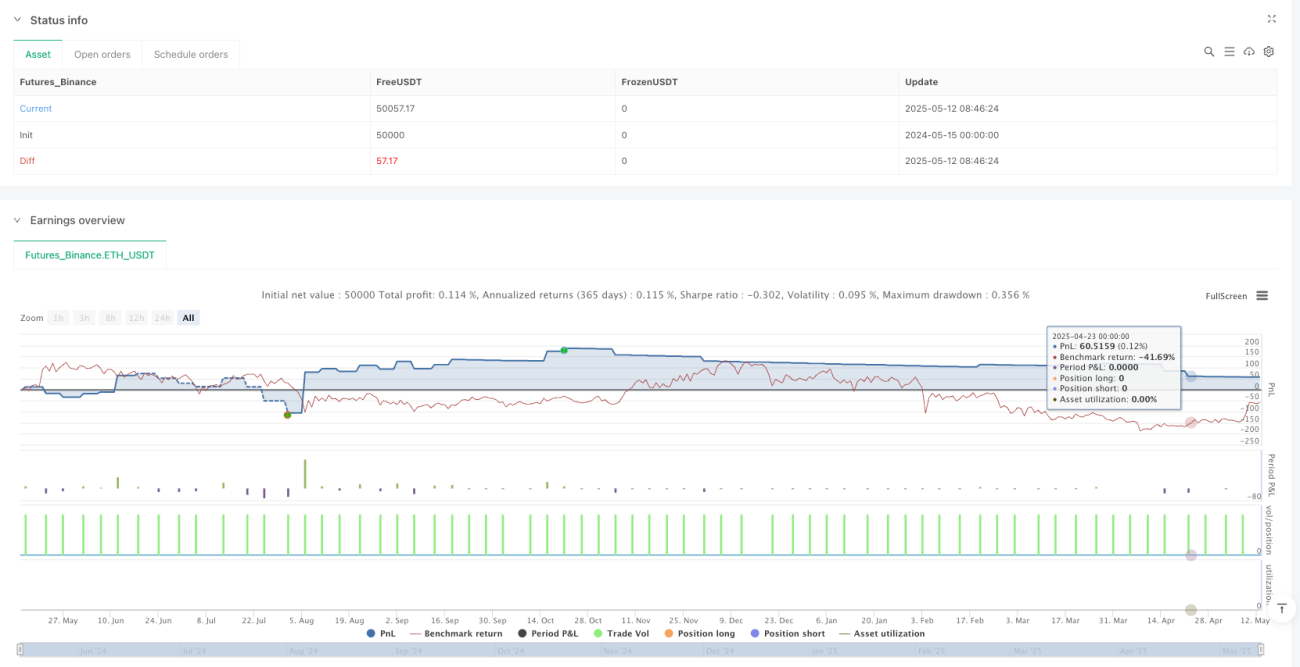
Chiến lược giao dịch động lượng xu hướng đa chu kỳ là một hệ thống giao dịch toàn diện, cung cấp cho các nhà giao dịch một công cụ mạnh mẽ để giúp nắm bắt xu hướng thị trường và giảm thiểu tín hiệu giả mạo bằng cách tích hợp phân tích xu hướng đa chu kỳ, tín hiệu động lượng, xác nhận khối lượng giao dịch và khái niệm tiền thông minh (CHoCH và BOS), cung cấp cho các nhà giao dịch một công cụ mạnh mẽ để giúp nắm bắt xu hướng thị trường và giảm thiểu tín hiệu giả mạo. Thành phần “AI” độc đáo của chiến lược phân tích xu hướng trong nhiều chu kỳ thời gian, cung cấp bảng điều khiển rõ ràng và dễ sử dụng, giúp người mới bắt đầu và các nhà giao dịch có kinh nghiệm dễ sử dụng.
Chiến lược này là một hệ thống giao dịch liên kết được tạo ra bằng cách tích hợp nhiều thành phần:
Phân tích xu hướng đa chu kỳChiến lược sử dụng ba chu kỳ thời gian (thường là 1 giờ, 4 giờ, ngày) để đánh giá xu hướng, sử dụng chỉ số trung bình di chuyển (EMA) và giá trung bình có trọng lượng giao dịch (VWAP). Xu hướng được coi là lạc quan khi giá cao hơn EMA và VWAP; khi giá thấp hơn, nó được coi là đi xuống; nếu không thì trung lập. Chỉ khi xu hướng thời gian cao hơn mà người dùng chọn phù hợp với hướng giao dịch (ví dụ, tín hiệu mua cần xu hướng lạc quan với chu kỳ thời gian cao hơn), tín hiệu sẽ được tạo ra.
Bộ lọc động lượng: đo tỷ lệ phần trăm thay đổi giá giữa các cột liên tiếp và điều chỉnh nó với tỷ lệ dao động để giảm giá (dựa trên phạm vi thực tế trung bình)[ATR) để so sánh. Điều này đảm bảo giao dịch chỉ được thực hiện trong thời gian chuyển động giá đáng kể, lọc các điều kiện động lượng thấp.
Bộ lọc số lượng giao hàng (có thể chọn): Kiểm tra xem khối lượng giao dịch hiện tại có vượt quá mức trung bình dài hạn và hiển thị sự thay đổi khối lượng giao dịch ngắn hạn tích cực. Điều này xác nhận sự tham gia mạnh mẽ của thị trường và giảm nguy cơ phá vỡ giả.
Thử vượt qua bộ lọc (có thể chọn)Yêu cầu giá phá vỡ (mua) hoặc phá vỡ (bán) các điểm cao / thấp gần đây, đảm bảo tín hiệu phù hợp với sự thay đổi cấu trúc thị trường.
Khái niệm tài chính thông minh (CHoCH/BOS):
Bảng điều khiển xu hướng AI: kết hợp xu hướng, động lực và biến động của các khung thời gian khác nhau để tính toán điểm xu hướng. Điểm cao hơn 0,5 cho thấy xu hướng “lên” và thấp hơn -0,5 cho thấy xu hướng “xu hướng xuống”, nếu không thì là “trung lập”. Hiển thị cường độ xu hướng (%), niềm tin AI (dựa trên sự nhất quán của xu hướng) và tổng hợp bối cảnh thị trường của sự khác biệt lưu lượng tích lũy (CVD).
Đường xu hướng độngĐường hỗ trợ và kháng cự được vẽ dựa trên các điểm thấp và cao gần đây trong khoảng thời gian được định nghĩa bởi người dùng (shortTrendPeriod, longTrendPeriod). Các đường này thích nghi với điều kiện thị trường và được tô màu theo cường độ của xu hướng.
Chiến lược giao dịch động lượng theo xu hướng đa chu kỳ có một số ưu điểm đáng chú ý:
Giảm tín hiệu saiChiến lược này giảm thiểu giao dịch trong thị trường biến động hoặc thiếu tin cậy bằng cách yêu cầu xu hướng, động lực, khối lượng giao dịch và sự nhất quán của bộ lọc phá vỡ.
Thích ứng với thị trườngĐộng lực giảm giá dựa trên ATR có thể được điều chỉnh theo động lực biến động, đảm bảo tín hiệu duy trì liên quan trong thị trường xu hướng và thị trường phân đoạn.
Đơn giản hóa việc ra quyết địnhBảng điều khiển AI sẽ tích hợp dữ liệu phức tạp nhiều thời gian thành bảng thân thiện với người dùng, loại bỏ nhu cầu phân tích thủ công.
Sử dụng tiền thông minh: CHoCH và BOS tín hiệu nắm bắt mô hình hành động giá của cơ quan, cung cấp cho các nhà giao dịch lợi thế trong việc nhận ra sự đảo ngược và tiếp tục.
Sự rõ ràng về thị giácChiến lược này giúp các nhà giao dịch hiểu rõ hơn về hành vi của giá cả bằng cách đánh dấu các mức quan trọng, tín hiệu và đường xu hướng.
Kiểm soát rủi roLưu ý: Các mức dừng và mất mát được xác định trước đã tạo ra sự quản lý rủi ro có kỷ luật, điều này rất quan trọng cho sự thành công của giao dịch dài hạn.
Cảnh báo trướcThông qua tín hiệu “sẵn sàng”, các nhà giao dịch có thể được nhắc nhở trước khi thiết lập phát triển đầy đủ, cho phép nhiều thời gian chuẩn bị và lập kế hoạch hơn.
Mặc dù chiến lược này có nhiều ưu điểm, nhưng cũng có một số rủi ro tiềm ẩn:
Lỗ bẫy tối ưu hóa tham số: Các tham số chiến lược tối ưu hóa quá mức có thể dẫn đến sự phù hợp với đường cong, không hoạt động tốt trong điều kiện thị trường trong tương lai. Giải pháp là thực hiện phản hồi rộng rãi trên nhiều thị trường và thời gian để tìm ra một tập hợp tham số vững chắc.
Tín hiệu trì hoãnViệc sử dụng nhiều bộ lọc có thể làm cho tín hiệu bị trì hoãn so với hành động giá, đôi khi bỏ lỡ điểm vào lý tưởng. Giải pháp là điều chỉnh các tham số nhạy cảm hơn với tốc độ thị trường, chẳng hạn như chiều dài trục trục và giá trị động lực.
Nhận ra xu hướng saiTrong các thị trường có biến động cao hoặc không định hướng, đánh giá xu hướng có thể không chính xác. Giải pháp là giảm giao dịch hoặc thêm yêu cầu lọc nghiêm ngặt hơn trong các điều kiện này.
Sự thiếu sót trong quản lý tài chính: Các điểm dừng và dừng cố định có thể không phù hợp với tất cả các điều kiện thị trường. Giải pháp là điều chỉnh chúng thành các giá trị dựa trên ATR để phù hợp với biến động hiện tại.
Năng lực tính toánSự phức tạp của các chiến lược có thể gây ra các vấn đề về hiệu suất trên một số nền tảng, đặc biệt là khi phân tích một lượng lớn dữ liệu lịch sử. Giải pháp là giới hạn phạm vi thời gian tra lại hoặc đơn giản hóa các tính toán không quan trọng.
Dữ liệu phụ thuộcChiến lược này phụ thuộc vào dữ liệu chính xác về nhiều chu kỳ thời gian, có thể không có trong tất cả các môi trường giao dịch. Giải pháp là thực hiện các lựa chọn thay thế đáng tin cậy, như tính toán giá trị cục bộ trong mã.
Ưu tiên đối với thị trường có tính thanh khoản caoChiến lược này có thể tạo ra nhiều tín hiệu sai lệch hơn trong thị trường có tính thanh khoản thấp. Giải pháp là tập trung vào các cặp tiền tệ chính, cổ phiếu được nắm giữ rộng rãi và các loại tiền điện tử chính.
Chiến lược này có thể được tối ưu hóa hơn nữa bằng cách:
Các tham số thích ứng: thực hiện các tham số điều chỉnh tự động, chẳng hạn như tối ưu hóa giá trị giá trị động dựa trên dữ liệu tỷ lệ biến động lịch sử. Điều này có thể cải thiện khả năng thích ứng của chiến lược trong các điều kiện thị trường khác nhau.
Tích hợp học máy: Ứng dụng thuật toán học máy để xác định các tham số tốt nhất hoặc dự đoán hiệu suất chiến lược trong điều kiện thị trường cụ thể. Điều này có thể được thực hiện bằng cách phân tích dữ liệu hiệu suất lịch sử để tăng cường hơn nữa các khía cạnh “AI” của chiến lược.
Chỉ số cảm xúc thị trườngThêm dữ liệu cảm xúc thị trường bên ngoài, chẳng hạn như chỉ số VIX hoặc phân tích cảm xúc truyền thông xã hội, cung cấp bối cảnh rộng hơn cho quyết định giao dịch. Điều này có thể giúp chiến lược tránh giao dịch trong điều kiện thị trường cực đoan.
Bộ lọc thời gianThêm bộ lọc dựa trên mô hình thời gian dao động của thị trường, tránh giao dịch trong thời gian có biến động thấp (ví dụ như giai đoạn giữa phiên châu Á). Điều này có thể làm giảm số lượng tín hiệu chất lượng thấp.
Phân tích tương quanThêm kiểm tra liên quan giữa các tài sản để đảm bảo giao dịch phù hợp với thị trường liên quan (ví dụ: xem xét chỉ số USD khi giao dịch EUR / USD). Điều này có thể cung cấp tín hiệu xác nhận bổ sung.
Tối ưu hóa quản lý tài chính: Thực hiện các mức dừng / mất động dựa trên biến động và thêm các quy tắc quản lý tiền, chẳng hạn như điều chỉnh quy mô vị trí khi tài khoản tăng trưởng. Điều này sẽ cải thiện lợi nhuận điều chỉnh rủi ro dài hạn.
Tối ưu hóa hiệu suất: Cần đơn giản hóa mã, giảm tính toán không cần thiết, đặc biệt là trong việc hiển thị đường xu hướng và biểu đồ, để tăng khả năng đáp ứng của chiến lược trong giao dịch thời gian thực.
Dữ liệu không liên quanChiến lược nâng cao để xử lý dữ liệu bị gián đoạn hoặc mất giá trị một cách thanh lịch hơn, đảm bảo tính bền vững trong điều kiện không mong muốn.
Chiến lược giao dịch động lượng xu hướng đa chu kỳ cung cấp một hệ thống giao dịch toàn diện, kết hợp phân tích kỹ thuật truyền thống, khái niệm tài chính thông minh và phân tích xu hướng được điều khiển bởi AI độc đáo. Sức mạnh của nó nằm ở cơ chế lọc và xác nhận nhiều cấp, đảm bảo chỉ tạo tín hiệu giao dịch trong trường hợp có khả năng cao.
Một khía cạnh đặc biệt sáng tạo của chiến lược này là việc tích hợp thông tin xu hướng nhiều chu kỳ vào một bảng điều khiển trực quan trực quan, cho phép các nhà giao dịch đánh giá nhanh chóng tình trạng thị trường mà không cần phân tích thủ công phức tạp. Khả năng hiển thị các đường kháng cự hỗ trợ động và các mức cấu trúc quan trọng làm tăng thêm sự dễ sử dụng này.
Thông qua sự kết hợp thông minh giữa các khái niệm CHoCH và BOS, chiến lược này có thể nắm bắt những thay đổi tinh tế trong tâm lý thị trường, thường là dấu hiệu cho thấy xu hướng tiếp tục hoặc có khả năng đảo ngược. Việc sử dụng ATR điều chỉnh ngưỡng thấp đảm bảo rằng chiến lược có thể thích ứng với các điều kiện biến động khác nhau, làm cho nó phù hợp với nhiều môi trường thị trường.
Mặc dù có một số rủi ro và hạn chế, nhưng hệ thống đã mạnh mẽ này có thể được tăng cường hơn nữa bằng các biện pháp tối ưu hóa được đề xuất. Áp dụng các nguyên tắc quản lý rủi ro một cách khôn ngoan và điều chỉnh các tham số theo mục tiêu giao dịch cụ thể và khả năng chịu rủi ro, chiến lược này có tiềm năng trở thành một công cụ quý giá trong hộp công cụ của bất kỳ nhà giao dịch nào.
Cuối cùng, giống như tất cả các chiến lược giao dịch, thành công sẽ phụ thuộc vào việc tối ưu hóa các tham số thích hợp, thực hiện kỷ luật, quản lý rủi ro mạnh mẽ và hiểu biết sâu sắc về động lực thị trường.
/*backtest
start: 2024-05-15 00:00:00
end: 2025-05-13 08:00:00
period: 1d
basePeriod: 1d
exchanges: [{"eid":"Futures_Binance","currency":"ETH_USDT"}]
*/
//@version=5
strategy("PowerHouse SwiftEdge AI v2.10 Strategy", overlay=true, calc_on_every_tick=true)
// Inputs med fleksible indstillinger
length = input.int(5, "Pivot Length", minval=1, maxval=20, step=1, tooltip="Number of bars to identify pivot highs and lows.")
momentum_threshold_base = input.float(0.01, "Base Momentum Threshold (%)", minval=0.001, maxval=1.0, step=0.001, tooltip="Base percentage change for signals.")
tp_points = input.int(10, "Take Profit (points)", minval=5, maxval=500, step=5)
sl_points = input.int(10, "Stop Loss (points)", minval=5, maxval=500, step=5)
min_signal_distance = input.int(5, "Min Signal Distance (bars)", minval=1, maxval=50, step=1)
tp_box_height = input.float(0.5, "TP Box Height % (Optional)", minval=0.1, maxval=2.0, step=0.1)
pre_momentum_factor_base = input.float(0.5, "Base Pre-Momentum Factor", minval=0.1, maxval=1.0, step=0.1, tooltip="Base factor for Get Ready signals.")
shortTrendPeriod = input.int(30, title="Short Trend Period", minval=10, maxval=100)
longTrendPeriod = input.int(100, title="Long Trend Period", minval=50, maxval=200)
// Brugerdefinerede filtre
use_momentum_filter = input.bool(true, "Use Momentum Filter", group="Signal Filters", tooltip="Require price change to exceed momentum threshold.")
use_trend_filter = input.bool(true, "Use Higher Timeframe Trend Filter", group="Signal Filters", tooltip="Require alignment with the selected higher timeframe trend.")
higher_tf_choice = input.string("60", "Higher Timeframe", options=["60", "240", "D"], group="Signal Filters", tooltip="Choose the timeframe for the higher timeframe filter.")
use_lower_tf_filter = input.bool(true, "Use Lower Timeframe Filter", group="Signal Filters", tooltip="Prevent signals against the selected lower timeframe trend.")
lower_tf_choice = input.string("60", "Lower Timeframe", options=["60", "240", "D"], group="Signal Filters", tooltip="Choose the timeframe for the lower timeframe filter.")
use_volume_filter = input.bool(false, "Use Volume Filter", group="Signal Filters", tooltip="Require volume above average (optional).")
use_breakout_filter = input.bool(false, "Use Breakout Filter", group="Signal Filters", tooltip="Require price to break previous high/low (optional).")
show_get_ready = input.bool(true, "Show Get Ready Signals", group="Signal Filters", tooltip="Enable or disable Get Ready signals.")
restrict_repeated_signals = input.bool(false, "Restrict Repeated Signals", group="Signal Filters", tooltip="Prevent multiple signals in the same trend direction until trend changes.")
restrict_trend_tf_choice = input.string("60", "Restrict Trend Timeframe", options=["60", "240", "D"], group="Signal Filters", tooltip="Choose the timeframe to check trend for restricting repeated signals.")
enable_ai_analysis = input.bool(true, "Enable AI Market Analysis", group="AI Market Analysis", tooltip="Show AI predictions for future trends across timeframes.")
ai_table_position = input.string("Bottom Center", "AI Market Analysis Table Position", options=["Top Left", "Top Center", "Top Right", "Middle Left", "Middle Center", "Middle Right", "Bottom Left", "Bottom Center", "Bottom Right"], group="AI Market Analysis", tooltip="Choose the position of the AI Market Analysis table.")
// Ekstra inputs til valgfrie filtre
volumeLongPeriod = input.int(50, "Long Volume Period", minval=10, maxval=100, group="Volume Filter Settings")
volumeShortPeriod = input.int(5, "Short Volume Period", minval=1, maxval=20, group="Volume Filter Settings")
breakoutPeriod = input.int(5, "Breakout Period", minval=1, maxval=50, group="Breakout Filter Settings")
// Funktion til at konvertere streng til position
f_getTablePosition(position_string) =>
switch position_string
"Top Left" => position.top_left
"Top Center" => position.top_center
"Top Right" => position.top_right
"Middle Left" => position.middle_left
"Middle Center" => position.middle_center
"Middle Right" => position.middle_right
"Bottom Left" => position.bottom_left
"Bottom Center" => position.bottom_center
"Bottom Right" => position.bottom_right
=> position.middle_right // Standard fallback
// AI-drevet adaptiv signaljustering med ATR
atr_raw = ta.atr(14)
atr = na(atr_raw) and bar_index > 0 ? (high - low) : atr_raw
volatility_factor = atr / close
momentum_threshold = momentum_threshold_base * (1 + volatility_factor * 2)
pre_momentum_factor = pre_momentum_factor_base * (1 - volatility_factor * 0.5)
pre_momentum_threshold = momentum_threshold * pre_momentum_factor
// Raw CVD-beregning
var float raw_cvd = 0.0
delta_volume = close > close[1] ? volume : close < close[1] ? -volume : 0
raw_cvd := raw_cvd + delta_volume
// Volatility Context baseret på absolut CVD
cvd_level = math.abs(raw_cvd) < 10000 ? "Low" : math.abs(raw_cvd) < 50000 ? "Medium" : "High"
cvd_color = raw_cvd > 0 ? color.lime : raw_cvd < 0 ? color.red : color.yellow
// Beregn prisændring (momentum)
price_change = ((close - close[1]) / close[1]) * 100
// Find højder og lavpunkter
pivot_high = ta.pivothigh(high, length, length)
pivot_low = ta.pivotlow(low, length, length)
// Variabler til at gemme seneste højder og lavpunkter
var float last_high = na
var float last_low = na
if not na(pivot_high)
last_high := pivot_high
if not na(pivot_low)
last_low := pivot_low
// Variabler til signalstyring
var float choch_sell_level = na
var float choch_buy_level = na
var float bos_sell_level = na
var float bos_buy_level = na
var float tp_sell_level = na
var float tp_buy_level = na
var int last_signal_bar = -min_signal_distance - 1
var string last_signal = "Neutral"
var int last_trend = 0 // Sporer den sidste trendretning for restrict_repeated_signals
// Multi-tidsramme trendanalyse med robust fallback
// Beregn EMA og VWAP for hver tidsramme
ema60_raw = request.security(syminfo.tickerid, "60", ta.ema(close, 20), lookahead=barmerge.lookahead_on)
vwap60_raw = request.security(syminfo.tickerid, "60", ta.vwap(hlc3), lookahead=barmerge.lookahead_on)
ema240_raw = request.security(syminfo.tickerid, "240", ta.ema(close, 20), lookahead=barmerge.lookahead_on)
vwap240_raw = request.security(syminfo.tickerid, "240", ta.vwap(hlc3), lookahead=barmerge.lookahead_on)
emaD_raw = request.security(syminfo.tickerid, "D", ta.ema(close, 20), lookahead=barmerge.lookahead_on)
vwapD_raw = request.security(syminfo.tickerid, "D", ta.vwap(hlc3), lookahead=barmerge.lookahead_on)
// Lokale EMA og VWAP som fallback
local_ema = ta.ema(close, 20)
local_vwap = ta.vwap(hlc3)
// Fallback for manglende data
ema60 = na(ema60_raw) ? local_ema : ema60_raw
vwap60 = na(vwap60_raw) ? local_vwap : vwap60_raw
ema240 = na(ema240_raw) ? local_ema : ema240_raw
vwap240 = na(vwap240_raw) ? local_vwap : vwap240_raw
emaD = na(emaD_raw) ? local_ema : emaD_raw
vwapD = na(vwapD_raw) ? local_vwap : vwapD_raw
// Trendbestemmelse (1 = op, -1 = ned, 0 = neutral)
trend60 = close > ema60 and close > vwap60 ? 1 : close < ema60 and close < vwap60 ? -1 : 0
trend240 = close > ema240 and close > vwap240 ? 1 : close < ema240 and close < vwap240 ? -1 : 0
trendD = close > emaD and close > vwapD ? 1 : close < emaD and close < vwapD ? -1 : 0
// AI-Trend Strength (-100 til +100)
trend_strength_raw = trend60 + trend240 + trendD
trend_strength = (trend_strength_raw / 3) * 100
// AI Confidence (simuleret succesrate)
var float ai_confidence = 50.0
if trend_strength_raw == 3 or trend_strength_raw == -3
ai_confidence := 90.0
else if trend_strength_raw >= 2 or trend_strength_raw <= -2
ai_confidence := 75.0
else
ai_confidence := 60.0
// Filterbetingelser
// Dynamisk valg af higher timeframe trend (til signalfiltrering)
var int higher_tf_trend = 0
switch higher_tf_choice
"60" => higher_tf_trend := trend60
"240" => higher_tf_trend := trend240
"D" => higher_tf_trend := trendD
bullish_trend_ok = higher_tf_trend == 1
bearish_trend_ok = higher_tf_trend == -1
// Dynamisk valg af lower timeframe trend (til signalfiltrering)
var int lower_tf_trend = 0
switch lower_tf_choice
"60" => lower_tf_trend := trend60
"240" => lower_tf_trend := trend240
"D" => lower_tf_trend := trendD
lower_tf_bullish = lower_tf_trend == 1
lower_tf_bearish = lower_tf_trend == -1
lower_tf_not_neutral = lower_tf_trend != 0
// Dynamisk valg af trend-tidsramme til restrict_repeated_signals
var int restrict_tf_trend = 0
switch restrict_trend_tf_choice
"60" => restrict_tf_trend := trend60
"240" => restrict_tf_trend := trend240
"D" => restrict_tf_trend := trendD
volAvg50 = ta.sma(volume, volumeLongPeriod)
volShort = ta.sma(volume, volumeShortPeriod)
volCondition = volume > volAvg50 and ta.change(volShort) > 0
highestBreakout = ta.highest(high, breakoutPeriod)
lowestBreakout = ta.lowest(low, breakoutPeriod)
// CHoCH og BOS definitioner
choch_sell = ta.crossunder(low, last_high) and close < open
choch_buy = ta.crossover(high, last_low) and close > open
bos_sell = ta.crossunder(low, last_low[1]) and low < last_low[1] and close < open
bos_buy = ta.crossover(high, last_high[1]) and high > last_high[1] and close > open
// Signalbetingelser med valgbare filtre
early_sell_signal = use_momentum_filter ? price_change < -momentum_threshold : true
early_buy_signal = use_momentum_filter ? price_change > momentum_threshold : true
sell_trend_ok = use_trend_filter ? bearish_trend_ok : true
buy_trend_ok = use_trend_filter ? bullish_trend_ok : true
sell_lower_tf_ok = use_lower_tf_filter ? (not lower_tf_bullish and lower_tf_not_neutral) : true
buy_lower_tf_ok = use_lower_tf_filter ? (not lower_tf_bearish and lower_tf_not_neutral) : true
sell_volume_ok = use_volume_filter ? volCondition : true
buy_volume_ok = use_volume_filter ? volCondition : true
sell_breakout_ok = use_breakout_filter ? close < lowestBreakout[1] : true
buy_breakout_ok = use_breakout_filter ? close > highestBreakout[1] : true
// Logik for at begrænse gentagne signaler baseret på restrict_tf_trend
sell_allowed = not restrict_repeated_signals or (last_signal != "Sell" or (last_signal == "Sell" and restrict_tf_trend != last_trend and restrict_tf_trend != -1))
buy_allowed = not restrict_repeated_signals or (last_signal != "Buy" or (last_signal == "Buy" and restrict_tf_trend != last_trend and restrict_tf_trend != 1))
sell_condition = early_sell_signal and (bar_index - last_signal_bar >= min_signal_distance) and sell_trend_ok and sell_lower_tf_ok and sell_volume_ok and sell_breakout_ok and sell_allowed
buy_condition = early_buy_signal and (bar_index - last_signal_bar >= min_signal_distance) and buy_trend_ok and buy_lower_tf_ok and buy_volume_ok and buy_breakout_ok and buy_allowed
get_ready_sell = use_momentum_filter ? (price_change < -pre_momentum_threshold and price_change > -momentum_threshold) : true and (bar_index - last_signal_bar >= min_signal_distance) and sell_trend_ok and sell_lower_tf_ok and sell_volume_ok and sell_breakout_ok
get_ready_buy = use_momentum_filter ? (price_change > pre_momentum_threshold and price_change < momentum_threshold) : true and (bar_index - last_signal_bar >= min_signal_distance) and buy_trend_ok and buy_lower_tf_ok and buy_volume_ok and buy_breakout_ok
// Strategy logic
if buy_condition
strategy.entry("Long", strategy.long)
strategy.exit("TP/SL Long", "Long", limit=close + tp_points, stop=close - sl_points)
label.new(bar_index, low, "Buy", color=color.green, style=label.style_label_up, textcolor=color.white)
tp_buy_level := high + tp_points
last_signal := "Buy"
last_signal_bar := bar_index
last_trend := restrict_tf_trend
if sell_condition
strategy.entry("Short", strategy.short)
strategy.exit("TP/SL Short", "Short", limit=close - tp_points, stop=close + sl_points)
label.new(bar_index, high, "Sell", color=color.red, style=label.style_label_down, textcolor=color.white)
tp_sell_level := low - tp_points
last_signal := "Sell"
last_signal_bar := bar_index
last_trend := restrict_tf_trend
// Plot Get Ready signals
if show_get_ready and get_ready_sell
label.new(bar_index, high, "Get Ready SELL", color=color.orange, style=label.style_label_down, textcolor=color.black, size=size.small)
if show_get_ready and get_ready_buy
label.new(bar_index, low, "Get Ready BUY", color=color.yellow, style=label.style_label_up, textcolor=color.black, size=size.small)
// Plot CHoCH og BOS som fulde linjer med AI-agtige farver
var line choch_sell_line = na
var line choch_buy_line = na
var line bos_sell_line = na
var line bos_buy_line = na
// Trendlinjer med bufferkontrol og AI-laser-look
var line sup = na
var line res = na
if barstate.islast
float lowest_y2 = 60000
int lowest_x2 = 0
float highest_y2 = 0
int highest_x2 = 0
// Begræns lookback til max 2000 bars for at undgå bufferfejl
int maxShortBars = math.min(math.min(shortTrendPeriod, bar_index), 2000)
for i = 1 to maxShortBars
if low[i] < lowest_y2
lowest_y2 := low[i]
lowest_x2 := i
if high[i] > highest_y2
highest_y2 := high[i]
highest_x2 := i
float lowest_y1 = 60000
int lowest_x1 = 0
float highest_y1 = 0
int highest_x1 = 0
// Begræns lookback til max 2000 bars for at undgå bufferfejl
int maxLongBars = math.min(math.min(longTrendPeriod, bar_index), 2000)
for j = shortTrendPeriod + 1 to maxLongBars
if low[j] < lowest_y1
lowest_y1 := low[j]
lowest_x1 := j
if high[j] > highest_y1
highest_y1 := high[j]
highest_x1 := j
int trendStrength = trend_strength_raw
// Plot niveauer
plot(choch_sell_level, title="Last High at CHoCH", color=color.aqua, style=plot.style_circles, linewidth=1, trackprice=false)
plot(choch_buy_level, title="Last Low at CHoCH", color=color.lime, style=plot.style_circles, linewidth=1, trackprice=false)
plot(bos_sell_level, title="Last Low at BOS", color=color.fuchsia, style=plot.style_circles, linewidth=1, trackprice=false)
plot(bos_buy_level, title="Last High at BOS", color=color.teal, style=plot.style_circles, linewidth=1, trackprice=false)
plot(tp_sell_level, title="TP Sell", color=color.red, style=plot.style_circles, linewidth=1, trackprice=false)
plot(tp_buy_level, title="TP Buy", color=color.green, style=plot.style_circles, linewidth=1, trackprice=false)
plot(last_high, title="Last High", color=color.red, style=plot.style_histogram, linewidth=1, trackprice=true)
plot(last_low, title="Last Low", color=color.green, style=plot.style_histogram, linewidth=1, trackprice=true)
// AI Markedsanalyse - Beregn data uanset betingelse
momentum_1h = request.security(syminfo.tickerid, "60", close - close[3], lookahead=barmerge.lookahead_on)
momentum_4h = request.security(syminfo.tickerid, "240", close - close[3], lookahead=barmerge.lookahead_on)
momentum_d = request.security(syminfo.tickerid, "D", close - close[3], lookahead=barmerge.lookahead_on)
// Beregn ATR og SMA(ATR) for hver tidsramme
atr_1h = request.security(syminfo.tickerid, "60", ta.atr(14), lookahead=barmerge.lookahead_on)
atr_4h = request.security(syminfo.tickerid, "240", ta.atr(14), lookahead=barmerge.lookahead_on)
atr_d = request.security(syminfo.tickerid, "D", ta.atr(14), lookahead=barmerge.lookahead_on)
sma_atr_1h = request.security(syminfo.tickerid, "60", ta.sma(ta.atr(14), 20), lookahead=barmerge.lookahead_on)
sma_atr_4h = request.security(syminfo.tickerid, "240", ta.sma(ta.atr(14), 20), lookahead=barmerge.lookahead_on)
sma_atr_d = request.security(syminfo.tickerid, "D", ta.sma(ta.atr(14), 20), lookahead=barmerge.lookahead_on)
// Lokale ATR og SMA(ATR) som fallback
local_atr = ta.atr(14)
local_sma_atr = ta.sma(ta.atr(14), 20)
// Fallback for manglende data
volatility_1h = na(atr_1h) ? local_atr : atr_1h
volatility_4h = na(atr_4h) ? local_atr : atr_4h
volatility_d = na(atr_d) ? local_atr : atr_d
volatility_avg_1h = na(sma_atr_1h) ? local_sma_atr : sma_atr_1h
volatility_avg_4h = na(sma_atr_4h) ? local_sma_atr : sma_atr_4h
volatility_avg_d = na(sma_atr_d) ? local_sma_atr : sma_atr_d
momentum_1h := na(momentum_1h) ? 0 : momentum_1h
momentum_4h := na(momentum_4h) ? 0 : momentum_4h
momentum_d := na(momentum_d) ? 0 : momentum_d
// Analyse baseret på trend, momentum og volatilitet
score_1h = trend60 + (momentum_1h > 0 ? 0.5 : momentum_1h < 0 ? -0.5 : 0) + (volatility_1h > volatility_avg_1h ? 0.5 : 0)
score_4h = trend240 + (momentum_4h > 0 ? 0.5 : momentum_4h < 0 ? -0.5 : 0) + (volatility_4h > volatility_avg_4h ? 0.5 : 0)
score_d = trendD + (momentum_d > 0 ? 0.5 : momentum_d < 0 ? -0.5 : 0) + (volatility_d > volatility_avg_d ? 0.5 : 0)
// Forudsigelser
pred_1h = score_1h > 0.5 ? "Up" : score_1h < -0.5 ? "Down" : "Neutral"
pred_4h = score_4h > 0.5 ? "Up" : score_4h < -0.5 ? "Down" : "Neutral"
pred_d = score_d > 0.5 ? "Up" : score_d < -0.5 ? "Down" : "Neutral"
// Futuristisk AI-Trend Dashboard
var table trendTable = table.new(position.top_right, columns=2, rows=6, bgcolor=color.new(color.black, 50), border_width=2, border_color=color.new(color.teal, 20))
table.cell(trendTable, 0, 0, "AI-Trend Matrix v2.10", text_color=color.new(color.aqua, 0), bgcolor=color.new(color.navy, 60))
table.cell(trendTable, 1, 0, "", bgcolor=color.new(color.navy, 60))
table.merge_cells(trendTable, 0, 0, 1, 0)
table.cell(trendTable, 0, 1, "Trend Strength", text_color=color.white)
table.cell(trendTable, 1, 1, str.tostring(math.round(trend_strength)), text_color=trend_strength > 0 ? color.rgb(0, math.min(255, trend_strength * 2.55), 0) : color.rgb(math.min(255, math.abs(trend_strength) * 2.55), 0, 0))
table.cell(trendTable, 0, 2, "AI Confidence", text_color=color.white)
table.cell(trendTable, 1, 2, str.tostring(ai_confidence) + "%", text_color=color.teal)
table.cell(trendTable, 0, 3, "AI Calibration", text_color=color.white)
table.cell(trendTable, 1, 3, "CVD: " + str.tostring(math.round(raw_cvd)) + " (" + cvd_level + ")", text_color=cvd_color)
table.cell(trendTable, 0, 4, "1H", text_color=color.white)
table.cell(trendTable, 1, 4, trend60 == 1 ? "Up" : trend60 == -1 ? "Down" : "Neutral", text_color=trend60 == 1 ? color.lime : trend60 == -1 ? color.fuchsia : color.yellow)
table.cell(trendTable, 0, 5, "4H", text_color=color.white)
table.cell(trendTable, 1, 5, trend240 == 1 ? "Up" : trend240 == -1 ? "Down" : "Neutral", text_color=trend240 == 1 ? color.lime : trend240 == -1 ? color.fuchsia : color.yellow)
// Tabel for AI Markedsanalyse
if enable_ai_analysis
var table ai_table = table.new(f_getTablePosition(ai_table_position), columns=4, rows=2, bgcolor=color.new(color.black, 50), border_width=2, border_color=color.new(color.teal, 20))
table.cell(ai_table, 0, 0, "AI Market Analysis", text_color=color.new(color.aqua, 0), bgcolor=color.new(color.navy, 60))
table.cell(ai_table, 1, 0, "1H", text_color=color.white)
table.cell(ai_table, 2, 0, "4H", text_color=color.white)
table.cell(ai_table, 3, 0, "1D", text_color=color.white)
table.cell(ai_table, 0, 1, "Prediction", text_color=color.white)
table.cell(ai_table, 1, 1, pred_1h, text_color=pred_1h == "Up" ? color.lime : pred_1h == "Down" ? color.fuchsia : color.yellow)
table.cell(ai_table, 2, 1, pred_4h, text_color=pred_4h == "Up" ? color.lime : pred_4h == "Down" ? color.fuchsia : color.yellow)
table.cell(ai_table, 3, 1, pred_d, text_color=pred_d == "Up" ? color.lime : pred_d == "Down" ? color.fuchsia : color.yellow)
// Debug alerts for null data
if na(ema60) or na(vwap60)
alert("Warning: 60-minute timeframe data is null!", alert.freq_once_per_bar)
if na(ema240) or na(vwap240)
alert("Warning: 240-minute timeframe data is null!", alert.freq_once_per_bar)
if na(emaD) or na(vwapD)
alert("Warning: Daily timeframe data is null!", alert.freq_once_per_bar)