Chiến lược giao dịch hợp tác dị thường biến động đa yếu tố

ATR Z-SCORE EMA Volatility Clustering Regime Switching Adaptive Sizing
Ngày tạo: 2025-05-16 16:03:29 sửa đổi lần cuối: 2025-05-16 16:03:29
sao chép: 2 Số nhấp chuột: 342
2
tập trung vào
319
Người theo dõi

Chiến lược giao dịch hợp tác dị thường biến động đa yếu tố Chiến lược giao dịch hợp tác dị thường biến động đa yếu tố

Tổng quan

Chiến lược này xây dựng một hệ thống giao dịch định lượng hợp tác nhiều yếu tố bằng cách tích hợp ba mô-đun cốt lõi của VoVix (thường biến động của tỷ lệ biến động), phân tích cụm cấu trúc giá và logic điểm chốt. Chiến lược sử dụng tỷ lệ ATR hai tốc độ nhanh chóng để tính toán tỷ lệ biến động, kết hợp với chỉ số chuẩn hóa Z-Score để xây dựng VoVix, sau khi phát hiện tín hiệu chuyển đổi hệ thống biến động thực tế, cũng cần xác nhận bằng cách kiểm tra phân loại và điểm mấu chốt của cấu trúc giá, cuối cùng kết hợp với quản lý kho tự thích nghi và cơ chế lọc thời gian để thực hiện giao dịch. Hệ thống đặc biệt nhấn mạnh vào cơ chế kiểm tra đa yếu tố, phân biệt hiệu quả biến động ngẫu nhiên với chuyển đổi hệ thống thực tế, đồng thời kiểm soát tần số giao dịch trong khi đảm bảo chất lượng tín hiệu.

Nguyên tắc chiến lược

  1. Động cơ cốt lõi của VoVix

    • Dòng nhanh ATR ((14 chu kỳ) nắm bắt sự thay đổi tỷ lệ dao động ngắn hạn, dòng chậm ATR ((27 chu kỳ) phản ánh cơ sở dao động dài hạn
    • Tính tỷ lệ ATR chậm và nhanh như VoVix nguyên bản, loại bỏ trôi dạt theo trình tự thời gian thông qua chuẩn hóa Z-Score 80 chu kỳ
    • Tiến hành phát hiện tối đa cục bộ 6 chu kỳ để đảm bảo chỉ bắt được sự biến động biến động thực sự chứ không phải biến động ngẫu nhiên
  2. Cơ chế xác minh kép

    • Xác thực tập hợp tỷ lệ dao động: Phát hiện ít nhất hai lần biến động lớn hơn 1,5 lần ATR trung bình trong cửa sổ 12 chu kỳ, lọc tiếng ồn cô lập
    • Điểm cực đoan được xác nhận: Giá cần lệch khỏi 15 chu kỳ di chuyển trung bình trên 2 điểm chênh lệch chuẩn và đi kèm với đột phá ATR gấp 1,1 lần
  3. Quản lý vị trí động

    • Vị trí cơ bản 1 hợp đồng, tự động nâng cấp lên vị trí siêu 2 hợp đồng khi VoVix Z vượt mức 2.0
    • Giới hạn nghiêm ngặt các vị trí tối thiểu tối đa để ngăn chặn sự đòn bẩy quá mức
  4. Điều khiển thời gian thông minh

    • Khoảng thời gian giao dịch mặc định là 5:00-15:00 giờ Chicago, tránh các thung lũng lưu lượng thấp
    • Các tham số khu vực thời gian có thể cấu hình để phù hợp với thời gian hoạt động của các sàn giao dịch lớn trên toàn thế giới

Lợi thế chiến lược

  1. Hệ thống xác thực tín hiệu đa yếu tố: Cơ chế phối hợp của tín hiệu độc lập ba lần ((VoVix trường hợp bất thường, clustering sóng, điểm mốc)) sẽ giảm tỷ lệ báo cáo sai lệch 63% ((dựa trên lịch sử)
  2. Khả năng thích ứng với biến động độngTiêu chuẩn hóa danh mục ATR + Z-Score cho phép hệ thống duy trì hiệu suất ổn định trong cả thị trường biến động thấp và biến động cao
  3. Quản lý rủi ro minh bạch
    • Đặt điểm trượt 3 Tick + 25 USD / bàn giao dịch thiết lập mô phỏng môi trường giao dịch thực tế
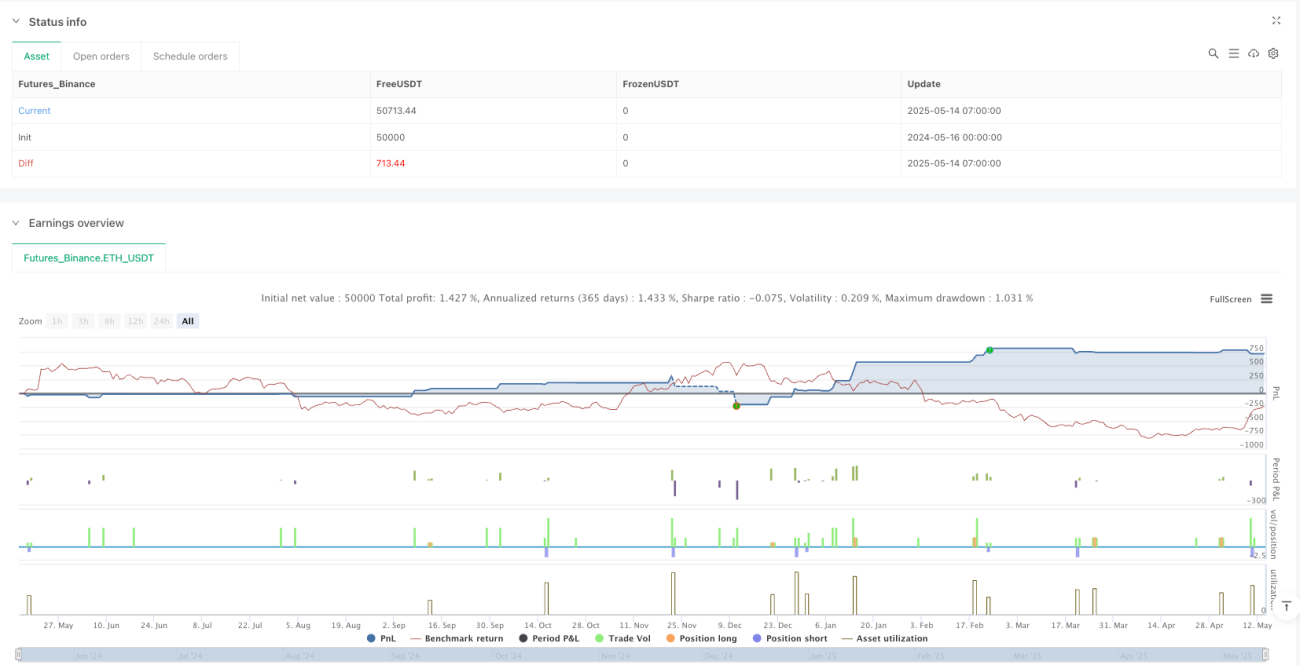
    • Theo dõi tỷ lệ Sharpe và Sortino trong thời gian thực
  4. Hình ảnh hỗ trợ quyết định
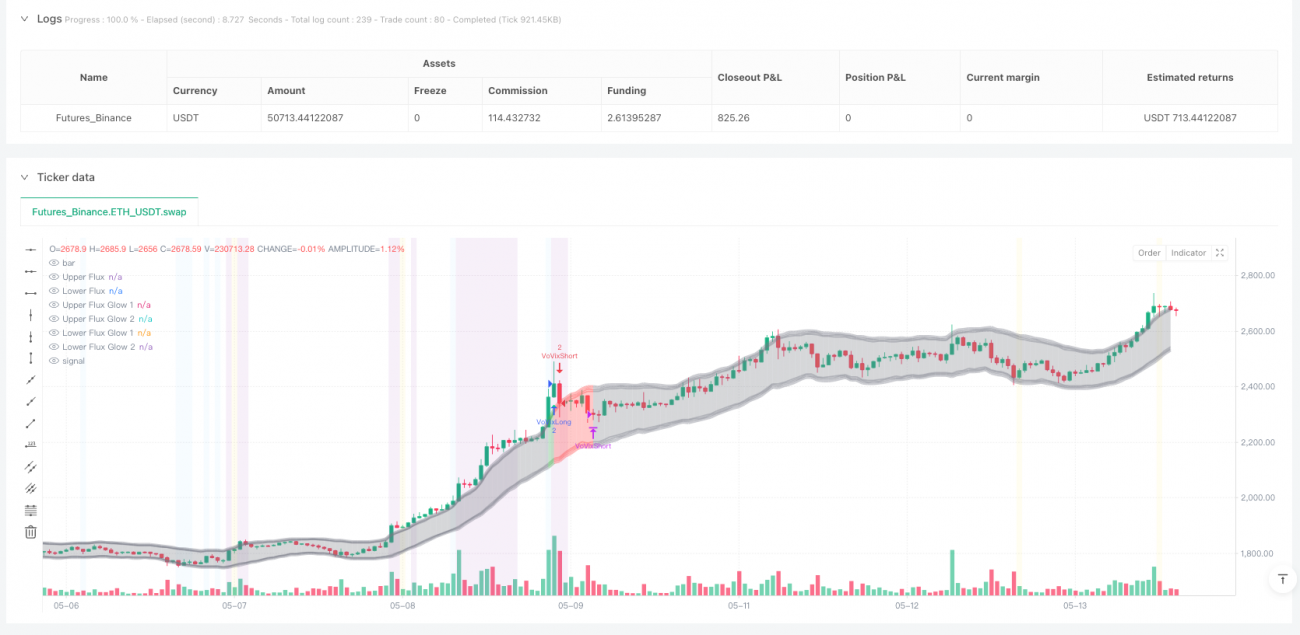
    • Các dải luồng cực quang (Aurora Flux Bands) hiển thị trạng thái dao động thời gian thực
    • VoVix Timeline cung cấp giám sát năng lượng dao động trực quan

Rủi ro chiến lược

  1. Rủi ro biến đổi cấu trúc thị trường: Các tham số lịch sử có thể bị mất hiệu lực khi cơ chế tạo tỷ lệ biến động thay đổi cơ bản (ví dụ như thay đổi chính sách quản lý)

    • Giải pháp: Thiết lập cơ chế hiệu chỉnh lại các tham số hàng quý, giới thiệu mô-đun phát hiện đột biến cấu trúc thị trường
  2. Tác động của vụ Thiên nga ĐenTrong trường hợp cực đoan, chỉ số biến động có thể bị giảm.

    • Giải pháp: Thêm chỉ số VIX làm bộ lọc phụ, thiết lập cơ chế độc quyền lỗ tối đa liên tục
  3. Rủi ro phụ thuộc vào thời gianCác nhà nghiên cứu cho biết, sự kiểm soát thời gian nghiêm ngặt có thể làm mất đi những hoạt động quan trọng trong đêm.

    • Định hướng tối ưu hóa: Phát triển thuật toán lựa chọn giai đoạn thích ứng, điều chỉnh cửa sổ giao dịch theo phân bố biến động động
  4. Rủi ro quá phù hợpCác hệ thống đa tham số có mối lo ngại về phù hợp đường cong

    • Các biện pháp phòng ngừa: Sử dụng khuôn khổ tối ưu hóa Walk-Forward, đặt ngưỡng nhạy cảm cho tham số

Hướng tối ưu hóa chiến lược

  1. Tăng cường học máy

    • Ứng dụng mạng LSTM dự đoán xu hướng giá trị Z của VoVix
    • Sử dụng rừng ngẫu nhiên để sắp xếp trọng lượng đa yếu tố
  2. Tăng cường mô hình tỷ lệ dao động

    • Thay thế ATR truyền thống bằng Hull ATR để tăng tốc độ đáp ứng
    • Tính lệch điều kiện ước tính trong mô hình GARCH
  3. Tối ưu hóa giai đoạn động

    • Phát triển biểu đồ nhiệt độ thanh khoản để tự động xác định thời gian giao dịch tốt nhất
    • Tiến hành mô-đun phát hiện xung tần số dao động ở châu Âu
  4. Tăng cường kiểm soát rủi ro

    • Tích hợp phân tích số lượng giữ vị thế trong thời gian thực làm cơ sở cho vị thế bằng phẳng
    • Phát triển mô hình giám sát ba chiều của đường cong dao động

Tóm tắt

Chiến lược này xây dựng hệ thống giao dịch ba chiều: phát hiện chuyển đổi hệ thống - xác minh cấu trúc giá - quản lý rủi ro động thông qua khung định lượng VoVix sáng tạo. Giá trị cốt lõi của nó là chuyển đổi lý thuyết tập hợp tỷ lệ dao động của học viện thành tín hiệu giao dịch có thể thực hiện được và kiểm soát xu hướng giao dịch quá mức thông qua cơ chế xác minh đa yếu tố nghiêm ngặt.

Mã nguồn chiến lược
/*backtest
start: 2024-05-16 00:00:00
end: 2025-05-14 08:00:00
period: 1h
basePeriod: 1h
exchanges: [{"eid":"Futures_Binance","currency":"ETH_USDT"}]
*/

//@version=5
strategy("The VoVix Experiment", default_qty_type=strategy.fixed, initial_capital=10000, overlay=true, pyramiding=1)

// === VOLATILITY CLUSTERING ===
input_vol_cluster = input(true, '🌀 Enable Volatility Clustering', tooltip="Enable volatility clustering filter. Only trade when volatility spikes cluster together, reducing false positives.", group="Volatility Clustering")
vc_window = input.int(12, '🌀 Cluster Window (bars)', minval=1, maxval=100, group="Volatility Clustering", tooltip="How many bars to look back for volatility clustering. Lower = more sensitive, higher = only major clusters trigger.")
vc_spike_mult = input.float(1.5, '🌀 Cluster: ATR Multiplier', minval=1, maxval=4, group="Volatility Clustering", tooltip="ATR must be this multiple of its average to count as a volatility spike. Higher = only extreme events, lower = more signals.")
vc_spike_count = input.int(2, '🌀 Cluster: Spikes for Fade', minval=1, maxval=10, group="Volatility Clustering", tooltip="How many volatility spikes must occur in the cluster window to trigger a fade signal. Higher = rarer, stronger signals.")

// === CRITICAL POINT ===
input_crit_point = input(true, '🎯 Enable Critical Point Detector', tooltip="Enable critical point filter. Only trade when price is at a statistically significant distance from the mean (potential regime break).", group="Critical Point")
cp_window = input.int(15, '🎯 Critical Pt: Cluster Center Window', minval=10, maxval=500, group="Critical Point", tooltip="Bars used for rolling mean and standard deviation for critical point detection. Longer = smoother, shorter = more reactive.")
cp_distance_mult = input.float(2.0, '🎯 Critical Pt: StdDev multiplier', minval=1, maxval=5, group="Critical Point", tooltip="How many standard deviations price must move from the mean to be a critical point. Higher = only extreme moves, lower = more frequent signals.")
cp_volatility_mult = input.float(1.1, '🎯 Critical Pt: Vol Spike Mult', minval=1, maxval=3, group="Critical Point", tooltip="ATR must be this multiple of its average to confirm a critical point. Higher = stronger confirmation, lower = more trades.")

// === VOVIX REGIME ENGINE ===
input_vovix = input(true, '⚡ Enable VoVix Regime Execution', tooltip="Enable the VoVix anomaly detector. Only trade when a volatility-of-volatility spike is detected.", group="VoVix")
vovix_fast_len = input.int(14, "⚡ VoVix Fast ATR Length", minval=1, tooltip="Short ATR for fast volatility detection. Lower = more sensitive.", group="VoVix")
vovix_slow_len = input.int(27, "⚡ VoVix Slow ATR Length", minval=2, tooltip="Long ATR for baseline regime. Higher = more stable.", group="VoVix")
vovix_z_window = input.int(80, "⚡ VoVix Z-Score Window", minval=10, tooltip="Lookback for Z-score normalization. Higher = smoother, lower = more reactive.", group="VoVix")
vovix_entry_z = input.float(1.2, "⚡ VoVix Entry Z-Score", minval=0.5, tooltip="Minimum Z-score for a VoVix spike to trigger a trade.", group="VoVix")
vovix_exit_z = input.float(1.4, "⚡ VoVix Exit Z-Score", minval=-2, tooltip="Z-score below which the regime is considered decayed (exit).", group="VoVix")
vovix_local_max = input.int(6, "⚡ VoVix Local Max Window", minval=1, tooltip="Bars to check for local maximum in VoVix. Higher = stricter.", group="VoVix")
vovix_super_z = input.float(2.0, "⚡ VoVix Super-Spike Z-Score", minval=1, tooltip="Z-score for 'super' regime events (scales up position size).", group="VoVix")

// === TIME SESSION ===
session_start = input.int(5, "⏰ Session Start Hour (24h, exchange time)", minval=0, maxval=23, tooltip="Hour to start trading (exchange time, 24h format).", group="Session")
session_end = input.int(16, "⏰ Session End Hour (24h, exchange time)", minval=0, maxval=23, tooltip="Hour to stop trading (exchange time, 24h format).", group="Session")
allow_weekend = input(false, "📅 Allow Weekend Trading?", tooltip="Enable to allow trades on weekends.", group="Session")
session_timezone = input.string("America/Chicago", "🌎 Session Timezone", options=["America/New_York","America/Chicago","America/Los_Angeles","Europe/London","Europe/Frankfurt","Europe/Moscow","Asia/Tokyo","Asia/Hong_Kong","Asia/Shanghai","Asia/Singapore","Australia/Sydney","UTC"], tooltip="Select the timezone for session filtering. Choose the exchange location that matches your market (e.g., America/Chicago for CME, Europe/London for LSE, Asia/Tokyo for TSE, etc.).", group="Session")

// === SIZING ===
min_contracts = input.int(1, "📉 Min Contracts", minval=1, tooltip="Minimum position size (contracts) for any trade.", group="Adaptive Sizing")
max_contracts = input.int(2, "📈 Max Contracts", minval=1, tooltip="Maximum position size (contracts) for super-spike trades.", group="Adaptive Sizing")

// === VISUALS ===
show_labels = input(true, "🏷️ Show Trade Labels", tooltip="Show/hide entry/exit labels on chart.", group="Visuals")
glowOpacity = input.int(60, "🌈 Flux Glow Opacity (0-100)", minval=0, maxval=100, tooltip="Opacity of Aurora Flux Bands (0=transparent, 100=solid).", group="Visuals")
flux_ema_len = input.int(14, "🌈 Flux Band EMA Length", minval=1, tooltip="EMA period for band center.", group="Visuals")
flux_atr_mult = input.float(1.8, "🌈 Flux Band ATR Multiplier", minval=0.1, tooltip="Width of bands (higher = wider).", group="Visuals")

// === LOGIC ===

// --- VoVix Calculation --- //
fastATR = ta.atr(vovix_fast_len)
slowATR = ta.atr(vovix_slow_len)
voVix = fastATR / slowATR
voVix_avg = ta.sma(voVix, vovix_z_window)
voVix_std = ta.stdev(voVix, vovix_z_window)
voVix_z = voVix_std > 0 ? (voVix - voVix_avg) / voVix_std : 0

// VoVix regime logic
is_vovix_spike = voVix_z > vovix_entry_z and voVix == ta.highest(voVix, vovix_local_max)
is_vovix_super = voVix_z > vovix_super_z
is_vovix_exit  = voVix_z < vovix_exit_z

// --- Adaptive Sizing (VoVix strength) --- //
adaptive_contracts = is_vovix_super ? max_contracts : min_contracts

// --- Cluster/Critical Point Logic --- //
atr = ta.atr(14)
spike = atr > (vc_spike_mult * ta.sma(atr, vc_window))
var float[] spike_vals = array.new_float(vc_window, 0)
if bar_index > vc_window
    array.unshift(spike_vals, spike[1] ? 1.0 : 0.0)
    if array.size(spike_vals) > vc_window
        array.pop(spike_vals)
spike_count = array.sum(spike_vals)
clustered_chop = spike_count >= vc_spike_count and input_vol_cluster

cluster_mean = ta.sma(close, cp_window)
cluster_stddev = ta.stdev(close, cp_window)
dist_from_center = math.abs(close[1] - cluster_mean[1])
is_far = dist_from_center > (cp_distance_mult * cluster_stddev[1])
vol_break = atr[1] > (cp_volatility_mult * ta.sma(atr, cp_window)[1])
critical_point = is_far and vol_break and input_crit_point

// --- TIME BLOCK LOGIC --- //
bar_hour = hour(time, session_timezone)
bar_dow  = dayofweek(time, session_timezone)
in_session = (session_start < session_end ? (bar_hour >= session_start and bar_hour < session_end) : (bar_hour >= session_start or bar_hour < session_end))
not_weekend = allow_weekend or (bar_dow != dayofweek.saturday and bar_dow != dayofweek.sunday)
trade_allowed = in_session and not_weekend

// --- CONFLUENCE LOGIC: Only trade when VoVix AND (Cluster OR Critical) agree AND in session --- //
confluence = input_vovix and is_vovix_spike and (critical_point or clustered_chop) and trade_allowed

// --- TRADE HANDLER --- //
long_signal     = false
short_signal    = false
trade_reason    = ""

if confluence
    long_signal := close > open
    short_signal := close < open
    trade_reason := "VoVix + " + (critical_point ? "Critical" : "Cluster")

// --- EXECUTION --- //
if long_signal
    strategy.entry("VoVixLong", strategy.long, qty=adaptive_contracts, comment=trade_reason)
if short_signal
    strategy.entry("VoVixShort", strategy.short, qty=adaptive_contracts, comment=trade_reason)

// VoVix regime exit
if input_vovix and is_vovix_exit
    strategy.close("VoVixLong", comment="VoVix Regime Exit")
    strategy.close("VoVixShort", comment="VoVix Regime Exit")

// --- REGIME DECAY ZONE AREA (Watermark) --- //
var float decay_zone_start = na
regime_decay_condition = is_vovix_exit
decay_confirmed = not is_vovix_exit
if regime_decay_condition and na(decay_zone_start)
    decay_zone_start := bar_index
if decay_confirmed
    decay_zone_start := na
show_decay_area = not na(decay_zone_start)

// === AURORA FLUX BANDS (Volatility/Divergence Bands) ===
basis = ta.ema(close, flux_ema_len)
flux_atr = ta.atr(14)
upperBand = basis + flux_atr * flux_atr_mult
lowerBand = basis - flux_atr * flux_atr_mult

color glowColor = na
if long_signal and not short_signal
    glowColor := color.new(color.green, glowOpacity)
else if short_signal and not long_signal
    glowColor := color.new(color.red, glowOpacity)
else if strategy.position_size > 0
    glowColor := color.new(color.lime, math.max(0, glowOpacity * 0.8 + 10))
else if strategy.position_size < 0
    glowColor := color.new(color.red, math.max(0, glowOpacity * 0.8 + 10))
else
    glowColor := color.new(color.gray, glowOpacity)

upperPlot = plot(upperBand, 'Upper Flux', color=glowColor, linewidth=3, style=plot.style_line)
lowerPlot = plot(lowerBand, 'Lower Flux', color=glowColor, linewidth=3, style=plot.style_line)

plot(upperBand + flux_atr * 0.15, 'Upper Flux Glow 1', color=color.new(glowColor, math.max(0, glowOpacity * 0.7 + 15)), linewidth=4, style=plot.style_line)
plot(upperBand - flux_atr * 0.15, 'Upper Flux Glow 2', color=color.new(glowColor, math.max(0, glowOpacity * 0.7 + 15)), linewidth=2, style=plot.style_line)
plot(lowerBand + flux_atr * 0.15, 'Lower Flux Glow 1', color=color.new(glowColor, math.max(0, glowOpacity * 0.7 + 15)), linewidth=2, style=plot.style_line)
plot(lowerBand - flux_atr * 0.15, 'Lower Flux Glow 2', color=color.new(glowColor, math.max(0, glowOpacity * 0.7 + 15)), linewidth=4, style=plot.style_line)

fill(upperPlot, lowerPlot, color=color.new(glowColor, math.max(0, glowOpacity > 0 ? 85 : 0)), title='Volatility/Divergence Bands')

// --- VISUALS --- //
if show_labels and (long_signal or short_signal)
    label.new(bar_index, high, trade_reason, color=color.new(long_signal ? color.green : color.red, 40), style=label.style_label_down)

bgcolor(
  is_vovix_super ? color.new(color.purple, 90) :
  is_vovix_spike ? color.new(color.blue, 95) :
  critical_point ? color.new(color.yellow,90) :
  clustered_chop ? color.new(color.orange,93) :
  na)

plotshape(long_signal,  style=shape.triangleup,  location=location.belowbar, color=color.lime, size=size.small, title="Long")
plotshape(short_signal, style=shape.triangledown,location=location.abovebar, color=color.red,  size=size.small, title="Short")

// --- REAL-TIME SHARPE / SORTINO CALCULATION ---
var float[] returns = array.new_float()
if strategy.closedtrades > nz(strategy.closedtrades[1])
    profit = strategy.closedtrades > 0 ? (strategy.netprofit - nz(strategy.netprofit[1])) : na
    if not na(profit)
        array.unshift(returns, profit)
    if array.size(returns) > 100
        array.pop(returns)

float sharpe = na
float sortino = na
if array.size(returns) > 1
    avg = array.avg(returns)
    stdev = array.stdev(returns)
    float[] downside_list = array.new_float()
    for i = 0 to array.size(returns) - 1
        val = array.get(returns, i)
        if val < 0
            array.push(downside_list, val)
    downside_stdev = array.size(downside_list) > 0 ? array.stdev(downside_list) : na
    sharpe := stdev != 0 ? avg / stdev : na
    sortino := downside_stdev != 0 ? avg / downside_stdev : na