Chiến lược giao dịch thống kê giá tối ưu hóa động lượng dựa trên giao nhau của Z-score làm mịn

Tổng quan
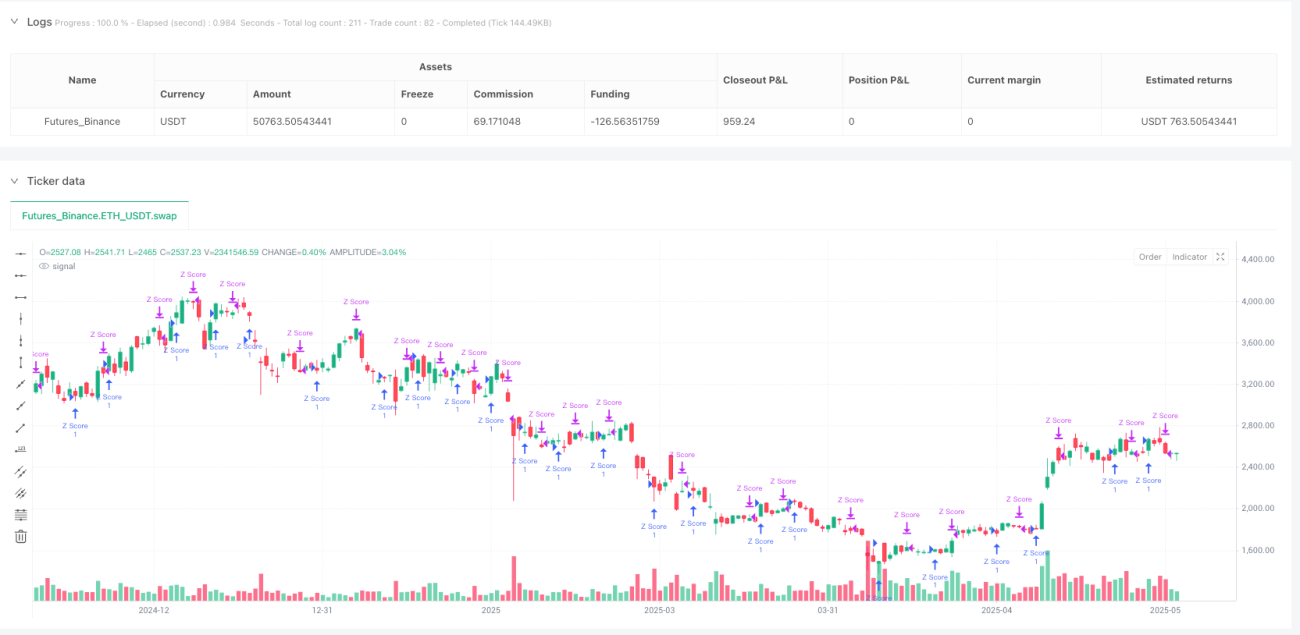
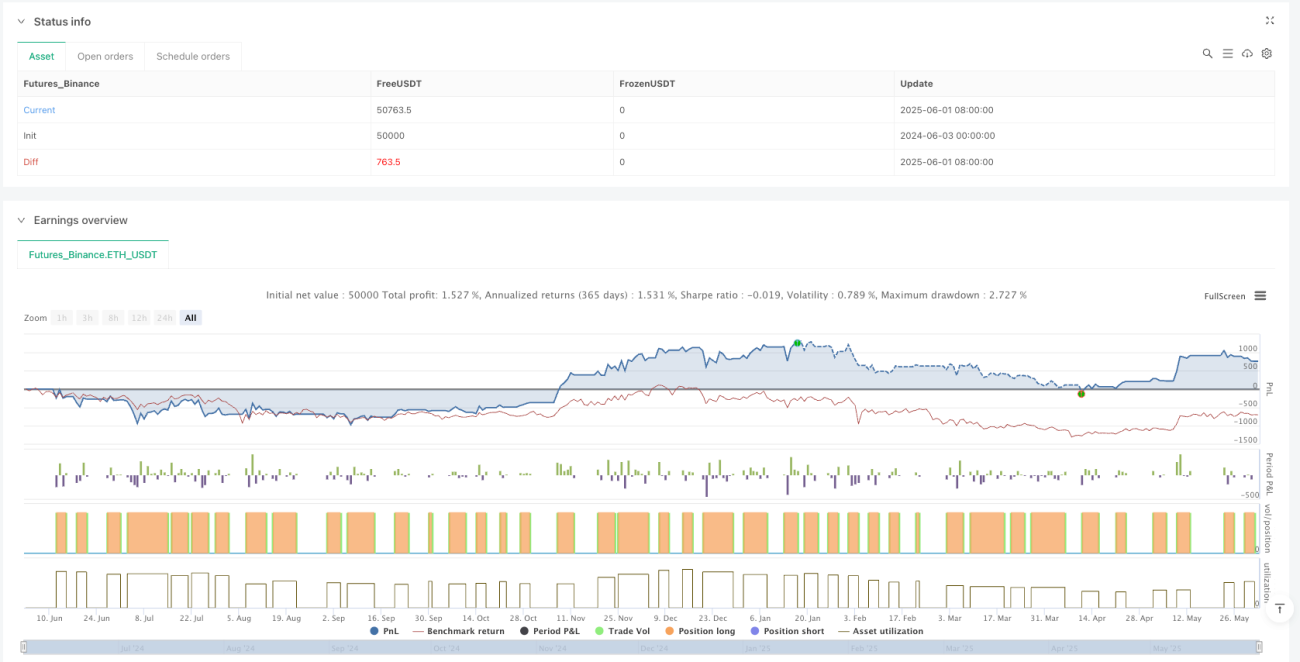
Chiến lược này dựa trên khái niệm thống kê Z-Score, được sử dụng để xác định độ lệch thống kê của giá so với giá trị trung bình cục bộ của nó. Chiến lược tính toán Z-Score của giá đóng cửa, sau đó áp dụng đường trung bình động ngắn hạn và dài hạn để làm mịn giá trị Z-Score. Khi Z-Score làm mịn ngắn hạn cắt lên trên Z-Score làm mịn dài hạn, tín hiệu mua (long) được tạo ra; khi Z-Score làm mịn ngắn hạn cắt xuống dưới Z-Score làm mịn dài hạn, tín hiệu đóng vị thế được tạo ra. Chiến lược cũng bao gồm kiểm soát khoảng cách tín hiệu và bộ lọc nến dựa trên động lượng để giảm giao dịch nhiễu.
Nguyên lý chiến lược
Cốt lõi của chiến lược là tính toán và ứng dụng Z-Score. Z-Score là một đại lượng thống kê dùng để đo mức độ lệch của một điểm dữ liệu so với giá trị trung bình của mẫu, tính theo đơn vị độ lệch chuẩn. Trong chiến lược này, công thức tính Z-Score như sau:
Z = (Giá đóng cửa - SMA(Giá đóng cửa, N)) / STDEV(Giá đóng cửa, N)
Trong đó N là chu kỳ cơ sở do người dùng xác định.
Quy trình thực hiện chiến lược như sau:
- Tính toán Z-Score gốc của giá đóng cửa
- Áp dụng làm mịn ngắn hạn (SMA) cho Z-Score gốc
- Áp dụng làm mịn dài hạn (SMA) cho Z-Score gốc
- Khi Z-Score làm mịn ngắn hạn cắt lên trên Z-Score làm mịn dài hạn, nếu thỏa mãn điều kiện bổ sung, thì mở vị thế mua (long)
- Khi Z-Score làm mịn ngắn hạn cắt xuống dưới Z-Score làm mịn dài hạn, nếu thỏa mãn điều kiện bổ sung, thì đóng vị thế
Các điều kiện bổ sung bao gồm:
- Khoảng cách tín hiệu: Giữa hai tín hiệu cùng loại (vào hoặc ra) phải có khoảng cách tối thiểu về số nến
- Bộ lọc động lượng: Khi xuất hiện ba nến tăng liên tiếp trở lên, cấm vào lệnh; khi xuất hiện ba nến giảm liên tiếp trở lên, cấm thoát lệnh
Ưu điểm chiến lược
- Cơ sở thống kê: Z-Score là một công cụ thống kê trưởng thành, có thể nhận diện hiệu quả mức độ lệch của giá so với giá trị trung bình, phù hợp để nắm bắt cơ hội giá quay về giá trị trung bình.
- Xử lý làm mịn: Bằng cách áp dụng làm mịn ngắn hạn và dài hạn cho Z-Score gốc, giảm nhiễu, nâng cao chất lượng tín hiệu.
- Kiểm soát khoảng cách tín hiệu: Bằng cách thiết lập khoảng cách tín hiệu tối thiểu, giảm giao dịch quá mức và tín hiệu lặp lại.
- Bộ lọc động lượng: Bằng cách cấm giao dịch ngược xu hướng trong xu hướng mạnh, tránh tổn thất không cần thiết trong thị trường mạnh.
- Tính đơn giản: Chiến lược chỉ sử dụng dữ liệu giá đóng cửa, không phụ thuộc vào tổ hợp chỉ báo phức tạp, dễ hiểu và thực hiện.
- Giám sát lỗ/lãi thời gian thực: Bao gồm bảng hiển thị lỗ/lãi chưa thực hiện theo thời gian thực, giúp nhà giao dịch giám sát trạng thái vị thế.
- Tính linh hoạt tham số: Người dùng có thể điều chỉnh chu kỳ cơ sở Z-Score và tham số làm mịn theo các thị trường và khung thời gian khác nhau, nâng cao khả năng thích ứng.
Rủi ro chiến lược
- Rủi ro giả định thống kê: Z-Score giả định phân phối giá xấp xỉ phân phối chuẩn, có thể hoạt động kém trong môi trường thị trường không chuẩn.
- Độ nhạy tham số: Việc lựa chọn chu kỳ cơ sở Z-Score và tham số làm mịn ảnh hưởng đáng kể đến hiệu suất chiến lược, lựa chọn không phù hợp có thể dẫn đến quá khớp hoặc tín hiệu chậm trễ.
- Hạn chế yếu tố đơn lẻ: Chiến lược chỉ dựa trên giao cắt Z-Score để tạo tín hiệu, thiếu các chỉ báo xác nhận khác, có thể dẫn đến tín hiệu giả.
- Phụ thuộc môi trường thị trường: Trong thị trường xu hướng mạnh, chiến lược dựa trên hồi quy trung bình có thể liên tục tạo ra tín hiệu sai.
- Độ trễ tín hiệu: Do sử dụng làm mịn trung bình động, tín hiệu có thể bị trễ, bỏ lỡ điểm vào hoặc ra tối ưu.
Giải pháp:
- Backtest trên các môi trường thị trường khác nhau để tìm bộ tham số tối ưu
- Kết hợp bộ lọc xu hướng, giảm hoặc vô hiệu hóa giao dịch trong thị trường xu hướng mạnh
- Thêm các chỉ báo xác nhận bổ sung như phân tích khối lượng hoặc các chỉ báo kỹ thuật khác
- Xem xét sử dụng tham số thích ứng, tự động điều chỉnh tham số Z-Score theo biến động thị trường
Hướng tối ưu hóa
- Tích hợp nhận diện xu hướng: Thêm thành phần nhận diện xu hướng, điều chỉnh hành vi chiến lược trong thị trường có xu hướng rõ ràng. Điều này có thể thực hiện thông qua đường trung bình động dài hạn hoặc chỉ báo ADX, tránh tạo tín hiệu hồi quy trung bình sai trong xu hướng mạnh.
- Điều chỉnh biến động: Triển khai điều chỉnh thích ứng tham số Z-Score, tự động tối ưu hóa chu kỳ cơ sở và tham số làm mịn theo biến động thị trường. Điều này sẽ nâng cao độ mạnh mẽ của chiến lược trong các môi trường thị trường khác nhau.
- Phân tích đa khung thời gian: Tích hợp tín hiệu Z-Score của khung thời gian cao hơn làm xác nhận, chỉ giao dịch khi tín hiệu của nhiều khung thời gian nhất quán, giảm tín hiệu giả.
- Cơ chế dừng lỗ: Triển khai dừng lỗ động dựa trên phạm vi biến động của Z-Score, nâng cao khả năng quản lý rủi ro. Ví dụ, có thể đặt dừng lỗ ở một bội số độ lệch cụ thể của Z-Score khi vào lệnh.
- Chốt lời một phần: Thực hiện chiến lược chốt lời theo từng phần, đóng một phần vị thế khi Z-Score đạt đến ngưỡng cụ thể, tối ưu hóa quản lý vốn.
- Xác nhận khối lượng: Thêm phân tích khối lượng làm xác nhận giao dịch, chỉ thực hiện giao dịch khi tín hiệu Z-Score được hỗ trợ bởi khối lượng, nâng cao chất lượng tín hiệu.
- Kết hợp chỉ báo: Kết hợp Z-Score với các chỉ báo thống kê hoặc kỹ thuật khác như RSI hoặc Bollinger Bands, tạo mô hình quyết định đa yếu tố, tăng cường độ tin cậy của chiến lược.
Tổng kết
Chiến lược giao dịch thống kê giá tối ưu hóa động lượng dựa trên giao cắt Z-Score làm mịn là một hệ thống giao dịch đơn giản dựa trên nguyên lý thống kê, tập trung vào việc nắm bắt sự lệch và hồi quy của giá so với giá trị trung bình cục bộ. Thông qua xử lý làm mịn, kiểm soát khoảng cách tín hiệu và bộ lọc động lượng, chiến lược này giảm hiệu quả giao dịch nhiễu, nâng cao chất lượng tín hiệu. Chiến lược này đặc biệt phù hợp với thị trường dao động và các sản phẩm tài chính có hành vi hồi quy trung bình rõ rệt.
Tuy nhiên, chiến lược cũng có một số hạn chế như phụ thuộc vào giả định thống kê, độ nhạy tham số và quyết định yếu tố đơn lẻ. Thông qua việc thêm các biện pháp tối ưu hóa như nhận diện xu hướng, điều chỉnh biến động, phân tích đa khung thời gian, cơ chế dừng lỗ, xác nhận khối lượng và kết hợp đa yếu tố, có thể nâng cao đáng kể độ mạnh mẽ và hiệu suất của chiến lược.
Nhìn chung, đây là một khung chiến lược có nền tảng lý thuyết vững chắc, triển khai đơn giản, dễ hiểu và mở rộng, phù hợp làm thành phần cơ sở của hệ thống giao dịch hoặc công cụ giáo dục, giúp nhà giao dịch hiểu ứng dụng của thống kê trong giao dịch.
- 1