
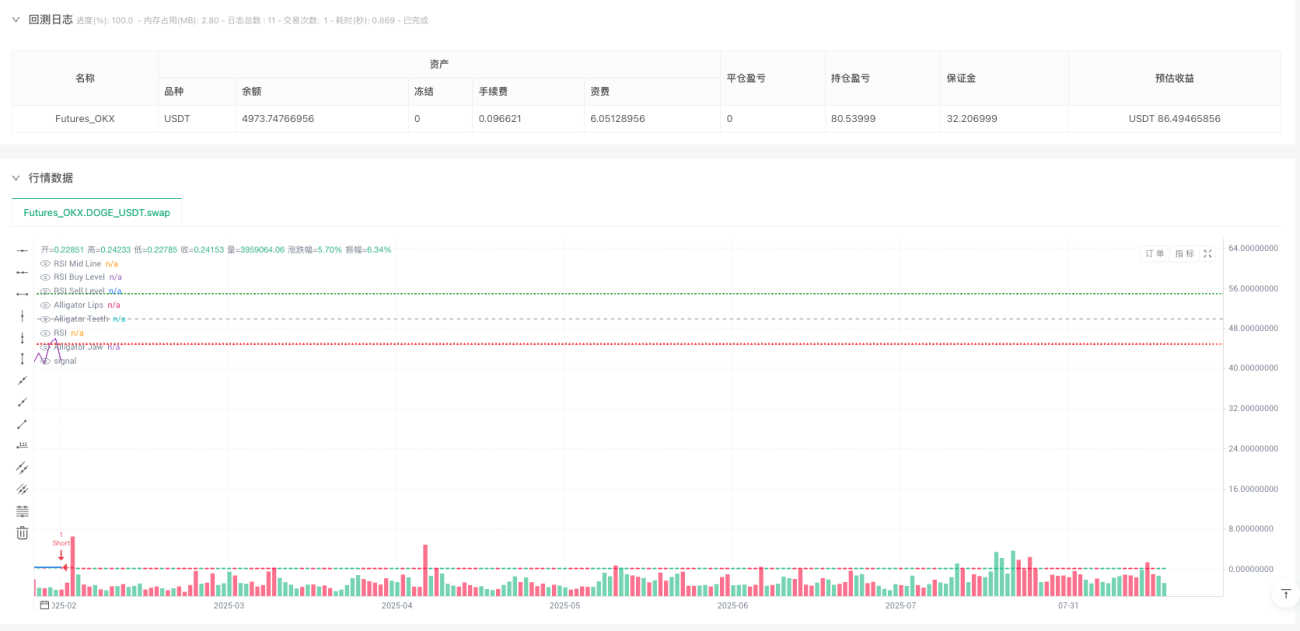
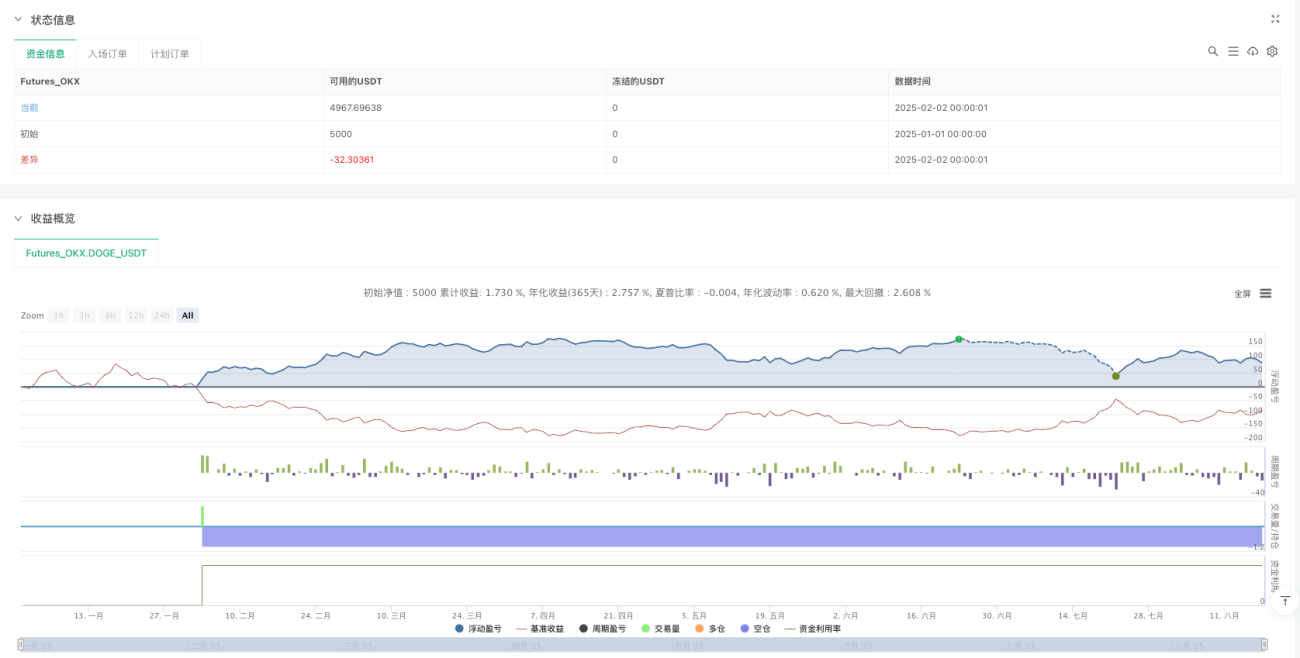
Tổng quan
Chiến lược Đột phá Động lượng RSI kết hợp Chỉ báo Cá Sấu Williams là một chiến lược giao dịch định lượng đa khung thời gian, tích hợp Chỉ báo Cá Sấu Williams (Williams Alligator) và Chỉ số Sức mạnh Tương đối (RSI). Chiến lược này hoạt động trên khung thời gian nến 15 phút, sử dụng ba đường trung bình động (đường Môi, đường Răng, đường Hàm) của Chỉ báo Cá Sấu để xác định xu hướng thị trường, đồng thời kết hợp chỉ báo RSI để xác nhận sức mạnh động lượng, tạo thành một hệ thống tín hiệu vào lệnh và thoát lệnh hoàn chỉnh. Chiến lược được thiết kế với các cơ chế dừng lỗ và chốt lời rõ ràng, thông qua nhiều bộ lọc điều kiện để đảm bảo độ tin cậy của tín hiệu giao dịch, đặc biệt phù hợp với môi trường thị trường có xu hướng rõ rệt.
Nguyên lý chiến lược
Nguyên lý cốt lõi của chiến lược này dựa trên khả năng nhận diện xu hướng của Chỉ báo Cá Sấu Williams và chức năng xác nhận động lượng của chỉ báo RSI. Chỉ báo Cá Sấu Williams bao gồm ba đường trung bình động với các chu kỳ khác nhau: Đường Hàm (13 chu kỳ, dịch chuyển 8), Đường Răng (8 chu kỳ, dịch chuyển 5), Đường Môi (5 chu kỳ, dịch chuyển 3). Khi ba đường này sắp xếp theo thứ tự Đường Môi > Đường Răng > Đường Hàm, điều đó cho thấy thị trường đang trong xu hướng tăng; ngược lại là xu hướng giảm.
Việc kích hoạt tín hiệu mua cần đồng thời thỏa mãn bốn điều kiện: Giá đóng cửa cao hơn Đường Môi, Đường Môi cao hơn Đường Răng, Đường Răng cao hơn Đường Hàm, và RSI lớn hơn 55. Cơ chế lọc đa lớp này đảm bảo chỉ mở vị thế khi xu hướng rõ ràng và động lượng đủ mạnh. Tín hiệu bán thì ngược lại: Giá đóng cửa thấp hơn Đường Môi, Đường Môi thấp hơn Đường Răng, Đường Răng thấp hơn Đường Hàm, và RSI nhỏ hơn 45.
Cơ chế dừng lỗ được thiết kế với ba lớp bảo vệ: RSI giảm xuống dưới 50, giá phá vỡ xuống dưới Đường Răng, hoặc Đường Môi xuống dưới Đường Răng. Chốt lời được đặt ở mức cố định (25 Rupee), cung cấp tỷ lệ rủi ro-lợi nhuận rõ ràng.
Ưu điểm chiến lược
Thứ nhất, việc tích hợp nhiều chỉ báo mang lại độ chính xác tín hiệu cao hơn. Chỉ báo Cá Sấu Williams giỏi trong việc nhận biết điểm bắt đầu và kết thúc của xu hướng, trong khi chỉ báo RSI có thể đo lường hiệu quả động lượng giá, sự kết hợp của cả hai có thể làm giảm đáng kể xác suất tín hiệu nhiễu. Thứ hai, chiến lược áp dụng phương pháp xác minh điều kiện tuần tự, chỉ khi tất cả các điều kiện được thỏa mãn đồng thời mới phát sinh tín hiệu giao dịch, điều này cải thiện đáng kể tỷ lệ thành công của giao dịch.
Chiến lược này có khả năng thích ứng tốt, thông qua việc điều chỉnh tham số có thể thích nghi với các môi trường thị trường và loại tài sản giao dịch khác nhau. Khung thời gian 15 phút có thể nắm bắt được các biến động giá ngắn và trung hạn, đồng thời tránh được các giao dịch quá thường xuyên. Cơ chế chốt lời cố định giúp đơn giản hóa quá trình ra quyết định giao dịch, hỗ trợ duy trì kỷ luật giao dịch.
Chiến lược còn có hệ thống quản lý rủi ro hoàn chỉnh, ba điều kiện dừng lỗ đảm bảo có thể thoát lệnh kịp thời trong các tình huống bất lợi, kiểm soát hiệu quả khoản lỗ tối đa cho mỗi giao dịch. Việc đánh dấu tín hiệu giao dịch trực quan giúp việc thực thi chiến lược trở nên trực quan và thuận tiện hơn.
Rủi ro chiến lược
Rủi ro chính mà chiến lược này phải đối mặt bao gồm rủi ro đảo chiều xu hướng. Trong trường hợp thị trường đảo chiều mạnh, nhiều chỉ báo có thể đồng loạt mất hiệu lực, dẫn đến thua lỗ lớn. Đặc biệt trong thị trường đi ngang (sideway), Chỉ báo Cá Sấu có thể tạo ra nhiều tín hiệu nhiễu, trong khi RSI trong giai đoạn tích lũy cũng dễ đưa ra các chỉ báo gây hiểu lầm.
Cơ chế chốt lời cố định mặc dù đơn giản hóa thao tác, nhưng cũng có thể hạn chế tiềm năng lợi nhuận trong các xu hướng mạnh. Khi thị trường xuất hiện các phiên một chiều liên tục, việc chốt lời quá sớm có thể bỏ lỡ cơ hội lợi nhuận lớn hơn. Độ trễ là một vấn đề khác cần quan tâm, do Chỉ báo Cá Sấu Williams dựa trên đường trung bình động, nên có đặc tính trễ tự nhiên, có thể dẫn đến thời điểm vào lệnh không đủ kịp thời.
Độ nhạy tham số cũng là một điểm rủi ro. Các ngưỡng RSI (55 và 45) cũng như các tham số chu kỳ của Chỉ báo Cá Sấu cần được điều chỉnh tùy theo môi trường thị trường khác nhau, tham số cố định có thể không phù hợp với mọi điều kiện thị trường. Ngoài ra, chiến lược khá nhạy cảm với chi phí giao dịch, việc vào lệnh và thoát lệnh thường xuyên có thể bị bào mòn lợi nhuận bởi phí hoa hồng và độ trượt giá.
Hướng tối ưu hóa
Điều chỉnh tham số động là một hướng tối ưu hóa quan trọng. Có thể đưa vào cơ chế thích ứng, tự động điều chỉnh ngưỡng RSI và tham số Chỉ báo Cá Sấu dựa trên mức độ biến động của thị trường. Ví dụ, tăng ngưỡng RSI trong môi trường biến động cao và giảm ngưỡng trong môi trường biến động thấp, để thích ứng với các điều kiện thị trường khác nhau.
Cơ chế chốt lời có thể được thay đổi từ số tiền cố định sang chốt lời động, ví dụ sử dụng bội số của ATR (Dải biên độ trung bình thực) làm mục tiêu chốt lời, từ đó có thể thích ứng tốt hơn với đặc tính biến động của thị trường. Cũng có thể xem xét triển khai chốt lời dạng trailing, kích hoạt lệnh dừng lỗ trailing khi lợi nhuận đạt đến một mức nhất định, nhằm nắm bắt các khoản lợi nhuận xu hướng lớn hơn.
Thêm bộ lọc môi trường thị trường là một hướng tối ưu hóa khác. Có thể đưa vào các chỉ báo sức mạnh thị trường hoặc chỉ báo biến động để đánh giá xem thị trường hiện tại có phù hợp với chiến lược này hay không, và tạm dừng giao dịch trong các môi trường thị trường bất lợi. Bộ lọc thời gian cũng rất quan trọng, tránh giao dịch trong các khung giờ có thanh khoản kém.
Cơ chế xác nhận tín hiệu có thể được tăng cường hơn nữa. Có thể thêm xác nhận khối lượng, chỉ xác nhận tín hiệu có hiệu lực khi khối lượng giao dịch tăng lên. Cũng có thể xem xét phân tích đa khung thời gian, sau khi xác nhận hướng xu hướng trên khung thời gian lớn hơn, sau đó tìm điểm vào lệnh cụ thể trên khung thời gian nhỏ hơn.
Kết luận
Chiến lược Đột phá Động lượng RSI kết hợp Chỉ báo Cá Sấu Williams là một hệ thống giao dịch định lượng được thiết kế tương đối hoàn chỉnh, thông qua việc tích hợp nhiều chỉ báo và bộ lọc điều kiện chặt chẽ, có tiềm năng hoạt động tốt trong các thị trường có xu hướng. Ưu điểm chính của chiến lược nằm ở việc quản lý rủi ro có hệ thống và cơ chế tạo tín hiệu rõ ràng, có thể cung cấp cho nhà giao dịch một khuôn khổ giao dịch tương đối ổn định.
Tuy nhiên, chiến lược này cũng có một số hạn chế, đặc biệt là hiệu suất có thể không lý tưởng trong thị trường đi ngang, và cài đặt tham số cố định có thể không thích ứng được với mọi môi trường thị trường. Thông qua việc đưa ra điều chỉnh tham số động, cải tiến cơ chế chốt lời, thêm bộ lọc môi trường thị trường và các biện pháp tối ưu hóa khác, có thể nâng cao hơn nữa khả năng thích ứng và lợi nhuận của chiến lược.
Đối với các nhà giao dịch sử dụng chiến lược này, khuyến nghị nên tiến hành backtest và xác nhận thực tế đầy đủ trong các môi trường thị trường khác nhau, đồng thời điều chỉnh tham số phù hợp dựa trên hiệu suất thực tế. Đồng thời, duy trì quản lý vốn tốt và kỷ luật giao dịch là yếu tố then chốt để thực hiện chiến lược thành công.
Trước hết, việc kết hợp nhiều chỉ báo giúp nâng cao độ chính xác của tín hiệu. Williams Alligator vượt trội trong việc xác định điểm bắt đầu và kết thúc xu hướng, trong khi RSI đo lường động lượng giá một cách hiệu quả; sự kết hợp của chúng giảm đáng kể xác suất tín hiệu sai. Thứ hai, chiến lược áp dụng cơ chế xác minh điều kiện tuần tự, chỉ tạo tín hiệu giao dịch khi tất cả các điều kiện được thỏa mãn đồng thời, cải thiện đáng kể tỷ lệ thành công của giao dịch.
Chiến lược này thể hiện khả năng thích ứng tốt, cho phép điều chỉnh tham số để phù hợp với các môi trường thị trường và công cụ giao dịch khác nhau. Khung thời gian 15 phút giúp nắm bắt biến động giá trung hạn, đồng thời tránh tần suất giao dịch quá cao. Cơ chế chốt lời cố định đơn giản hóa quyết định giao dịch và giúp duy trì kỷ luật giao dịch.
Chiến lược cũng có hệ thống quản lý rủi ro toàn diện với ba điều kiện cắt lỗ đảm bảo thoát lệnh kịp thời trong các tình huống bất lợi, kiểm soát hiệu quả mức lỗ tối đa mỗi giao dịch. Việc nhận diện tín hiệu giao dịch trực quan giúp thực hiện chiến lược dễ dàng và thuận tiện hơn.
Rủi ro chiến lược
Các rủi ro chính bao gồm rủi ro đảo chiều xu hướng. Trong các đợt đảo chiều thị trường mạnh, nhiều chỉ báo có thể cùng lúc thất bại, dẫn đến thua lỗ lớn. Đặc biệt trong thị trường dao động, chỉ báo Alligator có thể tạo ra các tín hiệu sai thường xuyên, trong khi RSI có thể đưa ra các chỉ báo gây hiểu lầm trong giai đoạn tích lũy đi ngang.
Mặc dù cơ chế chốt lời cố định đơn giản hóa thao tác, nhưng nó có thể hạn chế tiềm năng lợi nhuận trong các xu hướng mạnh. Trong các thị trường có xu hướng bền vững, việc chốt lời sớm có thể bỏ lỡ các cơ hội lợi nhuận lớn hơn. Độ trễ là một vấn đề khác, vì nền tảng đường trung bình động của Williams Alligator tạo ra đặc tính trễ tự nhiên, có thể dẫn đến thời điểm vào lệnh không tối ưu.
Độ nhạy tham số là một rủi ro bổ sung. Ngưỡng RSI (55 và 45) và tham số chu kỳ Alligator cần được điều chỉnh cho các môi trường thị trường khác nhau; tham số cố định có thể không phù hợp với mọi điều kiện thị trường. Hơn nữa, chiến lược này nhạy cảm với chi phí giao dịch, nơi việc vào và ra lệnh thường xuyên có thể làm giảm lợi nhuận thông qua hoa hồng và trượt giá.
Hướng tối ưu hóa
Điều chỉnh tham số động là một hướng tối ưu hóa quan trọng. Việc triển khai các cơ chế thích ứng để tự động điều chỉnh ngưỡng RSI và tham số Alligator dựa trên biến động thị trường có thể cải thiện hiệu suất. Ví dụ, tăng ngưỡng RSI trong môi trường biến động cao và giảm chúng trong điều kiện biến động thấp sẽ thích ứng tốt hơn với các điều kiện thị trường khác nhau.
Cơ chế chốt lời có thể phát triển từ số tiền cố định sang các mục tiêu động, chẳng hạn như sử dụng bội số của ATR (Average True Range) làm mục tiêu lợi nhuận, phù hợp hơn với đặc tính biến động của thị trường. Cũng có thể xem xét triển khai chốt lời trailing, kích hoạt lệnh dừng lỗ động sau khi đạt đến một mức lợi nhuận nhất định để nắm bắt các khoản lợi nhuận lớn hơn từ xu hướng.
Thêm các bộ lọc môi trường thị trường là một hướng tối ưu hóa khác. Giới thiệu các chỉ báo sức mạnh thị trường hoặc thước đo biến động để đánh giá mức độ phù hợp của thị trường hiện tại với chiến lược, có thể tạm dừng giao dịch trong các điều kiện không thuận lợi. Bộ lọc thời gian cũng quan trọng không kém, tránh giao dịch trong các giai đoạn thanh khoản thấp.
Cơ chế xác nhận tín hiệu cần được tăng cường hơn nữa. Có thể thêm xác nhận khối lượng, chỉ xác nhận tín hiệu khi khối lượng mở rộng. Phân tích đa khung thời gian cũng có thể được xem xét, xác nhận hướng xu hướng trên khung thời gian lớn hơn trước khi tìm điểm vào cụ thể trên khung thời gian nhỏ hơn.
Tổng kết
Chiến lược đột phá động lượng RSI của Alligator Williams là một hệ thống giao dịch định lượng được thiết kế tương đối tốt. Thông qua việc tích hợp nhiều chỉ báo và lọc điều kiện chặt chẽ, chiến lược này thể hiện tiềm năng hiệu suất tốt trong các thị trường có xu hướng. Ưu điểm chính của chiến lược nằm ở quản lý rủi ro có hệ thống và cơ chế tạo tín hiệu rõ ràng, cung cấp cho nhà giao dịch một khung giao dịch tương đối ổn định.
Tuy nhiên, chiến lược cũng có những hạn chế, đặc biệt là hiệu suất có thể kém trong thị trường dao động, khi các cài đặt tham số cố định có thể không thích ứng với tất cả các môi trường thị trường. Thông qua việc điều chỉnh tham số linh hoạt, cải thiện cơ chế chốt lời và bổ sung thêm bộ lọc môi trường thị trường, khả năng thích ứng và lợi nhuận của chiến lược có thể được nâng cao hơn nữa.
Đối với các nhà giao dịch triển khai chiến lược này, nên tiến hành backtest kỹ lưỡng và kiểm chứng giao dịch thực tế trong các môi trường thị trường khác nhau, đồng thời điều chỉnh tham số phù hợp dựa trên hiệu suất thực tế. Duy trì quản lý vốn hợp lý và kỷ luật giao dịch vẫn là yếu tố then chốt để thực hiện chiến lược thành công.[/trans]
- 1