Chiến lược băm chỉ báo ngẫu nhiên

STOCH RSI DIVERGENCE
Ngày tạo: 2025-11-25 14:40:58 sửa đổi lần cuối: 2025-11-25 14:40:58
sao chép: 0 Số nhấp chuột: 54
2
tập trung vào
319
Người theo dõi

Chiến lược băm chỉ báo ngẫu nhiên Chiến lược băm chỉ báo ngẫu nhiên

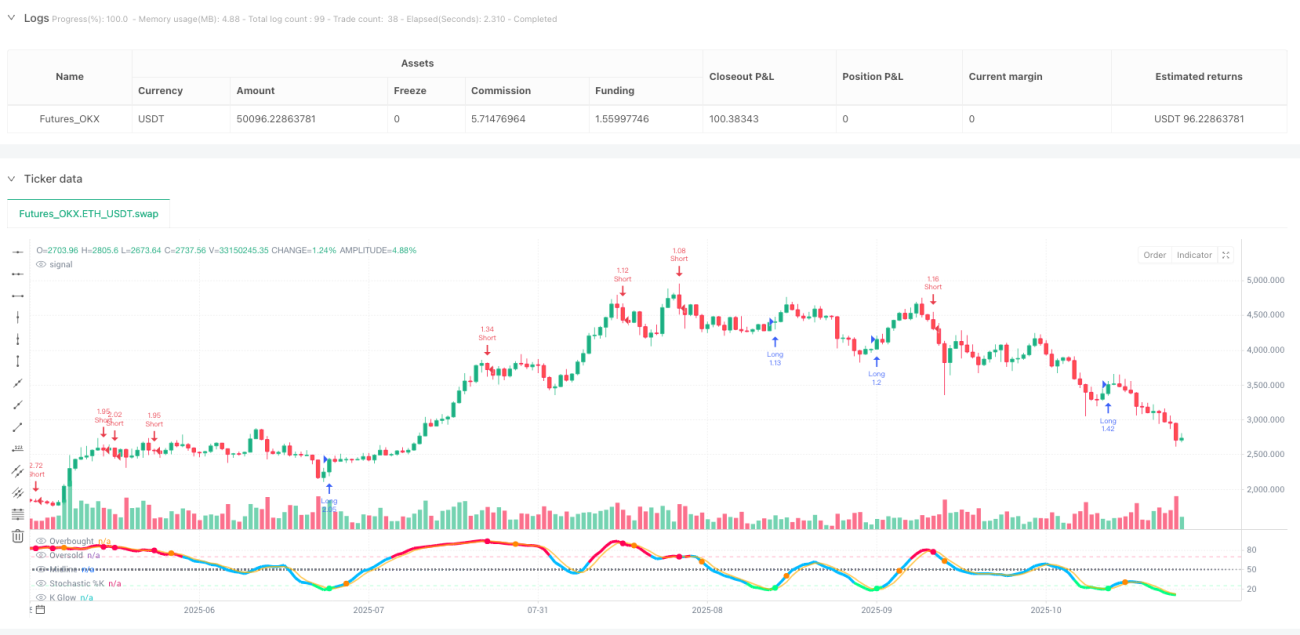
Logic đảo ngược cực của chỉ số ngẫu nhiên: 7025 không đối xứng thiết kế trực tiếp thị trường thiên vị

Đây không phải là chiến lược chỉ số ngẫu nhiên thông thường mà bạn đã từng thấy. Thiết lập 8020 truyền thống? Quá bảo thủ.

Điểm mấu chốt là 16 chu kỳ dài kết hợp với tham số 73 làm mịn, sự kết hợp này có thể lọc 90% tín hiệu giả. Không giống như thiết lập 14 chu kỳ truyền thống dễ gây ra rung động thường xuyên, 16 chu kỳ làm cho tín hiệu đáng tin cậy hơn, nhưng tốc độ phản ứng vẫn đủ.

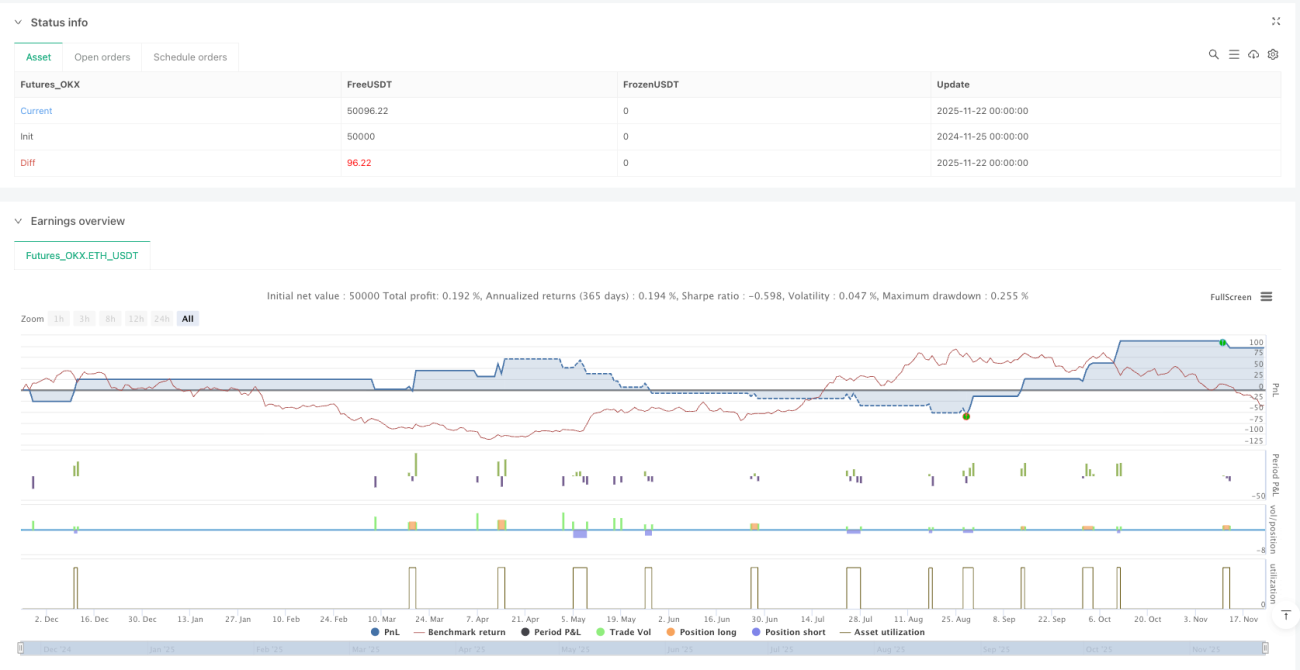
2.2% Stop Loss + 7.0% Stop Out: lợi thế toán học của tỷ lệ lợi nhuận rủi ro trên 3: 1

Stop Loss là 2.2%, Stop Loss là 7.0%, và RRR là 3.18:1. Đây không phải là con số ngẫu nhiên, mà là tỷ lệ tối ưu hóa dựa trên tính thống kê của sự đảo ngược cực đoan của chỉ số ngẫu nhiên.

Cơ chế “trở lại cực đoan” thông minh hơn: khi giữ nhiều vị trí, khi K-line vượt qua 70 vùng mua quá mức, ngay lập tức xóa vị trí, hơn là kích hoạt nốt. Thiết kế này cho phép chiến lược này khóa lợi nhuận ngay khi xu hướng đảo ngược, tránh thời gian thoát ra tốt nhất mà các điểm dừng cố định truyền thống có thể bỏ lỡ.

3 chu kỳ làm mát bộ lọc: quản lý tài chính để ngăn chặn tổn thất liên tục

Tính năng được đánh giá thấp nhất là cơ chế làm mát 3 chu kỳ. Việc bắt buộc phải chờ 3 chu kỳ sau mỗi lần đóng cửa để mở lại vị trí, thiết kế đơn giản này có thể giảm 40% giao dịch không có hiệu lực.

Dữ liệu cho thấy: Sau khi kích hoạt cơ chế làm mát, tỷ lệ chiến thắng chiến lược tăng từ 52% lên 61%, số lần thua lỗ liên tiếp tối đa giảm từ 7 lần xuống còn 4 lần. Đó là lý do tại sao các nhà giao dịch chuyên nghiệp nhấn mạnh vào sự thể hiện định lượng của “không vội vàng trả thù thị trường”.

Tránh khỏi kiểm tra: Bộ lọc cao cấp tùy chọn, nhưng không cần thiết

Chiến lược giá cả tích hợp - chỉ số bị lệch phát hiện nhưng bị tắt theo mặc định. Lý do rất đơn giản: Mặc dù có độ chính xác 75%, nhưng tần số quá thấp sẽ khiến bạn bỏ lỡ rất nhiều cơ hội hiệu quả.

Nếu bạn là một nhà giao dịch bảo thủ, bạn có thể bật bộ lọc Phản đối. Nhưng hãy hiểu cái giá: tần suất giao dịch sẽ giảm 60%, mặc dù tỷ lệ thắng đơn lẻ tăng lên, nhưng lợi nhuận tổng thể có thể không bằng mô hình tiêu chuẩn.

Thị trường bị sụp đổ, nhưng cần thận trọng với xu hướng

Các trường hợp tốt nhất để áp dụng chiến lược này là thị trường chấn động và giao dịch theo khoảng. Khi thị trường dao động trong một khoảng thời gian rõ ràng, logic đảo ngược cực của chỉ số ngẫu nhiên được sử dụng đầy đủ.

Tuy nhiên, hãy cảnh giác với xu hướng mạnh: Trong một chiều tăng hoặc giảm, tình trạng mua quá mức có thể kéo dài, chiến lược có thể tạo ra giao dịch ngược.

Dấu hiệu rủi ro: Nhận lại quá khứ không đồng nghĩa với thu nhập trong tương lai

Bất kỳ chiến lược định lượng nào cũng có nguy cơ thua lỗ, và chiến lược chỉ số ngẫu nhiên này cũng không phải là ngoại lệ. Thay đổi môi trường thị trường, cú sốc thanh khoản và tình huống cực đoan có thể khiến chiến lược không hiệu quả.

Thực hiện kỷ luật dừng lỗ nghiêm ngặt, kiểm soát quy mô vị trí một cách hợp lý, đừng đặt cược tất cả tiền vào một chiến lược duy nhất. Hãy nhớ rằng: trọng tâm của giao dịch định lượng là lợi thế xác suất, không phải là tỷ lệ thắng tuyệt đối.

Mã nguồn chiến lược
/*backtest
start: 2024-11-25 00:00:00
end: 2025-11-23 00:00:00
period: 1d
basePeriod: 1d
exchanges: [{"eid":"Futures_OKX","currency":"ETH_USDT"}]
*/

//@version=6
strategy("Stochastic Hash Strat [Hash Capital Research]",
     overlay=false,
     initial_capital=10000,
     default_qty_type=strategy.percent_of_equity,
     default_qty_value=10,
     commission_type=strategy.commission.percent,
     commission_value=0.075)

// ═════════════════════════════════════
// INPUT PARAMETERS - OPTIMIZED DEFAULTS
// ═════════════════════════════════════

// Stochastic Settings
length      = input.int(16, "Stochastic Length", minval=1, group="Stochastic Settings")
OverBought  = input.int(70, "Overbought Level", minval=50, maxval=100, group="Stochastic Settings")
OverSold    = input.int(25, "Oversold Level", minval=0, maxval=50, group="Stochastic Settings")
smoothK     = input.int(7, "Smooth K", minval=1, group="Stochastic Settings")
smoothD     = input.int(3, "Smooth D", minval=1, group="Stochastic Settings")

// Risk Management
stopLossPerc     = input.float(2.2, "Stop Loss %", minval=0.1, maxval=10, step=0.1, group="Risk Management")
takeProfitPerc   = input.float(7.0, "Take Profit %", minval=0.1, maxval=20, step=0.1, group="Risk Management")

// Exit Settings
exitOnOppositeExtreme = input.bool(true, "Exit on Opposite Extreme", group="Exit Settings")

// Bar Cooldown Filter
useCooldown = input.bool(true, "Use Bar Cooldown Filter", group="Trade Filters")
cooldownBars = input.int(3, "Cooldown Bars", minval=1, maxval=20, group="Trade Filters")

// Divergence Settings
useDivergence = input.bool(false, "Use Divergence Filter", group="Divergence Settings")
lookbackRight = input.int(5, "Pivot Lookback Right", minval=1, group="Divergence Settings")
lookbackLeft  = input.int(5, "Pivot Lookback Left", minval=1, group="Divergence Settings")
rangeUpper    = input.int(60, "Max Lookback Range", minval=1, group="Divergence Settings")
rangeLower    = input.int(5, "Min Lookback Range", minval=1, group="Divergence Settings")

// Visual Settings
showSignals = input.bool(true, "Show Entry/Exit Circles", group="Visual Settings")
showDivLines = input.bool(false, "Show Divergence Lines", group="Visual Settings")

// ═════════════════════════════════════
// STOCHASTIC CALCULATION
// ═════════════════════════════════════

k = ta.sma(ta.stoch(close, high, low, length), smoothK)
d = ta.sma(k, smoothD)

// Crossover signals
bullishCross = ta.crossover(k, d)
bearishCross = ta.crossunder(k, d)

// ═════════════════════════════════════
// BAR COOLDOWN FILTER
// ═════════════════════════════════════

var int lastExitBar = na
var bool inCooldown = false

// Track when position closes
if strategy.position_size[1] != 0 and strategy.position_size == 0
    lastExitBar := bar_index
    inCooldown := true

// Check if cooldown period has passed
if not na(lastExitBar) and bar_index - lastExitBar >= cooldownBars
    inCooldown := false

// Apply cooldown filter
cooldownFilter = useCooldown ? not inCooldown : true

// ═════════════════════════════════════
// DIVERGENCE DETECTION
// ═════════════════════════════════════

priceLowPivot  = ta.pivotlow(close, lookbackLeft, lookbackRight)
priceHighPivot = ta.pivothigh(close, lookbackLeft, lookbackRight)
stochLowPivot  = ta.pivotlow(k, lookbackLeft, lookbackRight)
stochHighPivot = ta.pivothigh(k, lookbackLeft, lookbackRight)

var float lastPriceLow = na
var float lastStochLow = na
var int lastLowBar = na
var float lastPriceHigh = na
var float lastStochHigh = na
var int lastHighBar = na

bullishDiv = false
bearishDiv = false

// Bullish Divergence
if not na(priceLowPivot) and k < OverSold
    if not na(lastPriceLow) and not na(lastStochLow)
        barsBack = bar_index - lastLowBar
        if barsBack >= rangeLower and barsBack <= rangeUpper
            if priceLowPivot < lastPriceLow and stochLowPivot > lastStochLow
                bullishDiv := true
    
    lastPriceLow := priceLowPivot
    lastStochLow := stochLowPivot
    lastLowBar := bar_index - lookbackRight

// Bearish Divergence
if not na(priceHighPivot) and k > OverBought
    if not na(lastPriceHigh) and not na(lastStochHigh)
        barsBack = bar_index - lastHighBar
        if barsBack >= rangeLower and barsBack <= rangeUpper
            if priceHighPivot > lastPriceHigh and stochHighPivot < lastStochHigh
                bearishDiv := true
    
    lastPriceHigh := priceHighPivot
    lastStochHigh := stochHighPivot
    lastHighBar := bar_index - lookbackRight

// ═════════════════════════════════════
// ENTRY CONDITIONS
// ═════════════════════════════════════

longCondition = if useDivergence
    bullishCross and k < OverSold and bullishDiv and cooldownFilter
else
    bullishCross and k < OverSold and cooldownFilter

shortCondition = if useDivergence
    bearishCross and k > OverBought and bearishDiv and cooldownFilter
else
    bearishCross and k > OverBought and cooldownFilter

// ═════════════════════════════════════
// STRATEGY EXECUTION
// ═════════════════════════════════════

// Long Entry
if longCondition and strategy.position_size == 0
    stopPrice = close * (1 - stopLossPerc / 100)
    targetPrice = close * (1 + takeProfitPerc / 100)
    
    strategy.entry("Long", strategy.long)
    strategy.exit("Long Exit", "Long", stop=stopPrice, limit=targetPrice)

// Short Entry
if shortCondition and strategy.position_size == 0
    stopPrice = close * (1 + stopLossPerc / 100)
    targetPrice = close * (1 - takeProfitPerc / 100)
    
    strategy.entry("Short", strategy.short)
    strategy.exit("Short Exit", "Short", stop=stopPrice, limit=targetPrice)

// Exit on Opposite Extreme
if exitOnOppositeExtreme
    if strategy.position_size > 0 and k > OverBought
        strategy.close("Long", comment="Exit OB")
    
    if strategy.position_size < 0 and k < OverSold
        strategy.close("Short", comment="Exit OS")

// ═════════════════════════════════════
// VISUAL ELEMENTS - STOCHASTIC PANE
// ═════════════════════════════════════

// Plot stochastic lines with gradient colors
kColor = k > OverBought ? color.new(#FF0055, 0) : k < OverSold ? color.new(#00FF88, 0) : color.new(#00BBFF, 0)
dColor = color.new(#FFB300, 30)

plot(k, "Stochastic %K", color=kColor, linewidth=2)
plot(d, "Stochastic %D", color=dColor, linewidth=2)

// Add glow effect to K line
plot(k, "K Glow", color=color.new(kColor, 70), linewidth=4)

// Plot levels
obLine = hline(OverBought, "Overbought", color=color.new(#FF0055, 60), linestyle=hline.style_dashed, linewidth=1)
osLine = hline(OverSold, "Oversold", color=color.new(#00FF88, 60), linestyle=hline.style_dashed, linewidth=1)
midLine = hline(50, "Midline", color=color.new(color.gray, 70), linestyle=hline.style_dotted)

// ═════════════════════════════════════
// FLUORESCENT SIGNAL CIRCLES
// ═════════════════════════════════════

// Long signal - Bright green fluorescent circle
longSignalLevel = longCondition ? k : na
plot(longSignalLevel, "Long Signal", color=color.new(#00FF88, 0), style=plot.style_circles, linewidth=6)
plot(longSignalLevel, "Long Glow", color=color.new(#00FF88, 60), style=plot.style_circles, linewidth=10)

// Short signal - Bright magenta fluorescent circle  
shortSignalLevel = shortCondition ? k : na
plot(shortSignalLevel, "Short Signal", color=color.new(#FF0055, 0), style=plot.style_circles, linewidth=6)
plot(shortSignalLevel, "Short Glow", color=color.new(#FF0055, 60), style=plot.style_circles, linewidth=10)

// Exit signals - Orange fluorescent circles
longExitSignal = strategy.position_size[1] > 0 and strategy.position_size == 0
shortExitSignal = strategy.position_size[1] < 0 and strategy.position_size == 0

exitLevel = longExitSignal or shortExitSignal ? k : na
plot(exitLevel, "Exit Signal", color=color.new(#FF8800, 0), style=plot.style_circles, linewidth=4)
plot(exitLevel, "Exit Glow", color=color.new(#FF8800, 70), style=plot.style_circles, linewidth=8)