Multi-factor Quantitative Trading Strategy

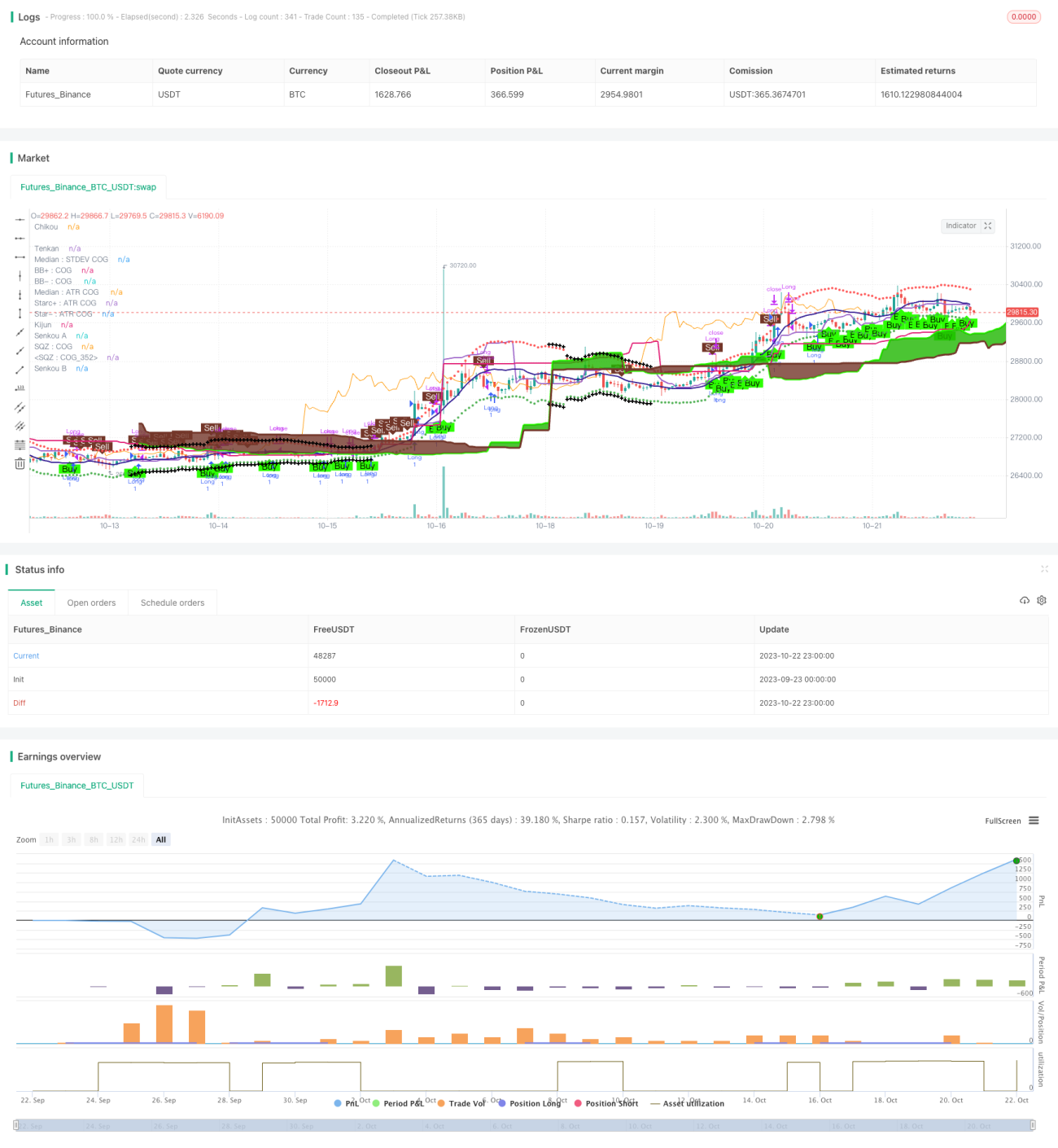
This is a quantitative trading strategy that combines multiple technical indicators for long/short decisions. It takes into account momentum indicators, trend indicators, Ichimoku cloud and other factors to form the final buy/sell judgements. The strategy has strong stability and risk resistance.
Principle Analysis
The strategy consists of following main components:
-
Momentum indicators: Parabolic SAR, Leledc, Kaufman Adaptive Moving Average etc.
-
Trend indicators: RahulMohindar Oscillator, Trend Magic etc.
-
Ichimoku Cloud: Tenkan-sen, Kijun-sen etc.
-
Volume indicators: Volume Flow Indicator
-
Volatility indicators: Wave Trend Oscillator
-
TD Sequential
These indicators judge the market trend and momentum from different perspectives. Parabolic SAR detects trend reversal points, Leledc measures momentum, Ichimoku Cloud identifies support/resistance levels. Buy/sell signals are generated when most indicators agree on the direction.
The strategy also sets filter conditions to avoid inefficient trades outside specified date ranges per month/day.
Advantage Analysis
-
Multiple factors improve accuracy and risk resistance
-
Cross validation with different indicator types avoids failure risk
-
Filter conditions avoid inefficient trades in unsuitable periods
-
Pine Script implementation allows easy use on TradingView
-
Customizable parameters can be optimized for different markets
-
Visual signals provide intuitive market structure judgements
Risk Analysis
-
Multi-factor combination requires parameter tuning and weight optimization
-
Individual indicators may fail in certain market conditions
-
Improper filter settings may miss opportunities
-
Over-optimization needs to be avoided
-
Traders should watch out for indicator failure risks and adjust strategy accordingly
Countermeasures:
-
Optimize parameters for indicator effectiveness in current market
-
Adjust weights to amplify effective and reduce ineffective indicators
-
Fine-tune filters to balance opportunity and risk
Optimization Directions
-
Add machine learning algorithms to auto-adjust indicator weights
-
Incorporate more factors like sentiment, money flow etc.
-
Test optimial parameters across products and timeframes
-
Evaluate different holding period performances
-
Combine more filters like seasonality, economic data etc.
-
Add stop loss strategies
Conclusion
The strategy combines multiple indicators for stronger risk resistance. But indicator failure risks need to be monitored, parameters continuously optimized. Future enhancements may include optimizing indicator weights, adding more factors, testing optimal holding periods etc.
//@version=2
persistent_bull = nz(persistent_bull[1],0)
persistent_bear  = nz(persistent_bear[1],0)

strategy("Strategy for The Bitcoin Buy/Sell Indicator", overlay=true, calc_on_every_tick=true)

// ****************************************Inputs***************************************************************
//@fixme if there is a buy and sell signal on the same bar, then it displays the first one and skips the second one. Fix this issue
buySellSignal = true // Make this false if you do not want to show Buy/Sell signal
inputIndividualSiganlPlot = true // = input (false, "Do you want to display each individual indicator's signal on the chart?")
sp = input (false, "Do you want to display Parabolic SAR?")
spLines = input (false, "Do you want to display Parabolic SAR on the chart?")- 1