Moving Average Crossover Strategy

Overview
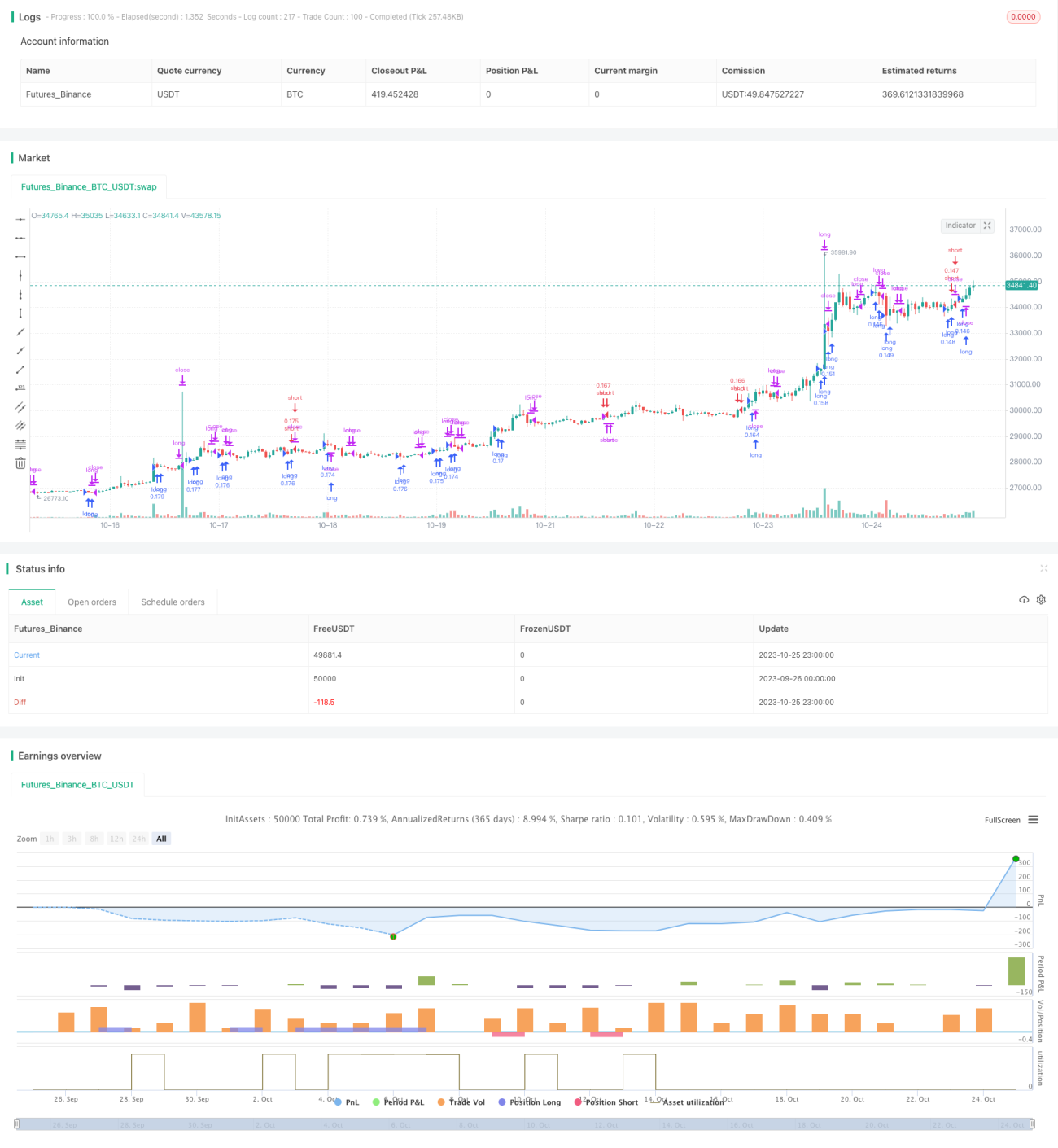
The Moving Average Crossover strategy is a momentum strategy that uses the crossover signals of double moving averages to determine the trend direction and generate trading signals. It employs 2 simple moving averages and 1 exponential moving average, judging long and short based on their crossover, belonging to a medium-term trading strategy.
Strategy Logic
The strategy uses 3 moving averages:
- EMA1: A shorter period exponential moving average, acting as the fast line
- SMA1: A longer period simple moving average, acting as the slow line
- SMA2: An even longer period simple moving average, determining the trend direction
The strategy judges the trend based on the relationship between EMA1, SMA1 and SMA2:
- Uptrend: EMA1 > SMA1 > SMA2
- Downtrend: EMA1 < SMA1 < SMA2
Entry signals:
- Long entry: When the fast line crosses above the slow line
- Short entry: When the fast line crosses below the slow line
Exit signals:
- Close long: When the fast line crosses below the slow line
- Close short: When the fast line crosses above the slow line
The strategy provides multiple parameter configurations, with customizable moving averages for entry and exit.
Advantage Analysis
The advantages of this strategy:
- Captures momentum: Detects trend changes, momentum strategy
- Flexible configuration: Provides multiple MA choices, flexible parameter tuning
- Trend filtering: Uses long period MA to determine trend, avoids counter-trend trades
- Risk management: Configurable stop loss and take profit controls single trade risk
Risk Analysis
The risks of this strategy:
- Whipsaws: Prolonged choppiness before breakout may cause multiple false signals
- Sensitive to MA parameters: Improper tuning of MA periods may result in over-sensitivity or sluggishness
- Lagging: Inherent lagging nature of moving averages, may miss best entry timing
- No fundamentals: Purely technical indicator driven, no consideration of fundamentals
Whipsaw risk can be mitigated by tuning MA periods; Parameter sensitivity can be solved by optimization; Lagging risk can be reduced by incorporating other leading indicators.
Optimization Directions
Potential optimizations:
- Add other technical filters like RSI, Bollinger Bands to improve signal quality
- Optimize MA periods to find optimum parameters
- Incorporate machine learning models to judge trend and signal reliability
- Consider trading volume to avoid false breakouts in low volume conditions
- Incorporate fundamental factors to avoid trading against economic cycles
Conclusion
The Moving Average Crossover strategy is straight-forward, judging trend and timing by crossing of fast and slow MAs. Its advantage is capturing momentum with flexible configurations, but risks like whipsaw and lagging exist. With optimizations like additional filters, it can become a very practical quantitative trading strategy.
- 1