
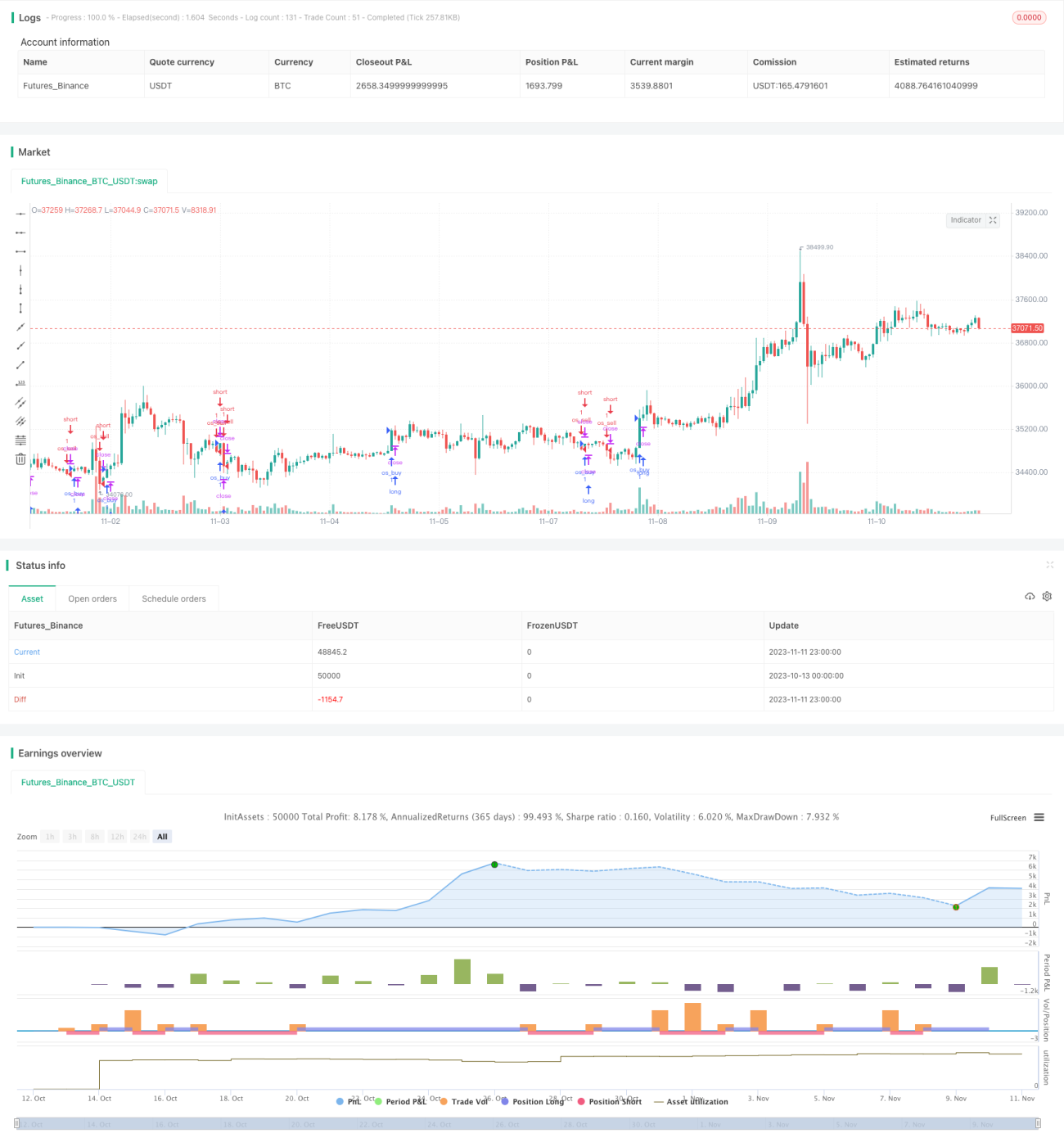
概述
本策略综合运用Ichimoku Kinko Hyo指标以及多种其它技术指标,实现多种交易信号的结合,以发挥Ichimoku系统的优势,同时通过多信号确认进行入场,能有效过滤假信号,在追求高胜率的同时控制风险。
策略原理
本策略主要分为以下几个部分:
-
Ichimoku Kinko Hyo指标的计算,包括转向线(Tenkan-sen)、基准线(Kijun-sen)、先行线(Senkou Span A)、滞后线(Senkou Span B)、云叠(Kumo)等的计算公式。
-
多种过滤器的设定,包括Kumo云叠过滤器、Kijun基准线过滤器、MACD过滤器、RSI过滤器、Bill WilliamsARGUMENTS fractals过滤器、SuperTrend过滤器、Parabolic SAR过滤器和ADX过滤器等。这些过滤器用于确认趋势方向,避免交易受到震荡市的影响。
-
多种交易信号的设定,包括前期收盘价突破基准线信号、Chikou幅与价格或云叠的关系信号、转向线与基准线或云叠的关系信号等共23种Ichimoku原生交易信号。此外,还加入多种其它技术指标信号,如MACD、RSI、Fractals等。这些交易信号用于寻找潜在的交易机会。
-
两级过滤器的设定,用于过滤入场信号。分别选择一种过滤器作為第一级和第二级过滤器,可有效避免假信号。
-
两级过滤器的设定,用于过滤出场信号。类似入场过滤器。
-
多信号集合作为最终的入场和出场信号。根据用户选择的具体交易信号,同时结合一级和二级入场过滤器以及出场过滤器,形成最终的交易决策。
-
止盈止损设置。可以选择是否启用以及具体止盈止损点位。
-
回测周期设置。可以设置回测的起止时间。
策略优势
本策略具有以下优势:
-
综合运用Ichimoku多种指标和多种交易信号的优势,兼顾趋势跟踪和信号过滤。
-
通过两级过滤器设定避免入场时被套,有效控制风险。
-
提供多种交易信号可供选择,可以针对不同市场环境进行优化。
-
提供多种过滤器可供选择,可以针对个股特点进行优化。
-
可设置止盈止损点位,有助于锁定盈利和控制风险。
-
可设置不同的回测周期进行验证,方便针对策略进行优化。
策略风险
本策略也存在一些风险:
-
Ichimoku系统对买卖信号判定比较慢,可能会错过短线交易机会。可以适当缩短周期优化。
-
多重过滤可能过于谨慎,导致入场不确定性。可以测试调整过滤参数。
-
单一止损点位设置不够灵活,无法应对复杂行情。可以考虑动态止损。
-
回测周期设置不够精确,无法完全模拟实盘环境。需要多次调整验证。
策略优化方向
本策略可以从以下方面进行优化:
-
调整Ichimoku系统参数,如调短转向线周期适应短线交易。
-
测试不同的交易信号组合,识别最适合个股的信号选择。
-
优化过滤器参数,平衡过滤效果与入场确定性。
-
尝试动态止损方式,使止损更贴近市场变化。
-
设置更长的回测周期,或使用tick回测数据使模拟更准确。
-
增加仓位管理模块,通过加仓方式优化资金利用效率。
-
增加自动参数优化功能,实现更智能的策略调整。
总结
本策略通过Ichimoku系统提供的多种指标与交易信号,并配合使用其它技术指标进行信号过滤和确认,实现了一套融合趋势跟踪和突破信号的量化交易策略。策略充分发挥Ichimoku系统的优势,同时设计了参数化的模块用于调整和优化,可以更好地适应市场的变化。通过不断测试与优化,本策略有望达到较高的稳定盈利能力。
/*backtest
start: 2023-10-13 00:00:00
end: 2023-11-12 00:00:00
period: 1h
basePeriod: 15m
exchanges: [{"eid":"Futures_Binance","currency":"BTC_USDT"}]
*/

// This source code is subject to the terms of the Mozilla Public License 2.0 at https://mozilla.org/MPL/2.0/
// © ramsay09
//@version=4
strategy(title="The Strategy - Ichimoku Kinko Hyo and more",shorttitle="Strategy ", overlay=true)- 1