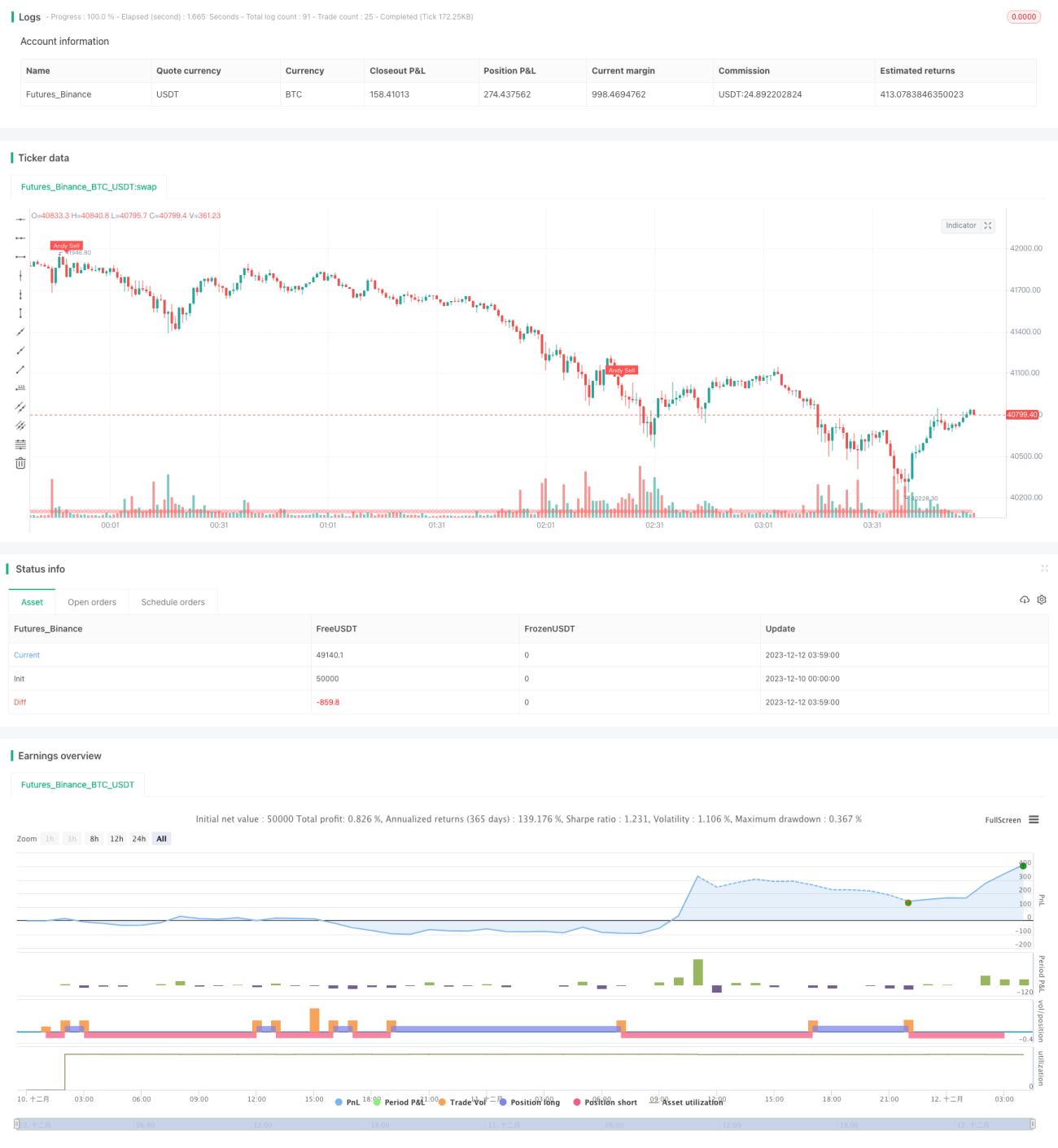
Positive Channel EMA Trailing Stop Strategy
Overview
This strategy is a channel-based stop loss strategy that utilizes the EMA indicator. It integrates trend judgment, channel tracking, and dynamic stop loss and other mainstream technical indicators. It determines bull and bear cycles by judging the order of EMAs and combines ATR channel tracking to implement stop loss so that the stop loss point can continue to track price movements. This kind of stop loss idea is more active and effectively avoids the probability of too aggressive stop loss being broken through.
Strategy Logic
The strategy mainly uses three EMA curves with different cycles to determine bull and bear state. The specific judging rules are:
- EMA5>EMA20>EMA40 is a bull cycle
- EMA20>EMA5>EMA40 is a bull cycle
- EMA20>EMA40>EMA5 is a bull cycle
- EMA40>EMA20>EMA5 is a bear cycle
- EMA40>EMA5>EMA20 is a bear cycle
- EMA5>EMA40>EMA20 is a bear cycle
After determining the bull and bear cycle, the strategy uses SMMA sampled K-line price and ATR indicator multiples as the channel range. Trading signals are only issued when the price breaks through this channel. In addition, after the trading signal is issued, the ATR dynamic tracking stop loss mechanism will be activated to adjust the stop loss position in real time to ensure that the stop loss point can follow the price movement to improve the effectiveness of stop loss.
Advantages
The main advantages of this strategy are:
- Using EMA to judge bull and bear cycles can effectively capture turning points in market trends
- Building entry points based on ATR channels avoids wrongly entering during market consolidations
- ATR dynamic tracking stop loss can maximize profit locking and effectively control risks
Risks and Optimization
The main risks of this strategy are concentrated in the problems caused by improper parameter settings, such as overtrading and stop loss being broken through. Optimization can be done from the following aspects:
- Optimize the combination of EMA cycle parameters to find the best parameter match
- Optimize the ATR multiple size to prevent the stop loss from being too close or too far
- Add other filtering indicators to avoid wrong entries during choppy markets
Conclusion
This strategy integrates multiple mainstream technical indicators and methods such as trend judgment, channel trading, and dynamic stop loss to form a relatively complete stop loss trading system. There is still great room for optimization in parameter tuning and risk control. It is suitable for investors who have high requirements for stop loss.
- 1

