
Overview
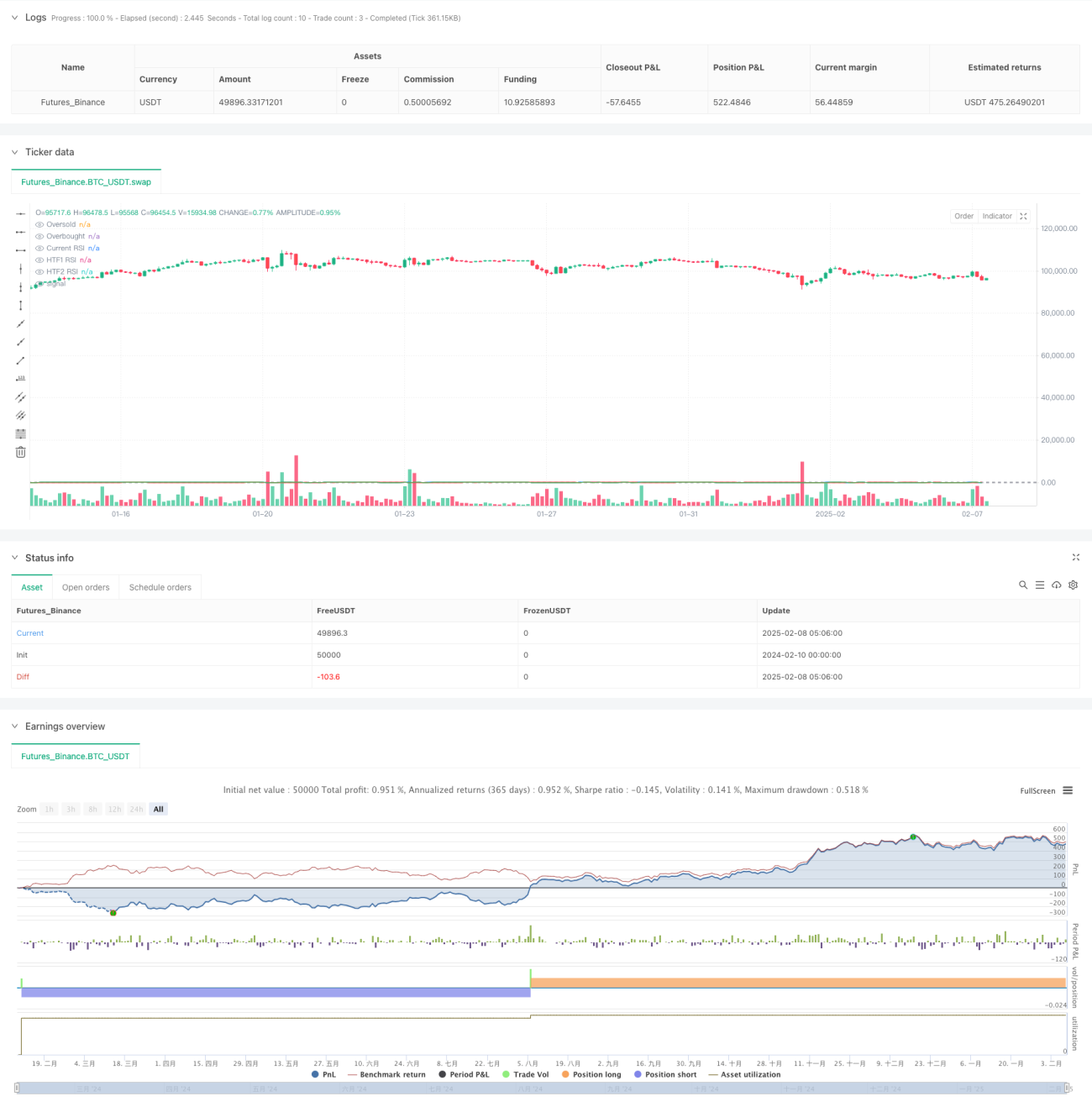
This strategy is a sophisticated trading system that combines multi-timeframe RSI analysis with a dynamic grid trading system. It identifies market overbought and oversold conditions by analyzing RSI values across three different timeframes while using an ATR-based dynamic grid system for position management. The strategy also incorporates daily profit targets and maximum drawdown protection mechanisms to effectively balance returns and risks.
Strategy Principles
The core logic includes several key components:
- Multi-timeframe Analysis - Monitors RSI indicators across current, 60-minute, and 240-minute timeframes, triggering trades only when all three periods show overbought or oversold signals.
- Dynamic Grid System - Uses ATR as volatility reference to dynamically calculate grid spacing. Increases position size with a multiplier factor when price moves against the position.
- Position Management - Uses 1% of account equity as base position size, controlled by lot_multiplier parameter for grid scaling.
- Risk Control - Includes daily profit target, 2% account equity maximum drawdown protection, and reverse signal closure mechanism.
Strategy Advantages
- Multi-dimensional Signal Confirmation - Reduces false signals through analysis of multiple timeframe RSI indicators.
- Flexible Position Management - Dynamic grid system adapts to market volatility.
- Comprehensive Risk Control - Daily profit target and maximum drawdown protection effectively manage risk.
- Highly Customizable - Multiple adjustable parameters for different market environments.
Strategy Risks
- Trend Risk - Grid strategy may face continuous losses in strong trend markets. Consider adding trend filters.
- Capital Management Risk - Multiple grids may lead to excessive capital usage. Strictly control maximum grid levels.
- Parameter Sensitivity - Strategy performance is sensitive to parameter settings. Thorough parameter optimization testing recommended.
Strategy Optimization Directions
- Trend Recognition Enhancement - Add moving averages or other trend indicators as filters.
- Dynamic Parameter Adjustment - Automatically adjust RSI thresholds and grid parameters based on market volatility.
- Stop Loss Optimization - Implement individual stop loss levels for each grid position.
- Time Filtering - Add trading time filters to avoid low liquidity periods.
Summary
This strategy creates a balanced trading approach by combining multi-timeframe RSI analysis with a dynamic grid trading system. Its comprehensive risk control mechanisms and flexible parameter settings make it suitable for various market environments. The strategy's stability and profitability can be further enhanced through the suggested optimization directions.
- 1