
Overview
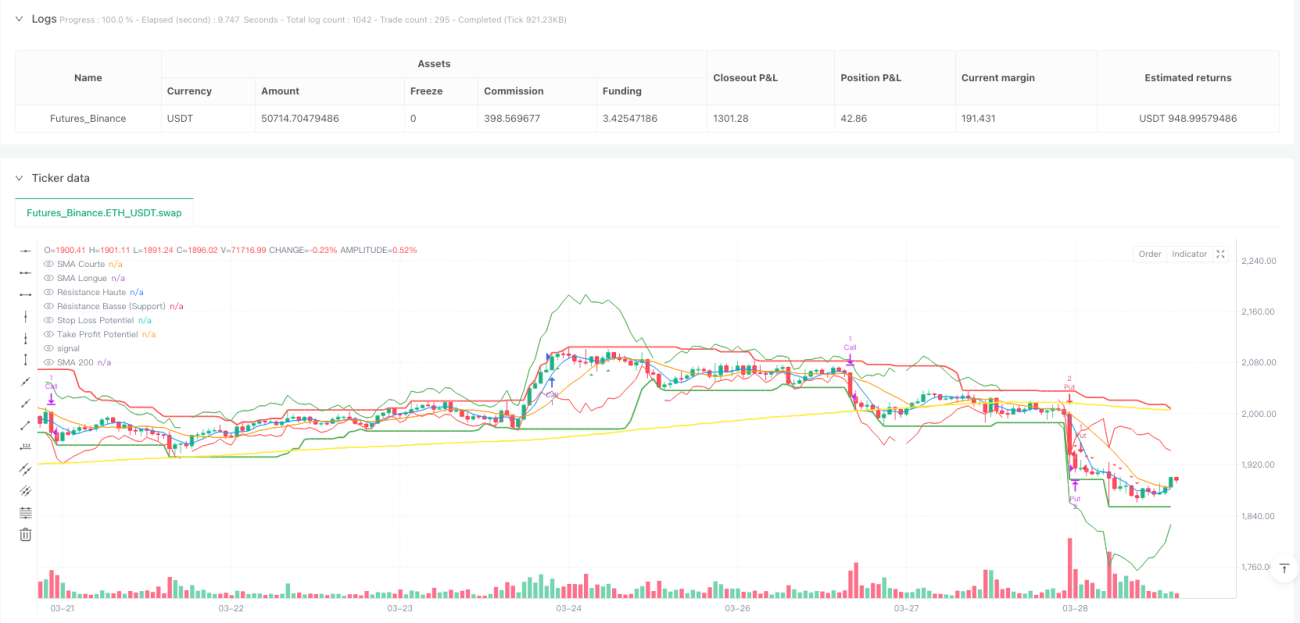
This strategy is a multi-dimensional short-term trend prediction approach focusing on leveraging the synergistic effects of multiple technical indicators to identify and predict short-term trend changes in financial markets. By integrating key technical analysis tools such as Simple Moving Averages (SMA), Relative Strength Index (RSI), Average Directional Index (ADX), Average True Range (ATR), Moving Average Convergence Divergence (MACD), and Stochastic Oscillator, the strategy aims to enhance the accuracy and reliability of trading signals.
Strategy Principles
The core principle of this strategy is based on synergistic technical indicator analysis and trend confirmation mechanisms. Trading signals are generated by comprehensively considering the following key factors:
- Short-term and long-term moving average crossovers
- RSI overbought/oversold states
- MACD line and signal line changes
- Stochastic oscillator momentum indicators
- ADX trend strength
- Overall market trend via 200-period moving average
- Recent market volatility
The strategy dynamically calculates potential entry points, stop-loss, and take-profit levels, adjusting these critical parameters based on recent market volatility to achieve risk management and trade execution.
Strategy Advantages
- Multi-indicator comprehensive analysis: Integrating multiple technical indicators reduces the risk of misjudgment from single indicators
- Dynamic risk management: ATR-based stop-loss and take-profit mechanisms adapt to market volatility
- Flexible timeframe: Supports trading cycles from 5 minutes to 4 hours
- Adaptive position sizing: Dynamically adjusts position size based on available capital and per-trade risk percentage
- Trend strength confirmation: Using ADX to validate trend effectiveness, avoiding frequent trading in ranging markets
Strategy Risks
- Complexity of multiple indicators may cause signal generation delays
- Potential contradictory signals in highly unstable market environments
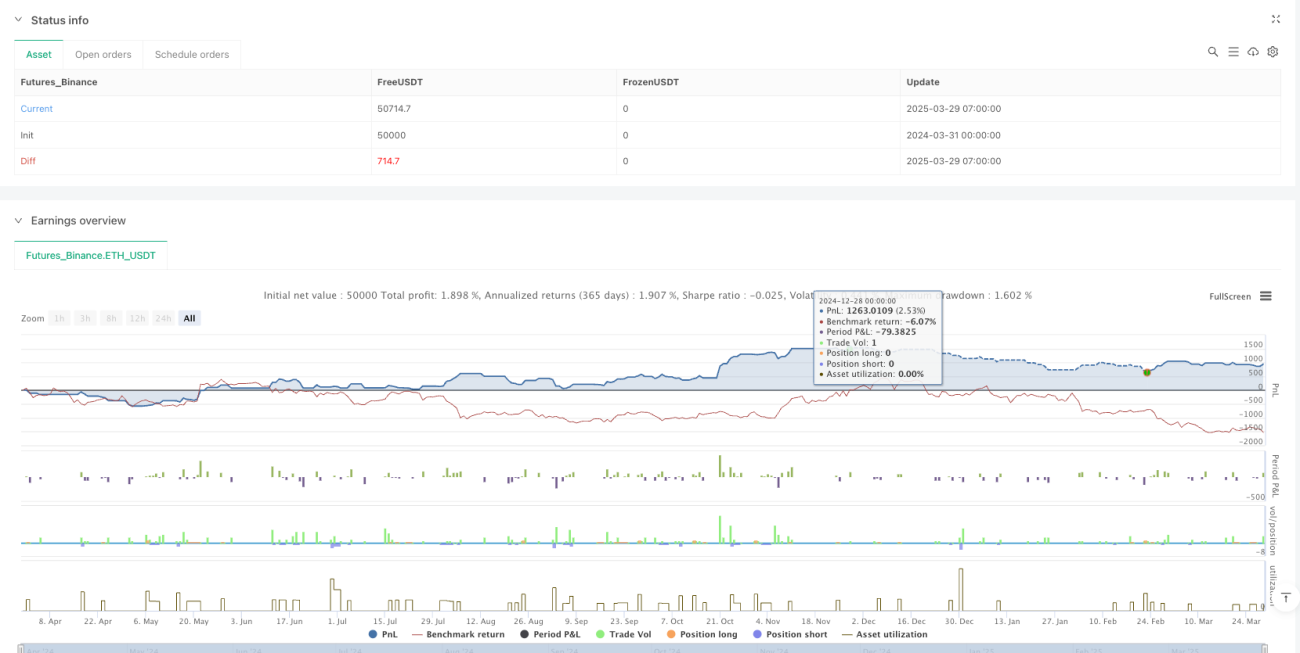
- Backtesting results may not fully represent actual future trading performance
- Leveraged trading can significantly amplify losses
- Lack of consideration for fundamental factors and unexpected market events
Strategy Optimization Directions
- Introduce machine learning algorithms for dynamic indicator weight adjustment
- Incorporate more fundamental and sentiment indicators
- Develop more intelligent position management algorithms
- Customize personalized parameters for different markets and asset classes
- Integrate real-time news and social media sentiment analysis
Conclusion
This is a multi-dimensional, data-driven short-term trend prediction strategy that aims to improve trading decision accuracy and reliability through complex technical indicator combinations and dynamic risk management mechanisms. Despite its theoretical advantages, practical application requires caution and continuous backtesting and optimization.
- 1