Multi-Indicator Dynamic Trend Trading Strategy: SuperTrend, ADX and Liquidity Delta Comprehensive Analysis System

Overview
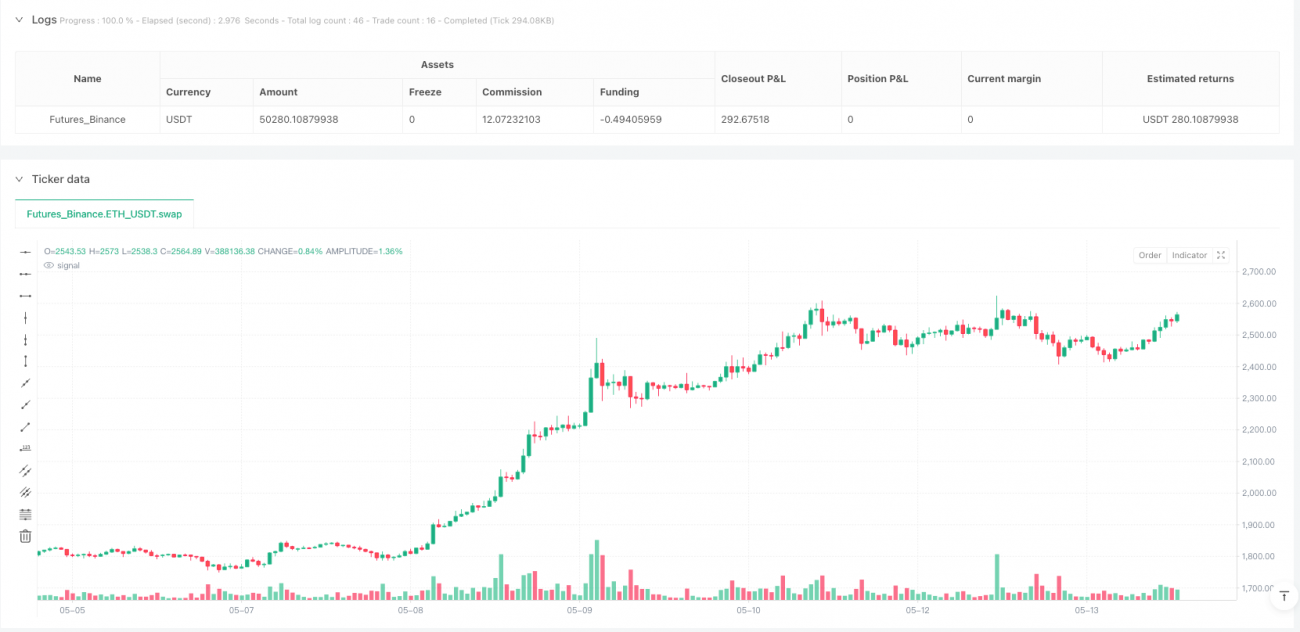
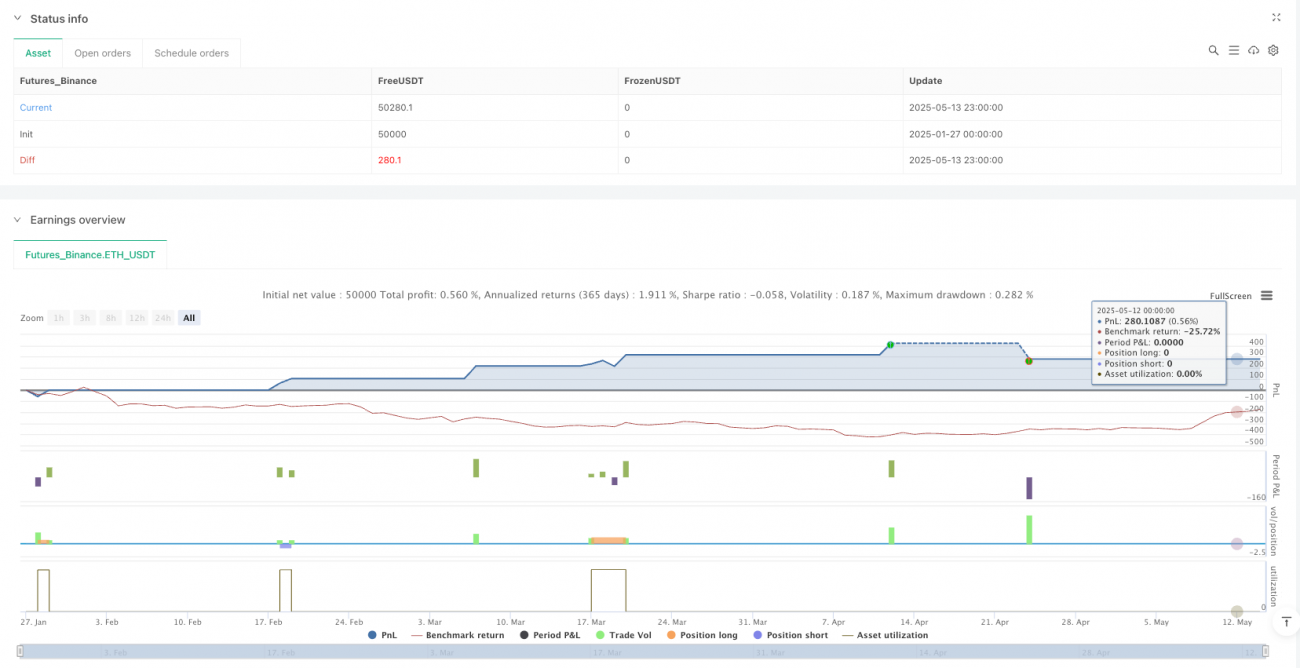
This strategy is a comprehensive technical analysis trading system that identifies high-probability swing trading opportunities by integrating multiple indicators. The system primarily utilizes the SuperTrend indicator as a trend direction filter, combines ADX (Average Directional Index) to confirm trend strength, and employs Liquidity Delta to analyze buying and selling pressure imbalances, thereby generating precise entry and exit signals across various market environments. The strategy adopts a conservative risk management approach, setting fixed percentage-based stop losses (default 2%) and take profits (default 4%) to ensure a favorable risk-reward ratio. The system is designed for daily timeframe swing trading in cryptocurrencies, forex, or stock indices, particularly suitable for assets with clear trending behavior and sufficient volatility.
Strategy Principles
The strategy works through the collaborative operation of four core indicators to form trading signals:
-
SuperTrend Indicator: Acts as the primary trend direction filter with optimized settings (Factor: 3.0, ATR Period: 10) to balance responsiveness and reliability. When the price is above the SuperTrend line, it identifies an uptrend; when the price is below the SuperTrend line, it identifies a downtrend.
-
ADX Indicator: Used to confirm the strength of the current trend, filtering out sideways or choppy market conditions. The strategy employs a custom implementation, calculating true range, positive and negative directional movements, ultimately generating the ADX value. When the ADX value exceeds the set threshold (default 25), it indicates a strong trend, and the system is more inclined to generate trading signals.
-
Liquidity Delta Indicator: Analyzes volume buying and selling pressure imbalances, calculating bid volume and ask volume, and obtaining the final delta value through a series of normalization and smoothing processes. When the delta value exceeds the positive threshold, it generates a long signal; when it falls below the negative threshold, it generates a short signal, thereby validating trend direction and potential reversals.
-
PSAR Indicator (Optional): Can serve as additional confirmation for trend changes, disabled by default to reduce signal filtering. When the price is above the PSAR point, it is viewed as an uptrend; when the price is below the PSAR point, it is viewed as a downtrend.
The trading logic generates comprehensive signals by combining all activated indicators. Only when all indicators point in the same direction will the final buy or sell signal be produced. For example, the system only generates a buy signal when the PSAR condition, SuperTrend condition, ADX condition, and Liquidity Delta condition all satisfy the long requirements. Additionally, the strategy allows users to select trading direction (long-only, short-only, or bidirectional trading) to adapt to different market environments or account restrictions.
Strategy Advantages
This strategy offers several significant advantages:
-
Multi-dimensional Confirmation System: By integrating different types of technical indicators, it confirms trades across multiple dimensions including trend, strength, and volume, significantly reducing the risk of false signals and improving trading accuracy.
-
High Adaptability: The strategy allows users to flexibly choose trading direction and enable/disable specific indicators, enabling the system to adapt to various market conditions and different trading instruments.
-
Strict Risk Control: Built-in fixed percentage-based stop loss and take profit mechanisms ensure that each trade has predefined risk limits and profit targets, effectively protecting capital safety.
-
Consideration of Realistic Trading Costs: The strategy model includes commission (0.035%) and slippage (2 points) calculations, making backtesting results more aligned with real trading environments.
-
Visualized Trading Signals: Provides clear buy/sell signal arrows with customizable sizes, facilitating quick identification on charts.
-
Information Panel: Dynamically displays currently active indicators and risk settings, providing immediate feedback on strategy operation status.
-
Conservative Position Management: Default uses 5% of equity as position size for each trade, avoiding capital losses due to excessive trading.
Strategy Risks
Despite the comprehensive design of this strategy, there are still the following potential risks:
-
Parameter Sensitivity: Strategy performance is highly dependent on indicator parameter settings, especially the SuperTrend factor and ADX threshold. Different market environments may require different parameter optimizations; otherwise, it may lead to overtrading or missing important opportunities.
-
Lag Risk: Due to the use of multiple moving average-type indicators, signals may experience some lag, resulting in untimely entry or exit in rapidly reversing markets.
-
Correlation Risk: There may be inherent correlations between multiple technical indicators, meaning seemingly independent confirmations may come from indicators based on similar mathematical models, reducing the actual value of multiple confirmations.
-
Overfitting Risk: Performing well during the 2021-2033 backtesting period does not necessarily mean it will be equally effective in future markets, especially if these parameters are the result of overfitting to historical data.
Solutions:
- Regularly reassess and adjust indicator parameters to ensure they remain applicable to the current market environment
- Consider adding indicators based on different principles, such as sentiment indicators or fundamental indicators, to reduce correlation between technical indicators
- Implement dynamic stop-loss strategies, such as trailing stops, to better adapt to market fluctuations
- Conduct live testing with small capital, gradually validating strategy performance under different market conditions
Strategy Optimization Directions
The strategy can be optimized in the following aspects:
-
Dynamic Parameter Adjustment: Implement a mechanism to automatically adjust SuperTrend factors and ADX thresholds based on market volatility, allowing the strategy to better adapt to different market environments. For example, use smaller SuperTrend factors in low-volatility markets and larger factors in high-volatility markets.
-
Time Filters: Add time-based filtering mechanisms to avoid trading during known low-liquidity or high-volatility periods, such as weekends in cryptocurrency markets or important economic data release periods in forex markets.
-
Multi-timeframe Analysis: Integrate higher timeframe trend confirmation, for example, only entering trades when the daily trend direction aligns with the current trading timeframe. This can significantly improve the strategy's win rate.
-
Intelligent Stop-Loss Strategy: Replace fixed percentage stop-losses with dynamic stops based on ATR or support/resistance levels, better reflecting actual market volatility conditions and reducing stop-losses triggered by market noise.
-
Additional Entry Filtering Conditions: Consider adding filtering conditions such as RSI overbought/oversold judgments or Bollinger Band boundary tests, entering only at more favorable price levels to improve entry quality.
-
Capital Management Optimization: Implement dynamic position management based on current strategy performance and market conditions, gradually increasing positions when the strategy performs well and reducing positions when uncertainty increases.
-
Machine Learning Enhancement: Utilize machine learning techniques to optimize indicator weight allocation, automatically adjusting the importance of each indicator in final signal formation according to different market environments.
Summary
The Multi-Indicator Dynamic Trend Trading Strategy constructs a comprehensive and flexible trading system by integrating multiple technical indicators such as SuperTrend, ADX, and Liquidity Delta, suitable for swing trading in various market environments. The core advantages of this strategy lie in its multi-dimensional signal confirmation mechanism and strict risk management framework, effectively filtering market noise and protecting trading capital. However, users need to be aware of potential risks such as parameter sensitivity and indicator lag, and regularly reassess strategy performance.
By implementing the suggested optimization directions, such as dynamic parameter adjustments, multi-timeframe analysis, and intelligent stop-loss strategies, the system has the potential to further improve its profitability and stability. Ultimately, this strategy provides quantitative traders with a solid framework that can be customized and expanded according to individual risk preferences and market views.
- 1