Stratégie de trading de suivi de tendance et de divergence avec les canaux de Donchian multi-périodes

Aperçu
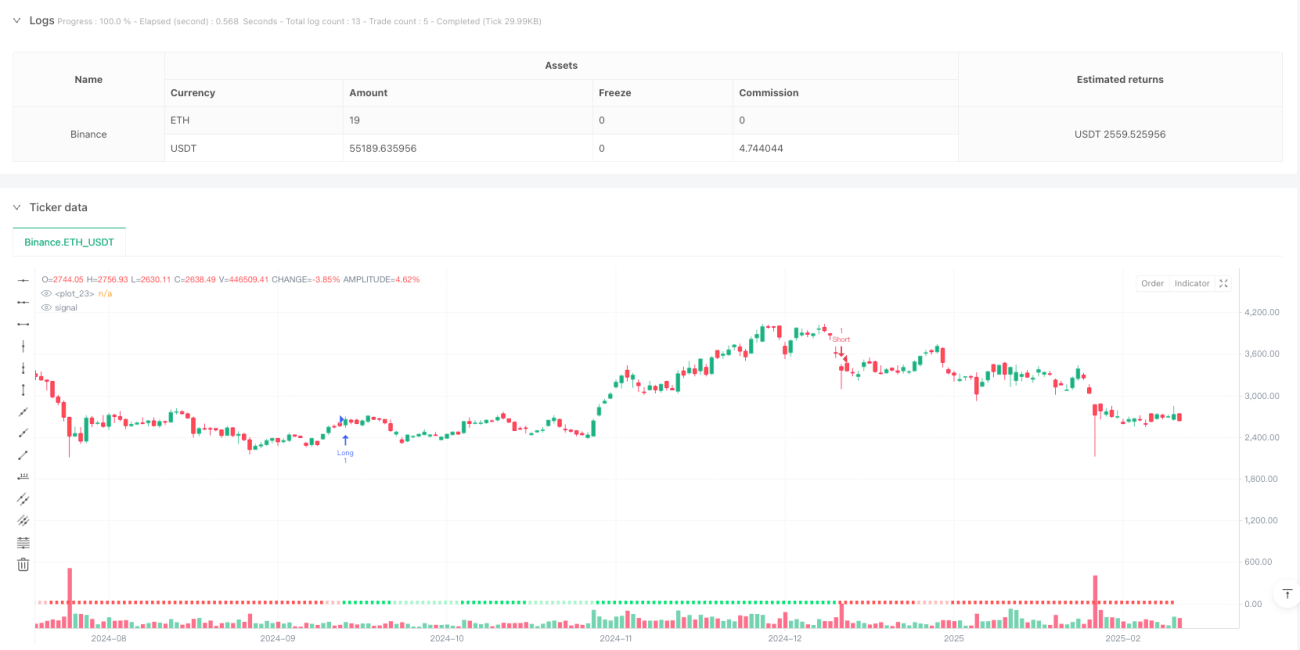
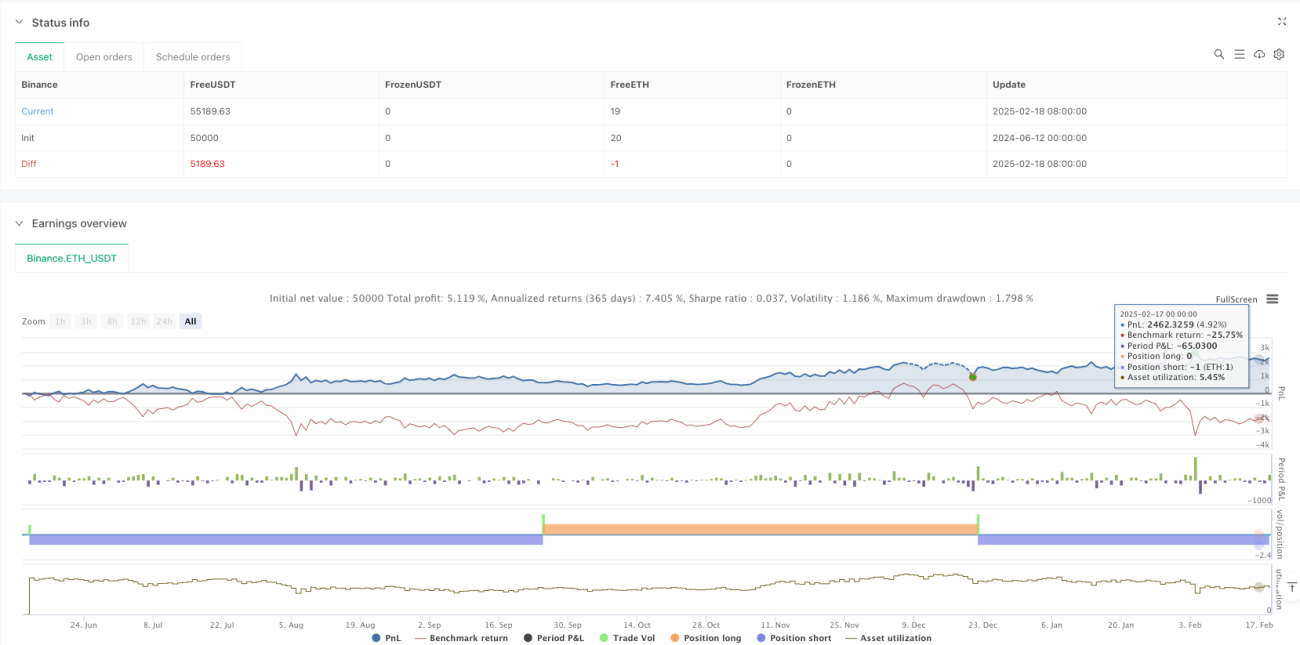
Cette stratégie construit un système de suivi de tendance basé sur l'indicateur de canal de Donchian à multiples périodes. En analysant les cassures des canaux de Donchian sur différentes périodes, combinées à la relation de coordination entre la tendance principale et les tendances locales, elle forme une bande de tendance visuellement intuitive. La stratégie utilise des variations de couleur pour indiquer la force de la tendance : les nuances de vert représentent une tendance haussière, les nuances de rouge une tendance baissière, plus la couleur est foncée, plus la tendance est marquée.
Principe de la stratégie
Le cœur de la stratégie repose sur l'indicateur de canal de Donchian pour déterminer la tendance. Le canal de Donchian est constitué d'un canal de prix maximum et d'un canal de prix minimum. En comparant la position du prix actuel par rapport au canal, on évalue la tendance. Il comprend les éléments clés suivants :
- Détermination de la tendance principale : utilisation du canal de Donchian sur 20 périodes. Lorsque le prix franchit la bande supérieure, une tendance haussière se forme ; lorsqu'il franchit la bande inférieure, une tendance baissière se forme.
- Détermination de la tendance locale : dans le cadre de la tendance principale, on utilise un canal de Donchian de plus courte période pour évaluer l'orientation de la tendance locale.
- Bande de tendance : combinaison de 10 canaux de Donchian de différentes périodes formant une bande de tendance, la profondeur des couleurs reflétant la force de la tendance.
- Signaux de trading : ouverture d'une position longue lorsque la tendance principale est haussière, ouverture d'une position courte lorsque la tendance principale est baissière, et clôture lors d'un retournement de tendance.
Avantages de la stratégie
- Jugement objectif de la tendance : basé sur les cassures de prix, évitant les biais subjectifs.
- Confirmation multi-périodes : amélioration de la précision grâce à la superposition des tendances de différentes périodes.
- Visuel intuitif : les changements de couleur de la bande de tendance montrent clairement l'état du marché.
- Règles de trading claires : signaux d'entrée et de sortie précis, faciles à programmer.
- Adaptabilité : possibilité d'ajuster les paramètres en fonction des caractéristiques de l'instrument négocié pour optimiser les performances.
Risques de la stratégie
- Risque de retournement de tendance : des drawdowns importants peuvent survenir aux points de retournement.
- Inadaptation aux marchés de range : dans une phase de consolidation, de faux signaux peuvent être générés.
- Sensibilité aux paramètres : des réglages différents influencent considérablement l'efficacité de la stratégie.
- Impact du slippage : les transactions fréquentes peuvent être affectées par le slippage.
- Risque systémique : des événements imprévus sur le marché peuvent entraîner des pertes importantes.
Directions d'optimisation
- Ajout d'un filtre de force de tendance : introduire des indicateurs comme l'ADX pour filtrer les signaux de tendance faible.
- Optimisation du stop-loss : ajustement dynamique du stop-loss basé sur l'ATR pour améliorer la gestion des risques.
- Confirmation par le volume : intégrer l'analyse des volumes pour valider la validité de la tendance.
- Adaptation à la volatilité : ajustement dynamique des paramètres en fonction de la volatilité du marché.
- Amélioration de la gestion de position : ajustement de la taille de la position en fonction de la force de la tendance.
Conclusion
Cette stratégie, grâce à une application innovante des canaux de Donchian à multiples périodes, construit un système de suivi de tendance visuellement frappant et logique. Son principal avantage réside dans la visualisation du processus complexe d'analyse de tendance, permettant aux traders de saisir intuitivement l'évolution du marché. Avec une optimisation appropriée des paramètres et des mesures de contrôle des risques, cette stratégie a une bonne valeur pratique. Il est recommandé aux traders de prêter attention au choix de l'environnement de marché lors de l'application en conditions réelles et de gérer leur position en fonction de leur tolérance au risque.
/*backtest
start: 2024-06-12 00:00:00
end: 2025-02-19 08:00:00
period: 1d
basePeriod: 1d
exchanges: [{"eid":"Binance","currency":"ETH_USDT"}]
*/

//@version=6
strategy("Donchian Trend Ribbon Strategy", shorttitle="DonchianTrendRibbonStrat", overlay=true, precision=0)

//~~~~~~~~~~~~~~~~~~~~~~~~~~~~~~~~~~~~~~~~~~~~~~~~~~~~~~~~~~~~~~~~~~~~~~~~~~~~~~- 1