Strategi Investasi Dollar-Cost Averaging Bollinger Bands Tipe Mean-Reversion

Ikhtisar
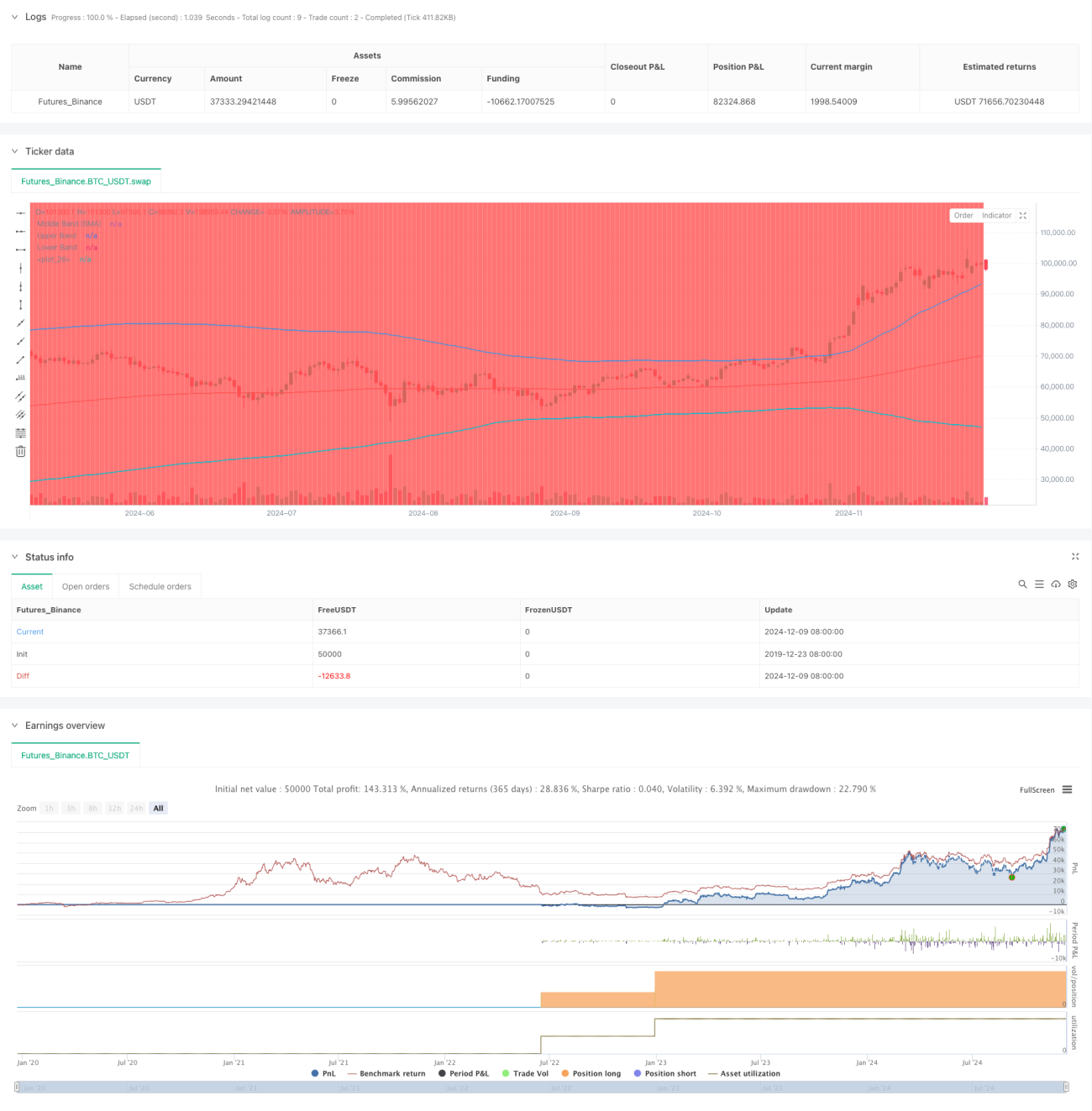
Strategi ini adalah strategi investasi cerdas yang menggabungkan metode Dollar Cost Averaging (DCA) dan indikator teknikal Bollinger Bands. Strategi ini secara sistematis membangun posisi selama periode koreksi harga, memanfaatkan prinsip mean reversion untuk berinvestasi. Inti dari strategi ini adalah melakukan pembelian dengan jumlah tetap saat harga menembus batas bawah Bollinger Bands, sehingga memperoleh harga masuk yang lebih baik selama periode penyesuaian pasar.
Prinsip Strategi
Prinsip inti strategi didasarkan pada tiga pilar: 1) Dollar Cost Averaging, dengan menginvestasikan jumlah tetap secara berkala untuk mengurangi risiko pemilihan waktu; 2) Teori Mean Reversion, yang beranggapan bahwa harga pada akhirnya akan kembali ke rata-rata historisnya; 3) Indikator Bollinger Bands, yang digunakan untuk mengidentifikasi area overbought dan oversold. Sinyal beli dipicu saat harga menembus batas bawah Bollinger Bands, dengan jumlah pembelian ditentukan oleh jumlah investasi yang ditetapkan dibagi harga saat ini. Strategi ini menggunakan Exponential Moving Average (EMA) 200 periode sebagai garis tengah Bollinger Bands, dengan pengali standar deviasi sebesar 2 untuk menentukan batas atas dan bawah.
Keunggulan Strategi
- Mengurangi risiko pemilihan waktu - Mengurangi kesalahan manusia melalui pembelian sistematis, bukan penilaian subjektif.
- Memanfaatkan peluang koreksi - Secara otomatis melakukan pembelian saat harga mengalami oversold.
- Pengaturan parameter yang fleksibel - Parameter Bollinger Bands dan jumlah investasi dapat disesuaikan dengan kondisi pasar yang berbeda.
- Aturan masuk dan keluar yang jelas - Berdasarkan sinyal objektif dari indikator teknikal.
- Eksekusi otomatis - Tanpa campur tangan manusia, menghindari perdagangan emosional.
Risiko Strategi
- Risiko kegagalan mean reversion - Dapat menghasilkan banyak sinyal palsu di pasar yang sedang tren.
- Risiko manajemen modal - Perlu menyediakan dana yang cukup untuk menangani sinyal pembelian beruntun.
- Risiko optimasi parameter - Optimasi berlebihan dapat menyebabkan strategi gagal.
- Ketergantungan pada kondisi pasar - Kinerja mungkin buruk di pasar yang sangat fluktuatif.
Disarankan untuk menerapkan sistem manajemen modal yang ketat dan mengevaluasi kinerja strategi secara berkala untuk mengelola risiko-risiko ini.
Arah Optimasi Strategi
- Memasukkan filter tren untuk menghindari tindakan kontra-tren di pasar yang sedang tren kuat.
- Menambahkan mekanisme konfirmasi multi-timeframe.
- Mengoptimalkan sistem manajemen modal, menyesuaikan jumlah investasi secara dinamis berdasarkan volatilitas.
- Menambahkan mekanisme take profit, merealisasikan keuntungan saat harga kembali ke rata-rata.
- Mempertimbangkan untuk menggabungkan indikator teknikal lain guna meningkatkan keandalan sinyal.
Kesimpulan
Ini adalah strategi kokoh yang menggabungkan analisis teknikal dengan metode investasi sistematis. Dengan menggunakan Bollinger Bands untuk mengidentifikasi peluang oversold, dipadukan dengan Dollar Cost Averaging untuk mengurangi risiko. Kunci keberhasilan strategi terletak pada pengaturan parameter yang wajar dan disiplin eksekusi yang ketat. Meskipun memiliki risiko tertentu, stabilitas strategi dapat ditingkatkan melalui optimasi berkelanjutan dan manajemen risiko.
/*backtest
start: 2019-12-23 08:00:00
end: 2024-12-10 08:00:00
period: 1d
basePeriod: 1d
exchanges: [{"eid":"Futures_Binance","currency":"BTC_USDT"}]
*/

//@version=5
strategy("DCA Strategy with Mean Reversion and Bollinger Band", overlay=true) // Define the strategy name and set overlay=true to display on the main chart

// Inputs for investment amount and dates- 1