興味深いPine戦略に偶然出会った
数日前、Inventorフォーラムで戦略を閲覧していたところ、次のような投稿を見つけました。Panel Pro+ Quantum SmartPromptコードを確認した後、その根底にあるコンセプトが非常に興味深いと感じました。10種類のテクニカル指標を用い、市場の状況に応じて各指標に異なるウェイトを割り当て、最終的にスコアを計算して売買の判断を下すのです。例えば、強気相場ではトレンド指標のウェイトは2.0、RSIのウェイトは1.5です。弱気相場ではウェイトが異なります。まるで人間の思考方法、つまり状況に応じて異なる点に着目する考え方を模倣しているように感じます。
よく考えてみると、この構造はニューラル ネットワークによく似ています。
- 入力時の10個のテクニカル指標
- 隠れ層のような市場状態分類
- 重み行列は接続重みである
- 最後にスコアを出力する
しかし、問題はすべての重みがハードコードされていることです。たとえば、次のようになります。
pine
if marketType == "Bull"
array.set(weights, 0, 2.0) // 趋势权重固定是2.0
array.set(weights, 1, 1.5) // RSI权重固定是1.5
これらの数値は市場経験に基づいて著者によって完全に固定されており、いかなる形でも研究または最適化されていません。
アイデア: 重みを学習可能にする
構造はすでにニューラルネットワークに非常に似ているので、実際に学習できるようにしてみませんか?
私の考えはシンプルです。
- 従来の重量計算方法を維持し、「重量スコア」を取得します
- この加重スコアを入力として小さなニューラルネットワークを訓練する
- ネットワークに加重スコアから将来のリターンを予測することを学習させる
- 予測収益率に基づいてポジションを開くかどうかを決定する
これにより、元の戦略が保持されるだけでなく、学習能力も向上します。
Inventor プラットフォームを使い始める
Inventor プラットフォームが選ばれた主な理由は、Python をサポートし、豊富なデータが含まれているためです。
ステップ1:テクニカル指標を書き換える
Pineスクリプト内のすべてのインジケーターをPythonで書き直し、Talibライブラリを使用して正確な計算を実現しました。これには、EMA、MACD、RSI、ATRなどの一般的なインジケーターに加え、出来高分析やシンプルなローソク足パターン認識機能も含まれます。
ステップ2: 市場状況の検出
元の戦略のロジックに従って、ブル、ベア、イーグル、ウルフなどのさまざまな指標の組み合わせに基づいて市場タイプが決定されます。この部分は基本的に if-else ロジックの組み合わせです。
ステップ3: 重みスコアの計算
これが核となる部分です。2つの重みを設定しました。
- ベース重量:[2.0, 1.5, 2.0, 1.3, 1.2, ...]
- 市場ウェイト:さまざまな市場状況に応じて調整
最終重量 = ベース重量 × 市場重量
この重みは、10 個の指標の元のスコアに重み付けして合計し、「加重スコア」を取得するために使用されます。
ステップ4: ニューラルネットワーク予測
非常にシンプルなネットワークを作成しました:
- 入力: 1つの特徴量(加重スコア)
- 隠れ層: 16 ニューロン、ReLU 活性化
- 出力: tanhを使用して±5%に制限された予測収益率
トレーニング目標: 時刻 t-1 の重みスコアを使用して、時刻 t の価格の変化を予測します。
ステップ5: トランザクションロジック
格付けに基づいて直接売買するのではなく、予測収益率を確認します。
- 予想収益率 > 1.5%: ロングポジションを開くか、ショートポジションをクローズする
- 予想収益率 < -1.5%: ショートポジションを開くか、ロングポジションをクローズする
- その他の状況: 現状維持
同時に、リスクが制御可能であることを確認するために、ストッププロフィットとストップロスを維持します。
実際の操作に関するいくつかの観察
データ収集
この戦略は、通常通りトレーニングデータを収集できます。新しいローソク足が出現するたびに、前のローソク足の重みスコアが特徴量として使用され、現在のローソク足と前のローソク足の相対的な増加または減少がラベルとして使用されます。
データはおそらく次のようになります:
            权重评分=15.6, 收益率=+0.8%
权重评分=-8.2, 收益率=-1.2%
权重评分=22.1, 收益率=+0.3%
モデルのトレーニング
ニューラルネットワークは通常通り学習でき、MSE損失は徐々に減少します。モデルが市場の変化に適応できるよう、4時間ごとに再学習するように設定してください。
予測効果
モデルの予測は実際のリターンと一定の相関関係がありますが、特に強いわけではありません。
- 単一の機能は単純すぎるため、十分な情報が含まれていない可能性があります
- 短期的な価格変動は非常にランダムである
- 契約市場は非常に騒がしい
取引実績
ストップロスとテイクプロフィットの保護により、単一取引のリスクは適切に管理されています。しかし、全体的な収益性は平均的であり、これは主に予測精度が低いことが原因です。
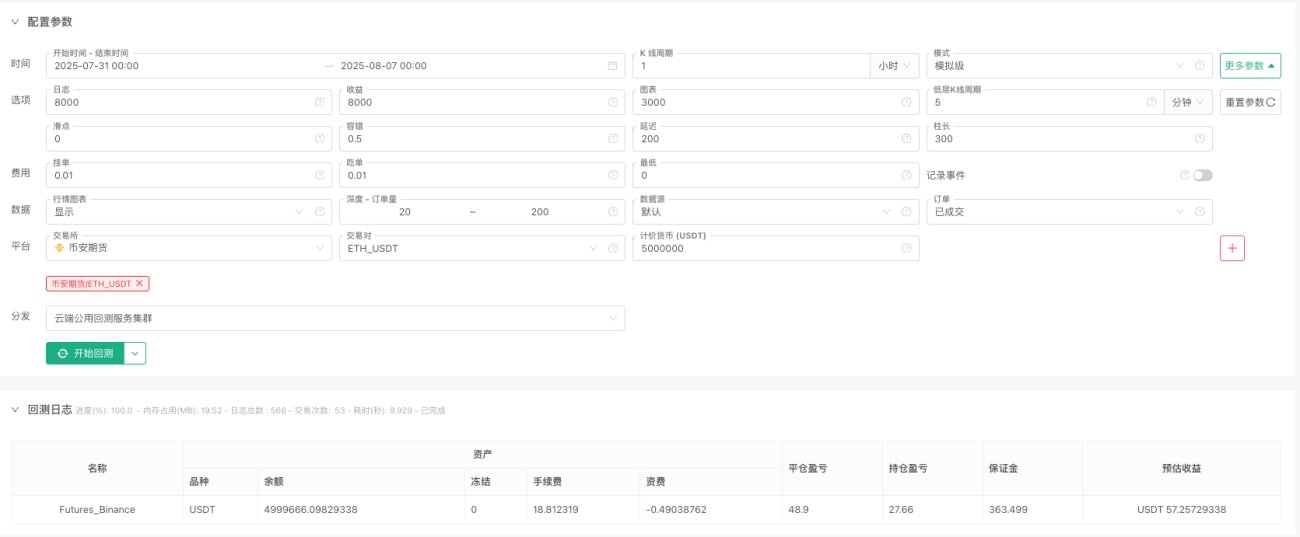
いくつかの問題が発生しました
機能がシンプルすぎる重み付けだけで単一の特徴を評価するのは少し単純すぎるかもしれません。市場は非常に複雑なので、単一の数値で完全に把握するのは困難です。
サンプル品質が不安定: 契約価格は短期的に大きく変動し、多くの場合その上昇と下降は実際にはランダムであり、トレーニング サンプルの品質が不安定になります。
オーバーフィットするリスク: ネットワークはシンプルですが、サンプル サイズが制限されている場合は過剰適合する可能性があります。
リアルタイム要件オンライン学習では、トレーニング時間とリアルタイムのパフォーマンスのバランスが必要です。
限られた時間と不十分な最適化
この戦略にはまだ改善できる点が数多くありますが、時間とエネルギーが限られているため、徹底的に最適化することはできません。
特徴: より多くのテクニカル指標を追加したり、価格シリーズの統計特性を使用したりすることができます。
モデル: LSTM などのシーケンス モデルを試したり、複数のモデルを統合したりできます。
データ: サンプルの品質を向上させ、データのクリーニングを強化します。
風力制御について: 動的ストップロスを改善し、ポジション管理を最適化します。
得たものと考察
この探求を通して、私は一つの教訓を得ました。それは、良いアイデアを生み出す鍵は、タイムリーな実装にあるということです。Pineスクリプトの重み行列設計を見た時、ニューラルネットワークでそれを改善できる可能性をすぐに思いつきました。もしただ考えただけ、あるいは先延ばしにしていたなら、そのアイデアはおそらく忘れ去られていたでしょう。幸いなことに、InventorプラットフォームはPython環境とデータインターフェースを提供してくれたので、アイデアを実行可能なコードに素早く変換することができました。アイデアの創出から基本的な実装まで、たった1日しかかかりませんでした。最終的な戦略のパフォーマンスは平凡なものでしたが、実際の実装によって、少なくともアイデアの実現可能性は検証されました。さらに重要なのは、実装プロセスによって新たなアイデアと改良が生まれたことです。迅速な行動がなければ、これらの発見と洞察は不可能だったでしょう。紙の上でアイデアを語ることは、コードを書き、データを実行し、結果を観察するという現実の経験には決して匹敵しません。これがクオンツトレーディングの本質です。アイデアは数多くありますが、真に価値のあるアイデアは、迅速に実装され、検証されたものなのです。
python
'''backtest
start: 2025-07-31 00:00:00
end: 2025-08-07 00:00:00
period: 1h
basePeriod: 5m
exchanges: [{"eid":"Futures_Binance","currency":"ETH_USDT","balance":5000000,"fee":[0.01,0.01]}]
'''
import numpy as np
from collections import deque
import talib as TA
# ========== 异常类 ==========
class Error_noSupport(BaseException):
def __init__(self):
Log("只支持期货交易!#FF0000")
class Error_AtBeginHasPosition(BaseException):
def __init__(self):
Log("启动时有期货持仓! #FF0000")
# ========== 收益率预测神经网络 ==========
class ReturnPredictor:
def __init__(self, input_size=10, hidden_size=20, output_size=1):
"""收益率预测网络: X[t] -> y[t+1] (收益率)"""
self.W1 = np.random.randn(input_size, hidden_size) * 0.1
self.b1 = np.zeros((1, hidden_size))
self.W2 = np.random.randn(hidden_size, output_size) * 0.1
self.b2 = np.zeros((1, output_size))
self.learning_rate = 0.001
def sigmoid(self, x):
return 1 / (1 + np.exp(-np.clip(x, -250, 250)))
def tanh(self, x):
return np.tanh(x)
def forward(self, X):
self.z1 = np.dot(X, self.W1) + self.b1
self.a1 = self.sigmoid(self.z1)
self.z2 = np.dot(self.a1, self.W2) + self.b2
# 输出预测收益率,使用tanh限制在合理范围
self.a2 = self.tanh(self.z2) * 0.1 # 限制在±10%范围内
return self.a2
def backward(self, X, y, output):
m = X.shape[0]
# MSE损失的梯度
dZ2 = (output - y) / m
# tanh的导数
tanh_derivative = 1 - (output / 0.1) ** 2
dZ2 = dZ2 * 0.1 * tanh_derivative
dW2 = np.dot(self.a1.T, dZ2)
db2 = np.sum(dZ2, axis=0, keepdims=True)
dA1 = np.dot(dZ2, self.W2.T)
dZ1 = dA1 * self.a1 * (1 - self.a1) # sigmoid导数
dW1 = np.dot(X.T, dZ1)
db1 = np.sum(dZ1, axis=0, keepdims=True)
# 更新权重
self.W2 -= self.learning_rate * dW2
self.b2 -= self.learning_rate * db2
self.W1 -= self.learning_rate * dW1
self.b1 -= self.learning_rate * db1
def train(self, X, y, epochs=100):
for i in range(epochs):
output = self.forward(X)
self.backward(X, y, output)
if i % 20 == 0:
loss = np.mean((output - y) ** 2)
Log(f"收益率预测训练轮次 {i}, MSE损失: {loss:.6f}")
def predict(self, X):
return self.forward(X)
# ========== 技术指标计算类 ==========
class TechnicalIndicators:
@staticmethod
def calculate_indicators(records, use_completed_only=True):
"""计算技术指标和特征"""
if len(records) < 55:
return None, None
# 只使用已完成的K线数据
if use_completed_only and len(records) > 1:
working_records = records[:-1]
else:
working_records = records
if len(working_records) < 55:
return None, None
closes = np.array([r['Close'] for r in working_records])
highs = np.array([r['High'] for r in working_records])
lows = np.array([r['Low'] for r in working_records])
volumes = np.array([r['Volume'] for r in working_records])
opens = np.array([r['Open'] for r in working_records])
try:
# 基础指标
ema_55 = TA.EMA(closes, timeperiod=55)
sma_vol20 = TA.SMA(volumes, timeperiod=20)
macd, signal_line, _ = TA.MACD(closes)
rsi_val = TA.RSI(closes, timeperiod=14)
atr14 = TA.ATR(highs, lows, closes, timeperiod=14)
range20 = TA.STDDEV(closes, timeperiod=20)
# 计算派生指标
sma_atr20 = TA.SMA(atr14, timeperiod=20)
sma_range20 = TA.SMA(range20, timeperiod=20)
rvol = volumes / sma_vol20 if sma_vol20[-1] > 0 else np.ones_like(volumes)
delta = closes - opens
# 计算量能阈值
vol_abs_thresh = sma_vol20 * 1.2
sniper_thresh = np.percentile(volumes[-40:], 80) if len(volumes) >= 40 else sma_vol20[-1]
# 趋势
trend = np.where(closes > ema_55, 1, np.where(closes < ema_55, -1, 0))
# 简化K线形态
body_size = np.abs(closes - opens)
total_range = highs - lows
# 锤子线
is_hammer = ((total_range > 3 * body_size) &
((closes - lows) / (total_range + 0.001) > 0.6) &
((opens - lows) / (total_range + 0.001) > 0.6))
# 吞噬形态
is_engulfing = np.zeros_like(closes, dtype=bool)
if len(closes) >= 2:
is_engulfing[1:] = ((closes[1:] > opens[:-1]) &
(opens[1:] < closes[:-1]) &
(closes[1:] > opens[1:]) &
(opens[1:] < closes[1:]))
pattern = np.where(is_hammer, 1, np.where(is_engulfing, 2, 0))
# 🔥 计算标准化特征向量(用于神经网络输入)
features = []
# 1. 趋势特征
if len(ema_55) > 0 and not np.isnan(ema_55[-1]):
trend_feature = (closes[-1] - ema_55[-1]) / ema_55[-1]
features.append(np.tanh(trend_feature * 100))
else:
features.append(0)
# 2. RSI特征
if len(rsi_val) > 0 and not np.isnan(rsi_val[-1]):
rsi_feature = (rsi_val[-1] - 50) / 50
features.append(rsi_feature)
else:
features.append(0)
# 3. MACD特征
if len(macd) > 0 and not np.isnan(macd[-1]) and not np.isnan(signal_line[-1]):
macd_feature = (macd[-1] - signal_line[-1]) / closes[-1] if closes[-1] > 0 else 0
features.append(np.tanh(macd_feature * 1000))
else:
features.append(0)
# 4. 成交量特征
if len(vol_abs_thresh) > 0 and vol_abs_thresh[-1] > 0:
vol_feature = volumes[-1] / vol_abs_thresh[-1] - 1
features.append(np.tanh(vol_feature))
else:
features.append(0)
# 5. 相对成交量特征
if len(rvol) > 0 and not np.isnan(rvol[-1]):
rvol_feature = rvol[-1] - 1
features.append(np.tanh(rvol_feature))
else:
features.append(0)
# 6. Delta特征
if len(delta) > 0 and not np.isnan(delta[-1]) and closes[-1] > 0:
delta_feature = delta[-1] / closes[-1]
features.append(np.tanh(delta_feature * 100))
else:
features.append(0)
# 7. ATR特征
if len(atr14) > 0 and len(sma_atr20) > 0 and sma_atr20[-1] > 0:
atr_feature = atr14[-1] / sma_atr20[-1] - 1
features.append(np.tanh(atr_feature))
else:
features.append(0)
# 8. Blocks特征
if len(volumes) >= 10:
highest_vol = np.max(volumes[-10:])
blocks_feature = volumes[-1] / highest_vol - 0.8 if highest_vol > 0 else 0
features.append(np.tanh(blocks_feature * 5))
else:
features.append(0)
# 9. Tick特征
if len(sma_vol20) > 0 and sma_vol20[-1] > 0:
tick_feature = volumes[-1] / sma_vol20[-1] - 1
features.append(np.tanh(tick_feature))
else:
features.append(0)
# 10. 形态特征
pattern_feature = pattern[-1] / 2.0 if len(pattern) > 0 else 0
features.append(pattern_feature)
# 确保特征数量正确
while len(features) < 10:
features.append(0)
features = np.array(features[:10]).reshape(1, -1)
indicators = {
'ema_55': ema_55,
'sma_vol20': sma_vol20,
'macd': macd,
'signal_line': signal_line,
'rsi_val': rsi_val,
'atr14': atr14,
'range20': range20,
'sma_atr20': sma_atr20,
'sma_range20': sma_range20,
'rvol': rvol,
'delta': delta,
'vol_abs_thresh': vol_abs_thresh,
'sniper_thresh': sniper_thresh,
'trend': trend,
'pattern': pattern,
'volumes': volumes,
'closes': closes,
'highs': highs,
'lows': lows
}
return indicators, features
except Exception as e:
Log(f"计算技术指标异常: {str(e)}")
return None, None
# ========== 市场状态检测类 ==========
class MarketStateDetector:
@staticmethod
def detect_market_type(indicators):
"""检测市场状态"""
if indicators is None:
return "Unknown"
try:
# 获取最新值
close = indicators['closes'][-1]
ema_55 = indicators['ema_55'][-1]
macd = indicators['macd'][-1]
signal_line = indicators['signal_line'][-1]
rsi_val = indicators['rsi_val'][-1]
atr14 = indicators['atr14'][-1]
volume = indicators['volumes'][-1]
sma_vol20 = indicators['sma_vol20'][-1]
sma_atr20 = indicators['sma_atr20'][-1]
range20 = indicators['range20'][-1]
sma_range20 = indicators['sma_range20'][-1]
rvol = indicators['rvol'][-1]
delta = indicators['delta'][-1]
# 检查有效性
if (np.isnan(ema_55) or np.isnan(macd) or np.isnan(signal_line) or
np.isnan(rsi_val) or np.isnan(atr14) or np.isnan(sma_atr20)):
return "Unknown"
# 市场类型判断
is_bull = (close > ema_55 and macd > signal_line and rsi_val > 50 and rvol > 1)
is_bear = (close < ema_55 and macd < signal_line and rsi_val < 50 and volume > sma_vol20)
is_sideways = (abs(close - ema_55) < atr14 * 0.5 and atr14 < sma_atr20)
is_volatile = (atr14 > sma_atr20 * 1.2)
# 需要历史数据的判断
if len(indicators['closes']) >= 2:
price_change = indicators['closes'][-1] - indicators['closes'][-2]
is_momentum = (price_change > atr14 * 1.5 and volume > sma_vol20 * 1.5)
is_wolf = (price_change < -atr14 and close < ema_55)
else:
is_momentum = False
is_wolf = False
is_mean_rev = (rsi_val > 70 or rsi_val < 30)
is_box = (is_sideways and range20 < sma_range20 * 0.8)
is_macro = (abs(delta) > atr14 * 2) if not np.isnan(delta) else False
is_eagle = (is_bull and atr14 < sma_atr20 * 0.8)
# 优先级判断
if is_eagle:
return "Eagle"
elif is_bull:
return "Bull"
elif is_wolf:
return "Wolf"
elif is_bear:
return "Bear"
elif is_box:
return "Box"
elif is_sideways:
return "Sideways"
elif is_volatile:
return "Volatile"
elif is_momentum:
return "Momentum"
elif is_mean_rev:
return "MeanRev"
elif is_macro:
return "Macro"
else:
return "Unknown"
except Exception as e:
Log(f"市场状态检测异常: {str(e)}")
return "Unknown"
# ========== 动态权重生成器 ==========
class DynamicWeightGenerator:
@staticmethod
def generate_weights_from_predicted_return(predicted_return, market_type):
"""根据预测收益率和市场状态生成动态权重"""
# 基础权重矩阵(不同市场类型)
base_weights_matrix = {
"Bull": [2.0, 1.5, 2.0, 1.3, 1.2, 1.0, 1.2, 1.0, 1.0, 1.0],
"Bear": [2.0, 1.5, 2.0, 1.5, 1.3, 1.1, 1.2, 1.1, 1.0, 1.0],
"Eagle": [2.2, 1.4, 2.1, 1.2, 1.3, 1.1, 1.1, 1.0, 1.0, 1.1],
"Wolf": [1.8, 1.6, 1.8, 1.6, 1.2, 1.0, 1.3, 1.2, 1.0, 0.9],
"Momentum": [1.5, 1.2, 1.8, 2.0, 2.0, 1.5, 1.5, 1.3, 1.2, 1.0],
"Sideways": [1.0, 1.4, 1.0, 0.8, 0.7, 1.0, 0.9, 0.8, 1.0, 1.3],
"Volatile": [1.2, 1.5, 1.3, 1.6, 1.8, 1.2, 1.4, 1.3, 1.4, 1.0],
}
base_weights = base_weights_matrix.get(market_type, [1.0] * 10)
# 🔥 根据预测收益率动态调整权重
adjustment_factors = [1.0] * 10
# 预测收益率的强度
return_strength = abs(predicted_return)
return_direction = 1 if predicted_return > 0 else -1
if return_strength > 0.02: # 强预测信号 > 2%
if return_direction > 0: # 预测上涨
adjustment_factors[0] *= 1.3 # 增强趋势权重
adjustment_factors[2] *= 1.2 # 增强MACD权重
adjustment_factors[4] *= 1.15 # 增强相对成交量权重
adjustment_factors[1] *= 0.9 # 降低RSI权重
else: # 预测下跌
adjustment_factors[1] *= 1.3 # 增强RSI权重
adjustment_factors[3] *= 1.2 # 增强成交量权重
adjustment_factors[0] *= 0.9 # 降低趋势权重
elif return_strength > 0.01: # 中等预测信号 1%-2%
if return_direction > 0:
adjustment_factors[0] *= 1.15
adjustment_factors[2] *= 1.1
else:
adjustment_factors[1] *= 1.15
adjustment_factors[3] *= 1.1
# 波动性调整
if return_strength > 0.03: # 高波动预期 > 3%
adjustment_factors[4] *= 1.2 # 增强相对成交量权重
adjustment_factors[6] *= 1.15 # 增强sniper权重
adjustment_factors[7] *= 1.1 # 增强blocks权重
# 生成最终动态权重
dynamic_weights = [base_weights[i] * adjustment_factors[i] for i in range(10)]
# 权重标准化(可选)
# total_weight = sum(dynamic_weights)
# dynamic_weights = [w / total_weight * 10 for w in dynamic_weights]
return dynamic_weights
# ========== 智能得分计算系统 ==========
class SmartScoringSystem:
def __init__(self):
self.return_predictor = ReturnPredictor()
self.weight_generator = DynamicWeightGenerator()
self.is_model_trained = False
def calculate_score(self, indicators, market_type, features=None):
"""计算交易得分(使用预测收益率的动态权重)"""
if indicators is None:
return 50.0
try:
# 🔥 核心逻辑:使用当前指标预测下期收益率
if self.is_model_trained and features is not None:
predicted_return = self.return_predictor.predict(features)[0, 0]
else:
predicted_return = 0.0
Log(f"📊 使用基础权重计算")
# 根据预测收益率生成动态权重
dynamic_weights = self.weight_generator.generate_weights_from_predicted_return(
predicted_return, market_type)
# 获取最新指标值
trend = indicators['trend'][-1]
rsi_val = indicators['rsi_val'][-1]
macd = indicators['macd'][-1]
signal_line = indicators['signal_line'][-1]
volume = indicators['volumes'][-1]
vol_abs_thresh = indicators['vol_abs_thresh'][-1]
sma_vol20 = indicators['sma_vol20'][-1]
rvol = indicators['rvol'][-1]
delta = indicators['delta'][-1]
sniper_thresh = indicators['sniper_thresh']
pattern = indicators['pattern'][-1]
# 计算各项得分
base_score = 0.0
# 1. 趋势得分
trend_score = 20 if trend == 1 else (-20 if trend == -1 else 0)
base_score += trend_score * dynamic_weights[0]
# 2. RSI得分
rsi_score = -10 if rsi_val > 70 else (10 if rsi_val < 30 else 0)
base_score += rsi_score * dynamic_weights[1]
# 3. MACD得分
macd_score = 10 if macd > signal_line else -10
base_score += macd_score * dynamic_weights[2]
# 4. 成交量得分
vol_score = 8 if volume > vol_abs_thresh else (-8 if volume < sma_vol20 else 0)
base_score += vol_score * dynamic_weights[3]
# 5. 相对成交量得分
rvol_score = 7 if rvol > 1.5 else (-7 if rvol < 0.8 else 0)
base_score += rvol_score * dynamic_weights[4]
# 6. Delta得分
delta_score = 6 if delta > 0 else -6
base_score += delta_score * dynamic_weights[5]
# 7. Sniper得分
sniper_score = 8 if volume > sniper_thresh else (-8 if volume < sma_vol20 else 0)
base_score += sniper_score * dynamic_weights[6]
# 8. Blocks得分
if len(indicators['volumes']) >= 10:
highest_vol = np.max(indicators['volumes'][-10:])
blocks_score = 5 if volume > highest_vol * 0.8 else (-5 if volume < sma_vol20 else 0)
else:
blocks_score = 0
base_score += blocks_score * dynamic_weights[7]
# 9. Tick得分
tick_score = 5 if volume > sma_vol20 else -5
base_score += tick_score * dynamic_weights[8]
# 10. 形态得分
pattern_score = 7 if pattern == 1 else (5 if pattern == 2 else 0)
base_score += pattern_score * dynamic_weights[9]
# 转换为百分比得分
score_pct = max(0, min(100, 50 + base_score))
return score_pct
except Exception as e:
Log(f"得分计算异常: {str(e)}")
return 50.0
def train_return_predictor(self, X, y):
"""训练收益率预测器"""
if len(X) < 20:
Log("训练数据不足,跳过收益率预测器训练")
return False
X_array = np.array(X)
y_array = np.array(y).reshape(-1, 1)
Log(f"🧠 开始训练收益率预测器,样本数: {len(X_array)}")
Log(f"📊 收益率范围: [{np.min(y_array)*100:.3f}%, {np.max(y_array)*100:.3f}%]")
self.return_predictor.train(X_array, y_array, epochs=100)
self.is_model_trained = True
# 验证模型预测效果
predictions = self.return_predictor.predict(X_array)
mse = np.mean((predictions - y_array) ** 2)
correlation = np.corrcoef(predictions.flatten(), y_array.flatten())[0, 1]
Log(f"✅ 收益率预测器训练完成")
Log(f"📈 MSE: {mse:.6f}, 相关系数: {correlation:.4f}")
return True
# ========== 动态参数管理器 ==========
class DynamicParameterManager:
def __init__(self):
self.market_params = {
"Bull": {"stop_loss": 0.02, "take_profit": 0.05},
"Bear": {"stop_loss": 0.02, "take_profit": 0.05},
"Eagle": {"stop_loss": 0.015, "take_profit": 0.06},
"Wolf": {"stop_loss": 0.025, "take_profit": 0.04},
"Momentum": {"stop_loss": 0.025, "take_profit": 0.06},
"Sideways": {"stop_loss": 0.01, "take_profit": 0.02},
"Volatile": {"stop_loss": 0.03, "take_profit": 0.07},
"Unknown": {"stop_loss": 0.02, "take_profit": 0.03}
}
def get_params(self, market_type):
return self.market_params.get(market_type, self.market_params["Unknown"])
# ========== 主策略类 ==========
class PredictiveNeuralTradingStrategy:
def __init__(self):
self.data_buffer = deque(maxlen=200)
self.feature_buffer = deque(maxlen=100)
self.label_buffer = deque(maxlen=100) # 存储收益率标签
self.scoring_system = SmartScoringSystem()
self.param_manager = DynamicParameterManager()
# 训练控制
self.last_retrain_time = 0
self.retrain_interval = 3600 * 6 # 6小时重新训练
self.min_train_samples = 30
# 交易状态
self.POSITION_NONE = 0
self.POSITION_LONG = 1
self.POSITION_SHORT = 2
self.position_state = self.POSITION_NONE
# 交易记录
self.open_price = 0
self.counter = {'win': 0, 'loss': 0}
# K线数据管理
self.last_processed_time = 0
def get_current_position(self):
"""获取当前期货持仓状态"""
try:
positions = exchange.GetPosition()
if not positions:
return self.POSITION_NONE, 0
long_amount = 0
short_amount = 0
for pos in positions:
amount = pos.get('Amount', 0)
pos_type = pos.get('Type', -1)
if amount > 0:
if pos_type == 0: # 多仓
long_amount += amount
elif pos_type == 1: # 空仓
short_amount += amount
net_position = long_amount - short_amount
if net_position > 0:
return self.POSITION_LONG, net_position
elif net_position < 0:
return self.POSITION_SHORT, abs(net_position)
else:
return self.POSITION_NONE, 0
except Exception as e:
Log(f"获取持仓异常: {str(e)}")
return self.POSITION_NONE, 0
def collect_data(self, records):
"""收集数据并生成训练样本"""
if not records or len(records) < 55:
return False
# 检查是否有新的已完成K线
if len(records) > 1:
latest_completed = records[-2]
current_time = latest_completed['Time']
# 如果这根K线已经处理过,跳过
if current_time <= self.last_processed_time:
return False
self.last_processed_time = current_time
# 添加已完成的K线到缓冲区
completed_records = records[:-1] if len(records) > 1 else []
if completed_records:
self.data_buffer.extend(completed_records[-5:])
# 🔥 生成训练样本:X[t] -> y[t+1]
if len(self.data_buffer) >= 2:
# 使用倒数第二条记录作为特征,最后一条记录计算收益率标签
buffer_list = list(self.data_buffer)
# 计算t-1时刻的指标作为特征
feature_records = buffer_list[:-1] if len(buffer_list) > 1 else buffer_list
indicators, features = TechnicalIndicators.calculate_indicators(
feature_records, use_completed_only=False)
if indicators is not None and features is not None:
# 计算t时刻相对于t-1时刻的收益率作为标签
if len(buffer_list) >= 2:
current_close = buffer_list[-1]['Close']
previous_close = buffer_list[-2]['Close']
if previous_close > 0:
return_rate = (current_close - previous_close) / previous_close
# 添加到训练集
self.feature_buffer.append(features[0])
self.label_buffer.append(return_rate)
Log(f"📈 新样本: 收益率={return_rate*100:.3f}%, 特征维度={features.shape}")
return True
def should_retrain(self):
"""判断是否需要重新训练"""
import time
current_time = time.time()
return (current_time - self.last_retrain_time > self.retrain_interval and
len(self.feature_buffer) >= self.min_train_samples)
def train_model(self):
"""训练收益率预测器"""
if len(self.feature_buffer) < self.min_train_samples:
Log("训练数据不足,跳过训练")
return False
X = list(self.feature_buffer)
y = list(self.label_buffer)
success = self.scoring_system.train_return_predictor(X, y)
if success:
import time
self.last_retrain_time = time.time()
return success
def get_trading_signals(self, records):
"""获取交易信号"""
# 计算当前时刻的技术指标
indicators, features = TechnicalIndicators.calculate_indicators(
list(self.data_buffer), use_completed_only=False)
if indicators is None:
return 50.0, "Unknown"
# 检测市场类型
market_type = MarketStateDetector.detect_market_type(indicators)
# 🔥 使用预测收益率的动态权重计算得分
score = self.scoring_system.calculate_score(indicators, market_type, features)
return score, market_type
def check_entry_conditions(self, score, market_type):
"""检查开仓条件"""
# 多头条件
long_condition = ((market_type in ["Bull", "Eagle", "Momentum"]) and score > 65)
# 空头条件
short_condition = ((market_type in ["Bear", "Wolf"]) and score < 35)
return long_condition, short_condition
def open_long(self):
"""开多仓"""
try:
ticker = exchange.GetTicker()
if not ticker:
return False
buy_price = ticker['Last'] + 20
order_id = exchange.CreateOrder("", "buy", buy_price, AmountOP)
if order_id:
Sleep(2000)
order_info = exchange.GetOrder(order_id)
if order_info and order_info.get('Status') == 1:
self.open_price = order_info.get('AvgPrice', buy_price)
self.position_state = self.POSITION_LONG
Log(f"🚀 开多仓成功: 价格={self.open_price}, 数量={AmountOP}")
return True
else:
exchange.CancelOrder(order_id)
Log("开多仓订单未完全成交,已取消")
return False
except Exception as e:
Log(f"开多仓异常: {str(e)}")
return False
def open_short(self):
"""开空仓"""
try:
ticker = exchange.GetTicker()
if not ticker:
return False
sell_price = ticker['Last'] - 20
order_id = exchange.CreateOrder("", "sell", sell_price, AmountOP)
if order_id:
Sleep(2000)
order_info = exchange.GetOrder(order_id)
if order_info and order_info.get('Status') == 1:
self.open_price = order_info.get('AvgPrice', sell_price)
self.position_state = self.POSITION_SHORT
Log(f"🎯 开空仓成功: 价格={self.open_price}, 数量={AmountOP}")
return True
else:
exchange.CancelOrder(order_id)
Log("开空仓订单未完全成交,已取消")
return False
except Exception as e:
Log(f"开空仓异常: {str(e)}")
return False
def close_position(self):
"""平仓"""
try:
positions = exchange.GetPosition()
if not positions:
Log("没有持仓需要平仓")
self.position_state = self.POSITION_NONE
self.open_price = 0
return True
ticker = exchange.GetTicker()
if not ticker:
return False
close_success = True
for pos in positions:
if pos['Amount'] == 0:
continue
amount = pos['Amount']
pos_type = pos['Type']
if pos_type == 0: # 平多仓
close_price = ticker['Last'] - 20
order_id = exchange.CreateOrder("", "closebuy", close_price, amount)
Log(f"📤 平多仓: 价格={close_price}, 数量={amount}")
elif pos_type == 1: # 平空仓
close_price = ticker['Last'] + 20
order_id = exchange.CreateOrder("", "closesell", close_price, amount)
Log(f"📤 平空仓: 价格={close_price}, 数量={amount}")
if order_id:
Sleep(2000)
order_info = exchange.GetOrder(order_id)
if order_info and order_info.get('Status') == 1:
close_price = order_info.get('AvgPrice', close_price)
Log(f"✅ 平仓成功: 成交价格={close_price}")
self.update_profit_stats(close_price)
else:
exchange.CancelOrder(order_id)
close_success = False
Log(f"平仓订单未完全成交,已取消")
else:
close_success = False
Log("平仓订单创建失败")
if close_success:
self.position_state = self.POSITION_NONE
self.open_price = 0
return close_success
except Exception as e:
Log(f"平仓异常: {str(e)}")
return False
def update_profit_stats(self, close_price):
"""更新盈亏统计"""
if self.open_price == 0:
return
if self.position_state == self.POSITION_LONG:
if close_price > self.open_price:
self.counter['win'] += 1
Log("💰 多仓盈利")
else:
self.counter['loss'] += 1
Log("💸 多仓亏损")
elif self.position_state == self.POSITION_SHORT:
if close_price < self.open_price:
self.counter['win'] += 1
Log("💰 空仓盈利")
else:
self.counter['loss'] += 1
Log("💸 空仓亏损")
def check_stop_loss_take_profit(self, current_price, params):
"""检查止损止盈并执行平仓"""
if self.open_price == 0 or self.position_state == self.POSITION_NONE:
return False
stop_loss_pct = params["stop_loss"]
take_profit_pct = params["take_profit"]
if self.position_state == self.POSITION_LONG:
profit_pct = (current_price - self.open_price) / self.open_price
if profit_pct <= -stop_loss_pct:
Log(f"🔴 多仓止损触发: 开仓价={self.open_price:.2f}, 当前价={current_price:.2f}, 亏损={profit_pct:.4f}")
return self.execute_close_position("止损")
elif profit_pct >= take_profit_pct:
Log(f"🟢 多仓止盈触发: 开仓价={self.open_price:.2f}, 当前价={current_price:.2f}, 盈利={profit_pct:.4f}")
return self.execute_close_position("止盈")
elif self.position_state == self.POSITION_SHORT:
profit_pct = (self.open_price - current_price) / self.open_price
if profit_pct <= -stop_loss_pct:
Log(f"🔴 空仓止损触发: 开仓价={self.open_price:.2f}, 当前价={current_price:.2f}, 亏损={profit_pct:.4f}")
return self.execute_close_position("止损")
elif profit_pct >= take_profit_pct:
Log(f"🟢 空仓止盈触发: 开仓价={self.open_price:.2f}, 当前价={current_price:.2f}, 盈利={profit_pct:.4f}")
return self.execute_close_position("止盈")
return False
def execute_close_position(self, reason):
"""执行平仓操作(专门用于止盈止损)"""
try:
positions = exchange.GetPosition()
if not positions:
Log(f"{reason}平仓: 没有持仓")
self.position_state = self.POSITION_NONE
self.open_price = 0
return True
ticker = exchange.GetTicker()
if not ticker:
Log(f"{reason}平仓失败: 无法获取ticker")
return False
Log(f"🚨 执行{reason}平仓操作...")
close_success = True
for pos in positions:
if pos['Amount'] == 0:
continue
amount = pos['Amount']
pos_type = pos['Type']
order_id = None
if pos_type == 0: # 平多仓
close_price = ticker['Last'] - 50
order_id = exchange.CreateOrder("", "closebuy", close_price, amount)
Log(f"📤 {reason}平多仓订单: 价格={close_price}, 数量={amount}")
elif pos_type == 1: # 平空仓
close_price = ticker['Last'] + 50
order_id = exchange.CreateOrder("", "closesell", close_price, amount)
Log(f"📤 {reason}平空仓订单: 价格={close_price}, 数量={amount}")
if order_id:
Log(f"📋 {reason}平仓订单ID: {order_id}")
Sleep(1500)
for retry in range(2):
order_info = exchange.GetOrder(order_id)
if order_info:
status = order_info.get('Status', -1)
if status == 1:
close_price = order_info.get('AvgPrice', close_price)
Log(f"✅ {reason}平仓成功: 成交价格={close_price}")
self.update_profit_stats(close_price)
break
elif status == 0:
if retry == 0:
Log(f"⏳ {reason}平仓订单执行中,等待...")
Sleep(1500)
else:
Log(f"⚠️ {reason}平仓订单未完全成交,强制取消")
exchange.CancelOrder(order_id)
close_success = False
else:
Log(f"❌ {reason}平仓订单状态异常: {status}")
exchange.CancelOrder(order_id)
close_success = False
break
else:
Log(f"⚠️ 无法获取{reason}平仓订单信息,重试 {retry+1}/2")
if retry == 1:
close_success = False
else:
Log(f"❌ {reason}平仓订单创建失败")
close_success = False
if close_success:
Sleep(1000)
new_positions = exchange.GetPosition()
total_amount = sum(pos['Amount'] for pos in new_positions) if new_positions else 0
if total_amount == 0:
Log(f"✅ {reason}平仓完成,持仓已清零")
self.position_state = self.POSITION_NONE
self.open_price = 0
return True
else:
Log(f"⚠️ {reason}平仓不完全,剩余持仓: {total_amount}")
return False
else:
Log(f"❌ {reason}平仓失败")
return False
except Exception as e:
Log(f"❌ {reason}平仓异常: {str(e)}")
return False
def execute_trade_logic(self, score, market_type, current_price):
"""执行交易逻辑"""
params = self.param_manager.get_params(market_type)
# 获取当前实际持仓状态
actual_position, position_amount = self.get_current_position()
# 同步内部状态
self.position_state = actual_position
# 先检查止损止盈(最高优先级)
if self.position_state != self.POSITION_NONE:
if self.check_stop_loss_take_profit(current_price, params):
Log("🚨 触发止盈止损,已执行平仓,跳过其他交易信号")
return
# 获取开仓条件
long_condition, short_condition = self.check_entry_conditions(score, market_type)
# 执行交易逻辑
if long_condition and self.position_state <= self.POSITION_NONE:
Log(f"📈 开多仓信号: 市场={market_type}, 预测得分={score:.1f} > 65")
self.open_long()
if short_condition and self.position_state >= self.POSITION_NONE:
Log(f"📉 开空仓信号: 市场={market_type}, 预测得分={score:.1f} < 35")
self.open_short()
if not long_condition and self.position_state > self.POSITION_NONE:
Log(f"📤 平多仓信号: 市场={market_type}, 预测得分={score:.1f}")
self.close_position()
if not short_condition and self.position_state < self.POSITION_NONE:
Log(f"📤 平空仓信号: 市场={market_type}, 预测得分={score:.1f}")
self.close_position()
def CancelPendingOrders():
"""取消所有挂单"""
while True:
orders = exchange.GetOrders()
if not orders:
break
for order in orders:
exchange.CancelOrder(order['Id'])
Sleep(500)
def main():
global AmountOP, LoopInterval
# 检查初始持仓
initial_positions = exchange.GetPosition()
if initial_positions and any(pos['Amount'] > 0 for pos in initial_positions):
raise Error_AtBeginHasPosition()
# 取消所有挂单
CancelPendingOrders()
# 初始化策略
strategy = PredictiveNeuralTradingStrategy()
Log("🔮 预测型神经网络期货交易策略启动")
LogProfitReset()
# 数据预热期
Log("进入数据预热期...")
warmup_count = 0
warmup_target = 60
while warmup_count < warmup_target:
records = exchange.GetRecords()
if records and len(records) >= 55:
if strategy.collect_data(records):
warmup_count += 1
if warmup_count % 10 == 0:
Log(f"预热进度: {warmup_count}/{warmup_target}")
Sleep(5000)
Log("数据预热完成,开始首次收益率预测器训练...")
strategy.train_model()
# 主交易循环
loop_count = 0
while True:
loop_count += 1
# 获取K线数据
records = exchange.GetRecords()
if not records or len(records) < 55:
Sleep(LoopInterval * 1000)
continue
# 数据处理
data_updated = strategy.collect_data(records)
# 检查是否需要重新训练
if strategy.should_retrain():
Log("🔄 重新训练收益率预测器...")
strategy.train_model()
# 获取交易信号
score, market_type = strategy.get_trading_signals(records)
# 获取当前实时价格
ticker = exchange.GetTicker()
if ticker:
current_price = ticker['Last']
else:
current_price = records[-1]['Close']
# 获取当前参数
params = strategy.param_manager.get_params(market_type)
# 优先检查止损止盈(使用实时价格)
if strategy.position_state != strategy.POSITION_NONE:
if strategy.check_stop_loss_take_profit(current_price, params):
Log("⚡ 触发止盈止损,已执行平仓")
Sleep(LoopInterval * 1000)
continue
# 执行交易逻辑(只在有新数据时执行)
if data_updated:
strategy.execute_trade_logic(score, market_type, current_price)
# 状态显示
pos_state_name = {
strategy.POSITION_NONE: "无仓",
strategy.POSITION_LONG: "多仓",
strategy.POSITION_SHORT: "空仓"
}.get(strategy.position_state, "未知")
data_status = "📊新数据" if data_updated else "⏸️等待"
model_status = "🔮预测" if strategy.scoring_system.is_model_trained else "📊基础"
# 获取开仓条件用于显示
long_cond, short_cond = strategy.check_entry_conditions(score, market_type)
signal_status = ""
if long_cond:
signal_status = "📈多头"
elif short_cond:
signal_status = "📉空头"
else:
signal_status = "🔄观望"
# 显示训练样本数量
sample_count = len(strategy.feature_buffer)
LogStatus(f"循环: {loop_count}, 价格: {current_price:.2f}, "
f"预测得分: {score:.1f}, 市场: {market_type}, "
f"持仓: {pos_state_name}, 信号: {signal_status}, "
f"状态: {data_status}, 模式: {model_status}, "
f"样本: {sample_count}, "
f"胜: {strategy.counter['win']}, 负: {strategy.counter['loss']}")
Sleep(LoopInterval * 1000)
# ========== 参数设置 ==========
AmountOP = 1 # 期货合约数量
LoopInterval = 3 # 循环间隔(秒)
if __name__ == "__main__":
main()


- 1