8
Follow
1386
Followers
Kライン合成関数のPythonバージョンを段階的に記述する方法を説明します
Created 2019-12-21 09:38:26 Updated 2024-12-15 15:59:54
4
3517

Kライン合成関数のPythonバージョンを段階的に記述する方法を説明します
戦略を記述して使用する場合、いくつかの珍しい K ライン サイクル データが頻繁に使用されます。ただし、取引所やデータソースではこれらの期間のデータは提供されません。既存のサイクルのデータを使用することによってのみ合成できます。合成アルゴリズムにはすでにJavaScriptバージョンがある(リンク)、実は、JavaScript コードを Python バージョンに移植するのは非常に簡単です。次に、K ライン合成アルゴリズムの Python バージョンを記述してみましょう。
JavaScript バージョン
function GetNewCycleRecords (sourceRecords, targetCycle) { // K线合成函数
var ret = []
// 首先获取源K线数据的周期
if (!sourceRecords || sourceRecords.length < 2) {
return null
}
var sourceLen = sourceRecords.length
var sourceCycle = sourceRecords[sourceLen - 1].Time - sourceRecords[sourceLen - 2].Time
if (targetCycle % sourceCycle != 0) {
Log("targetCycle:", targetCycle)
Log("sourceCycle:", sourceCycle)
throw "targetCycle is not an integral multiple of sourceCycle."
}
if ((1000 * 60 * 60) % targetCycle != 0 && (1000 * 60 * 60 * 24) % targetCycle != 0) {
Log("targetCycle:", targetCycle)
Log("sourceCycle:", sourceCycle)
Log((1000 * 60 * 60) % targetCycle, (1000 * 60 * 60 * 24) % targetCycle)
throw "targetCycle cannot complete the cycle."
}
var multiple = targetCycle / sourceCycle
var isBegin = false
var count = 0
var high = 0
var low = 0
var open = 0
var close = 0
var time = 0
var vol = 0
for (var i = 0 ; i < sourceLen ; i++) {
// 获取 时区偏移数值
var d = new Date()
var n = d.getTimezoneOffset()
if (((1000 * 60 * 60 * 24) - sourceRecords[i].Time % (1000 * 60 * 60 * 24) + (n * 1000 * 60)) % targetCycle == 0) {
isBegin = true
}
if (isBegin) {
if (count == 0) {
high = sourceRecords[i].High
low = sourceRecords[i].Low
open = sourceRecords[i].Open
close = sourceRecords[i].Close
time = sourceRecords[i].Time
vol = sourceRecords[i].Volume
count++
} else if (count < multiple) {
high = Math.max(high, sourceRecords[i].High)
low = Math.min(low, sourceRecords[i].Low)
close = sourceRecords[i].Close
vol += sourceRecords[i].Volume
count++
}
if (count == multiple || i == sourceLen - 1) {
ret.push({
High : high,
Low : low,
Open : open,
Close : close,
Time : time,
Volume : vol,
})
count = 0
}
}
}
return ret
}
JavaScript のアルゴリズムがあれば、それを 1 行ずつ Python に翻訳して移植することができます。JavaScript の組み込み関数や固有のメソッドに遭遇した場合は、Python で対応するメソッドを探すだけでよいので、移植は比較的簡単です。
アルゴリズムのロジックはまったく同じで、JavaScript関数の呼び出しだけですvar n = d.getTimezoneOffset()Pythonに移植する場合は、Pythonのtimeライブラリを使用するn = time.altzone交換する。その他の違いは、言語構文のみです (for ループの使用、ブール値の違い、論理 AND、論理 NOT、論理 OR の使用の違いなど)。
移植された Python コード:
            import time

def GetNewCycleRecords(sourceRecords, targetCycle):
    ret = []

    # 首先获取源K线数据的周期
    if not sourceRecords or len(sourceRecords) < 2 :
        return None

    sourceLen = len(sourceRecords)
    sourceCycle = sourceRecords[-1]["Time"] - sourceRecords[-2]["Time"]

    if targetCycle % sourceCycle != 0 :
        Log("targetCycle:", targetCycle)
        Log("sourceCycle:", sourceCycle)
        raise "targetCycle is not an integral multiple of sourceCycle."

    if (1000 * 60 * 60) % targetCycle != 0 and (1000 * 60 * 60 * 24) % targetCycle != 0 :
        Log("targetCycle:", targetCycle)
        Log("sourceCycle:", sourceCycle)
        Log((1000 * 60 * 60) % targetCycle, (1000 * 60 * 60 * 24) % targetCycle)
        raise "targetCycle cannot complete the cycle."

    multiple = targetCycle / sourceCycle

    isBegin = False
    count = 0
    barHigh = 0
    barLow = 0
    barOpen = 0
    barClose = 0
    barTime = 0
    barVol = 0

    for i in range(sourceLen) :
        # 获取时区偏移数值
        n = time.altzone

        if ((1000 * 60 * 60 * 24) - (sourceRecords[i]["Time"] * 1000) % (1000 * 60 * 60 * 24) + (n * 1000)) % targetCycle == 0 :
            isBegin = True

        if isBegin :
            if count == 0 :
                barHigh = sourceRecords[i]["High"]
                barLow = sourceRecords[i]["Low"]
                barOpen = sourceRecords[i]["Open"]
                barClose = sourceRecords[i]["Close"]
                barTime = sourceRecords[i]["Time"]
                barVol = sourceRecords[i]["Volume"]
                count += 1
            elif count < multiple :
                barHigh = max(barHigh, sourceRecords[i]["High"])
                barLow = min(barLow, sourceRecords[i]["Low"])
                barClose = sourceRecords[i]["Close"]
                barVol += sourceRecords[i]["Volume"]
                count += 1

            if count == multiple or i == sourceLen - 1 :
                ret.append({
                    "High" : barHigh,
                    "Low" : barLow,
                    "Open" : barOpen,
                    "Close" : barClose,
                    "Time" : barTime,
                    "Volume" : barVol,
                })
                count = 0

    return ret

# 测试
def main():
    while True:
        r = exchange.GetRecords()
        r2 = GetNewCycleRecords(r, 1000 * 60 * 60 * 4)

        ext.PlotRecords(r2, "r2")
        Sleep(1000)
テスト
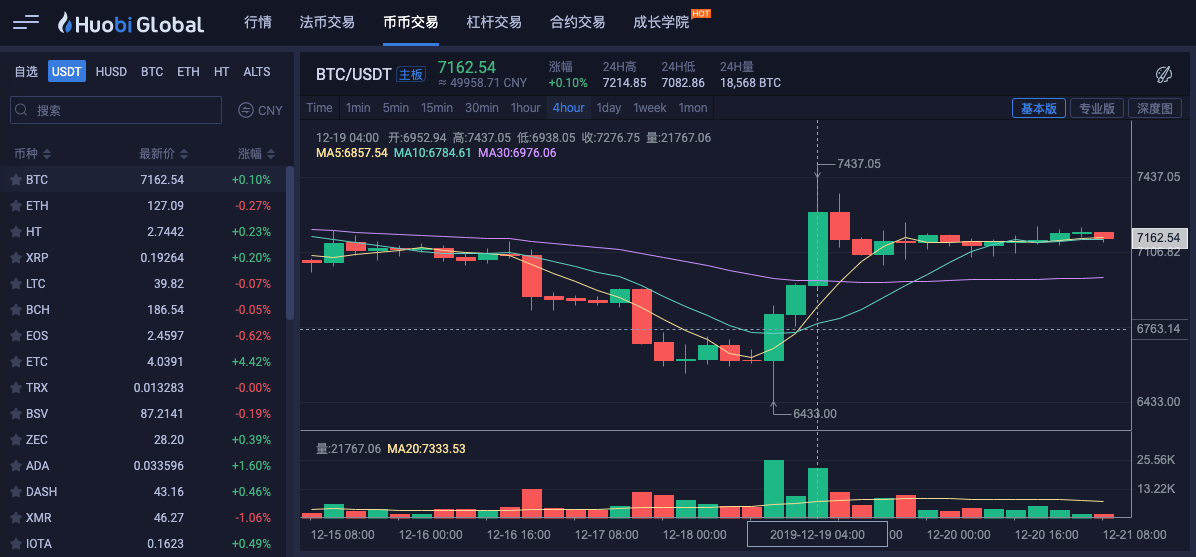
Huobiマーケットチャート
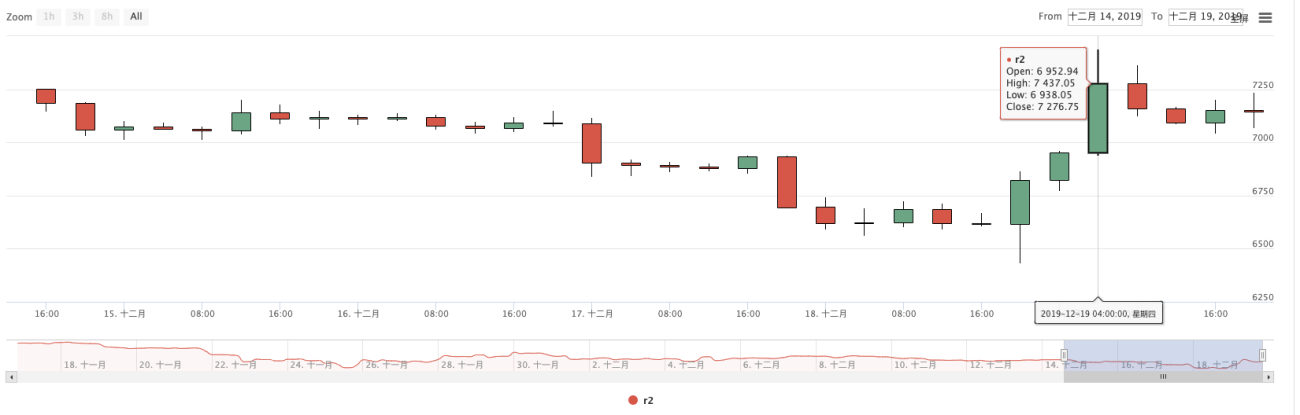
合成4時間チャートのバックテスト
上記のコードは学習の参考としてのみ使用されます。特定の戦略で使用する場合は、必要に応じて変更してテストしてください。
バグや改善の提案がありましたら、メッセージを残してください。よろしくお願いしますo^_^o
Related Recommendations
Research on Binance Futures Multi-currency Hedging Strategy Part 3Research on Binance Futures Multi-currency Hedging Strategy Part 2Research on Binance Futures Multi-currency Hedging Strategy Part 1Crocodile line trading system Python versionJavaScript version SuperTrend strategyIntroducing FMZ Quant data science research environmentParabolic Steering SAR and Price High and Low Point StrategyTeach you how to let an old strategy docking the websocket quotes interfaceSimilarities and differences between commodity futures and cryptocurrency exchanges APIMulti-level percentage take profit strategy