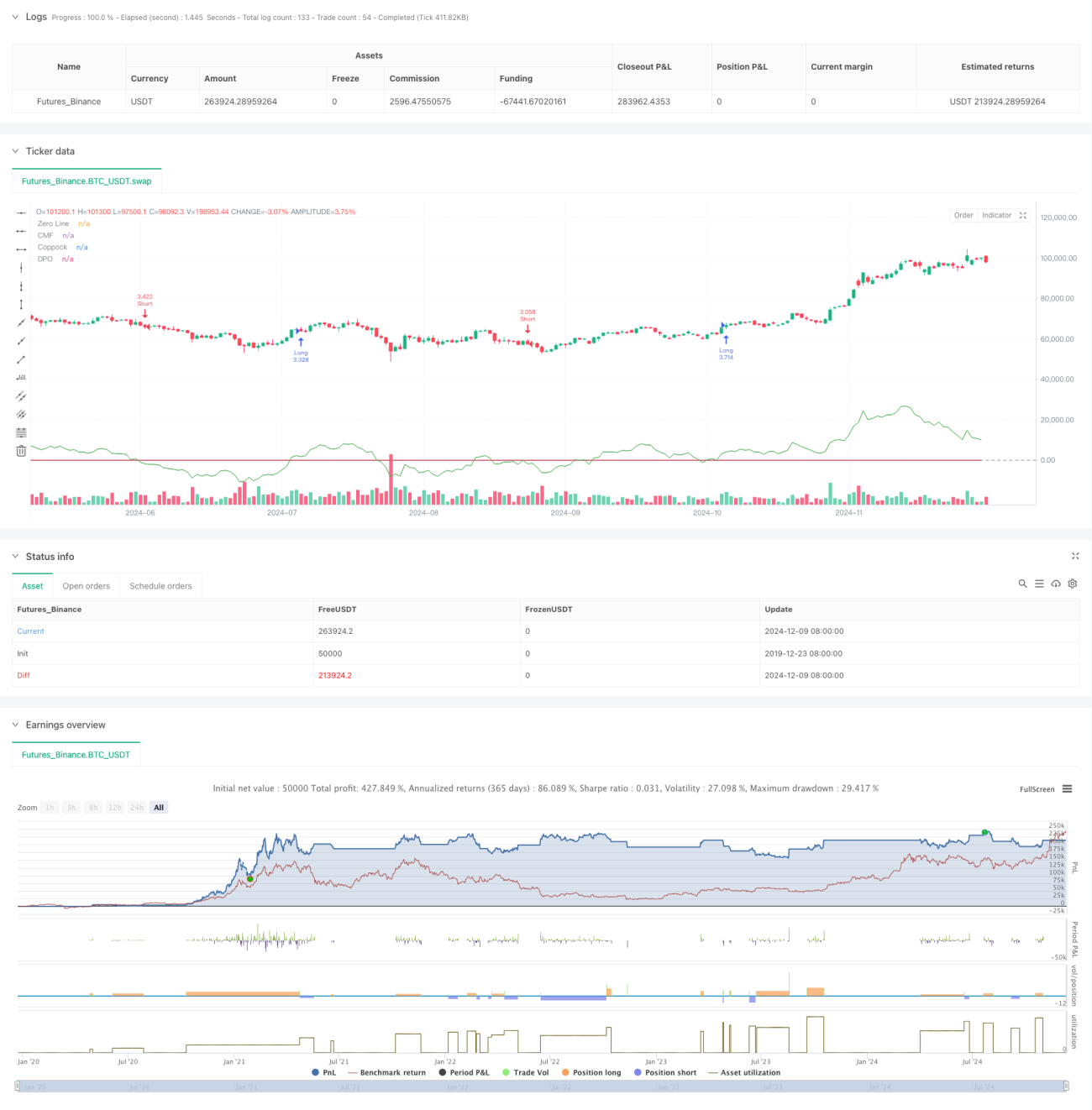
다중 시장 적응형 다중 지표 조합 추세 추적 전략

CMF DPO ROC WMA ATR
생성 날짜: 2024-12-12 15:23:28 마지막으로 수정됨: 2024-12-12 15:23:28
복사: 0 클릭수: 459
avatar of ChaoZhang ChaoZhang
1
집중하다
1617
수행원

다중 시장 적응형 다중 지표 조합 추세 추적 전략

개요

이것은 여러 기술 지표의 조합에 기반한 자기 적응 트렌드 추적 전략이며, 다양한 시장 특성에 따라 자동으로 매개 변수를 조정할 수 있다. 이 전략은 CMF, DPO 및 코포크 지표를 사용하여 시장의 흐름을 포착하고, 변동률 조정 인자를 통해 다른 시장의 특성에 맞게 조정한다. 전략은 완전한 포지션 관리 및 위험 제어 시스템을 가지고 있으며, 시장의 변동성 동력에 따라 거래 규모를 조정할 수 있다.

전략 원칙

전략의 핵심 논리는 여러 지표의 조합을 통해 트렌드 방향과 거래 시점을 확인하는 것입니다. 구체적으로:

  1. CMF 지표를 사용하여 자금 흐름을 측정하고 시장 정서를 판단합니다.
  2. DPO 지표를 통해 장기 동향의 영향을 제거하고, 중·단기 가격 변동에 주의를 기울입니다.
  3. 개선된 코포크 지표로 트렌드 전환점을 잡는다
  4. 3개의 지표가 함께 확인되면 거래 신호가 생성됩니다.
  5. ATR의 동적 계산을 통해 스톱 로즈 위치를 설정합니다.
  6. 다른 시장 특성에 따라 (주식, 외환, 선물) 자동으로 레버리지 및 변동률 파라미터를 조정합니다.

전략적 이점

  1. 가짜 신호를 효과적으로 필터링하는 다중 지표 크로스 검증
  2. 다양한 시장 환경에 적용할 수 있는 적응력
  3. 우수한 포지션 관리 시스템, 변동율에 따라 포지션을 동적으로 조정
  4. 손해 방지 장치가 있고, 위험을 통제하면서 수익을 보호합니다.
  5. 여러 품종의 동시 거래를 지원하고 위험을 분산합니다.
  6. 거래 논리가 명확하고 유지 및 최적화하기 쉽습니다.

전략적 위험

  1. 다중 지표 시스템은 지연되어서 빠른 흐름 속에서 기회를 놓칠 수 있습니다.
  2. 매개 변수를 지나치게 최적화하면 과도한 적합성이 발생할 수 있습니다.
  3. 시장 전환 시에는 잘못된 신호가 발생할 수 있습니다.
  4. 상쇄 설정이 너무 단단하면 빈번한 상쇄가 발생할 수 있습니다.
  5. 거래 비용은 전략적 수익에 영향을 미칠 수 있습니다. 다음의 방법으로 위험을 관리하는 것이 좋습니다.
  • 매개 변수의 유효성을 주기적으로 확인합니다.
  • 실시간으로 포지션 모니터링
  • 리베이트를 합리적으로 조절하는 방법
  • 최대 회수 제한을 설정

전략 최적화 방향

  1. 시장의 변동률 상태를 판단하기 위해 다양한 변동 환경에서 다른 파라미터의 조합을 도입합니다.
  2. 더 많은 시장 특성을 식별하는 지표를 추가하고 전략의 적응성을 향상시킵니다.
  3. 손해 차단 장치를 최적화하여 이동 손해 차단을 고려할 수 있습니다.
  4. 자동 변수 최적화 시스템을 개발하고 정기적으로 변수를 조정합니다.
  5. 거래 비용 분석 모듈을 추가합니다.
  6. 위험 경고 메커니즘에 가입하세요

요약하다

이 전략은 좀 더 완전한 트렌드 추적 시스템으로, 다중 지표 조합과 위험 제어 메커니즘을 통해 수익을 보장하면서도 위험을 잘 통제한다. 전략은 확장성이 강하며, 최적화 할 수있는 큰 공간이 있다. 실장 거래에서 소규모에서 시작하여 거래 규모를 점차 증가시키는 것이 권장되며, 전략의 성능을 지속적으로 모니터링하고 매개 변수를 적시에 조정한다.

전략 소스 코드
/*backtest
start: 2019-12-23 08:00:00
end: 2024-12-10 08:00:00
period: 1d
basePeriod: 1d
exchanges: [{"eid":"Futures_Binance","currency":"BTC_USDT"}]
*/

//@version=5
strategy("Multi-Market Adaptive Trading Strategy", overlay=true, default_qty_type=strategy.percent_of_equity, default_qty_value=10)

// Input parameters
i_market_type = input.string("Crypto", "Market Type", options=["Forex", "Crypto", "Futures"])
i_risk_percent = input.float(1, "Risk Per Trade (%)", minval=0.1, maxval=100, step=0.1)
i_volatility_adjustment = input.float(1.0, "Volatility Adjustment", minval=0.1, maxval=5.0, step=0.1)
i_max_position_size = input.float(5.0, "Max Position Size (%)", minval=1.0, maxval=100.0, step=1.0)
i_max_open_trades = input.int(3, "Max Open Trades", minval=1, maxval=10)

// Indicator Parameters
i_cmf_length = input.int(20, "CMF Length", minval=1)
i_dpo_length = input.int(21, "DPO Length", minval=1)
i_coppock_short = input.int(11, "Coppock Short ROC", minval=1)
i_coppock_long = input.int(14, "Coppock Long ROC", minval=1)
i_coppock_wma = input.int(10, "Coppock WMA", minval=1)
i_atr_length = input.int(14, "ATR Length", minval=1)

// Market-specific Adjustments
volatility_factor = i_market_type == "Forex" ? 0.1 : i_market_type == "Futures" ? 1.5 : 1.0
volatility_factor *= i_volatility_adjustment
leverage = i_market_type == "Forex" ? 100.0 : i_market_type == "Futures" ? 20.0 : 3.0

// Calculate Indicators
mf_multiplier = ((close - low) - (high - close)) / (high - low)
mf_volume = mf_multiplier * volume
cmf = ta.sma(mf_volume, i_cmf_length) / ta.sma(volume, i_cmf_length)

dpo_offset = math.floor(i_dpo_length / 2) + 1
dpo = close - ta.sma(close, i_dpo_length)[dpo_offset]

roc1 = ta.roc(close, i_coppock_short)
roc2 = ta.roc(close, i_coppock_long)
coppock = ta.wma(roc1 + roc2, i_coppock_wma)

atr = ta.atr(i_atr_length)

// Define Entry Conditions
long_condition = cmf > 0 and dpo > 0 and coppock > 0 and ta.crossover(coppock, 0)
short_condition = cmf < 0 and dpo < 0 and coppock < 0 and ta.crossunder(coppock, 0)

// Calculate Position Size
account_size = strategy.equity
risk_amount = math.min(account_size * (i_risk_percent / 100), account_size * (i_max_position_size / 100))
position_size = (risk_amount / (atr * volatility_factor)) * leverage

// Execute Trades
if (long_condition and strategy.opentrades < i_max_open_trades)
    sl_price = close - (atr * 2 * volatility_factor)
    tp_price = close + (atr * 3 * volatility_factor)
    strategy.entry("Long", strategy.long, qty=position_size)
    strategy.exit("Long Exit", "Long", stop=sl_price, limit=tp_price)

if (short_condition and strategy.opentrades < i_max_open_trades)
    sl_price = close + (atr * 2 * volatility_factor)
    tp_price = close - (atr * 3 * volatility_factor)
    strategy.entry("Short", strategy.short, qty=position_size)
    strategy.exit("Short Exit", "Short", stop=sl_price, limit=tp_price)

// Plot Indicators
plot(cmf, color=color.blue, title="CMF")
plot(dpo, color=color.green, title="DPO")
plot(coppock, color=color.red, title="Coppock")
hline(0, "Zero Line", color=color.gray)

// Alerts
alertcondition(long_condition, title="Long Entry", message="Potential Long Entry Signal")
alertcondition(short_condition, title="Short Entry", message="Potential Short Entry Signal")

// // Performance reporting
// if barstate.islastconfirmedhistory
//     label.new(bar_index, high, text="Strategy Performance:\nTotal Trades: " + str.tostring(strategy.closedtrades) + 
//               "\nWin Rate: " + str.tostring(strategy.wintrades / strategy.closedtrades * 100, "#.##") + "%" +
//               "\nProfit Factor: " + str.tostring(strategy.grossprofit / strategy.grossloss, "#.##"))