변동성 필터링 및 동적 위험 관리를 갖춘 다중 요인 ALMA-ATR 적응형 추세 추종 전략

ALMA EMA ATR RSI ADX BB UT Bot
생성 날짜: 2025-07-30 10:49:34 마지막으로 수정됨: 2025-07-30 10:49:34
복사: 0 클릭수: 244
avatar of ianzeng123 ianzeng123
2
집중하다
319
수행원

변동성 필터링 및 동적 위험 관리를 갖춘 다중 요인 ALMA-ATR 적응형 추세 추종 전략 변동성 필터링 및 동적 위험 관리를 갖춘 다중 요인 ALMA-ATR 적응형 추세 추종 전략

개요

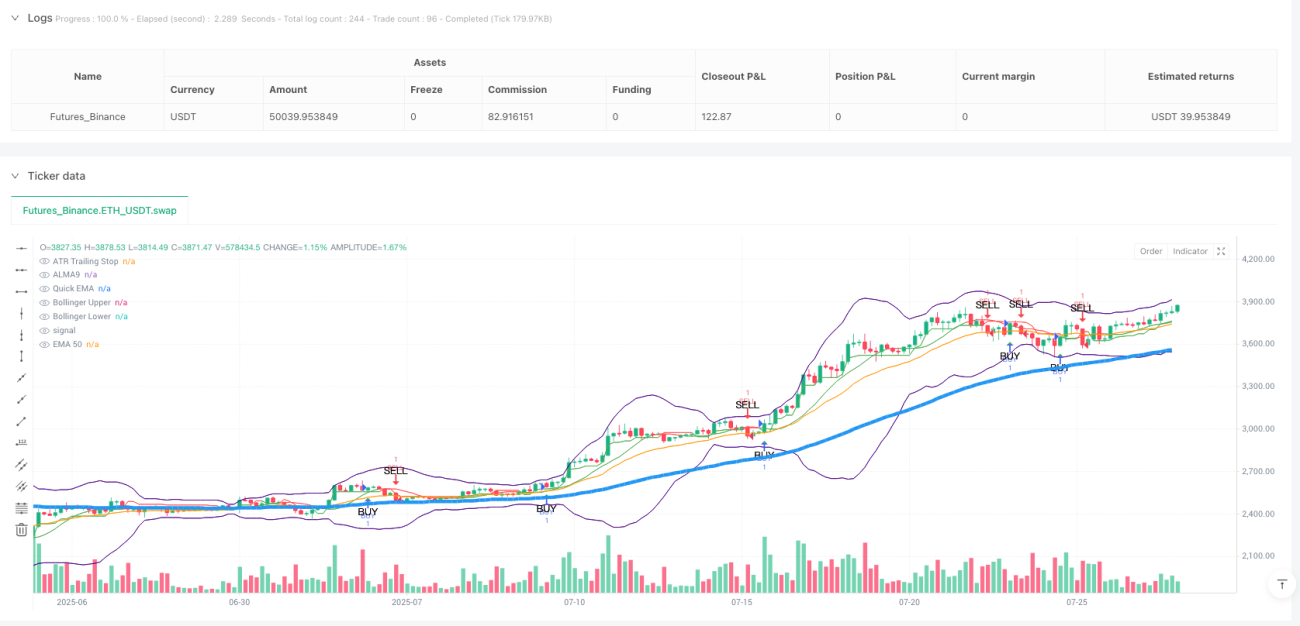
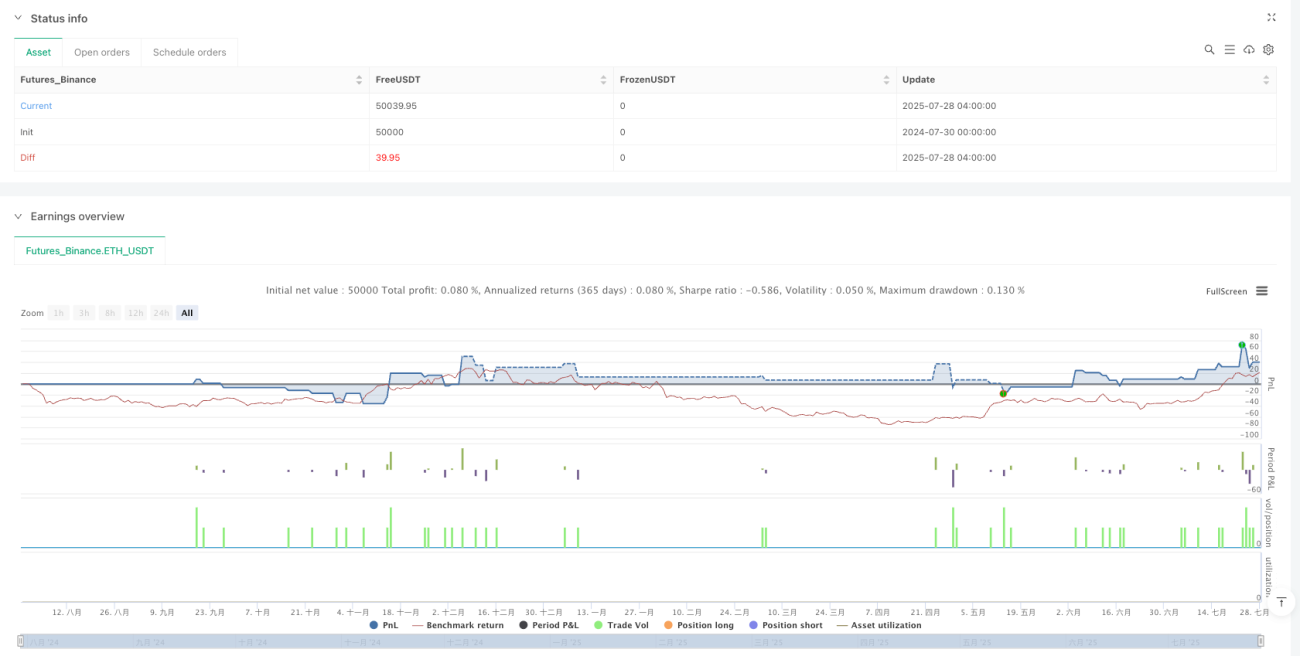
다중 인자 ALMA-ATR 자기 적응 트렌드 추적 전략은 입시 및 출퇴근 시간을 최적화하기 위해 여러 가지 기술 지표를 결합한 통합 거래 시스템이다. 이 전략의 핵심은 ALMA (아르누드 레고우스의 이동 평균) 을 주요 트렌드 판단 도구로 사용하는 반면, ATR 변동률 필터링, RSI 동력 확인, ADX 트렌드 강도 검증 및 브린 밴드 변동률 제어 메커니즘을 통합한다. 이 전략은 또한 UT Bot 시스템을 통합했다.

전략 원칙

이 전략의 핵심 원칙은 여러 기술적 지표의 연동으로 트렌드가 명확하고 변동성이 적당하다는 것을 보장하는 거래입니다. 구체적으로:

  1. ALMA를 주요 트렌드 지표로 사용하여, ALMA는 전통적인 EMA 또는 SMA에 비해 더 부드럽고 덜 뒤떨어진 특징을 가지고 있다.
  2. 변동율 필터를 적용: ATR 값이 설정된 최소값보다 높게 요구되어 시장의 충분한 변동성이 보장된다.
  3. 진입 조건은: 가격이 EMA50과 ALMA9 위에 있고, RSI가 초매 수준보다 높고 30보다 크며, ADX가 30보다 크며 (진행이 강하다는 것을 나타냅니다), 가격이 브린 반도보다 낮으며, 냉각 기간 요구 사항을 충족합니다.
  4. 출구 조건: 가격이 빠른 EMA를 넘어가는 것, 또는 ATR 기반의 스톱/스트로프를 유발하는 것, 또는 시간 출구 조건에 도달하는 것.
  5. UT Bot 시스템을 통합하여 ATR 기반의 추적 스톱 라인을 사용하여 거래에 대한 추가 보호 장치를 제공합니다.

이 전략은 동적 위험 관리 방식을 채택하고 있으며, 중지 및 중지 수준은 ATR 계산을 기반으로합니다. 이것은 전략이 다양한 시장 조건의 변동성에 적응할 수 있도록합니다.

우위 분석

이 전략은 다음과 같은 몇 가지 중요한 장점을 가지고 있습니다.

  1. 다중 인증 메커니즘: 여러 기술 지표를 통합하여 (ALMA, RSI, ADX, 브린 밴드 등) 신호의 신뢰도를 높이고, 가짜 신호를 줄인다.
  2. 적응력ATR 기반의 동적 중지 및 중지 수준으로, 전략이 시장의 변동성에 적응할 수 있도록 한다.
  3. 효과적인 트렌드 포착ALMA의 낮은 지연성 특성, ADX 트렌드 강도 확인과 함께, 트렌드 변화를 적시에 포착하는 데 도움이 됩니다.
  4. 완벽한 위험 관리: 변동률 필터링, 동적 중지 및 냉각기 메커니즘을 통해 여러 계층의 위험 보호를 제공합니다.
  5. 명확하게 표시전략: 거래자가 시장 상황을 직관적으로 이해할 수 있도록 차트에 구매 및 판매 신호를 표시합니다.
  6. 유연성: 매개 변수를 조정함으로써, 전략은 다른 시장 환경과 거래 사이클에 적응할 수 있다.

위험 분석

이 전략은 잘 설계되었지만, 다음과 같은 잠재적인 위험들이 있습니다.

  1. 매개변수 최적화 위험오버 최적화 파라미터는 전략이 역사적인 데이터에서 잘 작동하지만 실제 거래에서는 좋지 않습니다. 해결 방법: 전향 테스트와 샘플 외 데이터 검증을 사용하여 매개 변수가 안정성을 확보하십시오.
  2. 추세 반전 위험이 전략은 강력한 트렌드가 반전될 때 충분히 빠르게 반응하지 않을 수 있으며, 이로 인해 수익이 반전될 수 있습니다. 해결 방법: 동력 진동기 또는 거래량 분석과 같은 트렌드 반전 경고 지표를 추가하는 것을 고려하십시오.
  3. 과도한 거래의 위험이 경우, 거래 신호가 너무 많을 수 있습니다. 해결 방법: 변동률 필터링 조건을 강화하거나 수평 시장 식별 후 거래를 중단하십시오.
  4. 위험 함정에 빠지는 위험시장이 스톱로스를 쏘아올린 후 빠르게 회복될 수 있다. 해결 방법: 분기된 스톱 전략을 사용하거나 다양한 시장 조건에 대한 스톱 배수를 동적으로 조정하는 것을 고려하십시오.
  5. 뒤떨어진 위험ALMA의 지연은 작지만, 모든 기술 지표의 본질에는 지연이 있다. 해결 방법: 전향성 지표를 추가하거나 ALMA 파라미터 설정을 최적화 하는 것을 고려하십시오.

최적화 방향

전략에 대한 분석을 바탕으로 다음과 같은 최적화 방향을 제안합니다.

  1. 시장 상태 분류: 시장 상태를 식별하는 메커니즘을 도입하여, 다른 시장 상태 (트렌드,横盘, 높은 변동 등) 에 따라 다른 파라미터 설정을 사용합니다. 이렇게하면 다양한 시장 환경에서 전략의 적응성을 향상시킬 수 있습니다.
  2. 거래량 통합트렌드를 확인하는 보조 도구로 거래량 지표를 전략에 포함하면 신호의 신뢰도를 높일 수 있습니다.
  3. 다중 시간 프레임 분석다중 시간 프레임 확인 메커니즘을 도입하여 거래 방향이 더 높은 시간 프레임의 추세와 일치하도록합니다.
  4. 기계 학습 최적화: 기계 학습 알고리즘을 사용하여 동적으로 매개 변수를 조정하거나, 최적의 입/출구 지점을 예측한다.
  5. 제약 전략 개선: 분기금융을 실현하거나 시장구조에 기반한 동적금융을 구현하고, 자금 활용 효율성을 높여라.
  6. 신호 품질 점수: 신호 품질 점수 시스템을 개발하여 신호 강도가 특정 기한을 초과했을 때만 거래를 수행한다.
  7. 제어 최적화 철회: 전체 포지션 제어 메커니즘을 도입하여 특정 수준을 초과하면 포지션을 줄이거나 거래를 중지합니다.

이러한 최적화 방향의 목표는 전략의 안정성을 높이고, 회귀를 줄이고, 다양한 시장 환경에서 일관된 성과를 내는 것이다.

요약하다

다중 인자 ALMA-ATR 자기 적응 트렌드 추적 전략은 포괄적 인 강력한, 위험 통제에 완벽한 거래 시스템입니다. ALMA, ATR, RSI, ADX, 브린 밴드 및 UT Bot과 같은 여러 가지 기술 도구를 통합하여 전략은 효과적으로 트렌드를 식별하고, 소음을 필터링하고, 위험을 제어하고, 적절한 시간에 진입 및 출퇴근합니다. 전략의 핵심 장점은 여러 가지 확인 메커니즘과 자기 적응 위험 관리 시스템입니다. 이것은 다양한 시장 환경에서 안정적인 성능을 유지할 수 있습니다.

그럼에도 불구하고, 모든 거래 전략은 시장의 불확실성으로 인한 도전에 직면합니다. 지속적으로 최적화 된 파라미터 설정, 시장 상태 분류의 도입, 다중 시간 프레임 분석의 통합과 같은 방법을 통해이 전략은 여전히 향상 할 수있는 큰 공간이 있습니다. 양적 거래자에게는 개인 위험 선호와 시장에 대한 이해에 따라 추가적으로 사용자 정의 및 최적화 할 수있는 좋은 기본 프레임 워크를 가진 전략입니다.

전략 소스 코드
/*backtest
start: 2024-07-30 00:00:00
end: 2025-07-28 08:00:00
period: 4h
basePeriod: 4h
exchanges: [{"eid":"Futures_Binance","currency":"ETH_USDT"}]
*/

// This Pine Script™ code is subject to the terms of the Mozilla Public License 2.0 at https://mozilla.org/MPL/2.0/
// © blntduman

//@version=5
strategy(title="ALMA Optimized Strategy - Volatilite Filtresi + UT Bot", overlay=true)

// USER INPUTS
fast_ema_length = input.int(20, title="Hızlı EMA Length", minval=5, maxval=40)
atr_length = input(14, title="ATR Length")
ema_length = input(72, title="EMA Length")
adx_length = input.int(10, title="ADX Length")
rsi_length = input(14, title="RSI Length")
rsi_overbought = 70
rsi_oversold = 30
cooldown_bars = input.int(7, title="Cooldown Bars (Same Signal Block)", minval=1)
bb_mult = input.float(3.0, title="Bollinger Band Multiplier")
sl_atr_mult = input.float(5.0, title="Stop Loss Multiplier", minval=0.1)
tp_atr_mult = input.float(4.0, title="Take Profit Multiplier", minval=0.1)
time_based_exit = input.int(0, title="Time Based Exit (Bars)", minval=0)  // 0 is disabled
min_atr = input.float(0.005, title="Minimum ATR", minval=0.0001)  // Minimum ATR value

// Quick EMA Calculation
fast_ema = ta.ema(close, fast_ema_length)
plot(fast_ema, title="Quick EMA", color=color.orange)

// ALMA9 Calculation
alma9 = ta.alma(close, 15, 0.65, 6)
var color almaColor1 = na
almaColor1 := close > alma9 ? color.green : color.red
plot(alma9, title="ALMA9", color=almaColor1)

// EMA 50 Calculation
ema50 = ta.ema(close, ema_length)
plot(ema50, "EMA 50", color=color.blue, linewidth=5)

// ADX Calculation
[_, _, adx] = ta.dmi(adx_length, 14)

// RSI Calculation
rsi = ta.rsi(close, rsi_length)

// ATR Based Stop-Loss and Take-Profit
atr = ta.atr(atr_length)
stop_loss = atr * sl_atr_mult
profit_target = atr * tp_atr_mult

// Bollinger Bands
bb_basis = ta.sma(close, 20)
bb_dev = bb_mult * ta.stdev(close, 20)
bb_upper = bb_basis + bb_dev
bb_lower = bb_basis - bb_dev
plot(bb_upper, "Bollinger Upper", color=#4f0489)
plot(bb_lower, "Bollinger Lower", color=#4f0489)

//Variables to follow the previous signal
var int last_buy_bar = na
var int last_sell_bar = na
var int entry_bar_index = na
var string last_signal = ""

// Volatilite Filter
volatilite_filtresi = atr > min_atr

// BUY Conditions
buy_condition = volatilite_filtresi and close > ema50 and (close > alma9 )  and rsi > rsi_oversold and rsi > 30 and adx > 30 and close < bb_upper and (na(last_buy_bar) or bar_index - last_buy_bar > cooldown_bars) and (last_signal != "BUY")

// SELL Conditions
sell_condition = volatilite_filtresi and ta.crossunder(close, fast_ema) and (last_signal != "SELL") 

if (buy_condition)
    strategy.entry("BUY", strategy.long)
    last_buy_bar := bar_index
    entry_bar_index := bar_index
    last_signal := "BUY"

if (sell_condition)
    strategy.close("BUY")
    strategy.entry("SELL", strategy.short)
    last_sell_bar := bar_index
    last_signal := "SELL"

// Exit Strategy
if time_based_exit > 0
    strategy.exit("BUY_EXIT", from_entry="BUY", loss=stop_loss, profit=profit_target, when=bar_index - entry_bar_index >= time_based_exit)
else
    strategy.exit("BUY_EXIT", from_entry="BUY", loss=stop_loss, profit=profit_target)

strategy.exit("SELL_EXIT", from_entry="SELL", loss=stop_loss, profit=profit_target)

// Sinyalleri Görselleştirme
plotshape(series=buy_condition, location=location.belowbar, color=color.green, style=shape.triangleup, size=size.small, title="BUY Signal", text="BUY", textcolor=#090000)
plotshape(series=sell_condition, location=location.abovebar, color=color.red, style=shape.triangledown, size=size.small, title="SELL Signal", text="SELL", textcolor=#090000)

//----------------------------------------------------------------------------
// UT Bot Inputları
//----------------------------------------------------------------------------

a = input.int(1,     title = "UT Bot: Key Value. 'This changes the sensitivity'")
c = input.int(10,    title = "UT Bot: ATR Period")
h = input.bool(false, title = "UT Bot: Signals from Heikin Ashi Candles")

//----------------------------------------------------------------------------
// UT Bot Calculation
//----------------------------------------------------------------------------

xATR  = ta.atr(c)
nLoss = a * xATR

src = h ? request.security(syminfo.tickerid, timeframe.period, close, lookahead = barmerge.lookahead_on) : close

var float xATRTrailingStop = 0.0
xATRTrailingStop := if src > nz(xATRTrailingStop[1], 0) and src[1] > nz(xATRTrailingStop[1], 0)
    math.max(nz(xATRTrailingStop[1]), src - nLoss)
else
    if src < nz(xATRTrailingStop[1], 0) and src[1] < nz(xATRTrailingStop[1], 0)
        math.min(nz(xATRTrailingStop[1]), src + nLoss)
    else
        if src > nz(xATRTrailingStop[1], 0)
            src - nLoss
        else
            src + nLoss

var int pos = 0
pos := if src[1] < nz(xATRTrailingStop[1], 0) and src > nz(xATRTrailingStop[1], 0)
    1
else
    if src[1] > nz(xATRTrailingStop[1], 0) and src < nz(xATRTrailingStop[1], 0)
        -1
    else
        nz(pos[1], 0)

xcolor = pos == -1 ? color.red : pos == 1 ? color.green : color.blue

ema_ut   = ta.ema(src,1)
above = ta.crossover(ema_ut, xATRTrailingStop)
below = ta.crossunder(xATRTrailingStop, ema_ut)

buy_ut  = src > xATRTrailingStop and above
sell_ut = src < xATRTrailingStop and below

barbuy  = src > xATRTrailingStop
barsell = src < xATRTrailingStop

//----------------------------------------------------------------------------
// Alarms (UT Bot Tan)
//----------------------------------------------------------------------------

alertcondition(buy_ut,  "UT Long",  "UT Long")
alertcondition(sell_ut, "UT Short", "UT Short")

//----------------------------------------------------------------------------
// Plots (from UT Bot)
//----------------------------------------------------------------------------

// Making the UT Bot Alert Line Two-Color
linecolor = close > xATRTrailingStop ? color.green : color.red
plot(xATRTrailingStop, color=linecolor, title="ATR Trailing Stop")

// UT Bot Buy/Sell Articles
plotshape(series=buy_condition, location=location.belowbar, color=color.green, style=shape.triangleup, size=size.small, title="BUY Signal", text="BUY", textcolor=#090000)
plotshape(series=sell_condition, location=location.abovebar, color=color.red, style=shape.triangledown, size=size.small, title="SELL Signal", text="SELL", textcolor=#090000)