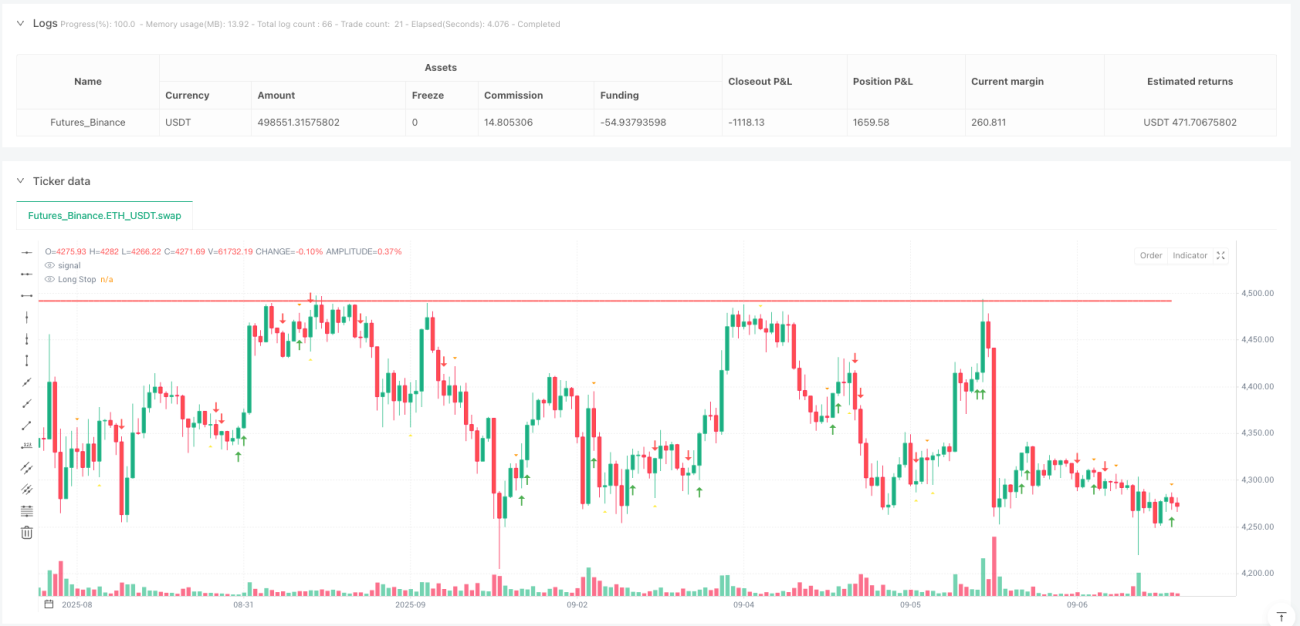
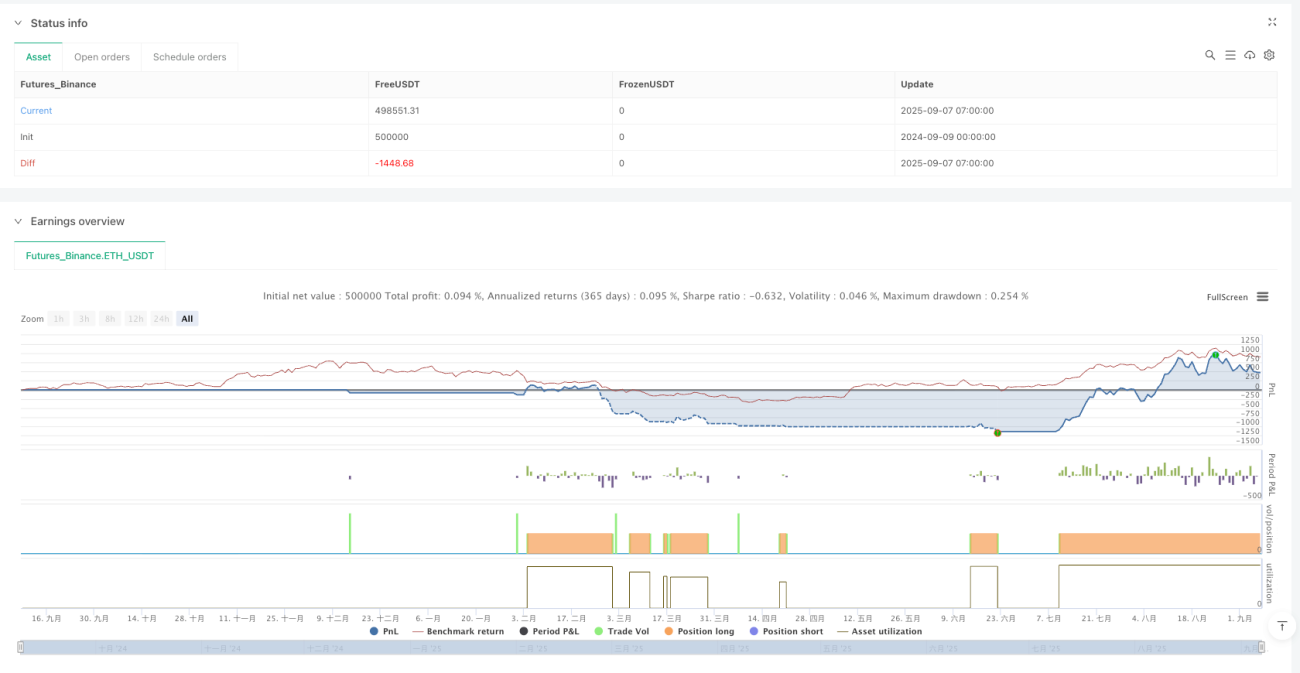
O que há de errado com a estratégia tradicional de oscilação? Há muitos sinais, qualidade variável, falhas frequentes. Esta estratégia resolve diretamente o problema:Cada sinal tem uma pontuação de qualidade de 1 a 5, sendo que apenas os sinais de alta qualidade acima de 4 são negociados.。
A lógica central é simples e grosseira: identifique o Higher Low e o Lower High, e pontua o sinal em 4 dimensões.Filtra 80% dos sinais de lixo em pelo menos 4 minutos。
1 ponto básicoConfirmação da existência de formas de oscilação Confirmação de entrega + 1 pontoO volume de transações de mais de 20 ciclos é 1,2 vezes o valor médio, indicando que há identificação de fundos. RSI posição + 1 pontoO RSI está entre 30 e 70, evitando falsos sinais de sobrecompra e sobrevenda. Entidade de linha K + 1 pontoA partir de agora, o Brasil vai ser o único país do mundo a ter uma economia de petróleo e gás, com mais de 60% de participação de entidades. A tendência de alinhamento + 1 pontoPreço, MA20 e MA50 estão todos na mesma direção
Resultado: 5 pontos a maior probabilidade de sucesso do sinal, 4 pontos ou mais são negociáveis, 3 pontos ou menos são ignorados。
A lógica do stop loss é muito clara:
Por que 10 ciclos?Uma vez que a estratégia de oscilação é essencial para capturar a reversão de curto prazo, os 10 ciclos dão ao preço espaço suficiente para respirar e não deixam a distância de parada muito grande. É mais adequado para a estrutura do mercado do que um múltiplo ATR fixo.
A estratégia também identifica os movimentos que falham:
Esses fracassos geralmente são sinais de aceleração da tendência, o melhor momento para inverter a tendência.。
Quando dois fios K consecutivos aparecem na mesma direção, o sinal de confirmação é indicado com a marcação de diamante. Isso geralmente significa:
A taxa de vitória de um sinal contínuo é geralmente de 15 a 20% maior do que a de um sinal isolado.。
Ambiente de melhor desempenho:
Evite usar cenários:
Riscos claros:
Conselhos de gestão de fundosO risco de uma única transação não deve exceder 2% da conta, mas deve ser suspenso após três perdas consecutivas e reavaliação da situação do mercado.
/*backtest
start: 2024-09-09 00:00:00
end: 2025-09-07 08:00:00
period: 1h
basePeriod: 1h
exchanges: [{"eid":"Futures_Binance","currency":"ETH_USDT","balance":500000}]
*/
//@version=6
strategy("Higher Lows, Lower Highs & Failures with Signal Quality Scoring", overlay=true)
// --- Higher Low detection ---
shares = 1
minScore = 4 // Minimum score to take trades
lowPoint = ta.lowest(low, 3)
prevLowPoint = ta.lowest(low[3], 3)
isHigherLow = low == lowPoint and low > prevLowPoint
bullConfirm = isHigherLow and close > open
// --- Lower High detection ---
highPoint = ta.highest(high, 3)
prevHighPoint = ta.highest(high[3], 3)
isLowerHigh = high == highPoint and high < prevHighPoint
bearConfirm = isLowerHigh and close < open
// --- Failures ---
failHigherLow = isHigherLow[1] and low < low[1]
failLowerHigh = isLowerHigh[1] and high > high[1]
// --- 2-in-a-row detection ---
bullSecond = bullConfirm and bullConfirm[1]
bearSecond = bearConfirm and bearConfirm[1]
// --- SIGNAL QUALITY SCORING (1-5 scale) ---
bullScore = if bullConfirm
score = 1 // Base score
// Factor 1: Volume confirmation
avgVolume = ta.sma(volume, 20)
if volume > avgVolume * 1.2
score := score + 1
// Factor 2: RSI positioning
rsi = ta.rsi(close, 14)
if rsi < 70 and rsi > 30
score := score + 1
// Factor 3: Candle strength
bodySize = math.abs(close - open)
candleRange = high - low
bodyRatio = candleRange > 0 ? bodySize / candleRange : 0
if bodyRatio > 0.6
score := score + 1
// Factor 4: Trend alignment
ma20 = ta.sma(close, 20)
ma50 = ta.sma(close, 50)
if ma20 > ma50 and close > ma20
score := score + 1
math.max(1, math.min(5, score))
else
na
bearScore = if bearConfirm
score = 1 // Base score
// Factor 1: Volume confirmation
avgVolume = ta.sma(volume, 20)
if volume > avgVolume * 1.2
score := score + 1
// Factor 2: RSI positioning
rsi = ta.rsi(close, 14)
if rsi > 30 and rsi < 70
score := score + 1
// Factor 3: Candle strength
bodySize = math.abs(close - open)
candleRange = high - low
bodyRatio = candleRange > 0 ? bodySize / candleRange : 0
if bodyRatio > 0.6
score := score + 1
// Factor 4: Trend alignment
ma20 = ta.sma(close, 20)
ma50 = ta.sma(close, 50)
if ma20 < ma50 and close < ma20
score := score + 1
math.max(1, math.min(5, score))
else
na
// --- Plot main signals with score-based styling ---
// Bullish signals
plotshape(bullConfirm and bullScore == 1, "Bull Score 1", shape.triangleup, location.belowbar, color.gray, size=size.tiny)
plotshape(bullConfirm and bullScore == 2, "Bull Score 2", shape.triangleup, location.belowbar, color.orange, size=size.small)
plotshape(bullConfirm and bullScore == 3, "Bull Score 3", shape.triangleup, location.belowbar, color.yellow, size=size.normal)
plotshape(bullConfirm and bullScore == 4, "Bull Score 4", shape.triangleup, location.belowbar, color.lime, size=size.normal)
plotshape(bullConfirm and bullScore == 5, "Bull Score 5", shape.triangleup, location.belowbar, color.green, size=size.large)
// Bearish signals
plotshape(bearConfirm and bearScore == 1, "Bear Score 1", shape.triangledown, location.abovebar, color.gray, size=size.tiny)
plotshape(bearConfirm and bearScore == 2, "Bear Score 2", shape.triangledown, location.abovebar, color.orange, size=size.small)
plotshape(bearConfirm and bearScore == 3, "Bear Score 3", shape.triangledown, location.abovebar, color.yellow, size=size.normal)
plotshape(bearConfirm and bearScore == 4, "Bear Score 4", shape.triangledown, location.abovebar, color.lime, size=size.normal)
plotshape(bearConfirm and bearScore == 5, "Bear Score 5", shape.triangledown, location.abovebar, color.green, size=size.large)
// --- Plot failures ---
plotshape(failHigherLow, "Failed Higher Low", shape.arrowdown, location.abovebar, color.red, size=size.small)
plotshape(failLowerHigh, "Failed Lower High", shape.arrowup, location.belowbar, color.green, size=size.small)
// --- Plot consecutive signals ---
plotshape(bullSecond, "Double Bullish Star", shape.diamond, location.bottom, color.lime, size=size.tiny)
plotshape(bearSecond, "Double Bearish Star", shape.diamond, location.top, color.red, size=size.tiny)
// --- Display score labels ---
if bullConfirm
labelColor = bullScore == 1 ? color.gray : bullScore == 2 ? color.orange : bullScore == 3 ? color.yellow : bullScore == 4 ? color.lime : color.green
label.new(bar_index, low - (high - low) * 0.1, "↑ " + str.tostring(bullScore), style=label.style_label_up, color=labelColor, textcolor=color.white, size=size.small)
if bearConfirm
labelColor = bearScore == 1 ? color.gray : bearScore == 2 ? color.orange : bearScore == 3 ? color.yellow : bearScore == 4 ? color.lime : color.green
label.new(bar_index, high + (high - low) * 0.1, "↓ " + str.tostring(bearScore), style=label.style_label_down, color=labelColor, textcolor=color.white, size=size.small)
// --- Alerts for high-quality signals only ---
alertcondition(bullConfirm and bullScore >= 4, "High Quality Bullish", "Strong Bullish Signal Detected")
alertcondition(bearConfirm and bearScore >= 4, "High Quality Bearish", "Strong Bearish Signal Detected")
// --- STRATEGY LOGIC ---
// Track previous highs and lows for stop levels
var float prevHigh = na
var float prevLow = na
// Update previous high/low when we get signals
if bullConfirm and bullScore >= minScore
prevLow := ta.lowest(low, 10) // Previous 10-bar low for stop
if bearConfirm and bearScore >= minScore
prevHigh := ta.highest(high, 10) // Previous 10-bar high for stop
// Entry conditions (only scores 4 or higher)
longCondition = bullConfirm and bullScore >= minScore
shortCondition = bearConfirm and bearScore >= minScore
// Execute trades
if longCondition and strategy.position_size == 0
strategy.entry("Long", strategy.long, qty=shares)
strategy.exit("Long Exit", "Long", stop=prevLow)
if shortCondition and strategy.position_size == 0
strategy.entry("Short", strategy.short, qty=shares)
strategy.exit("Short Exit", "Short", stop=prevHigh)
// Close opposite position if new signal occurs
if longCondition and strategy.position_size < 0
strategy.close("Short")
strategy.entry("Long", strategy.long, qty=shares)
strategy.exit("Long Exit", "Long", stop=prevLow)
if shortCondition and strategy.position_size > 0
strategy.close("Long")
strategy.entry("Short", strategy.short, qty=shares)
strategy.exit("Short Exit", "Short", stop=prevHigh)
// Plot stop levels for visualization
plot(strategy.position_size > 0 ? prevLow : na, "Long Stop", color.red, linewidth=2, style=plot.style_linebr)
plot(strategy.position_size < 0 ? prevHigh : na, "Short Stop", color.red, linewidth=2, style=plot.style_linebr)