پائن کی ایک دلچسپ حکمت عملی سے ٹھوکر کھائی
کچھ دن پہلے، میں انوینٹر فورم میں حکمت عملی کو براؤز کر رہا تھا اور ایک پوسٹ دیکھی جس کا نام تھا۔Panel Pro+ Quantum SmartPromptکوڈ کا جائزہ لینے کے بعد، مجھے بنیادی تصور کافی دلچسپ معلوم ہوا: یہ 10 تکنیکی اشارے استعمال کرتا ہے، مارکیٹ کے حالات کی بنیاد پر ہر اشارے کو مختلف وزن تفویض کرتا ہے، اور بالآخر خرید و فروخت کے فیصلوں کا تعین کرنے کے لیے اسکور کا حساب لگاتا ہے۔ مثال کے طور پر، بیل مارکیٹ میں، رجحان کے اشارے کا وزن 2.0 ہے، اور RSI کا وزن 1.5 ہے؛ ریچھ کے بازار میں، وزن مختلف ہوتے ہیں۔ ایسا محسوس ہوتا ہے کہ یہ لوگوں کے سوچنے کے انداز کی نقل کر رہا ہے: مختلف حالات میں مختلف چیزوں پر توجہ مرکوز کرنا۔
اگر آپ اس کے بارے میں غور سے سوچیں تو یہ ڈھانچہ ایک نیورل نیٹ ورک کی طرح نظر آتا ہے۔
- 10 تکنیکی اشارے جب ان پٹ
- مارکیٹ اسٹیٹ کی درجہ بندی جیسے پوشیدہ پرت
- وزن میٹرکس کنکشن وزن ہے
- آخر میں ایک سکور آؤٹ پٹ
لیکن مسئلہ یہ ہے کہ تمام وزن ہارڈ کوڈ شدہ ہیں، مثال کے طور پر:
pine
if marketType == "Bull"
array.set(weights, 0, 2.0) // 趋势权重固定是2.0
array.set(weights, 1, 1.5) // RSI权重固定是1.5
یہ نمبر مارکیٹ کے تجربے کی بنیاد پر مصنف کی طرف سے مکمل طور پر طے کیے گئے ہیں اور کسی بھی طرح سے ان کا مطالعہ یا اصلاح نہیں کیا گیا ہے۔
آئیڈیا: وزن کو سیکھنے کے قابل بنائیں
چونکہ ڈھانچہ پہلے سے ہی اعصابی نیٹ ورک سے بہت ملتا جلتا ہے، کیوں نہ اسے اصل میں سیکھنے کے قابل بنایا جائے؟
میرا خیال سادہ ہے:
- اصل وزن کے حساب کتاب کا طریقہ رکھیں اور "وزن سکور" حاصل کریں
- اس وزنی اسکور کو بطور ان پٹ استعمال کرتے ہوئے، ایک چھوٹے نیورل نیٹ ورک کو تربیت دیں۔
- نیٹ ورک کو وزن والے اسکور سے مستقبل کی واپسی کی پیشن گوئی کرنا سیکھنے دیں۔
- فیصلہ کریں کہ آیا واپسی کی پیشن گوئی کی شرح کی بنیاد پر کوئی پوزیشن کھولنی ہے۔
اس سے نہ صرف اصل حکمت عملی برقرار رہتی ہے بلکہ سیکھنے کی صلاحیت میں بھی اضافہ ہوتا ہے۔
موجد پلیٹ فارم پر شروع کریں۔
موجد پلیٹ فارم کا انتخاب بنیادی طور پر اس لیے کیا گیا تھا کہ یہ Python کو سپورٹ کرتا ہے اور اس میں بھرپور ڈیٹا ہوتا ہے۔
مرحلہ 1: تکنیکی اشارے دوبارہ لکھیں۔
میں نے درست حساب کو یقینی بنانے کے لیے طالب لائبریری کا استعمال کرتے ہوئے پائتھون میں پائن اسکرپٹ میں تمام اشارے دوبارہ لکھے۔ اس میں عام اشارے جیسے EMA، MACD، RSI، اور ATR، نیز حجم کا تجزیہ اور سادہ کینڈل سٹک پیٹرن کی شناخت شامل ہے۔
مرحلہ 2: مارکیٹ کی حیثیت کا پتہ لگانا
اصل حکمت عملی کی منطق کے بعد، مارکیٹ کی قسم کا تعین مختلف اشاریوں کے مجموعہ کی بنیاد پر کیا جاتا ہے: بیل، ریچھ، عقاب، بھیڑیا، وغیرہ۔ یہ حصہ بنیادی طور پر if-else منطق کا مجموعہ ہے۔
مرحلہ 3: وزن کے اسکور کا حساب کتاب
یہ بنیادی حصہ ہے۔ میں نے وزن کے دو سیٹ مقرر کیے ہیں:
- بنیادی وزن:[2.0, 1.5, 2.0, 1.3, 1.2, ...]
- مارکیٹ کا وزن: مارکیٹ کے مختلف حالات کے مطابق ایڈجسٹ کیا گیا۔
حتمی وزن = بنیادی وزن × مارکیٹ وزن
اس وزن کو پھر 10 اشاریوں کے اصل اسکور کے وزن کے لیے استعمال کیا جاتا ہے اور "وزن والے اسکور" حاصل کرنے کے لیے ان کا خلاصہ کیا جاتا ہے۔
مرحلہ 4: نیورل نیٹ ورک پریڈیکٹر
میں نے ایک بہت آسان نیٹ ورک لکھا:
- ان پٹ: 1 خصوصیت (وزن والا اسکور)
- پوشیدہ پرت: 16 نیوران، ReLU ایکٹیویشن
- آؤٹ پٹ: واپسی کی پیشن گوئی کی شرح، tanh کا استعمال کرتے ہوئے ±5% تک محدود
تربیت کا مقصد: وقت t پر قیمت میں تبدیلی کی پیشین گوئی کرنے کے لیے t-1 کے وقت وزن کا اسکور استعمال کریں۔
مرحلہ 5: لین دین کی منطق
درجہ بندی کی بنیاد پر براہ راست خریدنے یا فروخت کرنے کے بجائے، ہم پیشن گوئی کی شرح کو دیکھتے ہیں:
- واپسی کی پیشن گوئی کی شرح> 1.5%: لمبی پوزیشن کھولیں یا مختصر پوزیشن بند کریں۔
- واپسی کی پیشن گوئی کی شرح <-1.5%: مختصر پوزیشن کھولیں یا لمبی پوزیشن بند کریں۔
- دیگر حالات: جمود کو برقرار رکھیں
ساتھ ہی، سٹاپ پرافٹ اور سٹاپ لاس کو برقرار رکھیں تاکہ یہ یقینی بنایا جا سکے کہ خطرات قابل کنٹرول ہیں۔
اصل آپریشن پر کچھ مشاہدات
ڈیٹا اکٹھا کرنا
حکمت عملی عام طور پر تربیتی ڈیٹا اکٹھا کر سکتی ہے۔ جب بھی کوئی نئی کینڈل سٹک ظاہر ہوتی ہے، پچھلی کینڈل سٹک کے وزن کا سکور بطور فیچر استعمال کیا جاتا ہے، اور پچھلے کینڈل سٹک کی نسبت موجودہ کینڈل سٹک میں اضافہ یا کمی کو بطور لیبل استعمال کیا جاتا ہے۔
ڈیٹا شاید اس طرح ہے:
            权重评分=15.6, 收益率=+0.8%
权重评分=-8.2, 收益率=-1.2%
权重评分=22.1, 收益率=+0.3%
ماڈل ٹریننگ
اعصابی نیٹ ورک کو عام طور پر تربیت دی جا سکتی ہے، اور MSE کا نقصان بتدریج کم ہو جائے گا۔ اسے ہر 4 گھنٹے بعد دوبارہ تربیت دینے کے لیے سیٹ کریں تاکہ یہ یقینی بنایا جا سکے کہ ماڈل مارکیٹ کی تبدیلیوں کے مطابق ہو سکتا ہے۔
پیشن گوئی کا اثر
ماڈل کی پیشین گوئیوں کا اصل ریٹرن کے ساتھ ایک خاص تعلق ہے، لیکن یہ خاص طور پر مضبوط نہیں ہے۔
- ایک خصوصیت بہت آسان ہے اور اس میں کافی معلومات نہیں ہوسکتی ہیں۔
- قلیل مدتی قیمتوں میں اتار چڑھاؤ انتہائی بے ترتیب ہیں۔
- کنٹریکٹ مارکیٹ کافی شور مچاتی ہے۔
تجارتی کارکردگی
اسٹاپ لاس اور ٹیک پرافٹ کے تحفظ کی وجہ سے ایک ہی لین دین کا خطرہ اچھی طرح سے کنٹرول کیا جاتا ہے۔ تاہم، مجموعی منافع اوسط ہے، بنیادی طور پر اعلی پیشن گوئی کی درستگی کی کمی کی وجہ سے۔
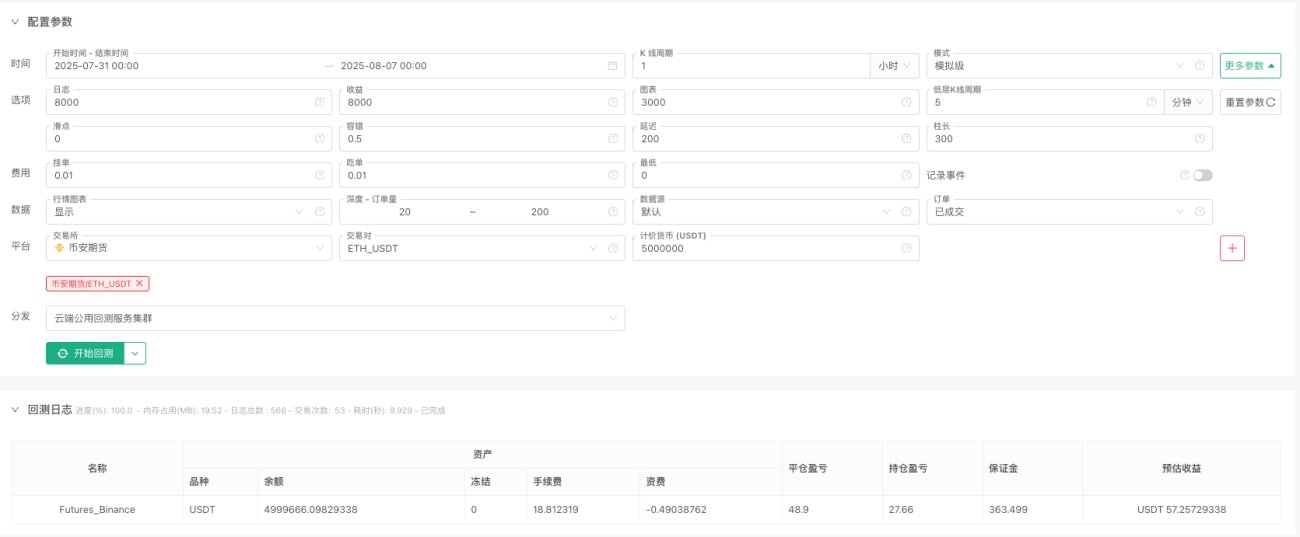
کچھ مسائل کا سامنا کرنا پڑا
**خصوصیات بہت آسان ہیں۔**کسی ایک خصوصیت کو اسکور کرنے کے لیے صرف وزن کا استعمال کرنا قدرے آسان ہے۔ مارکیٹ اتنی پیچیدہ ہے کہ کسی ایک نمبر کو پوری طرح پکڑنا مشکل ہے۔
غیر مستحکم نمونے کا معیار: مختصر مدت میں معاہدے کی قیمتوں میں بہت اتار چڑھاؤ آتا ہے، اور بہت سے معاملات میں عروج و زوال دراصل بے ترتیب ہوتے ہیں، جس سے تربیتی نمونوں کا معیار غیر مستحکم ہوتا ہے۔
اوور فٹ ہونے کا خطرہ: اگرچہ نیٹ ورک آسان ہے، لیکن نمونہ کا سائز محدود ہونے پر بھی یہ زیادہ فٹ ہو سکتا ہے۔
حقیقی وقت کی ضروریات: آن لائن سیکھنے کے لیے تربیت کے وقت اور حقیقی وقت کی کارکردگی کے درمیان توازن کی ضرورت ہوتی ہے۔
محدود وقت اور ناکافی اصلاح
ابھی بھی بہت سے شعبے ہیں جہاں اس حکمت عملی کو بہتر بنایا جا سکتا ہے، لیکن وقت اور توانائی محدود ہے، اس لیے ہم اسے گہرائی میں بہتر نہیں کر سکتے:
خصوصیات: آپ مزید تکنیکی اشارے شامل کر سکتے ہیں، یا قیمت کے سلسلے کی شماریاتی خصوصیات استعمال کر سکتے ہیں۔
ماڈل: آپ ایک ترتیب ماڈل جیسے LSTM کو آزما سکتے ہیں، یا متعدد ماڈلز کو ضم کر سکتے ہیں۔
ڈیٹا: نمونے کے معیار کو بہتر بنائیں اور ڈیٹا کی صفائی میں اضافہ کریں۔
ونڈ کنٹرول پہلو: متحرک اسٹاپ نقصان کو بہتر بنائیں اور پوزیشن مینجمنٹ کو بہتر بنائیں۔
فوائد اور خیالات
اس ریسرچ نے مجھے ایک سبق سکھایا: اچھے خیالات کی کلید بروقت نفاذ ہے! جب میں نے پائن اسکرپٹ میں ویٹ میٹرکس ڈیزائن کو دیکھا، تو میں نے فوری طور پر اعصابی نیٹ ورک کے ذریعے اسے بہتر کرنے کے امکان کے بارے میں سوچا۔ اگر میں نے ابھی اس کے بارے میں سوچا ہوتا یا اسے ختم کر دیا ہوتا تو شاید یہ خیال بھول جاتا۔ خوش قسمتی سے، موجد پلیٹ فارم نے ایک Python ماحول اور ڈیٹا انٹرفیس فراہم کیا، جس سے میں اپنے خیال کو تیزی سے چلانے کے قابل کوڈ میں تبدیل کر سکوں۔ آئیڈیا جنریشن سے لے کر بنیادی نفاذ تک، اس میں صرف ایک دن لگا۔ اگرچہ حتمی حکمت عملی کی کارکردگی معمولی تھی، لیکن اصل نفاذ نے کم از کم اس خیال کی فزیبلٹی کی تصدیق کی۔ زیادہ اہم بات یہ ہے کہ عمل درآمد کے عمل نے نئے خیالات اور تطہیر پیدا کیں۔ فوری کارروائی کے بغیر، یہ بعد کی دریافتیں اور بصیرتیں ناممکن ہوتیں۔ کاغذ پر خیالات کے بارے میں بات کرنا کبھی بھی کوڈ لکھنے، ڈیٹا چلانے اور نتائج کا مشاہدہ کرنے کے حقیقی دنیا کے تجربے سے موازنہ نہیں کر سکتا۔ یہ مقداری تجارت کی نوعیت ہے۔ بہت سے خیالات ہیں، لیکن واقعی قیمتی وہ ہیں جو تیزی سے نافذ اور تصدیق شدہ ہیں۔
python
'''backtest
start: 2025-07-31 00:00:00
end: 2025-08-07 00:00:00
period: 1h
basePeriod: 5m
exchanges: [{"eid":"Futures_Binance","currency":"ETH_USDT","balance":5000000,"fee":[0.01,0.01]}]
'''
import numpy as np
from collections import deque
import talib as TA
# ========== 异常类 ==========
class Error_noSupport(BaseException):
def __init__(self):
Log("只支持期货交易!#FF0000")
class Error_AtBeginHasPosition(BaseException):
def __init__(self):
Log("启动时有期货持仓! #FF0000")
# ========== 收益率预测神经网络 ==========
class ReturnPredictor:
def __init__(self, input_size=10, hidden_size=20, output_size=1):
"""收益率预测网络: X[t] -> y[t+1] (收益率)"""
self.W1 = np.random.randn(input_size, hidden_size) * 0.1
self.b1 = np.zeros((1, hidden_size))
self.W2 = np.random.randn(hidden_size, output_size) * 0.1
self.b2 = np.zeros((1, output_size))
self.learning_rate = 0.001
def sigmoid(self, x):
return 1 / (1 + np.exp(-np.clip(x, -250, 250)))
def tanh(self, x):
return np.tanh(x)
def forward(self, X):
self.z1 = np.dot(X, self.W1) + self.b1
self.a1 = self.sigmoid(self.z1)
self.z2 = np.dot(self.a1, self.W2) + self.b2
# 输出预测收益率,使用tanh限制在合理范围
self.a2 = self.tanh(self.z2) * 0.1 # 限制在±10%范围内
return self.a2
def backward(self, X, y, output):
m = X.shape[0]
# MSE损失的梯度
dZ2 = (output - y) / m
# tanh的导数
tanh_derivative = 1 - (output / 0.1) ** 2
dZ2 = dZ2 * 0.1 * tanh_derivative
dW2 = np.dot(self.a1.T, dZ2)
db2 = np.sum(dZ2, axis=0, keepdims=True)
dA1 = np.dot(dZ2, self.W2.T)
dZ1 = dA1 * self.a1 * (1 - self.a1) # sigmoid导数
dW1 = np.dot(X.T, dZ1)
db1 = np.sum(dZ1, axis=0, keepdims=True)
# 更新权重
self.W2 -= self.learning_rate * dW2
self.b2 -= self.learning_rate * db2
self.W1 -= self.learning_rate * dW1
self.b1 -= self.learning_rate * db1
def train(self, X, y, epochs=100):
for i in range(epochs):
output = self.forward(X)
self.backward(X, y, output)
if i % 20 == 0:
loss = np.mean((output - y) ** 2)
Log(f"收益率预测训练轮次 {i}, MSE损失: {loss:.6f}")
def predict(self, X):
return self.forward(X)
# ========== 技术指标计算类 ==========
class TechnicalIndicators:
@staticmethod
def calculate_indicators(records, use_completed_only=True):
"""计算技术指标和特征"""
if len(records) < 55:
return None, None
# 只使用已完成的K线数据
if use_completed_only and len(records) > 1:
working_records = records[:-1]
else:
working_records = records
if len(working_records) < 55:
return None, None
closes = np.array([r['Close'] for r in working_records])
highs = np.array([r['High'] for r in working_records])
lows = np.array([r['Low'] for r in working_records])
volumes = np.array([r['Volume'] for r in working_records])
opens = np.array([r['Open'] for r in working_records])
try:
# 基础指标
ema_55 = TA.EMA(closes, timeperiod=55)
sma_vol20 = TA.SMA(volumes, timeperiod=20)
macd, signal_line, _ = TA.MACD(closes)
rsi_val = TA.RSI(closes, timeperiod=14)
atr14 = TA.ATR(highs, lows, closes, timeperiod=14)
range20 = TA.STDDEV(closes, timeperiod=20)
# 计算派生指标
sma_atr20 = TA.SMA(atr14, timeperiod=20)
sma_range20 = TA.SMA(range20, timeperiod=20)
rvol = volumes / sma_vol20 if sma_vol20[-1] > 0 else np.ones_like(volumes)
delta = closes - opens
# 计算量能阈值
vol_abs_thresh = sma_vol20 * 1.2
sniper_thresh = np.percentile(volumes[-40:], 80) if len(volumes) >= 40 else sma_vol20[-1]
# 趋势
trend = np.where(closes > ema_55, 1, np.where(closes < ema_55, -1, 0))
# 简化K线形态
body_size = np.abs(closes - opens)
total_range = highs - lows
# 锤子线
is_hammer = ((total_range > 3 * body_size) &
((closes - lows) / (total_range + 0.001) > 0.6) &
((opens - lows) / (total_range + 0.001) > 0.6))
# 吞噬形态
is_engulfing = np.zeros_like(closes, dtype=bool)
if len(closes) >= 2:
is_engulfing[1:] = ((closes[1:] > opens[:-1]) &
(opens[1:] < closes[:-1]) &
(closes[1:] > opens[1:]) &
(opens[1:] < closes[1:]))
pattern = np.where(is_hammer, 1, np.where(is_engulfing, 2, 0))
# 🔥 计算标准化特征向量(用于神经网络输入)
features = []
# 1. 趋势特征
if len(ema_55) > 0 and not np.isnan(ema_55[-1]):
trend_feature = (closes[-1] - ema_55[-1]) / ema_55[-1]
features.append(np.tanh(trend_feature * 100))
else:
features.append(0)
# 2. RSI特征
if len(rsi_val) > 0 and not np.isnan(rsi_val[-1]):
rsi_feature = (rsi_val[-1] - 50) / 50
features.append(rsi_feature)
else:
features.append(0)
# 3. MACD特征
if len(macd) > 0 and not np.isnan(macd[-1]) and not np.isnan(signal_line[-1]):
macd_feature = (macd[-1] - signal_line[-1]) / closes[-1] if closes[-1] > 0 else 0
features.append(np.tanh(macd_feature * 1000))
else:
features.append(0)
# 4. 成交量特征
if len(vol_abs_thresh) > 0 and vol_abs_thresh[-1] > 0:
vol_feature = volumes[-1] / vol_abs_thresh[-1] - 1
features.append(np.tanh(vol_feature))
else:
features.append(0)
# 5. 相对成交量特征
if len(rvol) > 0 and not np.isnan(rvol[-1]):
rvol_feature = rvol[-1] - 1
features.append(np.tanh(rvol_feature))
else:
features.append(0)
# 6. Delta特征
if len(delta) > 0 and not np.isnan(delta[-1]) and closes[-1] > 0:
delta_feature = delta[-1] / closes[-1]
features.append(np.tanh(delta_feature * 100))
else:
features.append(0)
# 7. ATR特征
if len(atr14) > 0 and len(sma_atr20) > 0 and sma_atr20[-1] > 0:
atr_feature = atr14[-1] / sma_atr20[-1] - 1
features.append(np.tanh(atr_feature))
else:
features.append(0)
# 8. Blocks特征
if len(volumes) >= 10:
highest_vol = np.max(volumes[-10:])
blocks_feature = volumes[-1] / highest_vol - 0.8 if highest_vol > 0 else 0
features.append(np.tanh(blocks_feature * 5))
else:
features.append(0)
# 9. Tick特征
if len(sma_vol20) > 0 and sma_vol20[-1] > 0:
tick_feature = volumes[-1] / sma_vol20[-1] - 1
features.append(np.tanh(tick_feature))
else:
features.append(0)
# 10. 形态特征
pattern_feature = pattern[-1] / 2.0 if len(pattern) > 0 else 0
features.append(pattern_feature)
# 确保特征数量正确
while len(features) < 10:
features.append(0)
features = np.array(features[:10]).reshape(1, -1)
indicators = {
'ema_55': ema_55,
'sma_vol20': sma_vol20,
'macd': macd,
'signal_line': signal_line,
'rsi_val': rsi_val,
'atr14': atr14,
'range20': range20,
'sma_atr20': sma_atr20,
'sma_range20': sma_range20,
'rvol': rvol,
'delta': delta,
'vol_abs_thresh': vol_abs_thresh,
'sniper_thresh': sniper_thresh,
'trend': trend,
'pattern': pattern,
'volumes': volumes,
'closes': closes,
'highs': highs,
'lows': lows
}
return indicators, features
except Exception as e:
Log(f"计算技术指标异常: {str(e)}")
return None, None
# ========== 市场状态检测类 ==========
class MarketStateDetector:
@staticmethod
def detect_market_type(indicators):
"""检测市场状态"""
if indicators is None:
return "Unknown"
try:
# 获取最新值
close = indicators['closes'][-1]
ema_55 = indicators['ema_55'][-1]
macd = indicators['macd'][-1]
signal_line = indicators['signal_line'][-1]
rsi_val = indicators['rsi_val'][-1]
atr14 = indicators['atr14'][-1]
volume = indicators['volumes'][-1]
sma_vol20 = indicators['sma_vol20'][-1]
sma_atr20 = indicators['sma_atr20'][-1]
range20 = indicators['range20'][-1]
sma_range20 = indicators['sma_range20'][-1]
rvol = indicators['rvol'][-1]
delta = indicators['delta'][-1]
# 检查有效性
if (np.isnan(ema_55) or np.isnan(macd) or np.isnan(signal_line) or
np.isnan(rsi_val) or np.isnan(atr14) or np.isnan(sma_atr20)):
return "Unknown"
# 市场类型判断
is_bull = (close > ema_55 and macd > signal_line and rsi_val > 50 and rvol > 1)
is_bear = (close < ema_55 and macd < signal_line and rsi_val < 50 and volume > sma_vol20)
is_sideways = (abs(close - ema_55) < atr14 * 0.5 and atr14 < sma_atr20)
is_volatile = (atr14 > sma_atr20 * 1.2)
# 需要历史数据的判断
if len(indicators['closes']) >= 2:
price_change = indicators['closes'][-1] - indicators['closes'][-2]
is_momentum = (price_change > atr14 * 1.5 and volume > sma_vol20 * 1.5)
is_wolf = (price_change < -atr14 and close < ema_55)
else:
is_momentum = False
is_wolf = False
is_mean_rev = (rsi_val > 70 or rsi_val < 30)
is_box = (is_sideways and range20 < sma_range20 * 0.8)
is_macro = (abs(delta) > atr14 * 2) if not np.isnan(delta) else False
is_eagle = (is_bull and atr14 < sma_atr20 * 0.8)
# 优先级判断
if is_eagle:
return "Eagle"
elif is_bull:
return "Bull"
elif is_wolf:
return "Wolf"
elif is_bear:
return "Bear"
elif is_box:
return "Box"
elif is_sideways:
return "Sideways"
elif is_volatile:
return "Volatile"
elif is_momentum:
return "Momentum"
elif is_mean_rev:
return "MeanRev"
elif is_macro:
return "Macro"
else:
return "Unknown"
except Exception as e:
Log(f"市场状态检测异常: {str(e)}")
return "Unknown"
# ========== 动态权重生成器 ==========
class DynamicWeightGenerator:
@staticmethod
def generate_weights_from_predicted_return(predicted_return, market_type):
"""根据预测收益率和市场状态生成动态权重"""
# 基础权重矩阵(不同市场类型)
base_weights_matrix = {
"Bull": [2.0, 1.5, 2.0, 1.3, 1.2, 1.0, 1.2, 1.0, 1.0, 1.0],
"Bear": [2.0, 1.5, 2.0, 1.5, 1.3, 1.1, 1.2, 1.1, 1.0, 1.0],
"Eagle": [2.2, 1.4, 2.1, 1.2, 1.3, 1.1, 1.1, 1.0, 1.0, 1.1],
"Wolf": [1.8, 1.6, 1.8, 1.6, 1.2, 1.0, 1.3, 1.2, 1.0, 0.9],
"Momentum": [1.5, 1.2, 1.8, 2.0, 2.0, 1.5, 1.5, 1.3, 1.2, 1.0],
"Sideways": [1.0, 1.4, 1.0, 0.8, 0.7, 1.0, 0.9, 0.8, 1.0, 1.3],
"Volatile": [1.2, 1.5, 1.3, 1.6, 1.8, 1.2, 1.4, 1.3, 1.4, 1.0],
}
base_weights = base_weights_matrix.get(market_type, [1.0] * 10)
# 🔥 根据预测收益率动态调整权重
adjustment_factors = [1.0] * 10
# 预测收益率的强度
return_strength = abs(predicted_return)
return_direction = 1 if predicted_return > 0 else -1
if return_strength > 0.02: # 强预测信号 > 2%
if return_direction > 0: # 预测上涨
adjustment_factors[0] *= 1.3 # 增强趋势权重
adjustment_factors[2] *= 1.2 # 增强MACD权重
adjustment_factors[4] *= 1.15 # 增强相对成交量权重
adjustment_factors[1] *= 0.9 # 降低RSI权重
else: # 预测下跌
adjustment_factors[1] *= 1.3 # 增强RSI权重
adjustment_factors[3] *= 1.2 # 增强成交量权重
adjustment_factors[0] *= 0.9 # 降低趋势权重
elif return_strength > 0.01: # 中等预测信号 1%-2%
if return_direction > 0:
adjustment_factors[0] *= 1.15
adjustment_factors[2] *= 1.1
else:
adjustment_factors[1] *= 1.15
adjustment_factors[3] *= 1.1
# 波动性调整
if return_strength > 0.03: # 高波动预期 > 3%
adjustment_factors[4] *= 1.2 # 增强相对成交量权重
adjustment_factors[6] *= 1.15 # 增强sniper权重
adjustment_factors[7] *= 1.1 # 增强blocks权重
# 生成最终动态权重
dynamic_weights = [base_weights[i] * adjustment_factors[i] for i in range(10)]
# 权重标准化(可选)
# total_weight = sum(dynamic_weights)
# dynamic_weights = [w / total_weight * 10 for w in dynamic_weights]
return dynamic_weights
# ========== 智能得分计算系统 ==========
class SmartScoringSystem:
def __init__(self):
self.return_predictor = ReturnPredictor()
self.weight_generator = DynamicWeightGenerator()
self.is_model_trained = False
def calculate_score(self, indicators, market_type, features=None):
"""计算交易得分(使用预测收益率的动态权重)"""
if indicators is None:
return 50.0
try:
# 🔥 核心逻辑:使用当前指标预测下期收益率
if self.is_model_trained and features is not None:
predicted_return = self.return_predictor.predict(features)[0, 0]
else:
predicted_return = 0.0
Log(f"📊 使用基础权重计算")
# 根据预测收益率生成动态权重
dynamic_weights = self.weight_generator.generate_weights_from_predicted_return(
predicted_return, market_type)
# 获取最新指标值
trend = indicators['trend'][-1]
rsi_val = indicators['rsi_val'][-1]
macd = indicators['macd'][-1]
signal_line = indicators['signal_line'][-1]
volume = indicators['volumes'][-1]
vol_abs_thresh = indicators['vol_abs_thresh'][-1]
sma_vol20 = indicators['sma_vol20'][-1]
rvol = indicators['rvol'][-1]
delta = indicators['delta'][-1]
sniper_thresh = indicators['sniper_thresh']
pattern = indicators['pattern'][-1]
# 计算各项得分
base_score = 0.0
# 1. 趋势得分
trend_score = 20 if trend == 1 else (-20 if trend == -1 else 0)
base_score += trend_score * dynamic_weights[0]
# 2. RSI得分
rsi_score = -10 if rsi_val > 70 else (10 if rsi_val < 30 else 0)
base_score += rsi_score * dynamic_weights[1]
# 3. MACD得分
macd_score = 10 if macd > signal_line else -10
base_score += macd_score * dynamic_weights[2]
# 4. 成交量得分
vol_score = 8 if volume > vol_abs_thresh else (-8 if volume < sma_vol20 else 0)
base_score += vol_score * dynamic_weights[3]
# 5. 相对成交量得分
rvol_score = 7 if rvol > 1.5 else (-7 if rvol < 0.8 else 0)
base_score += rvol_score * dynamic_weights[4]
# 6. Delta得分
delta_score = 6 if delta > 0 else -6
base_score += delta_score * dynamic_weights[5]
# 7. Sniper得分
sniper_score = 8 if volume > sniper_thresh else (-8 if volume < sma_vol20 else 0)
base_score += sniper_score * dynamic_weights[6]
# 8. Blocks得分
if len(indicators['volumes']) >= 10:
highest_vol = np.max(indicators['volumes'][-10:])
blocks_score = 5 if volume > highest_vol * 0.8 else (-5 if volume < sma_vol20 else 0)
else:
blocks_score = 0
base_score += blocks_score * dynamic_weights[7]
# 9. Tick得分
tick_score = 5 if volume > sma_vol20 else -5
base_score += tick_score * dynamic_weights[8]
# 10. 形态得分
pattern_score = 7 if pattern == 1 else (5 if pattern == 2 else 0)
base_score += pattern_score * dynamic_weights[9]
# 转换为百分比得分
score_pct = max(0, min(100, 50 + base_score))
return score_pct
except Exception as e:
Log(f"得分计算异常: {str(e)}")
return 50.0
def train_return_predictor(self, X, y):
"""训练收益率预测器"""
if len(X) < 20:
Log("训练数据不足,跳过收益率预测器训练")
return False
X_array = np.array(X)
y_array = np.array(y).reshape(-1, 1)
Log(f"🧠 开始训练收益率预测器,样本数: {len(X_array)}")
Log(f"📊 收益率范围: [{np.min(y_array)*100:.3f}%, {np.max(y_array)*100:.3f}%]")
self.return_predictor.train(X_array, y_array, epochs=100)
self.is_model_trained = True
# 验证模型预测效果
predictions = self.return_predictor.predict(X_array)
mse = np.mean((predictions - y_array) ** 2)
correlation = np.corrcoef(predictions.flatten(), y_array.flatten())[0, 1]
Log(f"✅ 收益率预测器训练完成")
Log(f"📈 MSE: {mse:.6f}, 相关系数: {correlation:.4f}")
return True
# ========== 动态参数管理器 ==========
class DynamicParameterManager:
def __init__(self):
self.market_params = {
"Bull": {"stop_loss": 0.02, "take_profit": 0.05},
"Bear": {"stop_loss": 0.02, "take_profit": 0.05},
"Eagle": {"stop_loss": 0.015, "take_profit": 0.06},
"Wolf": {"stop_loss": 0.025, "take_profit": 0.04},
"Momentum": {"stop_loss": 0.025, "take_profit": 0.06},
"Sideways": {"stop_loss": 0.01, "take_profit": 0.02},
"Volatile": {"stop_loss": 0.03, "take_profit": 0.07},
"Unknown": {"stop_loss": 0.02, "take_profit": 0.03}
}
def get_params(self, market_type):
return self.market_params.get(market_type, self.market_params["Unknown"])
# ========== 主策略类 ==========
class PredictiveNeuralTradingStrategy:
def __init__(self):
self.data_buffer = deque(maxlen=200)
self.feature_buffer = deque(maxlen=100)
self.label_buffer = deque(maxlen=100) # 存储收益率标签
self.scoring_system = SmartScoringSystem()
self.param_manager = DynamicParameterManager()
# 训练控制
self.last_retrain_time = 0
self.retrain_interval = 3600 * 6 # 6小时重新训练
self.min_train_samples = 30
# 交易状态
self.POSITION_NONE = 0
self.POSITION_LONG = 1
self.POSITION_SHORT = 2
self.position_state = self.POSITION_NONE
# 交易记录
self.open_price = 0
self.counter = {'win': 0, 'loss': 0}
# K线数据管理
self.last_processed_time = 0
def get_current_position(self):
"""获取当前期货持仓状态"""
try:
positions = exchange.GetPosition()
if not positions:
return self.POSITION_NONE, 0
long_amount = 0
short_amount = 0
for pos in positions:
amount = pos.get('Amount', 0)
pos_type = pos.get('Type', -1)
if amount > 0:
if pos_type == 0: # 多仓
long_amount += amount
elif pos_type == 1: # 空仓
short_amount += amount
net_position = long_amount - short_amount
if net_position > 0:
return self.POSITION_LONG, net_position
elif net_position < 0:
return self.POSITION_SHORT, abs(net_position)
else:
return self.POSITION_NONE, 0
except Exception as e:
Log(f"获取持仓异常: {str(e)}")
return self.POSITION_NONE, 0
def collect_data(self, records):
"""收集数据并生成训练样本"""
if not records or len(records) < 55:
return False
# 检查是否有新的已完成K线
if len(records) > 1:
latest_completed = records[-2]
current_time = latest_completed['Time']
# 如果这根K线已经处理过,跳过
if current_time <= self.last_processed_time:
return False
self.last_processed_time = current_time
# 添加已完成的K线到缓冲区
completed_records = records[:-1] if len(records) > 1 else []
if completed_records:
self.data_buffer.extend(completed_records[-5:])
# 🔥 生成训练样本:X[t] -> y[t+1]
if len(self.data_buffer) >= 2:
# 使用倒数第二条记录作为特征,最后一条记录计算收益率标签
buffer_list = list(self.data_buffer)
# 计算t-1时刻的指标作为特征
feature_records = buffer_list[:-1] if len(buffer_list) > 1 else buffer_list
indicators, features = TechnicalIndicators.calculate_indicators(
feature_records, use_completed_only=False)
if indicators is not None and features is not None:
# 计算t时刻相对于t-1时刻的收益率作为标签
if len(buffer_list) >= 2:
current_close = buffer_list[-1]['Close']
previous_close = buffer_list[-2]['Close']
if previous_close > 0:
return_rate = (current_close - previous_close) / previous_close
# 添加到训练集
self.feature_buffer.append(features[0])
self.label_buffer.append(return_rate)
Log(f"📈 新样本: 收益率={return_rate*100:.3f}%, 特征维度={features.shape}")
return True
def should_retrain(self):
"""判断是否需要重新训练"""
import time
current_time = time.time()
return (current_time - self.last_retrain_time > self.retrain_interval and
len(self.feature_buffer) >= self.min_train_samples)
def train_model(self):
"""训练收益率预测器"""
if len(self.feature_buffer) < self.min_train_samples:
Log("训练数据不足,跳过训练")
return False
X = list(self.feature_buffer)
y = list(self.label_buffer)
success = self.scoring_system.train_return_predictor(X, y)
if success:
import time
self.last_retrain_time = time.time()
return success
def get_trading_signals(self, records):
"""获取交易信号"""
# 计算当前时刻的技术指标
indicators, features = TechnicalIndicators.calculate_indicators(
list(self.data_buffer), use_completed_only=False)
if indicators is None:
return 50.0, "Unknown"
# 检测市场类型
market_type = MarketStateDetector.detect_market_type(indicators)
# 🔥 使用预测收益率的动态权重计算得分
score = self.scoring_system.calculate_score(indicators, market_type, features)
return score, market_type
def check_entry_conditions(self, score, market_type):
"""检查开仓条件"""
# 多头条件
long_condition = ((market_type in ["Bull", "Eagle", "Momentum"]) and score > 65)
# 空头条件
short_condition = ((market_type in ["Bear", "Wolf"]) and score < 35)
return long_condition, short_condition
def open_long(self):
"""开多仓"""
try:
ticker = exchange.GetTicker()
if not ticker:
return False
buy_price = ticker['Last'] + 20
order_id = exchange.CreateOrder("", "buy", buy_price, AmountOP)
if order_id:
Sleep(2000)
order_info = exchange.GetOrder(order_id)
if order_info and order_info.get('Status') == 1:
self.open_price = order_info.get('AvgPrice', buy_price)
self.position_state = self.POSITION_LONG
Log(f"🚀 开多仓成功: 价格={self.open_price}, 数量={AmountOP}")
return True
else:
exchange.CancelOrder(order_id)
Log("开多仓订单未完全成交,已取消")
return False
except Exception as e:
Log(f"开多仓异常: {str(e)}")
return False
def open_short(self):
"""开空仓"""
try:
ticker = exchange.GetTicker()
if not ticker:
return False
sell_price = ticker['Last'] - 20
order_id = exchange.CreateOrder("", "sell", sell_price, AmountOP)
if order_id:
Sleep(2000)
order_info = exchange.GetOrder(order_id)
if order_info and order_info.get('Status') == 1:
self.open_price = order_info.get('AvgPrice', sell_price)
self.position_state = self.POSITION_SHORT
Log(f"🎯 开空仓成功: 价格={self.open_price}, 数量={AmountOP}")
return True
else:
exchange.CancelOrder(order_id)
Log("开空仓订单未完全成交,已取消")
return False
except Exception as e:
Log(f"开空仓异常: {str(e)}")
return False
def close_position(self):
"""平仓"""
try:
positions = exchange.GetPosition()
if not positions:
Log("没有持仓需要平仓")
self.position_state = self.POSITION_NONE
self.open_price = 0
return True
ticker = exchange.GetTicker()
if not ticker:
return False
close_success = True
for pos in positions:
if pos['Amount'] == 0:
continue
amount = pos['Amount']
pos_type = pos['Type']
if pos_type == 0: # 平多仓
close_price = ticker['Last'] - 20
order_id = exchange.CreateOrder("", "closebuy", close_price, amount)
Log(f"📤 平多仓: 价格={close_price}, 数量={amount}")
elif pos_type == 1: # 平空仓
close_price = ticker['Last'] + 20
order_id = exchange.CreateOrder("", "closesell", close_price, amount)
Log(f"📤 平空仓: 价格={close_price}, 数量={amount}")
if order_id:
Sleep(2000)
order_info = exchange.GetOrder(order_id)
if order_info and order_info.get('Status') == 1:
close_price = order_info.get('AvgPrice', close_price)
Log(f"✅ 平仓成功: 成交价格={close_price}")
self.update_profit_stats(close_price)
else:
exchange.CancelOrder(order_id)
close_success = False
Log(f"平仓订单未完全成交,已取消")
else:
close_success = False
Log("平仓订单创建失败")
if close_success:
self.position_state = self.POSITION_NONE
self.open_price = 0
return close_success
except Exception as e:
Log(f"平仓异常: {str(e)}")
return False
def update_profit_stats(self, close_price):
"""更新盈亏统计"""
if self.open_price == 0:
return
if self.position_state == self.POSITION_LONG:
if close_price > self.open_price:
self.counter['win'] += 1
Log("💰 多仓盈利")
else:
self.counter['loss'] += 1
Log("💸 多仓亏损")
elif self.position_state == self.POSITION_SHORT:
if close_price < self.open_price:
self.counter['win'] += 1
Log("💰 空仓盈利")
else:
self.counter['loss'] += 1
Log("💸 空仓亏损")
def check_stop_loss_take_profit(self, current_price, params):
"""检查止损止盈并执行平仓"""
if self.open_price == 0 or self.position_state == self.POSITION_NONE:
return False
stop_loss_pct = params["stop_loss"]
take_profit_pct = params["take_profit"]
if self.position_state == self.POSITION_LONG:
profit_pct = (current_price - self.open_price) / self.open_price
if profit_pct <= -stop_loss_pct:
Log(f"🔴 多仓止损触发: 开仓价={self.open_price:.2f}, 当前价={current_price:.2f}, 亏损={profit_pct:.4f}")
return self.execute_close_position("止损")
elif profit_pct >= take_profit_pct:
Log(f"🟢 多仓止盈触发: 开仓价={self.open_price:.2f}, 当前价={current_price:.2f}, 盈利={profit_pct:.4f}")
return self.execute_close_position("止盈")
elif self.position_state == self.POSITION_SHORT:
profit_pct = (self.open_price - current_price) / self.open_price
if profit_pct <= -stop_loss_pct:
Log(f"🔴 空仓止损触发: 开仓价={self.open_price:.2f}, 当前价={current_price:.2f}, 亏损={profit_pct:.4f}")
return self.execute_close_position("止损")
elif profit_pct >= take_profit_pct:
Log(f"🟢 空仓止盈触发: 开仓价={self.open_price:.2f}, 当前价={current_price:.2f}, 盈利={profit_pct:.4f}")
return self.execute_close_position("止盈")
return False
def execute_close_position(self, reason):
"""执行平仓操作(专门用于止盈止损)"""
try:
positions = exchange.GetPosition()
if not positions:
Log(f"{reason}平仓: 没有持仓")
self.position_state = self.POSITION_NONE
self.open_price = 0
return True
ticker = exchange.GetTicker()
if not ticker:
Log(f"{reason}平仓失败: 无法获取ticker")
return False
Log(f"🚨 执行{reason}平仓操作...")
close_success = True
for pos in positions:
if pos['Amount'] == 0:
continue
amount = pos['Amount']
pos_type = pos['Type']
order_id = None
if pos_type == 0: # 平多仓
close_price = ticker['Last'] - 50
order_id = exchange.CreateOrder("", "closebuy", close_price, amount)
Log(f"📤 {reason}平多仓订单: 价格={close_price}, 数量={amount}")
elif pos_type == 1: # 平空仓
close_price = ticker['Last'] + 50
order_id = exchange.CreateOrder("", "closesell", close_price, amount)
Log(f"📤 {reason}平空仓订单: 价格={close_price}, 数量={amount}")
if order_id:
Log(f"📋 {reason}平仓订单ID: {order_id}")
Sleep(1500)
for retry in range(2):
order_info = exchange.GetOrder(order_id)
if order_info:
status = order_info.get('Status', -1)
if status == 1:
close_price = order_info.get('AvgPrice', close_price)
Log(f"✅ {reason}平仓成功: 成交价格={close_price}")
self.update_profit_stats(close_price)
break
elif status == 0:
if retry == 0:
Log(f"⏳ {reason}平仓订单执行中,等待...")
Sleep(1500)
else:
Log(f"⚠️ {reason}平仓订单未完全成交,强制取消")
exchange.CancelOrder(order_id)
close_success = False
else:
Log(f"❌ {reason}平仓订单状态异常: {status}")
exchange.CancelOrder(order_id)
close_success = False
break
else:
Log(f"⚠️ 无法获取{reason}平仓订单信息,重试 {retry+1}/2")
if retry == 1:
close_success = False
else:
Log(f"❌ {reason}平仓订单创建失败")
close_success = False
if close_success:
Sleep(1000)
new_positions = exchange.GetPosition()
total_amount = sum(pos['Amount'] for pos in new_positions) if new_positions else 0
if total_amount == 0:
Log(f"✅ {reason}平仓完成,持仓已清零")
self.position_state = self.POSITION_NONE
self.open_price = 0
return True
else:
Log(f"⚠️ {reason}平仓不完全,剩余持仓: {total_amount}")
return False
else:
Log(f"❌ {reason}平仓失败")
return False
except Exception as e:
Log(f"❌ {reason}平仓异常: {str(e)}")
return False
def execute_trade_logic(self, score, market_type, current_price):
"""执行交易逻辑"""
params = self.param_manager.get_params(market_type)
# 获取当前实际持仓状态
actual_position, position_amount = self.get_current_position()
# 同步内部状态
self.position_state = actual_position
# 先检查止损止盈(最高优先级)
if self.position_state != self.POSITION_NONE:
if self.check_stop_loss_take_profit(current_price, params):
Log("🚨 触发止盈止损,已执行平仓,跳过其他交易信号")
return
# 获取开仓条件
long_condition, short_condition = self.check_entry_conditions(score, market_type)
# 执行交易逻辑
if long_condition and self.position_state <= self.POSITION_NONE:
Log(f"📈 开多仓信号: 市场={market_type}, 预测得分={score:.1f} > 65")
self.open_long()
if short_condition and self.position_state >= self.POSITION_NONE:
Log(f"📉 开空仓信号: 市场={market_type}, 预测得分={score:.1f} < 35")
self.open_short()
if not long_condition and self.position_state > self.POSITION_NONE:
Log(f"📤 平多仓信号: 市场={market_type}, 预测得分={score:.1f}")
self.close_position()
if not short_condition and self.position_state < self.POSITION_NONE:
Log(f"📤 平空仓信号: 市场={market_type}, 预测得分={score:.1f}")
self.close_position()
def CancelPendingOrders():
"""取消所有挂单"""
while True:
orders = exchange.GetOrders()
if not orders:
break
for order in orders:
exchange.CancelOrder(order['Id'])
Sleep(500)
def main():
global AmountOP, LoopInterval
# 检查初始持仓
initial_positions = exchange.GetPosition()
if initial_positions and any(pos['Amount'] > 0 for pos in initial_positions):
raise Error_AtBeginHasPosition()
# 取消所有挂单
CancelPendingOrders()
# 初始化策略
strategy = PredictiveNeuralTradingStrategy()
Log("🔮 预测型神经网络期货交易策略启动")
LogProfitReset()
# 数据预热期
Log("进入数据预热期...")
warmup_count = 0
warmup_target = 60
while warmup_count < warmup_target:
records = exchange.GetRecords()
if records and len(records) >= 55:
if strategy.collect_data(records):
warmup_count += 1
if warmup_count % 10 == 0:
Log(f"预热进度: {warmup_count}/{warmup_target}")
Sleep(5000)
Log("数据预热完成,开始首次收益率预测器训练...")
strategy.train_model()
# 主交易循环
loop_count = 0
while True:
loop_count += 1
# 获取K线数据
records = exchange.GetRecords()
if not records or len(records) < 55:
Sleep(LoopInterval * 1000)
continue
# 数据处理
data_updated = strategy.collect_data(records)
# 检查是否需要重新训练
if strategy.should_retrain():
Log("🔄 重新训练收益率预测器...")
strategy.train_model()
# 获取交易信号
score, market_type = strategy.get_trading_signals(records)
# 获取当前实时价格
ticker = exchange.GetTicker()
if ticker:
current_price = ticker['Last']
else:
current_price = records[-1]['Close']
# 获取当前参数
params = strategy.param_manager.get_params(market_type)
# 优先检查止损止盈(使用实时价格)
if strategy.position_state != strategy.POSITION_NONE:
if strategy.check_stop_loss_take_profit(current_price, params):
Log("⚡ 触发止盈止损,已执行平仓")
Sleep(LoopInterval * 1000)
continue
# 执行交易逻辑(只在有新数据时执行)
if data_updated:
strategy.execute_trade_logic(score, market_type, current_price)
# 状态显示
pos_state_name = {
strategy.POSITION_NONE: "无仓",
strategy.POSITION_LONG: "多仓",
strategy.POSITION_SHORT: "空仓"
}.get(strategy.position_state, "未知")
data_status = "📊新数据" if data_updated else "⏸️等待"
model_status = "🔮预测" if strategy.scoring_system.is_model_trained else "📊基础"
# 获取开仓条件用于显示
long_cond, short_cond = strategy.check_entry_conditions(score, market_type)
signal_status = ""
if long_cond:
signal_status = "📈多头"
elif short_cond:
signal_status = "📉空头"
else:
signal_status = "🔄观望"
# 显示训练样本数量
sample_count = len(strategy.feature_buffer)
LogStatus(f"循环: {loop_count}, 价格: {current_price:.2f}, "
f"预测得分: {score:.1f}, 市场: {market_type}, "
f"持仓: {pos_state_name}, 信号: {signal_status}, "
f"状态: {data_status}, 模式: {model_status}, "
f"样本: {sample_count}, "
f"胜: {strategy.counter['win']}, 负: {strategy.counter['loss']}")
Sleep(LoopInterval * 1000)
# ========== 参数设置 ==========
AmountOP = 1 # 期货合约数量
LoopInterval = 3 # 循环间隔(秒)
if __name__ == "__main__":
main()


- 1