Tình cờ tìm thấy một chiến lược thú vị của Pine
Vài ngày trước, tôi đang duyệt các chiến lược trong Diễn đàn Nhà phát minh và thấy một bài đăng có tênPanel Pro+ Quantum SmartPromptSau khi xem lại mã, tôi thấy khái niệm cơ bản khá thú vị: nó sử dụng 10 chỉ báo kỹ thuật, gán trọng số khác nhau cho từng chỉ báo dựa trên điều kiện thị trường, và cuối cùng tính toán điểm số để xác định quyết định mua và bán. Ví dụ, trong thị trường tăng giá, chỉ báo xu hướng được gán trọng số 2.0, và RSI được gán trọng số 1.5; trong thị trường giảm giá, các trọng số lại khác nhau. Có vẻ như nó đang mô phỏng cách mọi người suy nghĩ: tập trung vào những điều khác nhau trong những tình huống khác nhau.
Nếu bạn suy nghĩ kỹ thì cấu trúc này trông rất giống một mạng lưới nơ-ron:
- 10 chỉ báo kỹ thuật khi nhập
- Phân loại trạng thái thị trường như lớp ẩn
- Ma trận trọng số là trọng số kết nối
- Cuối cùng đưa ra một điểm số
Nhưng vấn đề là tất cả các trọng số đều được mã hóa cứng, ví dụ:
pine
if marketType == "Bull"
array.set(weights, 0, 2.0) // 趋势权重固定是2.0
array.set(weights, 1, 1.5) // RSI权重固定是1.5
Những con số này được tác giả cố định hoàn toàn dựa trên kinh nghiệm thị trường và chưa được nghiên cứu hoặc tối ưu hóa theo bất kỳ cách nào.
Ý tưởng: Làm cho trọng lượng có thể học được
Vì cấu trúc này rất giống với mạng nơ-ron, tại sao không làm cho nó thực sự có khả năng học?
Ý tưởng của tôi rất đơn giản:
- Giữ nguyên phương pháp tính trọng lượng ban đầu và nhận được "điểm trọng lượng"
- Sử dụng điểm số có trọng số này làm đầu vào, đào tạo một mạng nơ-ron nhỏ
- Hãy để mạng học cách dự đoán lợi nhuận trong tương lai từ điểm số có trọng số
- Quyết định có nên mở vị thế hay không dựa trên tỷ lệ lợi nhuận dự kiến
Điều này không chỉ giữ nguyên được chiến lược ban đầu mà còn tăng khả năng học tập.
Bắt đầu với Nền tảng Inventor
Nền tảng Inventor được chọn chủ yếu vì nó hỗ trợ Python và chứa dữ liệu phong phú.
Bước 1: Viết lại các chỉ báo kỹ thuật
Tôi đã viết lại tất cả các chỉ báo trong tập lệnh Pine bằng Python, sử dụng thư viện Talib để đảm bảo tính toán chính xác. Điều này bao gồm các chỉ báo phổ biến như EMA, MACD, RSI và ATR, cũng như phân tích khối lượng và nhận dạng mô hình nến đơn giản.
Bước 2: Phát hiện tình trạng thị trường
Theo logic của chiến lược ban đầu, loại thị trường được xác định dựa trên sự kết hợp của nhiều chỉ báo khác nhau: Bull, Bear, Eagle, Wolf, v.v. Phần này về cơ bản là sự kết hợp của logic if-else.
Bước 3: Tính điểm trọng số
Đây là phần cốt lõi. Tôi đặt hai bộ tạ:
- Trọng lượng cơ bản:[2.0, 1.5, 2.0, 1.3, 1.2, ...]
- Trọng số thị trường: được điều chỉnh theo các điều kiện thị trường khác nhau
Trọng lượng cuối cùng = trọng lượng cơ sở × trọng lượng thị trường
Trọng số này sau đó được sử dụng để cân nhắc điểm số ban đầu của 10 chỉ số và cộng chúng lại để có được "điểm có trọng số".
Bước 4: Dự đoán mạng nơ-ron
Tôi đã viết một mạng rất đơn giản:
- Đầu vào: 1 tính năng (điểm có trọng số)
- Lớp ẩn: 16 nơ-ron, kích hoạt ReLU
- Đầu ra: tỷ lệ lợi nhuận dự kiến, giới hạn ở mức ±5% khi sử dụng tanh
Mục tiêu đào tạo: Sử dụng điểm trọng số tại thời điểm t-1 để dự đoán sự thay đổi giá tại thời điểm t.
Bước 5: Logic giao dịch
Thay vì mua hoặc bán trực tiếp dựa trên xếp hạng, chúng ta hãy xem xét tỷ lệ lợi nhuận dự kiến:
- Tỷ lệ lợi nhuận dự kiến > 1,5%: Mở vị thế mua hoặc đóng vị thế bán
- Tỷ lệ lợi nhuận dự kiến < -1,5%: Mở vị thế bán hoặc đóng vị thế mua
- Các tình huống khác: Duy trì nguyên trạng
Đồng thời, duy trì mức dừng lỗ và dừng lãi để đảm bảo rủi ro có thể kiểm soát được.
Một số quan sát về hoạt động thực tế
Thu thập dữ liệu
Chiến lược này có thể thu thập dữ liệu huấn luyện một cách bình thường. Mỗi khi một nến mới xuất hiện, điểm trọng số của nến trước đó sẽ được sử dụng làm đặc trưng, và mức tăng hoặc giảm của nến hiện tại so với nến trước đó sẽ được sử dụng làm nhãn.
Dữ liệu có thể như thế này:
            权重评分=15.6, 收益率=+0.8%
权重评分=-8.2, 收益率=-1.2%
权重评分=22.1, 收益率=+0.3%
Đào tạo người mẫu
Mạng nơ-ron có thể được huấn luyện bình thường, và độ suy giảm MSE sẽ giảm dần. Hãy thiết lập chế độ huấn luyện lại sau mỗi 4 giờ để đảm bảo mô hình có thể thích ứng với những thay đổi của thị trường.
Hiệu ứng dự đoán
Dự đoán của mô hình có mối tương quan nhất định với lợi nhuận thực tế, nhưng không quá mạnh.
- Một tính năng duy nhất quá đơn giản và có thể không chứa đủ thông tin
- Biến động giá ngắn hạn là rất ngẫu nhiên
- Thị trường hợp đồng khá ồn ào
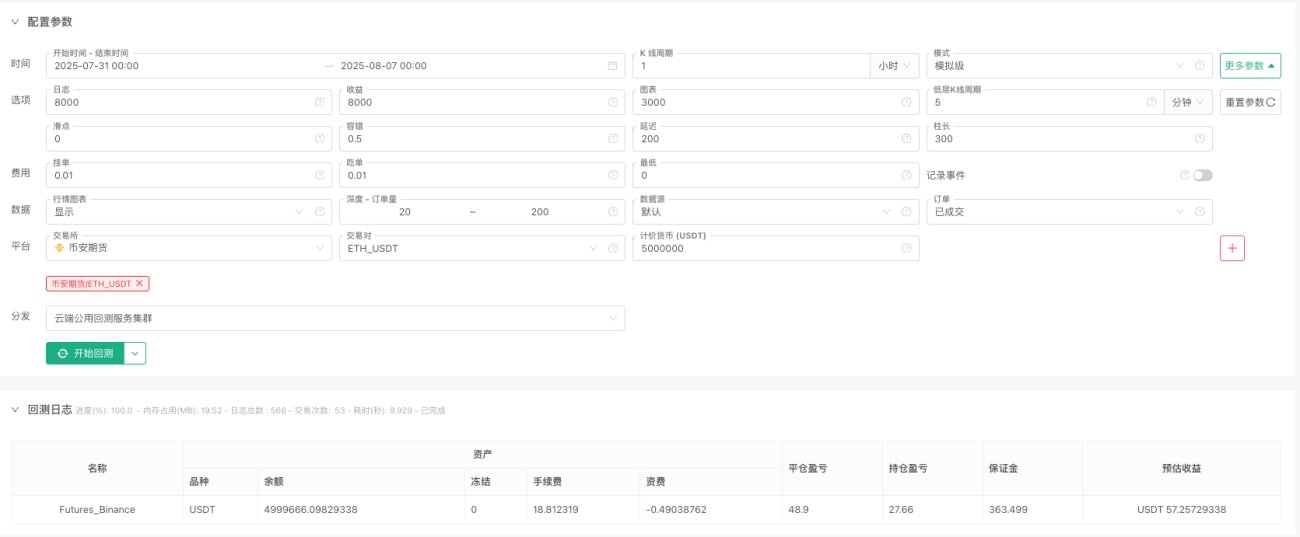
Hiệu suất giao dịch
Rủi ro của mỗi giao dịch được kiểm soát tốt nhờ cơ chế bảo vệ dừng lỗ và chốt lời. Tuy nhiên, lợi nhuận chung ở mức trung bình, chủ yếu do độ chính xác dự báo chưa cao.
Một số vấn đề gặp phải
Các tính năng quá đơn giảnViệc chỉ sử dụng trọng số để chấm điểm một tính năng duy nhất là hơi đơn giản. Thị trường quá phức tạp nên khó có thể nắm bắt đầy đủ chỉ bằng một con số.
Chất lượng mẫu không ổn định:Giá hợp đồng biến động mạnh trong ngắn hạn và trong nhiều trường hợp, sự tăng giảm thực sự là ngẫu nhiên, khiến chất lượng mẫu đào tạo không ổn định.
Rủi ro quá phù hợp:Mặc dù mạng đơn giản, nhưng nó vẫn có thể quá phù hợp khi kích thước mẫu bị giới hạn.
Yêu cầu thời gian thực:Học trực tuyến đòi hỏi sự cân bằng giữa thời gian đào tạo và hiệu suất thực tế.
Thời gian có hạn và tối ưu hóa không đủ
Vẫn còn nhiều lĩnh vực mà chiến lược này có thể được cải thiện, nhưng thời gian và năng lượng có hạn nên chúng tôi không thể tối ưu hóa sâu rộng:
Đặc trưng: Bạn có thể thêm nhiều chỉ báo kỹ thuật hơn hoặc sử dụng các đặc điểm thống kê của chuỗi giá.
Người mẫu: Bạn có thể thử mô hình trình tự như LSTM hoặc tích hợp nhiều mô hình.
Dữ liệu: Cải thiện chất lượng mẫu và tăng cường làm sạch dữ liệu.
Kiểm soát gió: Cải thiện mức dừng lỗ động và tối ưu hóa việc quản lý vị thế.
Lợi ích và suy nghĩ
Khám phá này đã dạy tôi một bài học: chìa khóa cho những ý tưởng tốt là triển khai kịp thời! Khi tôi nhìn thấy thiết kế ma trận trọng số trong tập lệnh Pine, tôi ngay lập tức nghĩ đến khả năng cải thiện nó bằng mạng nơ-ron. Nếu tôi chỉ nghĩ về nó hoặc trì hoãn, ý tưởng có thể đã bị lãng quên. May mắn thay, Nền tảng Inventor cung cấp một môi trường Python và giao diện dữ liệu, cho phép tôi nhanh chóng chuyển đổi ý tưởng của mình thành mã có thể chạy được. Từ khi tạo ý tưởng đến khi triển khai cơ bản, chỉ mất một ngày. Mặc dù hiệu suất chiến lược cuối cùng chỉ ở mức trung bình, nhưng việc triển khai thực tế ít nhất đã xác minh được tính khả thi của ý tưởng. Quan trọng hơn, quá trình triển khai đã tạo ra những ý tưởng và cải tiến mới. Nếu không có hành động kịp thời, những khám phá và hiểu biết tiếp theo này sẽ là không thể. Nói về ý tưởng trên giấy không bao giờ có thể so sánh với trải nghiệm thực tế của việc viết mã, chạy dữ liệu và quan sát kết quả. Đây là bản chất của giao dịch định lượng. Có rất nhiều ý tưởng, nhưng những ý tưởng thực sự có giá trị là những ý tưởng được triển khai và xác minh nhanh chóng.
python
'''backtest
start: 2025-07-31 00:00:00
end: 2025-08-07 00:00:00
period: 1h
basePeriod: 5m
exchanges: [{"eid":"Futures_Binance","currency":"ETH_USDT","balance":5000000,"fee":[0.01,0.01]}]
'''
import numpy as np
from collections import deque
import talib as TA
# ========== 异常类 ==========
class Error_noSupport(BaseException):
def __init__(self):
Log("只支持期货交易!#FF0000")
class Error_AtBeginHasPosition(BaseException):
def __init__(self):
Log("启动时有期货持仓! #FF0000")
# ========== 收益率预测神经网络 ==========
class ReturnPredictor:
def __init__(self, input_size=10, hidden_size=20, output_size=1):
"""收益率预测网络: X[t] -> y[t+1] (收益率)"""
self.W1 = np.random.randn(input_size, hidden_size) * 0.1
self.b1 = np.zeros((1, hidden_size))
self.W2 = np.random.randn(hidden_size, output_size) * 0.1
self.b2 = np.zeros((1, output_size))
self.learning_rate = 0.001
def sigmoid(self, x):
return 1 / (1 + np.exp(-np.clip(x, -250, 250)))
def tanh(self, x):
return np.tanh(x)
def forward(self, X):
self.z1 = np.dot(X, self.W1) + self.b1
self.a1 = self.sigmoid(self.z1)
self.z2 = np.dot(self.a1, self.W2) + self.b2
# 输出预测收益率,使用tanh限制在合理范围
self.a2 = self.tanh(self.z2) * 0.1 # 限制在±10%范围内
return self.a2
def backward(self, X, y, output):
m = X.shape[0]
# MSE损失的梯度
dZ2 = (output - y) / m
# tanh的导数
tanh_derivative = 1 - (output / 0.1) ** 2
dZ2 = dZ2 * 0.1 * tanh_derivative
dW2 = np.dot(self.a1.T, dZ2)
db2 = np.sum(dZ2, axis=0, keepdims=True)
dA1 = np.dot(dZ2, self.W2.T)
dZ1 = dA1 * self.a1 * (1 - self.a1) # sigmoid导数
dW1 = np.dot(X.T, dZ1)
db1 = np.sum(dZ1, axis=0, keepdims=True)
# 更新权重
self.W2 -= self.learning_rate * dW2
self.b2 -= self.learning_rate * db2
self.W1 -= self.learning_rate * dW1
self.b1 -= self.learning_rate * db1
def train(self, X, y, epochs=100):
for i in range(epochs):
output = self.forward(X)
self.backward(X, y, output)
if i % 20 == 0:
loss = np.mean((output - y) ** 2)
Log(f"收益率预测训练轮次 {i}, MSE损失: {loss:.6f}")
def predict(self, X):
return self.forward(X)
# ========== 技术指标计算类 ==========
class TechnicalIndicators:
@staticmethod
def calculate_indicators(records, use_completed_only=True):
"""计算技术指标和特征"""
if len(records) < 55:
return None, None
# 只使用已完成的K线数据
if use_completed_only and len(records) > 1:
working_records = records[:-1]
else:
working_records = records
if len(working_records) < 55:
return None, None
closes = np.array([r['Close'] for r in working_records])
highs = np.array([r['High'] for r in working_records])
lows = np.array([r['Low'] for r in working_records])
volumes = np.array([r['Volume'] for r in working_records])
opens = np.array([r['Open'] for r in working_records])
try:
# 基础指标
ema_55 = TA.EMA(closes, timeperiod=55)
sma_vol20 = TA.SMA(volumes, timeperiod=20)
macd, signal_line, _ = TA.MACD(closes)
rsi_val = TA.RSI(closes, timeperiod=14)
atr14 = TA.ATR(highs, lows, closes, timeperiod=14)
range20 = TA.STDDEV(closes, timeperiod=20)
# 计算派生指标
sma_atr20 = TA.SMA(atr14, timeperiod=20)
sma_range20 = TA.SMA(range20, timeperiod=20)
rvol = volumes / sma_vol20 if sma_vol20[-1] > 0 else np.ones_like(volumes)
delta = closes - opens
# 计算量能阈值
vol_abs_thresh = sma_vol20 * 1.2
sniper_thresh = np.percentile(volumes[-40:], 80) if len(volumes) >= 40 else sma_vol20[-1]
# 趋势
trend = np.where(closes > ema_55, 1, np.where(closes < ema_55, -1, 0))
# 简化K线形态
body_size = np.abs(closes - opens)
total_range = highs - lows
# 锤子线
is_hammer = ((total_range > 3 * body_size) &
((closes - lows) / (total_range + 0.001) > 0.6) &
((opens - lows) / (total_range + 0.001) > 0.6))
# 吞噬形态
is_engulfing = np.zeros_like(closes, dtype=bool)
if len(closes) >= 2:
is_engulfing[1:] = ((closes[1:] > opens[:-1]) &
(opens[1:] < closes[:-1]) &
(closes[1:] > opens[1:]) &
(opens[1:] < closes[1:]))
pattern = np.where(is_hammer, 1, np.where(is_engulfing, 2, 0))
# 🔥 计算标准化特征向量(用于神经网络输入)
features = []
# 1. 趋势特征
if len(ema_55) > 0 and not np.isnan(ema_55[-1]):
trend_feature = (closes[-1] - ema_55[-1]) / ema_55[-1]
features.append(np.tanh(trend_feature * 100))
else:
features.append(0)
# 2. RSI特征
if len(rsi_val) > 0 and not np.isnan(rsi_val[-1]):
rsi_feature = (rsi_val[-1] - 50) / 50
features.append(rsi_feature)
else:
features.append(0)
# 3. MACD特征
if len(macd) > 0 and not np.isnan(macd[-1]) and not np.isnan(signal_line[-1]):
macd_feature = (macd[-1] - signal_line[-1]) / closes[-1] if closes[-1] > 0 else 0
features.append(np.tanh(macd_feature * 1000))
else:
features.append(0)
# 4. 成交量特征
if len(vol_abs_thresh) > 0 and vol_abs_thresh[-1] > 0:
vol_feature = volumes[-1] / vol_abs_thresh[-1] - 1
features.append(np.tanh(vol_feature))
else:
features.append(0)
# 5. 相对成交量特征
if len(rvol) > 0 and not np.isnan(rvol[-1]):
rvol_feature = rvol[-1] - 1
features.append(np.tanh(rvol_feature))
else:
features.append(0)
# 6. Delta特征
if len(delta) > 0 and not np.isnan(delta[-1]) and closes[-1] > 0:
delta_feature = delta[-1] / closes[-1]
features.append(np.tanh(delta_feature * 100))
else:
features.append(0)
# 7. ATR特征
if len(atr14) > 0 and len(sma_atr20) > 0 and sma_atr20[-1] > 0:
atr_feature = atr14[-1] / sma_atr20[-1] - 1
features.append(np.tanh(atr_feature))
else:
features.append(0)
# 8. Blocks特征
if len(volumes) >= 10:
highest_vol = np.max(volumes[-10:])
blocks_feature = volumes[-1] / highest_vol - 0.8 if highest_vol > 0 else 0
features.append(np.tanh(blocks_feature * 5))
else:
features.append(0)
# 9. Tick特征
if len(sma_vol20) > 0 and sma_vol20[-1] > 0:
tick_feature = volumes[-1] / sma_vol20[-1] - 1
features.append(np.tanh(tick_feature))
else:
features.append(0)
# 10. 形态特征
pattern_feature = pattern[-1] / 2.0 if len(pattern) > 0 else 0
features.append(pattern_feature)
# 确保特征数量正确
while len(features) < 10:
features.append(0)
features = np.array(features[:10]).reshape(1, -1)
indicators = {
'ema_55': ema_55,
'sma_vol20': sma_vol20,
'macd': macd,
'signal_line': signal_line,
'rsi_val': rsi_val,
'atr14': atr14,
'range20': range20,
'sma_atr20': sma_atr20,
'sma_range20': sma_range20,
'rvol': rvol,
'delta': delta,
'vol_abs_thresh': vol_abs_thresh,
'sniper_thresh': sniper_thresh,
'trend': trend,
'pattern': pattern,
'volumes': volumes,
'closes': closes,
'highs': highs,
'lows': lows
}
return indicators, features
except Exception as e:
Log(f"计算技术指标异常: {str(e)}")
return None, None
# ========== 市场状态检测类 ==========
class MarketStateDetector:
@staticmethod
def detect_market_type(indicators):
"""检测市场状态"""
if indicators is None:
return "Unknown"
try:
# 获取最新值
close = indicators['closes'][-1]
ema_55 = indicators['ema_55'][-1]
macd = indicators['macd'][-1]
signal_line = indicators['signal_line'][-1]
rsi_val = indicators['rsi_val'][-1]
atr14 = indicators['atr14'][-1]
volume = indicators['volumes'][-1]
sma_vol20 = indicators['sma_vol20'][-1]
sma_atr20 = indicators['sma_atr20'][-1]
range20 = indicators['range20'][-1]
sma_range20 = indicators['sma_range20'][-1]
rvol = indicators['rvol'][-1]
delta = indicators['delta'][-1]
# 检查有效性
if (np.isnan(ema_55) or np.isnan(macd) or np.isnan(signal_line) or
np.isnan(rsi_val) or np.isnan(atr14) or np.isnan(sma_atr20)):
return "Unknown"
# 市场类型判断
is_bull = (close > ema_55 and macd > signal_line and rsi_val > 50 and rvol > 1)
is_bear = (close < ema_55 and macd < signal_line and rsi_val < 50 and volume > sma_vol20)
is_sideways = (abs(close - ema_55) < atr14 * 0.5 and atr14 < sma_atr20)
is_volatile = (atr14 > sma_atr20 * 1.2)
# 需要历史数据的判断
if len(indicators['closes']) >= 2:
price_change = indicators['closes'][-1] - indicators['closes'][-2]
is_momentum = (price_change > atr14 * 1.5 and volume > sma_vol20 * 1.5)
is_wolf = (price_change < -atr14 and close < ema_55)
else:
is_momentum = False
is_wolf = False
is_mean_rev = (rsi_val > 70 or rsi_val < 30)
is_box = (is_sideways and range20 < sma_range20 * 0.8)
is_macro = (abs(delta) > atr14 * 2) if not np.isnan(delta) else False
is_eagle = (is_bull and atr14 < sma_atr20 * 0.8)
# 优先级判断
if is_eagle:
return "Eagle"
elif is_bull:
return "Bull"
elif is_wolf:
return "Wolf"
elif is_bear:
return "Bear"
elif is_box:
return "Box"
elif is_sideways:
return "Sideways"
elif is_volatile:
return "Volatile"
elif is_momentum:
return "Momentum"
elif is_mean_rev:
return "MeanRev"
elif is_macro:
return "Macro"
else:
return "Unknown"
except Exception as e:
Log(f"市场状态检测异常: {str(e)}")
return "Unknown"
# ========== 动态权重生成器 ==========
class DynamicWeightGenerator:
@staticmethod
def generate_weights_from_predicted_return(predicted_return, market_type):
"""根据预测收益率和市场状态生成动态权重"""
# 基础权重矩阵(不同市场类型)
base_weights_matrix = {
"Bull": [2.0, 1.5, 2.0, 1.3, 1.2, 1.0, 1.2, 1.0, 1.0, 1.0],
"Bear": [2.0, 1.5, 2.0, 1.5, 1.3, 1.1, 1.2, 1.1, 1.0, 1.0],
"Eagle": [2.2, 1.4, 2.1, 1.2, 1.3, 1.1, 1.1, 1.0, 1.0, 1.1],
"Wolf": [1.8, 1.6, 1.8, 1.6, 1.2, 1.0, 1.3, 1.2, 1.0, 0.9],
"Momentum": [1.5, 1.2, 1.8, 2.0, 2.0, 1.5, 1.5, 1.3, 1.2, 1.0],
"Sideways": [1.0, 1.4, 1.0, 0.8, 0.7, 1.0, 0.9, 0.8, 1.0, 1.3],
"Volatile": [1.2, 1.5, 1.3, 1.6, 1.8, 1.2, 1.4, 1.3, 1.4, 1.0],
}
base_weights = base_weights_matrix.get(market_type, [1.0] * 10)
# 🔥 根据预测收益率动态调整权重
adjustment_factors = [1.0] * 10
# 预测收益率的强度
return_strength = abs(predicted_return)
return_direction = 1 if predicted_return > 0 else -1
if return_strength > 0.02: # 强预测信号 > 2%
if return_direction > 0: # 预测上涨
adjustment_factors[0] *= 1.3 # 增强趋势权重
adjustment_factors[2] *= 1.2 # 增强MACD权重
adjustment_factors[4] *= 1.15 # 增强相对成交量权重
adjustment_factors[1] *= 0.9 # 降低RSI权重
else: # 预测下跌
adjustment_factors[1] *= 1.3 # 增强RSI权重
adjustment_factors[3] *= 1.2 # 增强成交量权重
adjustment_factors[0] *= 0.9 # 降低趋势权重
elif return_strength > 0.01: # 中等预测信号 1%-2%
if return_direction > 0:
adjustment_factors[0] *= 1.15
adjustment_factors[2] *= 1.1
else:
adjustment_factors[1] *= 1.15
adjustment_factors[3] *= 1.1
# 波动性调整
if return_strength > 0.03: # 高波动预期 > 3%
adjustment_factors[4] *= 1.2 # 增强相对成交量权重
adjustment_factors[6] *= 1.15 # 增强sniper权重
adjustment_factors[7] *= 1.1 # 增强blocks权重
# 生成最终动态权重
dynamic_weights = [base_weights[i] * adjustment_factors[i] for i in range(10)]
# 权重标准化(可选)
# total_weight = sum(dynamic_weights)
# dynamic_weights = [w / total_weight * 10 for w in dynamic_weights]
return dynamic_weights
# ========== 智能得分计算系统 ==========
class SmartScoringSystem:
def __init__(self):
self.return_predictor = ReturnPredictor()
self.weight_generator = DynamicWeightGenerator()
self.is_model_trained = False
def calculate_score(self, indicators, market_type, features=None):
"""计算交易得分(使用预测收益率的动态权重)"""
if indicators is None:
return 50.0
try:
# 🔥 核心逻辑:使用当前指标预测下期收益率
if self.is_model_trained and features is not None:
predicted_return = self.return_predictor.predict(features)[0, 0]
else:
predicted_return = 0.0
Log(f"📊 使用基础权重计算")
# 根据预测收益率生成动态权重
dynamic_weights = self.weight_generator.generate_weights_from_predicted_return(
predicted_return, market_type)
# 获取最新指标值
trend = indicators['trend'][-1]
rsi_val = indicators['rsi_val'][-1]
macd = indicators['macd'][-1]
signal_line = indicators['signal_line'][-1]
volume = indicators['volumes'][-1]
vol_abs_thresh = indicators['vol_abs_thresh'][-1]
sma_vol20 = indicators['sma_vol20'][-1]
rvol = indicators['rvol'][-1]
delta = indicators['delta'][-1]
sniper_thresh = indicators['sniper_thresh']
pattern = indicators['pattern'][-1]
# 计算各项得分
base_score = 0.0
# 1. 趋势得分
trend_score = 20 if trend == 1 else (-20 if trend == -1 else 0)
base_score += trend_score * dynamic_weights[0]
# 2. RSI得分
rsi_score = -10 if rsi_val > 70 else (10 if rsi_val < 30 else 0)
base_score += rsi_score * dynamic_weights[1]
# 3. MACD得分
macd_score = 10 if macd > signal_line else -10
base_score += macd_score * dynamic_weights[2]
# 4. 成交量得分
vol_score = 8 if volume > vol_abs_thresh else (-8 if volume < sma_vol20 else 0)
base_score += vol_score * dynamic_weights[3]
# 5. 相对成交量得分
rvol_score = 7 if rvol > 1.5 else (-7 if rvol < 0.8 else 0)
base_score += rvol_score * dynamic_weights[4]
# 6. Delta得分
delta_score = 6 if delta > 0 else -6
base_score += delta_score * dynamic_weights[5]
# 7. Sniper得分
sniper_score = 8 if volume > sniper_thresh else (-8 if volume < sma_vol20 else 0)
base_score += sniper_score * dynamic_weights[6]
# 8. Blocks得分
if len(indicators['volumes']) >= 10:
highest_vol = np.max(indicators['volumes'][-10:])
blocks_score = 5 if volume > highest_vol * 0.8 else (-5 if volume < sma_vol20 else 0)
else:
blocks_score = 0
base_score += blocks_score * dynamic_weights[7]
# 9. Tick得分
tick_score = 5 if volume > sma_vol20 else -5
base_score += tick_score * dynamic_weights[8]
# 10. 形态得分
pattern_score = 7 if pattern == 1 else (5 if pattern == 2 else 0)
base_score += pattern_score * dynamic_weights[9]
# 转换为百分比得分
score_pct = max(0, min(100, 50 + base_score))
return score_pct
except Exception as e:
Log(f"得分计算异常: {str(e)}")
return 50.0
def train_return_predictor(self, X, y):
"""训练收益率预测器"""
if len(X) < 20:
Log("训练数据不足,跳过收益率预测器训练")
return False
X_array = np.array(X)
y_array = np.array(y).reshape(-1, 1)
Log(f"🧠 开始训练收益率预测器,样本数: {len(X_array)}")
Log(f"📊 收益率范围: [{np.min(y_array)*100:.3f}%, {np.max(y_array)*100:.3f}%]")
self.return_predictor.train(X_array, y_array, epochs=100)
self.is_model_trained = True
# 验证模型预测效果
predictions = self.return_predictor.predict(X_array)
mse = np.mean((predictions - y_array) ** 2)
correlation = np.corrcoef(predictions.flatten(), y_array.flatten())[0, 1]
Log(f"✅ 收益率预测器训练完成")
Log(f"📈 MSE: {mse:.6f}, 相关系数: {correlation:.4f}")
return True
# ========== 动态参数管理器 ==========
class DynamicParameterManager:
def __init__(self):
self.market_params = {
"Bull": {"stop_loss": 0.02, "take_profit": 0.05},
"Bear": {"stop_loss": 0.02, "take_profit": 0.05},
"Eagle": {"stop_loss": 0.015, "take_profit": 0.06},
"Wolf": {"stop_loss": 0.025, "take_profit": 0.04},
"Momentum": {"stop_loss": 0.025, "take_profit": 0.06},
"Sideways": {"stop_loss": 0.01, "take_profit": 0.02},
"Volatile": {"stop_loss": 0.03, "take_profit": 0.07},
"Unknown": {"stop_loss": 0.02, "take_profit": 0.03}
}
def get_params(self, market_type):
return self.market_params.get(market_type, self.market_params["Unknown"])
# ========== 主策略类 ==========
class PredictiveNeuralTradingStrategy:
def __init__(self):
self.data_buffer = deque(maxlen=200)
self.feature_buffer = deque(maxlen=100)
self.label_buffer = deque(maxlen=100) # 存储收益率标签
self.scoring_system = SmartScoringSystem()
self.param_manager = DynamicParameterManager()
# 训练控制
self.last_retrain_time = 0
self.retrain_interval = 3600 * 6 # 6小时重新训练
self.min_train_samples = 30
# 交易状态
self.POSITION_NONE = 0
self.POSITION_LONG = 1
self.POSITION_SHORT = 2
self.position_state = self.POSITION_NONE
# 交易记录
self.open_price = 0
self.counter = {'win': 0, 'loss': 0}
# K线数据管理
self.last_processed_time = 0
def get_current_position(self):
"""获取当前期货持仓状态"""
try:
positions = exchange.GetPosition()
if not positions:
return self.POSITION_NONE, 0
long_amount = 0
short_amount = 0
for pos in positions:
amount = pos.get('Amount', 0)
pos_type = pos.get('Type', -1)
if amount > 0:
if pos_type == 0: # 多仓
long_amount += amount
elif pos_type == 1: # 空仓
short_amount += amount
net_position = long_amount - short_amount
if net_position > 0:
return self.POSITION_LONG, net_position
elif net_position < 0:
return self.POSITION_SHORT, abs(net_position)
else:
return self.POSITION_NONE, 0
except Exception as e:
Log(f"获取持仓异常: {str(e)}")
return self.POSITION_NONE, 0
def collect_data(self, records):
"""收集数据并生成训练样本"""
if not records or len(records) < 55:
return False
# 检查是否有新的已完成K线
if len(records) > 1:
latest_completed = records[-2]
current_time = latest_completed['Time']
# 如果这根K线已经处理过,跳过
if current_time <= self.last_processed_time:
return False
self.last_processed_time = current_time
# 添加已完成的K线到缓冲区
completed_records = records[:-1] if len(records) > 1 else []
if completed_records:
self.data_buffer.extend(completed_records[-5:])
# 🔥 生成训练样本:X[t] -> y[t+1]
if len(self.data_buffer) >= 2:
# 使用倒数第二条记录作为特征,最后一条记录计算收益率标签
buffer_list = list(self.data_buffer)
# 计算t-1时刻的指标作为特征
feature_records = buffer_list[:-1] if len(buffer_list) > 1 else buffer_list
indicators, features = TechnicalIndicators.calculate_indicators(
feature_records, use_completed_only=False)
if indicators is not None and features is not None:
# 计算t时刻相对于t-1时刻的收益率作为标签
if len(buffer_list) >= 2:
current_close = buffer_list[-1]['Close']
previous_close = buffer_list[-2]['Close']
if previous_close > 0:
return_rate = (current_close - previous_close) / previous_close
# 添加到训练集
self.feature_buffer.append(features[0])
self.label_buffer.append(return_rate)
Log(f"📈 新样本: 收益率={return_rate*100:.3f}%, 特征维度={features.shape}")
return True
def should_retrain(self):
"""判断是否需要重新训练"""
import time
current_time = time.time()
return (current_time - self.last_retrain_time > self.retrain_interval and
len(self.feature_buffer) >= self.min_train_samples)
def train_model(self):
"""训练收益率预测器"""
if len(self.feature_buffer) < self.min_train_samples:
Log("训练数据不足,跳过训练")
return False
X = list(self.feature_buffer)
y = list(self.label_buffer)
success = self.scoring_system.train_return_predictor(X, y)
if success:
import time
self.last_retrain_time = time.time()
return success
def get_trading_signals(self, records):
"""获取交易信号"""
# 计算当前时刻的技术指标
indicators, features = TechnicalIndicators.calculate_indicators(
list(self.data_buffer), use_completed_only=False)
if indicators is None:
return 50.0, "Unknown"
# 检测市场类型
market_type = MarketStateDetector.detect_market_type(indicators)
# 🔥 使用预测收益率的动态权重计算得分
score = self.scoring_system.calculate_score(indicators, market_type, features)
return score, market_type
def check_entry_conditions(self, score, market_type):
"""检查开仓条件"""
# 多头条件
long_condition = ((market_type in ["Bull", "Eagle", "Momentum"]) and score > 65)
# 空头条件
short_condition = ((market_type in ["Bear", "Wolf"]) and score < 35)
return long_condition, short_condition
def open_long(self):
"""开多仓"""
try:
ticker = exchange.GetTicker()
if not ticker:
return False
buy_price = ticker['Last'] + 20
order_id = exchange.CreateOrder("", "buy", buy_price, AmountOP)
if order_id:
Sleep(2000)
order_info = exchange.GetOrder(order_id)
if order_info and order_info.get('Status') == 1:
self.open_price = order_info.get('AvgPrice', buy_price)
self.position_state = self.POSITION_LONG
Log(f"🚀 开多仓成功: 价格={self.open_price}, 数量={AmountOP}")
return True
else:
exchange.CancelOrder(order_id)
Log("开多仓订单未完全成交,已取消")
return False
except Exception as e:
Log(f"开多仓异常: {str(e)}")
return False
def open_short(self):
"""开空仓"""
try:
ticker = exchange.GetTicker()
if not ticker:
return False
sell_price = ticker['Last'] - 20
order_id = exchange.CreateOrder("", "sell", sell_price, AmountOP)
if order_id:
Sleep(2000)
order_info = exchange.GetOrder(order_id)
if order_info and order_info.get('Status') == 1:
self.open_price = order_info.get('AvgPrice', sell_price)
self.position_state = self.POSITION_SHORT
Log(f"🎯 开空仓成功: 价格={self.open_price}, 数量={AmountOP}")
return True
else:
exchange.CancelOrder(order_id)
Log("开空仓订单未完全成交,已取消")
return False
except Exception as e:
Log(f"开空仓异常: {str(e)}")
return False
def close_position(self):
"""平仓"""
try:
positions = exchange.GetPosition()
if not positions:
Log("没有持仓需要平仓")
self.position_state = self.POSITION_NONE
self.open_price = 0
return True
ticker = exchange.GetTicker()
if not ticker:
return False
close_success = True
for pos in positions:
if pos['Amount'] == 0:
continue
amount = pos['Amount']
pos_type = pos['Type']
if pos_type == 0: # 平多仓
close_price = ticker['Last'] - 20
order_id = exchange.CreateOrder("", "closebuy", close_price, amount)
Log(f"📤 平多仓: 价格={close_price}, 数量={amount}")
elif pos_type == 1: # 平空仓
close_price = ticker['Last'] + 20
order_id = exchange.CreateOrder("", "closesell", close_price, amount)
Log(f"📤 平空仓: 价格={close_price}, 数量={amount}")
if order_id:
Sleep(2000)
order_info = exchange.GetOrder(order_id)
if order_info and order_info.get('Status') == 1:
close_price = order_info.get('AvgPrice', close_price)
Log(f"✅ 平仓成功: 成交价格={close_price}")
self.update_profit_stats(close_price)
else:
exchange.CancelOrder(order_id)
close_success = False
Log(f"平仓订单未完全成交,已取消")
else:
close_success = False
Log("平仓订单创建失败")
if close_success:
self.position_state = self.POSITION_NONE
self.open_price = 0
return close_success
except Exception as e:
Log(f"平仓异常: {str(e)}")
return False
def update_profit_stats(self, close_price):
"""更新盈亏统计"""
if self.open_price == 0:
return
if self.position_state == self.POSITION_LONG:
if close_price > self.open_price:
self.counter['win'] += 1
Log("💰 多仓盈利")
else:
self.counter['loss'] += 1
Log("💸 多仓亏损")
elif self.position_state == self.POSITION_SHORT:
if close_price < self.open_price:
self.counter['win'] += 1
Log("💰 空仓盈利")
else:
self.counter['loss'] += 1
Log("💸 空仓亏损")
def check_stop_loss_take_profit(self, current_price, params):
"""检查止损止盈并执行平仓"""
if self.open_price == 0 or self.position_state == self.POSITION_NONE:
return False
stop_loss_pct = params["stop_loss"]
take_profit_pct = params["take_profit"]
if self.position_state == self.POSITION_LONG:
profit_pct = (current_price - self.open_price) / self.open_price
if profit_pct <= -stop_loss_pct:
Log(f"🔴 多仓止损触发: 开仓价={self.open_price:.2f}, 当前价={current_price:.2f}, 亏损={profit_pct:.4f}")
return self.execute_close_position("止损")
elif profit_pct >= take_profit_pct:
Log(f"🟢 多仓止盈触发: 开仓价={self.open_price:.2f}, 当前价={current_price:.2f}, 盈利={profit_pct:.4f}")
return self.execute_close_position("止盈")
elif self.position_state == self.POSITION_SHORT:
profit_pct = (self.open_price - current_price) / self.open_price
if profit_pct <= -stop_loss_pct:
Log(f"🔴 空仓止损触发: 开仓价={self.open_price:.2f}, 当前价={current_price:.2f}, 亏损={profit_pct:.4f}")
return self.execute_close_position("止损")
elif profit_pct >= take_profit_pct:
Log(f"🟢 空仓止盈触发: 开仓价={self.open_price:.2f}, 当前价={current_price:.2f}, 盈利={profit_pct:.4f}")
return self.execute_close_position("止盈")
return False
def execute_close_position(self, reason):
"""执行平仓操作(专门用于止盈止损)"""
try:
positions = exchange.GetPosition()
if not positions:
Log(f"{reason}平仓: 没有持仓")
self.position_state = self.POSITION_NONE
self.open_price = 0
return True
ticker = exchange.GetTicker()
if not ticker:
Log(f"{reason}平仓失败: 无法获取ticker")
return False
Log(f"🚨 执行{reason}平仓操作...")
close_success = True
for pos in positions:
if pos['Amount'] == 0:
continue
amount = pos['Amount']
pos_type = pos['Type']
order_id = None
if pos_type == 0: # 平多仓
close_price = ticker['Last'] - 50
order_id = exchange.CreateOrder("", "closebuy", close_price, amount)
Log(f"📤 {reason}平多仓订单: 价格={close_price}, 数量={amount}")
elif pos_type == 1: # 平空仓
close_price = ticker['Last'] + 50
order_id = exchange.CreateOrder("", "closesell", close_price, amount)
Log(f"📤 {reason}平空仓订单: 价格={close_price}, 数量={amount}")
if order_id:
Log(f"📋 {reason}平仓订单ID: {order_id}")
Sleep(1500)
for retry in range(2):
order_info = exchange.GetOrder(order_id)
if order_info:
status = order_info.get('Status', -1)
if status == 1:
close_price = order_info.get('AvgPrice', close_price)
Log(f"✅ {reason}平仓成功: 成交价格={close_price}")
self.update_profit_stats(close_price)
break
elif status == 0:
if retry == 0:
Log(f"⏳ {reason}平仓订单执行中,等待...")
Sleep(1500)
else:
Log(f"⚠️ {reason}平仓订单未完全成交,强制取消")
exchange.CancelOrder(order_id)
close_success = False
else:
Log(f"❌ {reason}平仓订单状态异常: {status}")
exchange.CancelOrder(order_id)
close_success = False
break
else:
Log(f"⚠️ 无法获取{reason}平仓订单信息,重试 {retry+1}/2")
if retry == 1:
close_success = False
else:
Log(f"❌ {reason}平仓订单创建失败")
close_success = False
if close_success:
Sleep(1000)
new_positions = exchange.GetPosition()
total_amount = sum(pos['Amount'] for pos in new_positions) if new_positions else 0
if total_amount == 0:
Log(f"✅ {reason}平仓完成,持仓已清零")
self.position_state = self.POSITION_NONE
self.open_price = 0
return True
else:
Log(f"⚠️ {reason}平仓不完全,剩余持仓: {total_amount}")
return False
else:
Log(f"❌ {reason}平仓失败")
return False
except Exception as e:
Log(f"❌ {reason}平仓异常: {str(e)}")
return False
def execute_trade_logic(self, score, market_type, current_price):
"""执行交易逻辑"""
params = self.param_manager.get_params(market_type)
# 获取当前实际持仓状态
actual_position, position_amount = self.get_current_position()
# 同步内部状态
self.position_state = actual_position
# 先检查止损止盈(最高优先级)
if self.position_state != self.POSITION_NONE:
if self.check_stop_loss_take_profit(current_price, params):
Log("🚨 触发止盈止损,已执行平仓,跳过其他交易信号")
return
# 获取开仓条件
long_condition, short_condition = self.check_entry_conditions(score, market_type)
# 执行交易逻辑
if long_condition and self.position_state <= self.POSITION_NONE:
Log(f"📈 开多仓信号: 市场={market_type}, 预测得分={score:.1f} > 65")
self.open_long()
if short_condition and self.position_state >= self.POSITION_NONE:
Log(f"📉 开空仓信号: 市场={market_type}, 预测得分={score:.1f} < 35")
self.open_short()
if not long_condition and self.position_state > self.POSITION_NONE:
Log(f"📤 平多仓信号: 市场={market_type}, 预测得分={score:.1f}")
self.close_position()
if not short_condition and self.position_state < self.POSITION_NONE:
Log(f"📤 平空仓信号: 市场={market_type}, 预测得分={score:.1f}")
self.close_position()
def CancelPendingOrders():
"""取消所有挂单"""
while True:
orders = exchange.GetOrders()
if not orders:
break
for order in orders:
exchange.CancelOrder(order['Id'])
Sleep(500)
def main():
global AmountOP, LoopInterval
# 检查初始持仓
initial_positions = exchange.GetPosition()
if initial_positions and any(pos['Amount'] > 0 for pos in initial_positions):
raise Error_AtBeginHasPosition()
# 取消所有挂单
CancelPendingOrders()
# 初始化策略
strategy = PredictiveNeuralTradingStrategy()
Log("🔮 预测型神经网络期货交易策略启动")
LogProfitReset()
# 数据预热期
Log("进入数据预热期...")
warmup_count = 0
warmup_target = 60
while warmup_count < warmup_target:
records = exchange.GetRecords()
if records and len(records) >= 55:
if strategy.collect_data(records):
warmup_count += 1
if warmup_count % 10 == 0:
Log(f"预热进度: {warmup_count}/{warmup_target}")
Sleep(5000)
Log("数据预热完成,开始首次收益率预测器训练...")
strategy.train_model()
# 主交易循环
loop_count = 0
while True:
loop_count += 1
# 获取K线数据
records = exchange.GetRecords()
if not records or len(records) < 55:
Sleep(LoopInterval * 1000)
continue
# 数据处理
data_updated = strategy.collect_data(records)
# 检查是否需要重新训练
if strategy.should_retrain():
Log("🔄 重新训练收益率预测器...")
strategy.train_model()
# 获取交易信号
score, market_type = strategy.get_trading_signals(records)
# 获取当前实时价格
ticker = exchange.GetTicker()
if ticker:
current_price = ticker['Last']
else:
current_price = records[-1]['Close']
# 获取当前参数
params = strategy.param_manager.get_params(market_type)
# 优先检查止损止盈(使用实时价格)
if strategy.position_state != strategy.POSITION_NONE:
if strategy.check_stop_loss_take_profit(current_price, params):
Log("⚡ 触发止盈止损,已执行平仓")
Sleep(LoopInterval * 1000)
continue
# 执行交易逻辑(只在有新数据时执行)
if data_updated:
strategy.execute_trade_logic(score, market_type, current_price)
# 状态显示
pos_state_name = {
strategy.POSITION_NONE: "无仓",
strategy.POSITION_LONG: "多仓",
strategy.POSITION_SHORT: "空仓"
}.get(strategy.position_state, "未知")
data_status = "📊新数据" if data_updated else "⏸️等待"
model_status = "🔮预测" if strategy.scoring_system.is_model_trained else "📊基础"
# 获取开仓条件用于显示
long_cond, short_cond = strategy.check_entry_conditions(score, market_type)
signal_status = ""
if long_cond:
signal_status = "📈多头"
elif short_cond:
signal_status = "📉空头"
else:
signal_status = "🔄观望"
# 显示训练样本数量
sample_count = len(strategy.feature_buffer)
LogStatus(f"循环: {loop_count}, 价格: {current_price:.2f}, "
f"预测得分: {score:.1f}, 市场: {market_type}, "
f"持仓: {pos_state_name}, 信号: {signal_status}, "
f"状态: {data_status}, 模式: {model_status}, "
f"样本: {sample_count}, "
f"胜: {strategy.counter['win']}, 负: {strategy.counter['loss']}")
Sleep(LoopInterval * 1000)
# ========== 参数设置 ==========
AmountOP = 1 # 期货合约数量
LoopInterval = 3 # 循环间隔(秒)
if __name__ == "__main__":
main()


- 1