Type/to search

Multi-Indicator Trend Line Crossover Strategy with Dynamic Stop-Loss

RSI
2
Follow
477
Followers

img
img

Overview

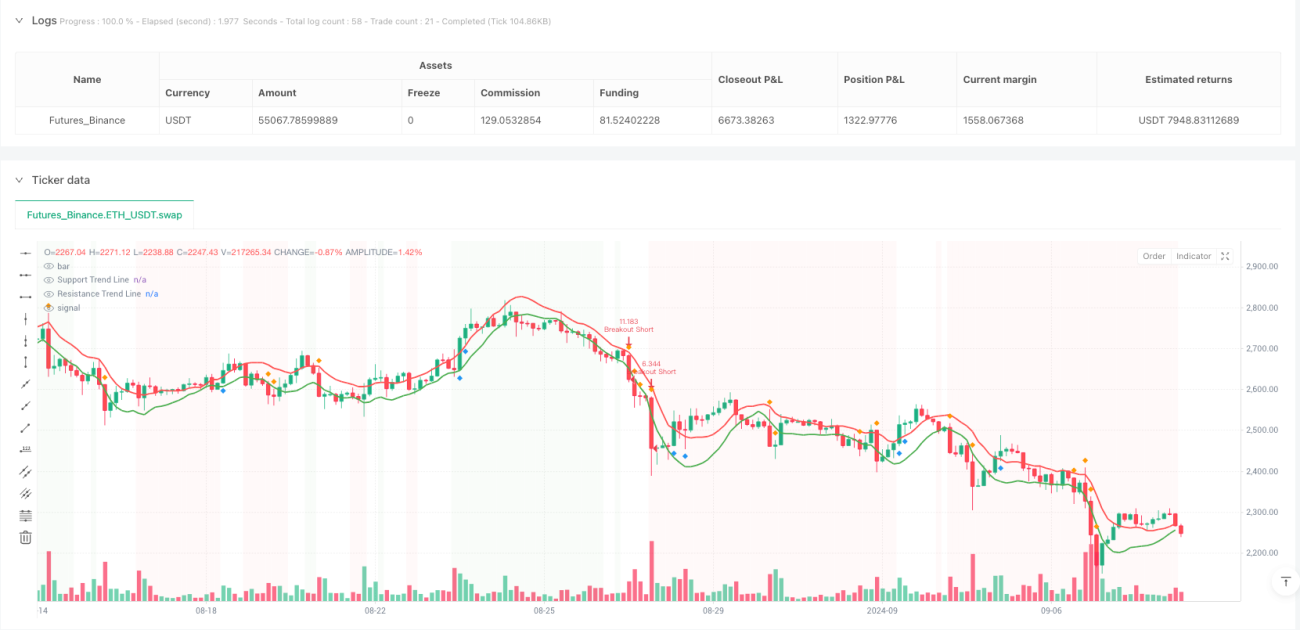
The Multi-Indicator Trend Line Crossover Strategy with Dynamic Stop-Loss is a comprehensive trading system that combines trend line analysis, technical indicators, and risk management. The core of this strategy is built around dynamic trend lines constructed using linear regression, complemented by RSI, MACD, volume analysis, and market structure to identify high-probability trading opportunities. The strategy implements ATR-based dynamic stop-losses, position sizing based on risk percentage, and dual profit targets. This approach is particularly suitable for volatile markets, enhancing trading success through multiple confirmation mechanisms and strict risk control.

Strategy Principles

This strategy is based on several core principles:

  1. Dynamic Trend Line Identification: Uses Linear Regression techniques to construct support and resistance trend lines, analyzing the relationship between price and these trend lines to identify potential bounce and rejection points.

  2. Multi-Indicator Confluence:

    • RSI (Relative Strength Index) for identifying overbought/oversold conditions
    • MACD for confirming momentum direction
    • Volume spikes for confirming market participation
    • Market structure analysis (higher lows/lower highs) for confirming overall trend
  3. Breakout Trading Mechanism: Triggers breakout trading signals when price breaks through resistance or support with volume confirmation.

  4. Risk Management System:

    • Position sizing based on account risk percentage
    • Dynamic stop-loss using ATR multiplier
    • Tiered profit-taking strategy with partial exits at different price targets
  5. Trade Execution Logic:

    • Long entries: Price bounces at support + RSI oversold + MACD histogram rising + Volume spike + Bullish market structure
    • Short entries: Price rejects at resistance + RSI overbought + MACD histogram falling + Volume spike + Bearish market structure
    • Breakout entries: Price breaks key trend lines + Volume confirmation

Strategy Advantages

  1. Comprehensive Market Analysis: Combines multiple technical analysis methods including trend lines, oscillators, momentum indicators, and volume analysis, providing a more complete market perspective and reducing false signals.

  2. Dynamic Adaptation to Market Conditions: Trend lines are dynamically calculated through linear regression, allowing adaptation to different market environments with more flexibility than static support/resistance levels.

  3. Multiple Confirmation Mechanism: Requires multiple conditions to be satisfied simultaneously before triggering trade signals, significantly improving signal quality and reducing erroneous trades.

  4. Robust Risk Management:

    • Risk limited to a fixed percentage of account per trade
    • ATR-based dynamic stops that adapt to market volatility
    • Tiered profit-taking strategy optimizing risk-reward ratio
    • Leverage limits to prevent excessive risk
  5. Visual Feedback: The strategy provides visual feedback of trend lines, signals, and market status, helping traders better understand market environment and strategy execution.

  6. Flexible Parameter Settings: Allows users to adjust various parameters based on the trading instrument and personal risk preferences, enhancing adaptability.

Strategy Risks

  1. Parameter Sensitivity: The strategy relies on multiple parameter settings, including trend line length, RSI thresholds, and MACD parameters. Inappropriate parameter settings may lead to overtrading or missed opportunities. Solution: Optimize parameters through backtesting and establish different parameter configurations for different market conditions.

  2. Multiple Conditions Limiting Trade Frequency: While multiple confirmation mechanisms improve signal quality, they may also reduce trading opportunities, potentially resulting in long periods without signals in certain market environments. Solution: Consider implementing a condition weighting system that allows relaxing some conditions when others are particularly strong.

  3. Trend Line Calculation Complexity: Linear regression trend lines may be inaccurate in certain extreme market conditions, especially in markets with violent fluctuations or sudden reversals. Solution: Incorporate alternative support/resistance identification methods such as key levels or moving averages.

  4. Position Sizing Dependent on Stop-Loss Point: Position size calculation depends on stop-loss location; if ATR-calculated stop distance is too large, it may result in positions that are too small, affecting profit potential. Solution: Set maximum stop distance limits or consider hybrid position sizing methods.

  5. Drawdown Risk: Despite risk management mechanisms, actual losses may exceed expectations in extreme market conditions such as flash crashes or price gaps. Solution: Add additional market volatility filters to reduce position size or pause trading during extreme volatility.

Strategy Optimization Directions

  1. Machine Learning Enhancement: Introduce machine learning algorithms to automatically optimize parameters, dynamically adjusting RSI thresholds, MACD parameters, and trend line length based on different market environments. This can overcome the limitations of fixed parameters across different market phases and improve strategy adaptability.

  2. Market Environment Classification: Implement a market environment recognition system that categorizes markets into trending, ranging, and transitional states, applying different trading rules for each state. This helps avoid overtrading in unsuitable market environments.

  3. Indicator Weighting System: Establish a dynamic indicator weighting system that allows reducing the importance of some indicators when others show particularly strong signals. This maintains the advantage of multiple confirmations while increasing trading frequency.

  4. Improved Trend Line Algorithms: Use more sophisticated trend line identification algorithms such as polynomial regression or support vector machines (SVM) to improve trend line accuracy under various market conditions.

  5. Enhanced Risk Management:

    • Implement dynamic risk percentage based on market volatility
    • Add trailing stop-loss functionality to protect realized profits
    • Introduce correlation analysis to control overall risk exposure for same-direction trades
  6. Sentiment Indicator Integration: Incorporate market sentiment indicators such as the Volatility Index (VIX) or fund flow data as additional filtering conditions to avoid trading during extreme market sentiment.

Conclusion

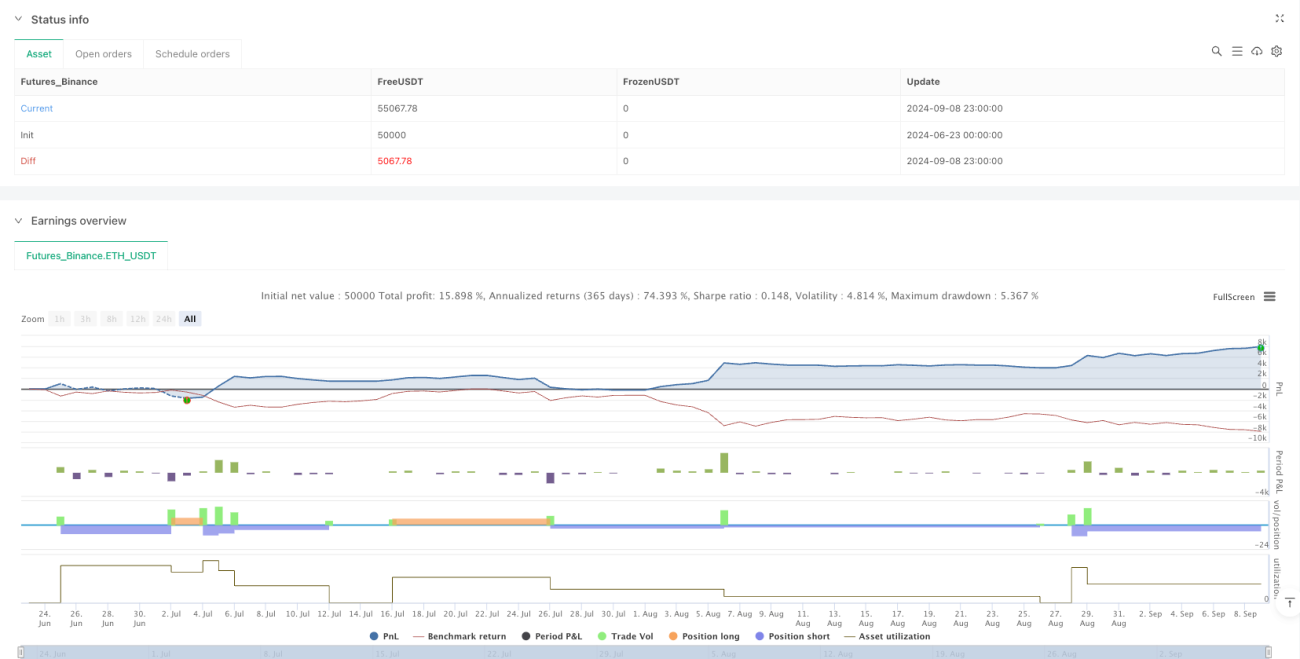
The Multi-Indicator Trend Line Crossover Strategy with Dynamic Stop-Loss is a comprehensively designed trading system that provides quality trading signals by combining trend line analysis, technical indicators, and strict risk management. Its greatest strengths lie in its multiple confirmation mechanisms and robust risk control system, though traders should be mindful of potential issues like parameter sensitivity and trading frequency limitations.

By optimizing trend line algorithms, implementing dynamic parameter adjustments, introducing market environment classification, and enhancing risk management systems, this strategy can further improve its stability and adaptability. For experienced traders, this represents a worthwhile comprehensive trading framework, particularly suitable for those who prioritize risk management and are willing to wait for high-quality trading signals.

This strategy integrates multiple dimensions of technical analysis, including price patterns, indicator confluence, and volume confirmation, forming a unified trading decision system. Through strict entry conditions and clear risk management rules, it provides a disciplined trading approach that helps traders maintain emotional stability in volatile markets and execute consistent trading plans.

Source
Pine
/*backtest
start: 2024-06-23 00:00:00
end: 2024-09-09 00:00:00
period: 3h
basePeriod: 3h
exchanges: [{"eid":"Futures_Binance","currency":"ETH_USDT"}]
*/

//@version=5
strategy("Advanced Crypto Trend Line Strategy", overlay=true, margin_long=100, margin_short=100)

// ================================
Strategy parameters
Strategy parameters
Cryptocurrency (Optional)
Trend Line Calculation Length (Optional)
Minimum Trend Line Touches (Optional)
Breakout Threshold % (Optional)
Risk Per Trade % (Optional)
Take Profit 1 Ratio (Optional)
Take Profit 2 Ratio (Optional)
RSI Length (Optional)
RSI Oversold Level (Optional)
RSI Overbought Level (Optional)
MACD Fast Length (Optional)
MACD Slow Length (Optional)
MACD Signal Length (Optional)
Volume Spike Multiplier (Optional)
ATR Length for Stops (Optional)
ATR Stop Multiplier (Optional)
Comment
All comments (0)
No data
No data
  • 1
iPhone Download
Forums
PINE Language
© 2015 - ∞ INVENTOR PTE LTD (SG)