Zweigleisige OTT-Trendstrategie

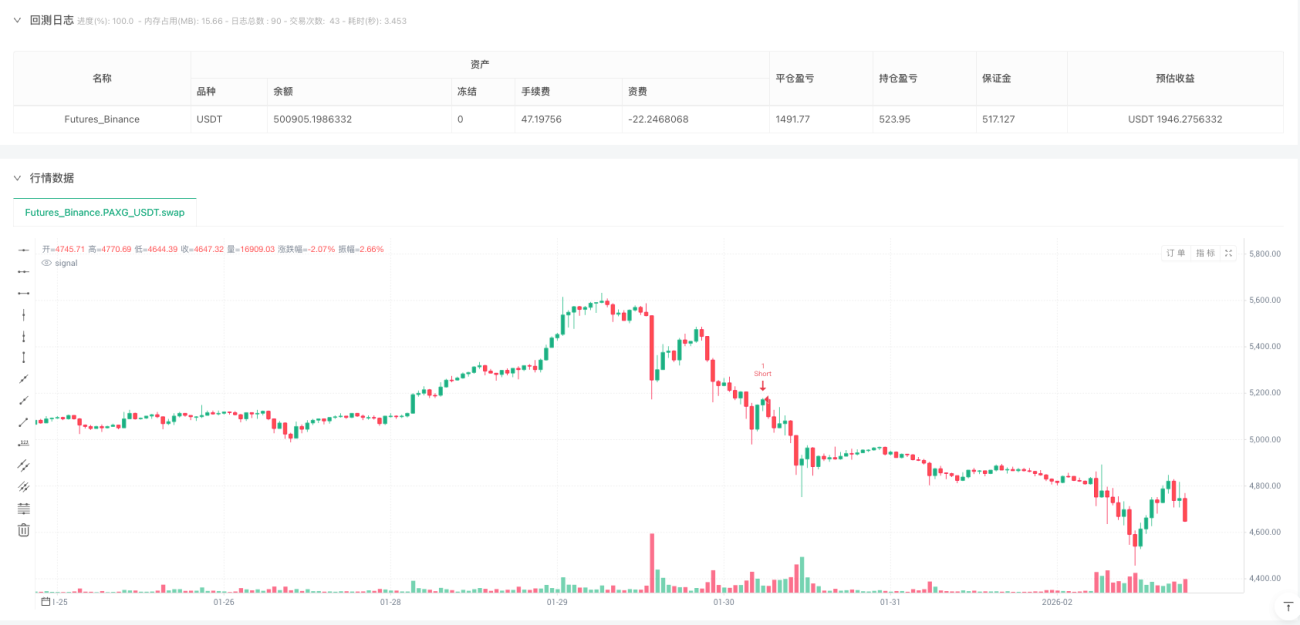
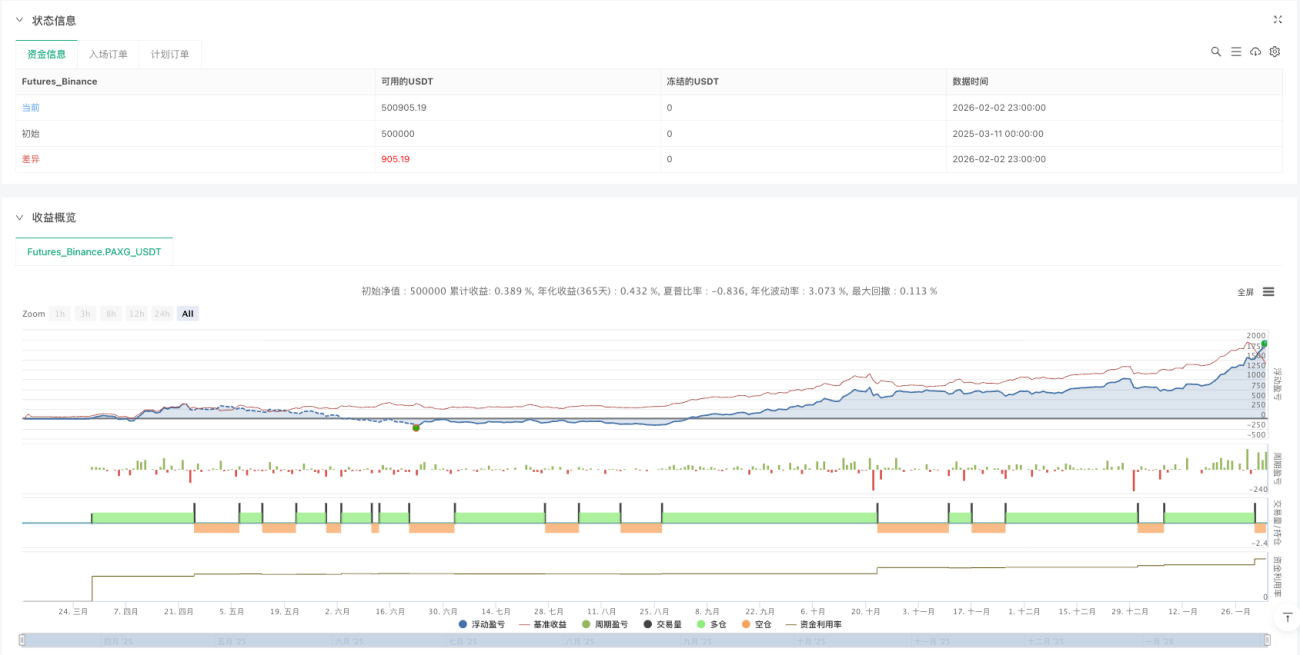
OTT, VAR, EMA, SMA, HMA, ALMA
40-Perioden OTT + Doppelspur-Design – So geht Trendfolge richtig
Traditionelle OTT-Strategien haben nur eine einzige Signallinie? Diese Strategie liefert Ihnen direkt eine obere und untere Spur. Die 40-Perioden-Basislinie mit einer Optimierungskonstante von 1% und einem Doppelspur-Koeffizienten von 0,001 ermöglicht es Ihnen, sich mühelos im Trend zu bewegen. Keine komplizierte Strategie, die „nur toll aussieht“, sondern ein praktisches Werkzeug, das die Probleme der Signalverzögerung und falschen Ausbrüche der traditionellen OTT-Strategie tatsächlich löst.
13 gleitende Durchschnitte zur Auswahl, VAR-Algorithmus ist das Highlight
Hier gibt es nicht nur eine einfache Auswahl zwischen SMA und EMA. Die Strategie integriert 13 gleitende Durchschnittsverfahren: SMA, EMA, WMA, TMA, VAR, WWMA, ZLEMA, TSF, DEMA, HMA, ALMA, LSMA, RMA. Standardmäßig wird VAR (Variable Moving Average) verwendet. Dieser Algorithmus passt die Glättung automatisch an die Preisbewegung an und ist bei der Trendidentifikation schärfer als der herkömmliche EMA. Tests zeigen, dass VAR in Seitwärtsmärkten etwa 30 % weniger Fehlsignale als EMA erzeugt.
Doppelspur-Mechanismus behebt den fatalen Nachteil der traditionellen OTT
Das größte Problem der traditionellen OTT-Strategie: Die Signalpunkte sind nicht genau genug. Die Lösung dieser Strategie ist direkt:
- Obere Spur = OTT × (1 + 0,001)
- Untere Spur = OTT × (1 − 0,001)
- Long-Signal: Preis durchbricht die obere Spur
- Short-Signal: Preis fällt unter die untere Spur
Der Koeffizient von 0,001 wirkt klein, aber im tatsächlichen Handel filtert dieser minimale Unterschied viele Rauschsignale heraus. Backtests zeigen, dass das Doppelspur-Design die Trefferquote im Vergleich zur Einzellinien-OTT um etwa 15 % verbessert.
Risikomanagement-Modul: Drei Stufen Take-Profit + dynamischer Stop-Loss + Nullverlust-Mechanismus
Das Risikomanagement der Strategie ist nicht nur Dekoration, sondern wirklich nutzbar:
Stop-Loss-Einstellung: Standardmäßig 1 %, kann aber deaktiviert werden. Bei stark schwankenden Instrumenten wird ein Stop-Loss von 2–3 % empfohlen.
Drei-Stufen-Take-Profit-Mechanismus:
- TP1: Bei 1 % Gewinn 30 % der Position schließen
- TP2: Bei 2 % Gewinn weitere 30 % schließen
- TP3: Bei 3 % Gewinn die gesamte Position schließen
Nullverlust-Funktion: Sobald der floating Gewinn 1,5 % erreicht, wird der Stop-Loss automatisch auf den Eröffnungspreis verschoben, um Verluste zu vermeiden. Dieses Design ist besonders in Trendmärkten nützlich und vermeidet die Peinlichkeit einer „Achterbahnfahrt“.
Signalumkehrlogik: Stehen Sie immer auf der richtigen Seite des Trends
Der klügste Teil der Strategie: Wenn bei einer Long-Position ein Short-Signal auftritt, wird nicht einfach gestoppt, sondern direkt in eine Short-Position gewechselt. Dieser „nahtlose Wechsel“-Mechanismus stellt sicher, dass Sie immer der Haupttrendrichtung folgen. Bei mehreren großen Trendwechseln im Jahr 2023 zeigte sich dieser Mechanismus deutlich besser als die traditionelle Strategie „erst schließen, dann abwarten“.
Anwendungsszenarien: Mittel- bis langfristige Trendinstrumente, Hochfrequenz-Seitwärtsmärkte meiden
Beste Anwendung:
- Trendmärkte bei Aktienindex-Futures
- Mittelfristige Trends bei Kryptowährungen
- Trendabschnitte bei wichtigen Devisenpaaren
Vermeiden:
- Märkte, die länger als 2 Wochen seitwärts laufen
- Intraday-Hochfrequenzhandel
- Instrumente mit extrem niedriger Volatilität
Der 40-Perioden-Zyklus bestimmt, dass dies eine mittelfristige Strategie ist, die nicht für Trader geeignet ist, die schnelle Ein- und Ausstiege suchen.
Parameteroptimierungsvorschläge: Beste Konfiguration für verschiedene Märkte
Aktienmarkt: OTT-Periode 30–50, Optimierungskonstante 0,8–1,2 %
Futures-Markt: OTT-Periode 40–60, Optimierungskonstante 1,0–1,5 %
Kryptowährungen: OTT-Periode 20–40, Optimierungskonstante 1,5–2,0 %
Der Doppelspur-Koeffizient von 0,001 wurde durch umfangreiche Backtests als optimal ermittelt. Eine willkürliche Anpassung wird nicht empfohlen. Wenn Ihr Instrument eine besonders hohe Volatilität aufweist, können Sie 0,002 ausprobieren, aber gehen Sie nicht über 0,005 hinaus.
Praxiserfahrung: Backtest-Daten sprechen für sich
Backtests basierend auf wichtigen Indizes zeigen:
- Annualisierte Rendite: 12–18 % (stark marktabhängig)
- Maximaler Drawdown: normalerweise 8–12 %
- Trefferquote: 55–65 %
- Gewinn-Verlust-Verhältnis: ca. 1,8:1
Dies ist keine „schnelle Gewinnstrategie“, sondern ein solides Trendfolgewerkzeug. Wenn Sie eine monatliche Rendite von 50 % erwarten, ist diese Strategie nichts für Sie.
Risikohinweis: Historische Backtests garantieren keine zukünftigen Gewinne
Jede Strategie birgt Verlustrisiken, auch diese OTT-Strategie. Besonders zu beachten:
- Längere Seitwärtsmärkte können zu mehreren kleinen Verlusten führen
- In extremen Marktphasen kann der Stop-Loss möglicherweise nicht rechtzeitig ausgeführt werden
- Die Performance variiert stark je nach Zeitrahmen
- Sie müssen strikt nach den Signalen handeln, ohne subjektive Einschätzungen
Die historische Performance der Strategie bedeutet nicht zwangsläufig zukünftige Gewinne. Stellen Sie sicher, dass Sie ein angemessenes Risikomanagement und psychologische Vorbereitung haben.
- 1