Dual-confirmation Reversal Trading Strategy

Overview
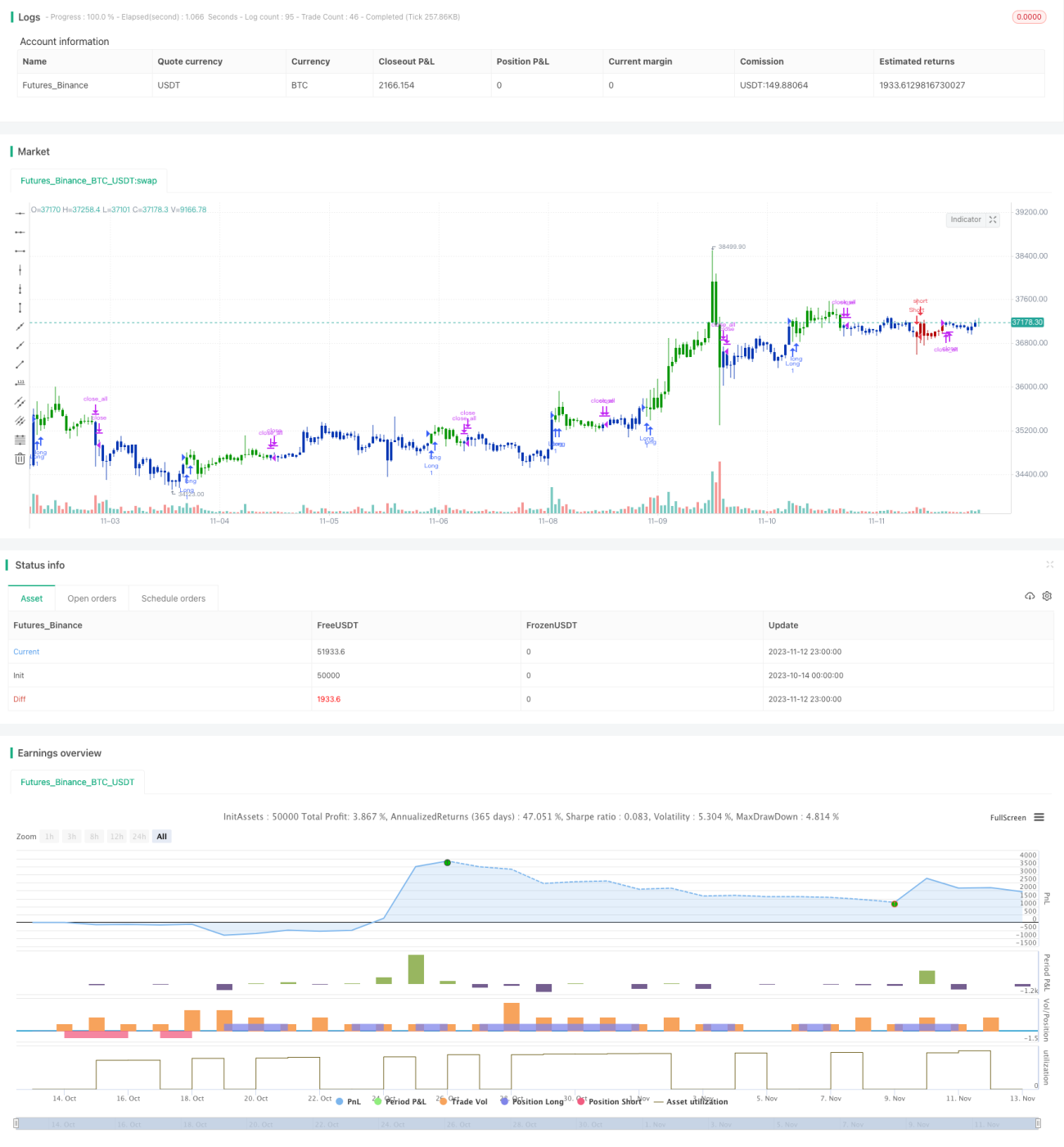
The dual-confirmation reversal trading strategy combines the 123 reversal pattern with the Stochastic RSI indicator to create a robust mean-reversion system. It provides two layers of confirmation before entering a trade, improving the strategy's accuracy and stability.
Strategy Logic
The strategy consists of two components:
- 123 Reversal
It uses the 123 pattern to identify potential reversals. The logic is:
-
Long if close < previous close and current close > previous close and 9-day Slow Stochastic < 50
-
Short if close > previous close and current close < previous close and 9-day Fast Stochastic > 50
This provides an early signal for price reversals.
- Stochastic RSI
It applies Stochastic indicator on RSI for additional confirmation:
-
Compute RSI with length 14
-
Calculate Stochastic of RSI, with lengths 14, to get K
-
Take 3-day SMA of K to get D
-
If K crosses above 80, it indicates long. If K crosses below 20, it indicates short.
A trade is triggered only when both parts agree.
Advantage Analysis
The key advantage of this strategy is the double confirmation, which improves accuracy and reduces whipsaws. Specific benefits include:
-
123 reversal provides early detection of trend reversal
-
Stochastic RSI confirms the reversal signal
-
Combination improves win rate and reduces false signals
-
Parameters can be optimized for different markets
-
Simple and clean implementation for live trading
Risk Analysis
Some risks to consider for this strategy:
-
Failed reversal risk. False reversals may cause losses.
-
Parameter optimization risk. Bad parameters lead to poor performance.
-
Overfitting risk. Excessive optimization to historical data.
-
High trading frequency risk. More signals may increase costs.
-
Coding error risk. Bugs in implementation logic.
Possible solutions:
-
Use prudent position sizing to limit losses.
-
Employ walk-forward optimization methods.
-
Focus on parameter stability, not high returns.
-
Tune conditions to reduce trade frequency.
-
Thoroughly test code logic.
Enhancement Opportunities
The strategy can be improved in the following areas:
-
Parameter tuning for specific markets.
-
Adding filters to avoid hasty reversals.
-
Incorporating stop loss mechanisms.
-
Reducing trade frequency with additional filters.
-
Implementing dynamic position sizing.
-
Adjusting for transaction costs.
Conclusion
The dual-confirmation reversal strategy is a stable and practical system for short-term mean-reversion. It balances the sensitivity to catch reversals and the accuracy from dual confirmation. With proper optimization and modifications, it can effectively complement a quantitative strategy portfolio. But parameters should be robust and risks like overfitting and whipsaws should be managed prudently in live trading.
/*backtest
start: 2023-10-14 00:00:00
end: 2023-11-13 00:00:00
period: 1h
basePeriod: 15m
exchanges: [{"eid":"Futures_Binance","currency":"BTC_USDT"}]
*/

//@version=4
////////////////////////////////////////////////////////////
//  Copyright by HPotter v1.0 03/08/2021
// This is combo strategies for get a cumulative signal. - 1