Quantitative Trend Strategy Based on Multi-factor

Overview
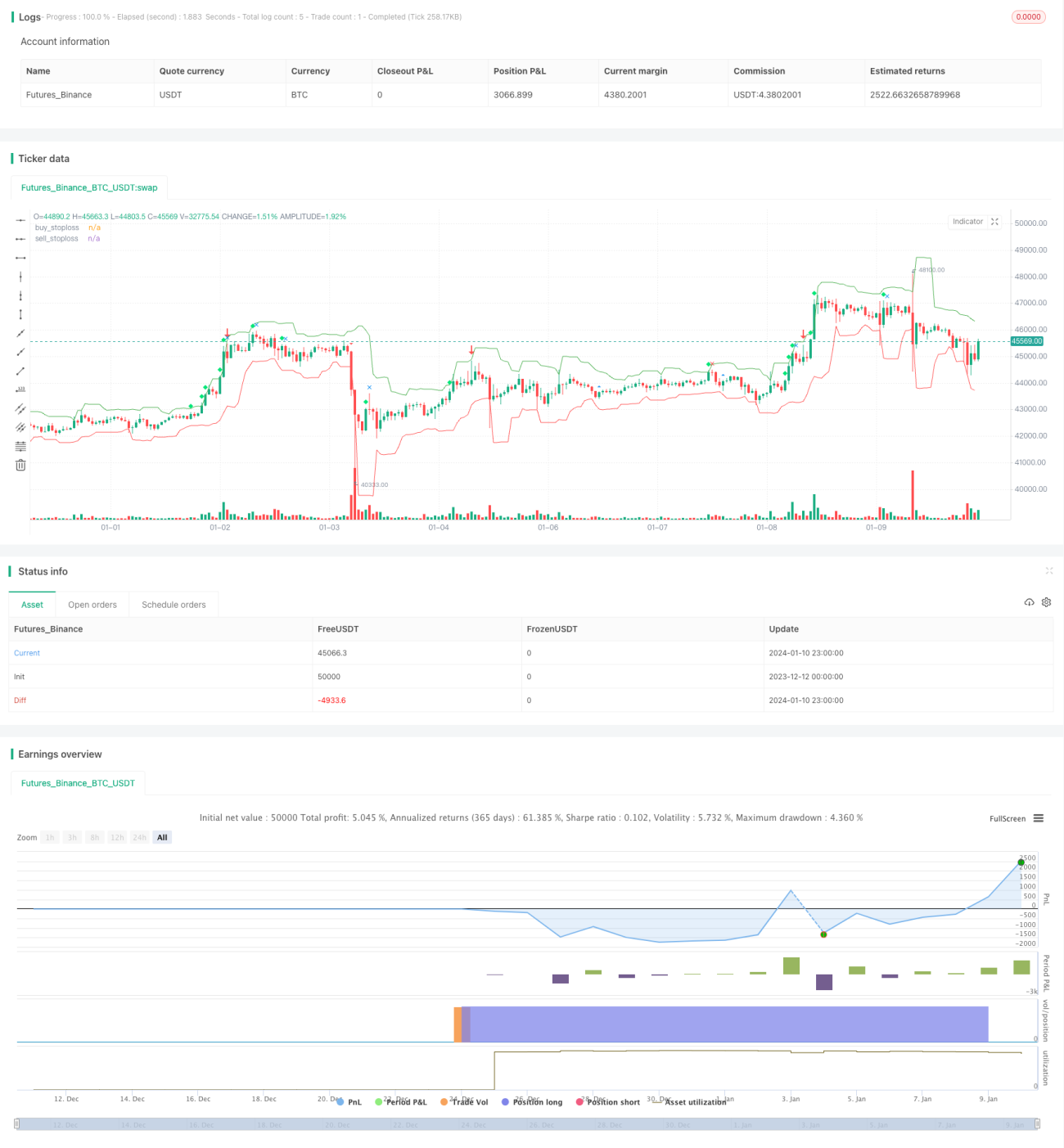
This strategy comprehensively considers factors like trading volume, volatility, closing price position, trend, etc. to identify trading opportunities. It belongs to the typical multi-factor quantitative strategy.
Strategy Principle
The core idea of this strategy is to identify entry and exit points by combining abnormal breakthroughs in trading volume, closing position, volatility range and other factors.
Specifically, the strategy calculates the average trading volume over a period of time. When the current period's trading volume shows significant abnormal breakthrough, it may indicate a trend reversal. In addition, if the closing price is near the upper or lower limit of the volatility range, it also implies a possible trend reversal. By combining trading volume and closing position, potential entry and exit points can be initially judged.
To verify the trading signals, this strategy also takes volatility range into consideration. If the current volatility breaks through the average level over a period, it forms the first condition of trading signals. Then if the closing price of an up bar falls in the lower half of the volatility range with increasing volume, a sell signal is generated. On the contrary, if the closing price of a down bar lies in higher half of the volatility range with decreasing volume, then a buy signal is produced.
In addition, this strategy also employs moving average to determine the overall trend. Reversal of the medium-long term trend will also act as a condition for producing trading signals.
By integrating above indicators, this strategy can effectively identify entry and exit points of the market.
Advantages
The biggest advantage of this strategy is that it takes multiple factors into account for decision making, making the trading signals more reliable. Main advantages are:
- Detect signs of trend reversal early by abnormal trading volume.
- Determine real trend by volatility range and closing position, avoiding short-term noises.
- Ensure strategy align with major trend by checking medium-long term moving average.
- Reducing losses by verifying signals from multiple aspects.
Risks
There are also several risks of this strategy:
- Complex to optimize parameters with multiple factors.
- Unable to completely avoid false signals.
- Wrong major trend judgment can negatively impact overall performance.
- Volatility parameters need adjustments among varying market environments.
Optimization Directions
Major aspects that this strategy can be optimized:
- Use machine learning models to auto tune parameters.
- Add stop loss mechanisms to control risks.
- Integrate more factors like money flows to determine major trends.
- Design adaptive volatility parameter.
Conclusion
This strategy identifies trading chances by taking various factors into account. The advantages lie in comprehensive signaling mechanisms and steady performance, while main risks come from parameter tuning and inaccurate major trend prediction. Some techniques like machine learning can be applied for further optimization in the future. Overall speaking, this is a strategy with sound rationale and promising practical performance.
- 1