Polynomial Interpolation Based RSI Momentum Strategy

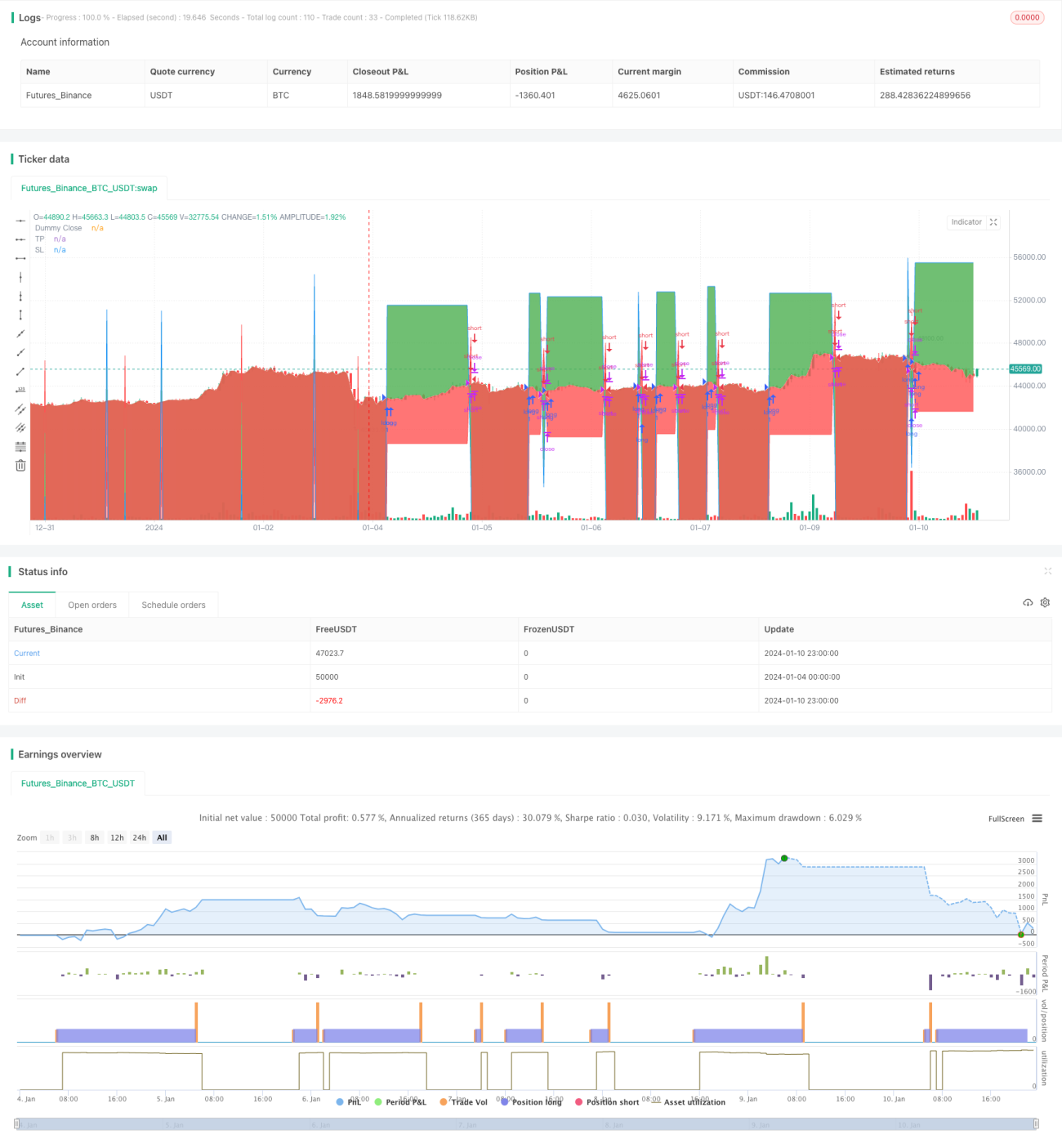
Overview
This strategy generates trading signals using the RSI momentum indicator Delta-RSI based on polynomial interpolation. Delta-RSI smooths RSI through local polynomial regression to obtain its first order time derivative as a momentum indicator. This strategy incorporates additional filters based on ATR, volume and RSI to filter out some “false” signals.
Principle
The core indicator of this strategy is Delta-RSI. Its calculation steps are:
- Take RSI time series with length rsi_l as input
- Fit RSI using polynomial interpolation within sliding window of length window
- Calculate the first order derivative of fitted curve at current point as Delta-RSI
- Delta-RSI crossing above 0 generates buy signal, crossing below 0 generates sell signal
- Trading signals can also be generated using Delta-RSI signal line
The strategy filters signals using ATR, volume and RSI filters:
- ATR filter: current N-period ATR higher than M-period ATR indicates rising volatility
- Volume filter: current volume higher than N times average volume over M periods
- RSI filter: RSI between threshold 1 and threshold 2 filters overbought/oversold area
Advantages
The advantages of this strategy include:
- Delta-RSI is more sensitive for early trend reversal detection
- Filters can remove most false signals and improve signal quality
- Customizable polynomial and filter parameters suit different markets
- Separate long/short allows accommodation of different biases
- Stop loss/take profit controls per trade loss/profit
Risks
The risks of this strategy include:
- Poor parameter tuning can cause over-smoothing or over-filtering
- Long/short position losses
- Overly wide stops can increase per trade loss
These can be controlled via parameter optimization, filter adjustment and tighter stops.
Enhancement Opportunities
This strategy can be further improved by:
- Optimizing Delta-RSI model parameters
- Incorporating machine learning based adaptive filtering
- Tuning parameters for different products
- Adding model combination methods etc. to increase robustness
Conclusion
By exploiting Delta-RSI’s high sensitivity and strict filtering mechanisms, this strategy can improve quality while controlling risks. Further parameter and model optimization may expand positive profit rate. It is an effective quantitative trading strategy.
/*backtest
start: 2024-01-04 00:00:00
end: 2024-01-11 00:00:00
period: 1h
basePeriod: 15m
exchanges: [{"eid":"Futures_Binance","currency":"BTC_USDT"}]
*/

// This source code is subject to the terms of the Mozilla Public License 2.0 at https://mozilla.org/MPL/2.0/
// © tbiktag
//
// Delta-RSI Oscillator Strategy With Filters- 1