Trend Following Strategy Based on Moving Averages

Overview
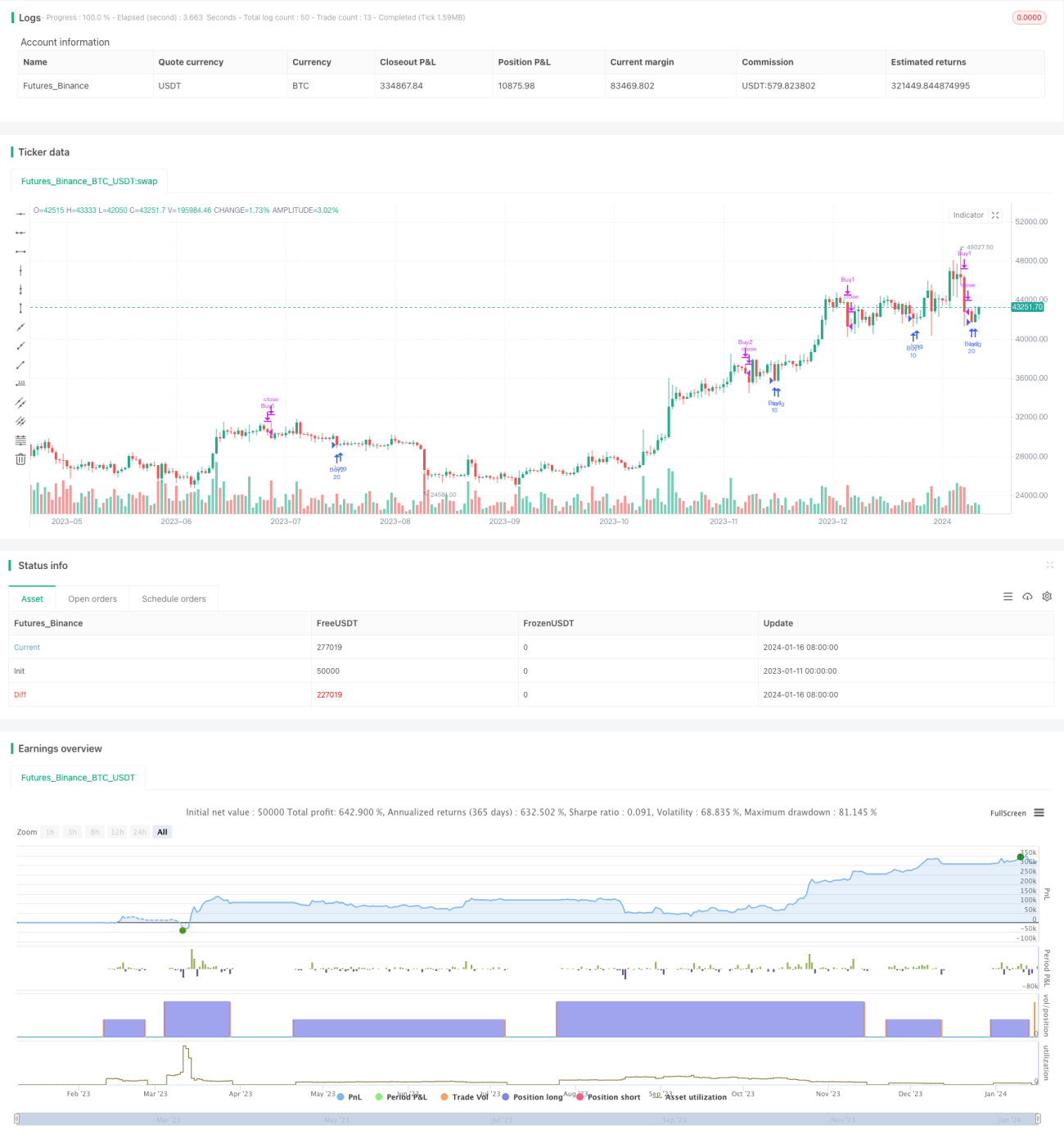
This strategy is a trend following strategy based on moving averages. It utilizes EMA lines of different periods to construct multiple sets of trading signals for trend tracking. When the price breaks below longer period moving averages, the strategy will progressively build long positions to lower the average cost. The strategy also sets stop loss conditions based on short period moving average turns to secure profits.
Strategy Logic
The strategy employs 5 EMA lines of different periods for constructing trading signals, which are 10-day, 20-day, 50-day, 100-day and 200-day EMA. The strategy defines 4 buying conditions based on the price relationship with these EMA lines to implement pyramid trading.
When the price is below 20-day EMA while above 50-day EMA, the first buy signal is triggered. When below 50-day EMA while above 100-day EMA, the second buy signal is triggered. The third and fourth buy signals are triggered when the price drops below 100-day EMA and 200-day EMA respectively. The position size also expands progressively from qt1 to qt4.
On the sell side, there are two groups of stop loss conditions. The first is to stop loss when price surpasses 10-day EMA while 10-day EMA is above other EMA lines. The second is similar but it exits when price drops below previous close of 10-day EMA. These two conditions are to secure short-term profits during trends.
Advantage Analysis
The biggest advantage of this strategy is the ability to automatically track market trends for long-term holds. By utilizing multiple entry conditions and progressive position building, it constantly reduces cost basis to yield excess returns. It also diversifies away the pricing risk associated with a single entry price level.
On the stop loss side, the strategy tracks short period moving average turning points to quickly take profit and avoid further losses. This minimizes the downside risk.
Risk Analysis
The biggest risk this strategy faces is being stuck in long lasting consolidations or downtrends. When the overall market enters a ranging or downward channel, moving average signals become less reliable. This could lead to sustained losses from continued long builds.
Another risk point is that moving averages do not always pinpoint turns accurately. Price gaps or explosive moves could result in faulty signals. This calls for additional technical indicators for verification and optimization.
Optimization Directions
Other technical indicators like volume or Bollinger Bands could be incorporated into the buying conditions to further improve entry accuracy.
The second layers of stop loss based on Bollinger Upper Band or key support areas could also be added. This helps avoid unnecessary small stops. Implementing adaptive stop loss to trail prices is another enhancement area to better protect profits.
Conclusion
This strategy implements trend following trading via a moving average system. Through pyramid position building, it aims to maximize returns from sustained trends while securing capital preservation with dual stop loss mechanisms. This is a strategy worthy of further tracking and live testing. Parameters and models can be incrementally optimized based on practical performance.
- 1