Price Divergence Based Trend Trading Strategy

Overview
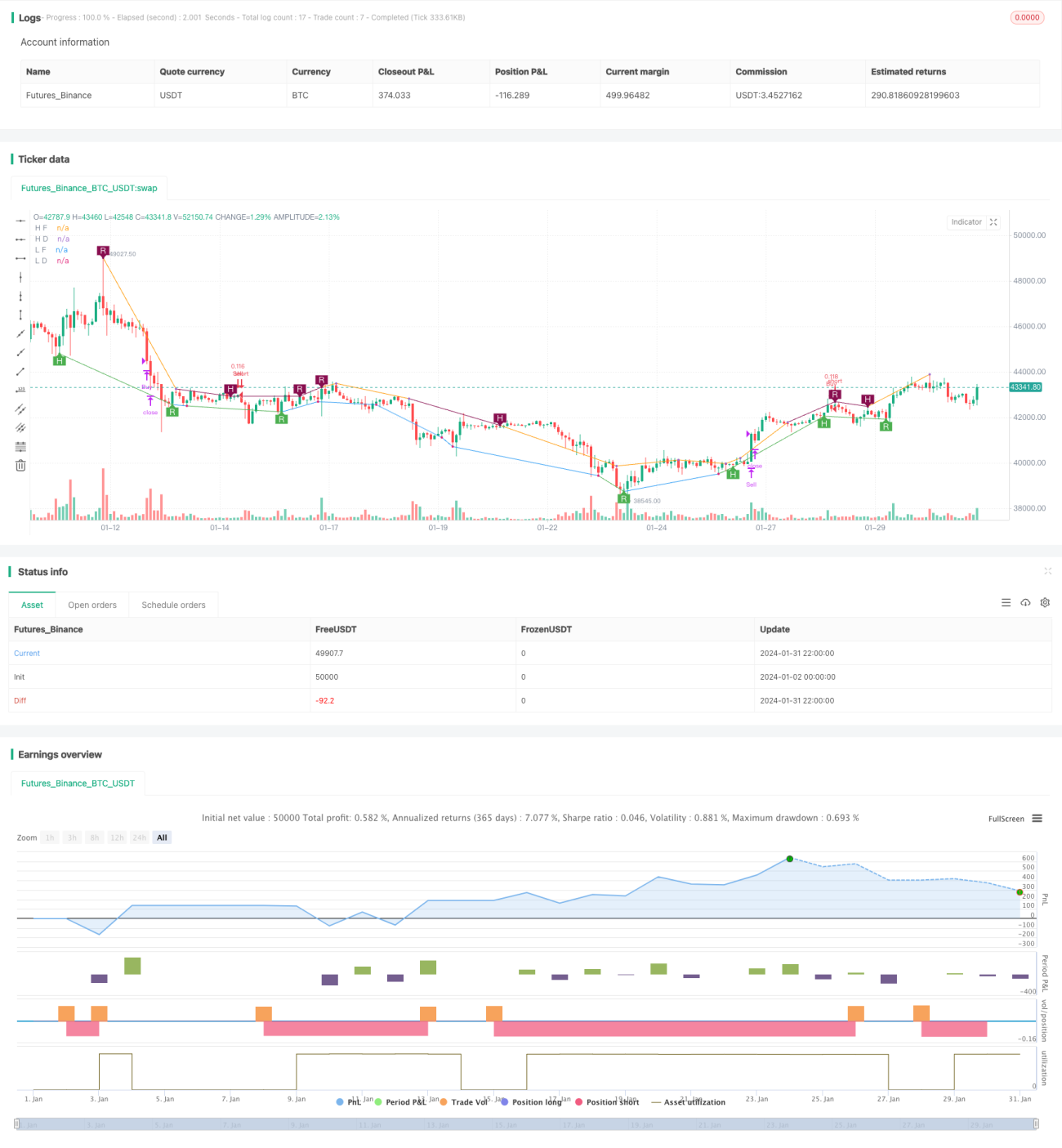
This is a trend trading strategy based on price divergence signals. It uses multiple indicators like RSI, MACD, Stochastics etc. to detect price divergences and the Murrey Math Oscillator to confirm. It enters when a price divergence signal appears and the oscillator confirms the current trend direction.
Strategy Logic
The core of this strategy is price divergence theory. When price reaches a new high but indicator doesn't, it's considered a bearish divergence. When price prints a new low but indicator doesn't, it's a bullish divergence. This signals a potential trend reversal. The strategy combines fractal signals with an oscillator to confirm trade signals.
Specifically, the entry conditions are:
- Detect regular/hidden price divergence
- Murrey Math Oscillator is in corresponding trend zone
Exit when the oscillator crosses middle line.
Advantage Analysis
The advantages of this strategy are:
- Detect potential reversal points using divergences
- Confirm ongoing trend with oscillator, avoiding false breakouts
- Flexible parameters and indicator combinations
- Combine trend following and risk management
- Clear logic rules, much room for optimization
Risk Analysis
The main risks are:
- Divergences could be false signals
- Improper oscillator parameters may cause missing trades
- Excessive one-sided positions bring large loss risk
- Increased trade frequency and slippage cost during high volatility periods
Suggest stop loss, position sizing, parameter optimization to reduce risks.
Optimization Directions
Some further optimizations:
- Add machine learning algorithms for dynamic parameter optimization
- Introduce more advanced stop loss techniques like trailing stop loss, average true range stop etc
- Incorporate more indicators and filters to improve signal-to-noise ratio
- Auto-adjust oscillator parameters for better trend judgement
- Enhance risk management, set maximum drawdown limits etc
Summary
This strategy integrates price divergence concept with trend analysis tools to discover potential reversals early. With proper risk management enhancements, it could achieve good risk-adjusted returns. Further machine learning based optimizations may lead to more stable alpha.
- 1