Multi-factor Intelligent Trading Strategy

Overview
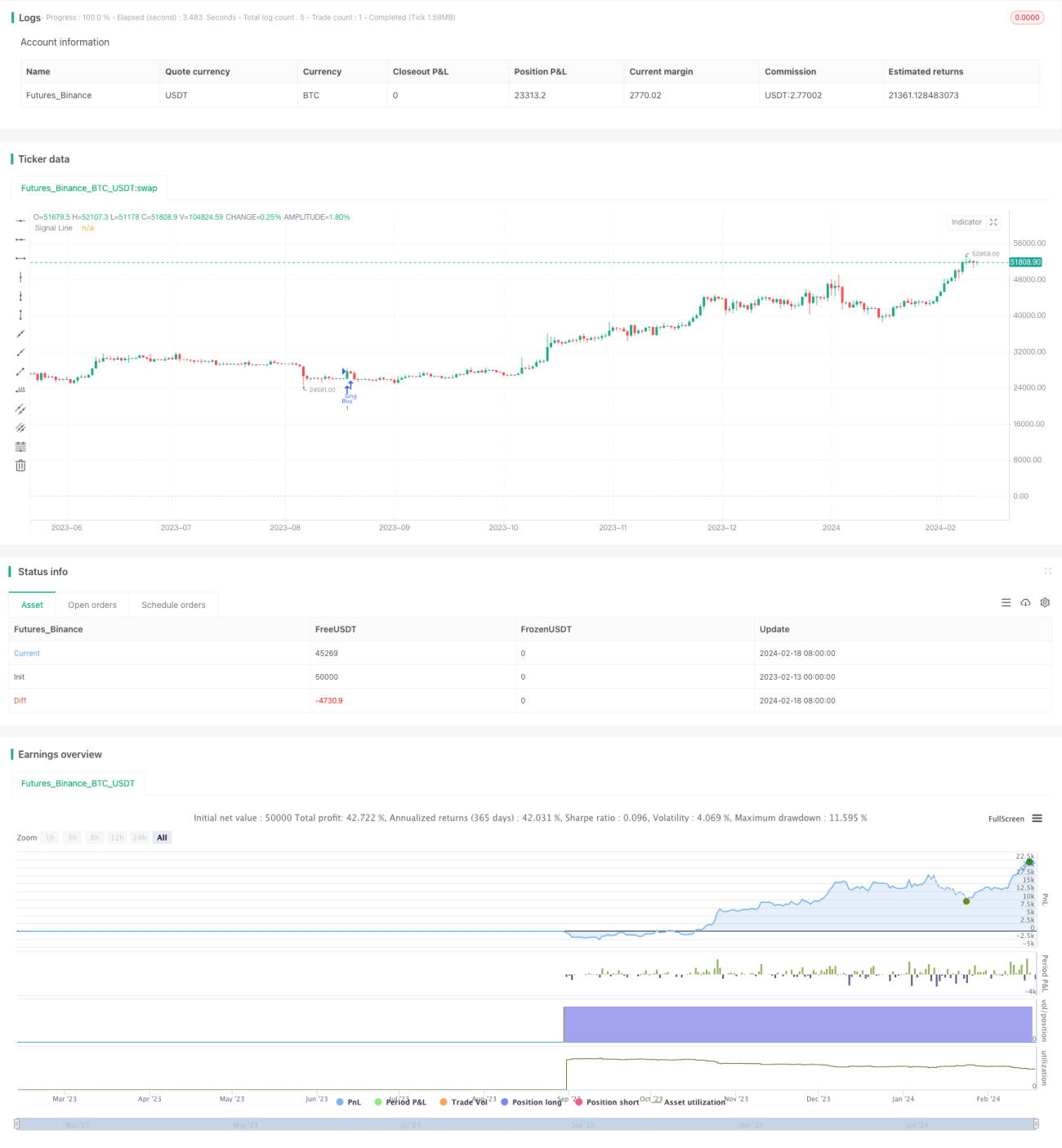
The Multi-factor Intelligent Trading Strategy is a powerful algo trading strategy that integrates multiple technical indicators. It combines Relative Strength Index (RSI), Bollinger Bands, Volume Profile, Fibonacci Retracement, Average Directional Index (ADX) and Volume Weighted Average Price (VWAP) to set entry and exit criteria for identifying potential trading opportunities in the financial markets.
Strategy Logic
The core principle of this strategy is based on the synthesis of multiple technical indicators. Firstly, it uses RSI to gauge momentum and identify overbought/oversold conditions. Secondly, it utilizes Bollinger Bands to spot volatility and potential trend changes. Additionally, it looks at Volume Profile for reliable support/resistance areas. It also factors in Fibonacci Retracement, ADX and VWAP to filter signals and confirm trends.
When multiple indicators meet the buy criteria, such as RSI crossing below 30 (oversold) and crossing above the 20-period SMA (middle band of Bollinger Bands), the strategy will generate a long entry signal. When sell criteria are met, like RSI surpassing 70 (overbought) and crossing below the middle band, a sell signal is triggered to close long positions. Such a multi-factor design improves signal reliability, reduces false signals, and catches major turning points in the markets.
Advantages Analysis
The Multi-factor Intelligent Trading Strategy has the following advantages:
-
Multi-factor design enhances signal quality and catches key breakouts while reducing noise.
-
A combination of indicators is used to confirm trends and filter incorrect signals.
-
It takes into account market momentum, volatility, volume-price relationship.
-
Captures potential opportunities from both reversal and trend-following tactics.
-
Customizable entry and exit criteria adaptable across different instruments and market regimes.
-
Clear visual signal line makes real trading execution straightforward.
Risk Analysis
Some risks to consider regarding this strategy:
-
Inadequate parameter optimization can lead to overtrading or missing signals. Robust in-sample and out-of-sample testing is critical.
-
Ineffective blending of factors may generate bad signals or add noise. Inter-relationships between factors need evaluation.
-
Inability to fully overcome directional bias from huge trends. Strict capital management essential for appropriate position sizing.
-
Price slippage upon entries and exits may erode actual P&L. Reasonable stop loss and take profit levels should be implemented.
Optimization Directions
The strategy can be further enhanced in the following aspects:
-
Test on more market data to find optimal combinations of indicator parameters for steady signals.
-
Incorporate machine learning models to aid multi-factor decision making.
-
Add more alternative data factors like sentiment measures to filter out noisy trades.
-
Employ adaptive stops to better adjust to evolving market landscapes.
-
Evaluate performance across more instruments like indices and futures.
Conclusion
The Multi-factor Intelligent Trading Strategy is a very effective quantitative approach that generates quality signals by synthesizing multiple factors while controlling risks. With continual testing and refinements, this strategy has strong practical merits and represents the future direction of quant strategy design - harnessing advanced models and diverse data sources for smarter decisions.
- 1