Dynamic Position Building Strategy

Overview
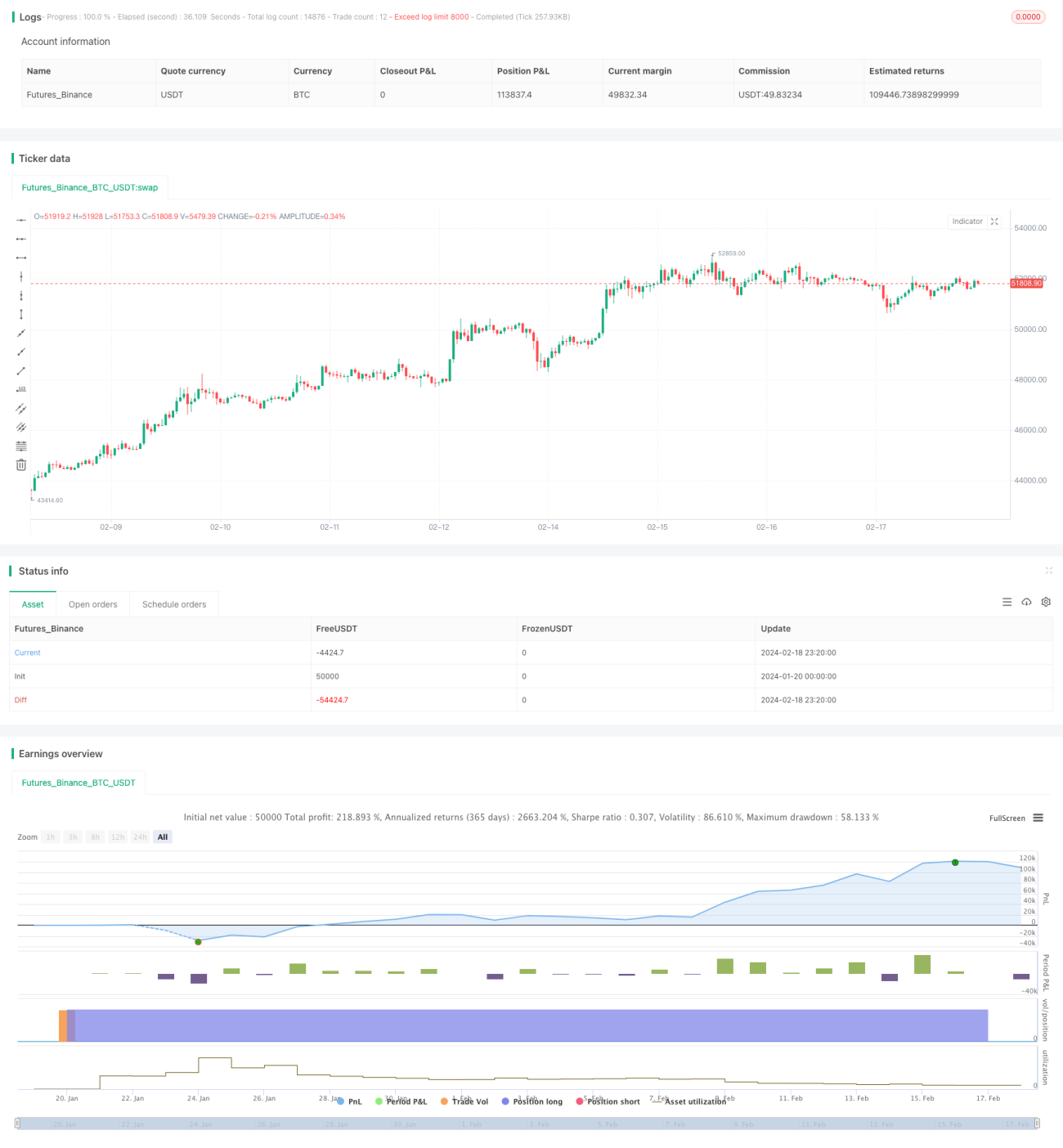
The main idea of this strategy is to dynamically build a position based on system signals in a bull market to control risks and obtain a lower average entry price.
Strategy Logic
The strategy first sets the starting capital and DCA percentage. On the close of every bar, it calculates an adjusted percentage based on the price change. If the price goes up, it lowers the percentage. If the price drops, it increases the percentage. This allows adding to the position at lower prices. It then calculates order size based on the adjusted percentage and remaining capital. On every bar close, it places orders to build the position until the starting capital is used up.
Thus, it can control risks and get a lower average entry price during fluctuating price action. Meanwhile, it tracks the average entry price and median price to judge the current entry situation.
Advantage Analysis
The strategy has the following advantages:
-
It can dynamically scale in the position, increasing allocation on dips and decreasing allocation on rallies to control risks.
-
It gets a lower average entry price compared to the median price, allowing more profit potential.
-
It fits ranging bull markets with volatility for better risk-reward ratios.
-
It enables presetting starting capital and DCA percentage to control position sizing risk.
-
It provides statistics on average entry price and median price for clear judgment of the entry quality.
Risk Analysis
There are also some risks:
-
In plunging markets, it will keep adding to the position, leading to heavy losses. A stop loss can restrict the risk.
-
If the price surges rapidly, the scaling in will diminish, possibly missing much of the rally. Other LSI signals are then needed.
-
Improper parameter configuration also poses dangers. Excessive starting capital and high DCA percentage will magnify losses.
Optimization Directions
Some ways to optimize the strategy:
-
Add stop loss logic to cease scaling in on heavy selloffs.
-
Dynamically adapt DCA percentage based on volatility or other metrics.
-
Incorporate machine learning models to forecast prices and guide scaling decisions.
-
Combine other indicators to identify market structure shifts for scaling exit points.
-
Add capital management rules to dynamically size orders based on account values.
Conclusion
This is a very practical dynamic position scaling strategy. It flexibly adjusts the position size based on price fluctuations to achieve good average entries in bull markets, while restricting risk via configurable parameters. Combining it with other indicators or models can further improve its performance. It suits investors seeking long-term gains.
- 1