RSI Mean Reversion Breakout Strategy

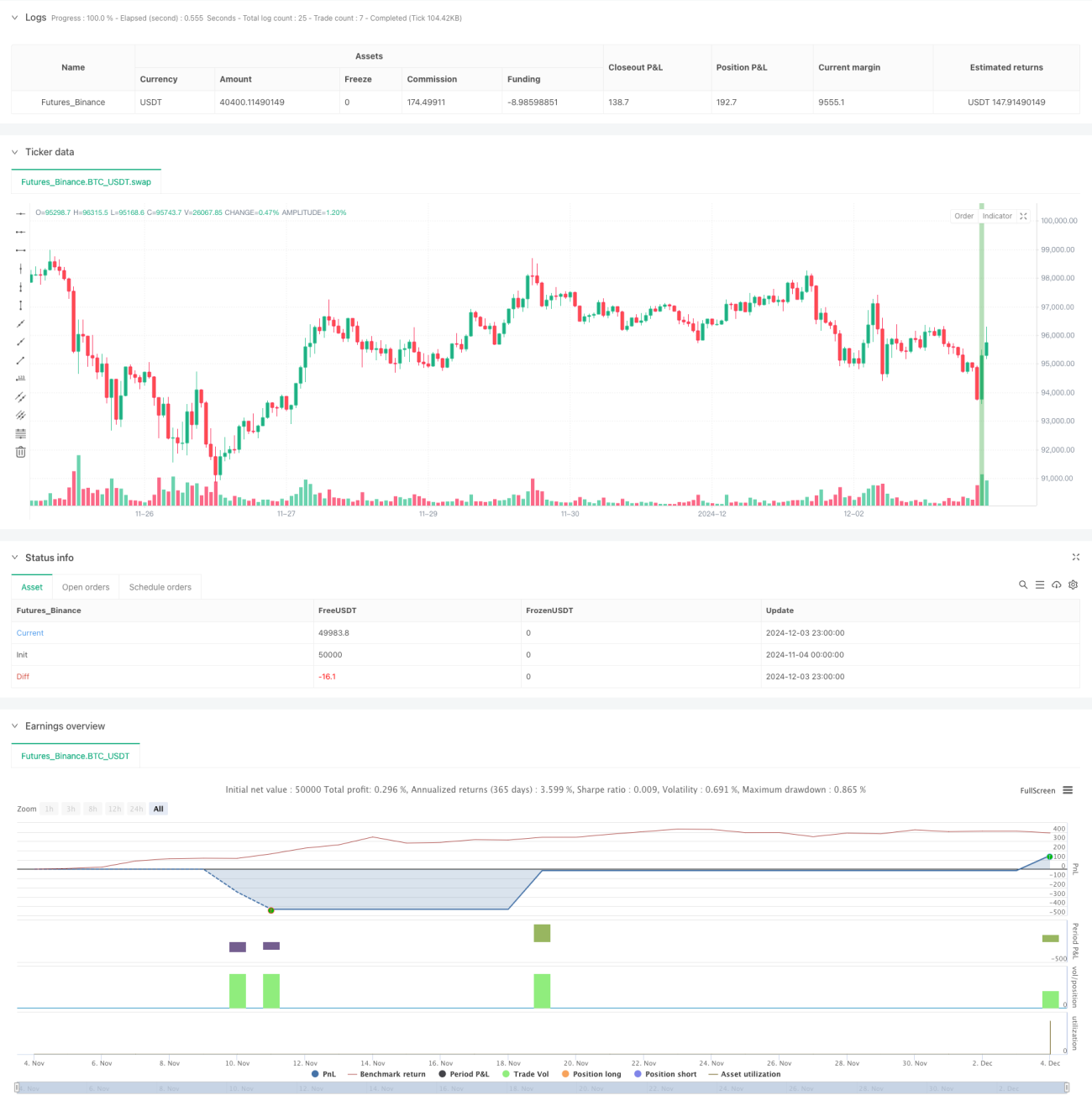
Strategy Overview
This strategy is a quantitative trading system based on the RSI indicator and mean reversion principles. It identifies market reversal opportunities by detecting overbought and oversold conditions, combined with price range analysis and closing price position. The core concept is to capture mean reversion opportunities after extreme market conditions, managing risk through strict entry criteria and dynamic stop-loss mechanisms.
Strategy Principles
The strategy employs multiple filtering mechanisms to determine trading signals: First, the price must make a 10-period low, indicating an oversold market condition; second, the day's price range must be the largest in the past 10 trading days, suggesting increased market volatility; finally, it confirms potential reversal signals by checking if the closing price is in the upper quartile of the day's range. Entry is executed through breakout confirmation, going long if price breaks above the previous high within 2 trading days after conditions are met. Stop-loss is implemented through a trailing mechanism to protect profits.
Strategy Advantages
- Multiple filtering conditions improve signal quality and reduce false signals
- Integrates multiple dimensions including technical price patterns, volatility, and momentum
- Employs trailing stop-loss mechanism for effective profit protection
- Entry mechanism uses breakout confirmation to avoid premature entry
- Trading logic is clear, easy to understand and implement
Strategy Risks
- May trigger frequent stop-losses in strong trend markets
- Strict entry conditions might miss some trading opportunities
- Requires higher trading frequency, potentially leading to higher transaction costs
- May struggle to find effective trading signals in low volatility environments
- Stop-loss settings might be too conservative, affecting overall returns
Strategy Optimization Directions
- Can introduce trend filters to pause trading in strong trend environments
- Consider adding volume indicators for additional confirmation
- Optimize stop-loss settings with dynamic adjustments based on market volatility
- Add position holding time limits to avoid prolonged oscillations
- Consider implementing multi-timeframe analysis to improve signal reliability
Summary
This is a well-structured mean reversion strategy with clear logic. Through multiple condition filtering and dynamic stop-loss management, the strategy effectively captures market oversold rebound opportunities while controlling risk. Although it has some limitations, the overall performance can be improved through reasonable optimization and refinement. Investors are advised to adjust parameters based on specific market characteristics and their risk tolerance when applying the strategy in live trading.
- 1