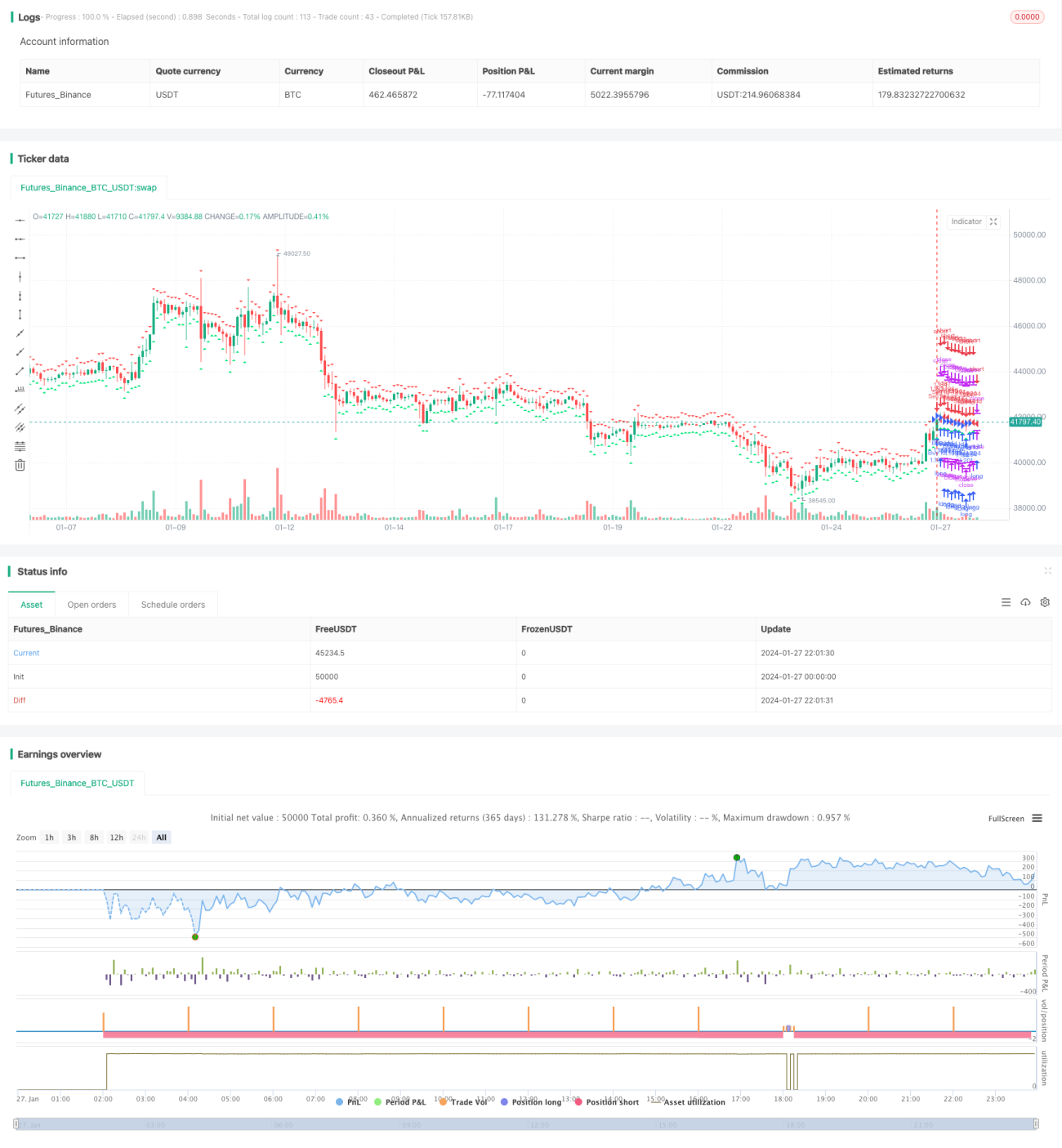
पीपीओ मूल्य संवेदनशीलता गतिशीलता द्विध्रुवीय उन्मुख ट्रेडिंग रणनीति एक ट्रेडिंग रणनीति है जो मूल्य संवेदनशीलता गतिशीलता संकेतक का उपयोग करके मूल्य द्विध्रुवीय गठन के रुझान को ट्रैक करने के लिए करती है। यह पीपीओ संकेतक के द्विध्रुवीय गठन निर्णय और मूल्य गतिशीलता विशेषता निर्णय को जोड़ती है, जिससे मूल्य द्विध्रुवीय टर्नओवर के सटीक स्थान को प्राप्त किया जा सकता है, जिससे ट्रेडिंग सिग्नल उत्पन्न होता है।
यह रणनीति पीपीओ सूचक का उपयोग करती है, जो कीमतों के दोहरे-नीचे के लक्षणों को निर्धारित करने के लिए है, जबकि कीमतों के निचले बिंदुओं को निर्धारित करने के लिए, वास्तविक समय में पीपीओ सूचक की निगरानी करता है कि क्या नीचे की विशेषताएं दिखाई देती हैं। जब पीपीओ सूचक नीचे से ऊपर की ओर उलटा दोहरे-नीचे का रूप दिखाता है, तो यह दर्शाता है कि वर्तमान में खरीदने का अवसर है।
दूसरी ओर, यह रणनीति न्यूनतम मूल्य निर्धारण के साथ काम करती है, यह निर्धारित करने के लिए कि क्या कीमत कम स्तर पर है। जब कीमत कम होती है, तो पीपीओ संकेतक में नीचे की विशेषता होती है, तो एक खरीद संकेत उत्पन्न होता है।
पीपीओ सूचक रिवर्स विशेषता निर्णय और मूल्य स्थिति की पुष्टि के माध्यम से दोहरे निर्णय, मूल्य रिवर्स अवसरों की प्रभावी पहचान करने, कुछ झूठे संकेतों को फ़िल्टर करने और संकेत की गुणवत्ता में सुधार करने में मदद करता है।
पीपीओ सूचकांक के दोहरे तल के रूप का उपयोग करके, समय-समय पर खरीदारी की स्थिति का सटीक निर्धारण किया जा सकता है।
मूल्य स्थान निर्धारण के साथ संयुक्त, उच्च बिंदु से उत्पन्न झूठे संकेतों को फ़िल्टर करें और संकेत गुणवत्ता में सुधार करें।
पीपीओ संकेतक मूल्य परिवर्तन के रुझान को जल्दी से पकड़ने के लिए संवेदनशील हैं, जो रुझानों को ट्रैक करने के लिए उपयुक्त हैं।
डबल सत्यापन तंत्र का उपयोग करने से लेनदेन के जोखिम को कम किया जा सकता है।
पीपीओ संकेतक झूठे संकेत उत्पन्न करने के लिए आसान है, अन्य संकेतक द्वारा पुष्टि की आवश्यकता है। एक औसत रेखा संकेतक या अस्थिरता संकेतक के साथ सहायता की जा सकती है।
डबल-बॉट रिवर्स को लगातार नहीं रखा जा सकता है, फिर से गिरने का जोखिम है। स्टॉप लॉस पॉइंट सेट करें, स्थिति प्रबंधन का अनुकूलन करें।
अनुचित पैरामीटर सेटिंग के कारण रिसाव या गलत खरीद का जोखिम हो सकता है। पैरामीटर संयोजनों को बार-बार परीक्षण और अनुकूलित करने की आवश्यकता होती है।
कोड की मात्रा अधिक है, मॉड्यूलर जारी रखने के लिए, कोड को दोहराने को कम करना।
स्टॉपलॉस मॉड्यूल को जोड़ना, स्थिति प्रबंधन रणनीति को अनुकूलित करना।
औसत रेखा सूचक या अस्थिरता सूचक सहायक पुष्टि जोड़ें.
मॉड्यूलर कोड, दोहराए गए निर्णय तर्क को कम करता है।
स्थिरता में सुधार के लिए पैरामीटर को अनुकूलित करना जारी रखें।
अधिक किस्मों के लिए बोली लगाने का परीक्षण करें।
पीपीओ मूल्य संवेदनशीलता गतिशीलता द्वि-अंत उन्मुख ट्रेडिंग रणनीति पीपीओ सूचक द्वि-अंत विशेषता को पकड़ने के माध्यम से, मूल्य स्थिति के निर्धारण की दोहरी पुष्टि के साथ, मूल्य पलटाव के लिए प्रभावी स्थिति को प्राप्त करता है। एकल सूचक निर्णय की तुलना में, अधिक सटीक निर्णय और बेहतर शोर फ़िल्टर करने का लाभ है। लेकिन इस रणनीति में कुछ झूठे जोखिम संकेत भी हैं, सूचक पोर्टफोलियो को अनुकूलित करने की आवश्यकता है, और सख्त स्थिति प्रबंधन रणनीति के साथ, आप वास्तविक लाभ को स्थिर कर सकते हैं।
/*backtest
start: 2024-01-27 00:00:00
end: 2024-01-28 00:00:00
period: 2h
basePeriod: 15m
exchanges: [{"eid":"Futures_Binance","currency":"BTC_USDT"}]
*/
// This source code is subject to the terms of the Mozilla Public License 2.0 at https://mozilla.org/MPL/2.0/
// © luciancapdefier
//@version=4
strategy("PPO Divergence ST", overlay=true, initial_capital=30000, calc_on_order_fills=true, default_qty_type=strategy.percent_of_equity, default_qty_value=100)
// time
FromYear = input(2019, "Backtest Start Year")
FromMonth = input(1, "Backtest Start Month")
FromDay = input(1, "Backtest Start Day")
ToYear = input(2999, "Backtest End Year")
ToMonth = input(1, "Backtest End Month")
ToDay = input(1, "Backtest End Day")
start = timestamp(FromYear, FromMonth, FromDay, 00, 00) // backtest start window
finish = timestamp(ToYear, ToMonth, ToDay, 23, 59) // backtest finish window
window() => time >= start and time <= finish ? true : false
source = close
topbots = input(true, title="Show PPO high/low triangles?")
long_term_div = input(true, title="Use long term divergences?")
div_lookback_period = input(55, minval=1, title="Lookback Period")
fastLength = input(12, minval=1, title="PPO Fast")
slowLength=input(26, minval=1, title="PPO Slow")
signalLength=input(9,minval=1, title="PPO Signal")
smoother = input(2,minval=1, title="PPO Smooth")
fastMA = ema(source, fastLength)
slowMA = ema(source, slowLength)
macd = fastMA - slowMA
macd2=(macd/slowMA)*100
d = sma(macd2, smoother) // smoothing PPO
bullishPrice = low
priceMins = bullishPrice > bullishPrice[1] and bullishPrice[1] < bullishPrice[2] or low[1] == low[2] and low[1] < low and low[1] < low[3] or low[1] == low[2] and low[1] == low[3] and low[1] < low and low[1] < low[4] or low[1] == low[2] and low[1] == low[3] and low[1] and low[1] == low[4] and low[1] < low and low[1] < low[5] // this line identifies bottoms and plateaus in the price
oscMins= d > d[1] and d[1] < d[2] // this line identifies bottoms in the PPO
BottomPointsInPPO = oscMins
bearishPrice = high
priceMax = bearishPrice < bearishPrice[1] and bearishPrice[1] > bearishPrice[2] or high[1] == high[2] and high[1] > high and high[1] > high[3] or high[1] == high[2] and high[1] == high[3] and high[1] > high and high[1] > high[4] or high[1] == high[2] and high[1] == high[3] and high[1] and high[1] == high[4] and high[1] > high and high[1] > high[5] // this line identifies tops in the price
oscMax = d < d[1] and d[1] > d[2] // this line identifies tops in the PPO
TopPointsInPPO = oscMax
currenttrough4=valuewhen (oscMins, d[1], 0) // identifies the value of PPO at the most recent BOTTOM in the PPO
lasttrough4=valuewhen (oscMins, d[1], 1) // NOT USED identifies the value of PPO at the second most recent BOTTOM in the PPO
currenttrough5=valuewhen (oscMax, d[1], 0) // identifies the value of PPO at the most recent TOP in the PPO
lasttrough5=valuewhen (oscMax, d[1], 1) // NOT USED identifies the value of PPO at the second most recent TOP in the PPO
currenttrough6=valuewhen (priceMins, low[1], 0) // this line identifies the low (price) at the most recent bottom in the Price
lasttrough6=valuewhen (priceMins, low[1], 1) // NOT USED this line identifies the low (price) at the second most recent bottom in the Price
currenttrough7=valuewhen (priceMax, high[1], 0) // this line identifies the high (price) at the most recent top in the Price
lasttrough7=valuewhen (priceMax, high[1], 1) // NOT USED this line identifies the high (price) at the second most recent top in the Price
delayedlow = priceMins and barssince(oscMins) < 3 ? low[1] : na
delayedhigh = priceMax and barssince(oscMax) < 3 ? high[1] : na
// only take tops/bottoms in price when tops/bottoms are less than 5 bars away
filter = barssince(priceMins) < 5 ? lowest(currenttrough6, 4) : na
filter2 = barssince(priceMax) < 5 ? highest(currenttrough7, 4) : na
//delayedbottom/top when oscillator bottom/top is earlier than price bottom/top
y11 = valuewhen(oscMins, delayedlow, 0)
y12 = valuewhen(oscMax, delayedhigh, 0)
// only take tops/bottoms in price when tops/bottoms are less than 5 bars away, since 2nd most recent top/bottom in osc
y2=valuewhen(oscMax, filter2, 1) // identifies the highest high in the tops of price with 5 bar lookback period SINCE the SECOND most recent top in PPO
y6=valuewhen(oscMins, filter, 1) // identifies the lowest low in the bottoms of price with 5 bar lookback period SINCE the SECOND most recent bottom in PPO
long_term_bull_filt = valuewhen(priceMins, lowest(div_lookback_period), 1)
long_term_bear_filt = valuewhen(priceMax, highest(div_lookback_period), 1)
y3=valuewhen(oscMax, currenttrough5, 0) // identifies the value of PPO in the most recent top of PPO
y4=valuewhen(oscMax, currenttrough5, 1) // identifies the value of PPO in the second most recent top of PPO
y7=valuewhen(oscMins, currenttrough4, 0) // identifies the value of PPO in the most recent bottom of PPO
y8=valuewhen(oscMins, currenttrough4, 1) // identifies the value of PPO in the SECOND most recent bottom of PPO
y9=valuewhen(oscMins, currenttrough6, 0)
y10=valuewhen(oscMax, currenttrough7, 0)
bulldiv= BottomPointsInPPO ? d[1] : na // plots dots at bottoms in the PPO
beardiv= TopPointsInPPO ? d[1]: na // plots dots at tops in the PPO
i = currenttrough5 < highest(d, div_lookback_period) // long term bearish oscilator divergence
i2 = y10 > long_term_bear_filt // long term bearish top divergence
i3 = delayedhigh > long_term_bear_filt // long term bearish delayedhigh divergence
i4 = currenttrough4 > lowest(d, div_lookback_period) // long term bullish osc divergence
i5 = y9 < long_term_bull_filt // long term bullish bottom div
i6 = delayedlow < long_term_bull_filt // long term bullish delayedbottom div
//plot(0, color=gray)
//plot(d, color=black)
//plot(bulldiv, title = "Bottoms", color=maroon, style=circles, linewidth=3, offset= -1)
//plot(beardiv, title = "Tops", color=green, style=circles, linewidth=3, offset= -1)
bearishdiv1 = (y10 > y2 and oscMax and y3 < y4) ? true : false
bearishdiv2 = (delayedhigh > y2 and y3 < y4) ? true : false
bearishdiv3 = (long_term_div and oscMax and i and i2) ? true : false
bearishdiv4 = (long_term_div and i and i3) ? true : false
bullishdiv1 = (y9 < y6 and oscMins and y7 > y8) ? true : false
bullishdiv2 = (delayedlow < y6 and y7 > y8) ? true : false
bullishdiv3 = (long_term_div and oscMins and i4 and i5) ? true : false
bullishdiv4 = (long_term_div and i4 and i6) ? true : false
bearish = bearishdiv1 or bearishdiv2 or bearishdiv3 or bearishdiv4
bullish = bullishdiv1 or bullishdiv2 or bullishdiv3 or bullishdiv4
greendot = beardiv != 0 ? true : false
reddot = bulldiv != 0 ? true : false
if (reddot and window())
strategy.entry("Buy Id", strategy.long, comment="BUY")
if (greendot and window())
strategy.entry("Sell Id", strategy.short, comment="SELL")
alertcondition( bearish, title="Bearish Signal (Orange)", message="Orange & Bearish: Short " )
alertcondition( bullish, title="Bullish Signal (Purple)", message="Purple & Bullish: Long " )
alertcondition( greendot, title="PPO High (Green)", message="Green High Point: Short " )
alertcondition( reddot, title="PPO Low (Red)", message="Red Low Point: Long " )
// plotshape(bearish ? d : na, text='▼\nP', style=shape.labeldown, location=location.abovebar, color=color(orange,0), textcolor=color(white,0), offset=0)
// plotshape(bullish ? d : na, text='P\n▲', style=shape.labelup, location=location.belowbar, color=color(#C752FF,0), textcolor=color(white,0), offset=0)
plotshape(topbots and greendot ? d : na, text='', style=shape.triangledown, location=location.abovebar, color=color.red, offset=0, size=size.tiny)
plotshape(topbots and reddot ? d : na, text='', style=shape.triangleup, location=location.belowbar, color=color.lime, offset=0, size=size.tiny)
//barcolor(bearishdiv1 or bearishdiv2 or bearishdiv3 or bearishdiv4 ? orange : na)
//barcolor(bullishdiv1 or bullishdiv2 or bullishdiv3 or bullishdiv4 ? fuchsia : na)
//barcolor(#dedcdc)