अवलोकन
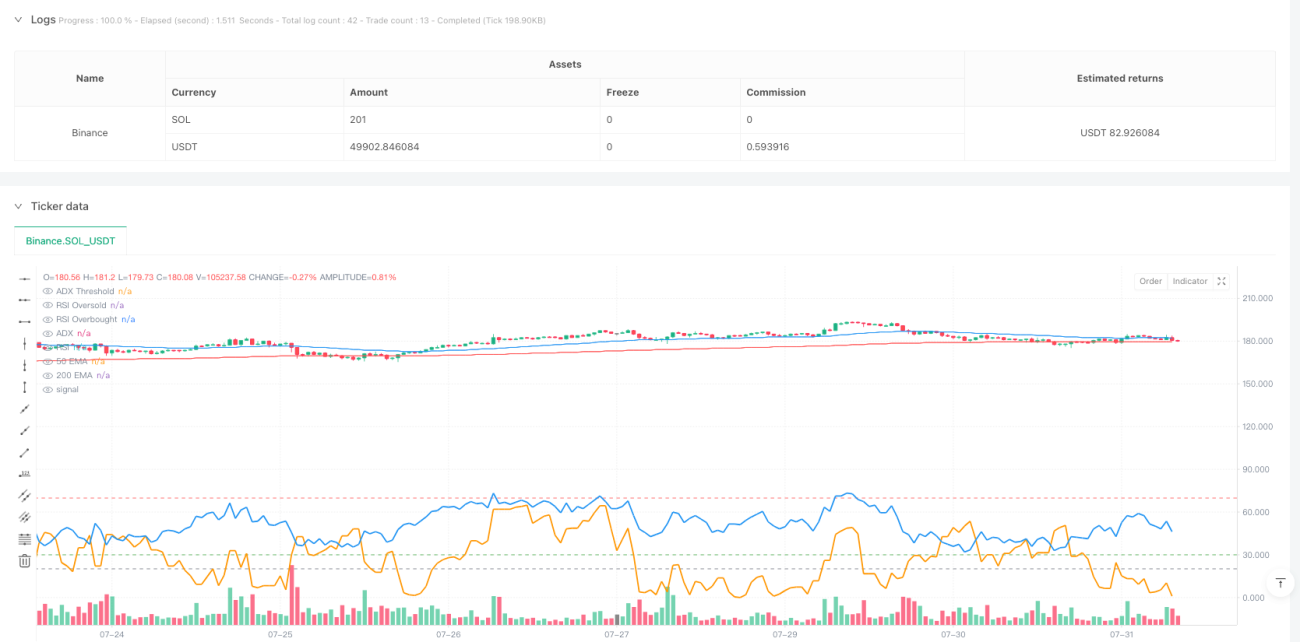
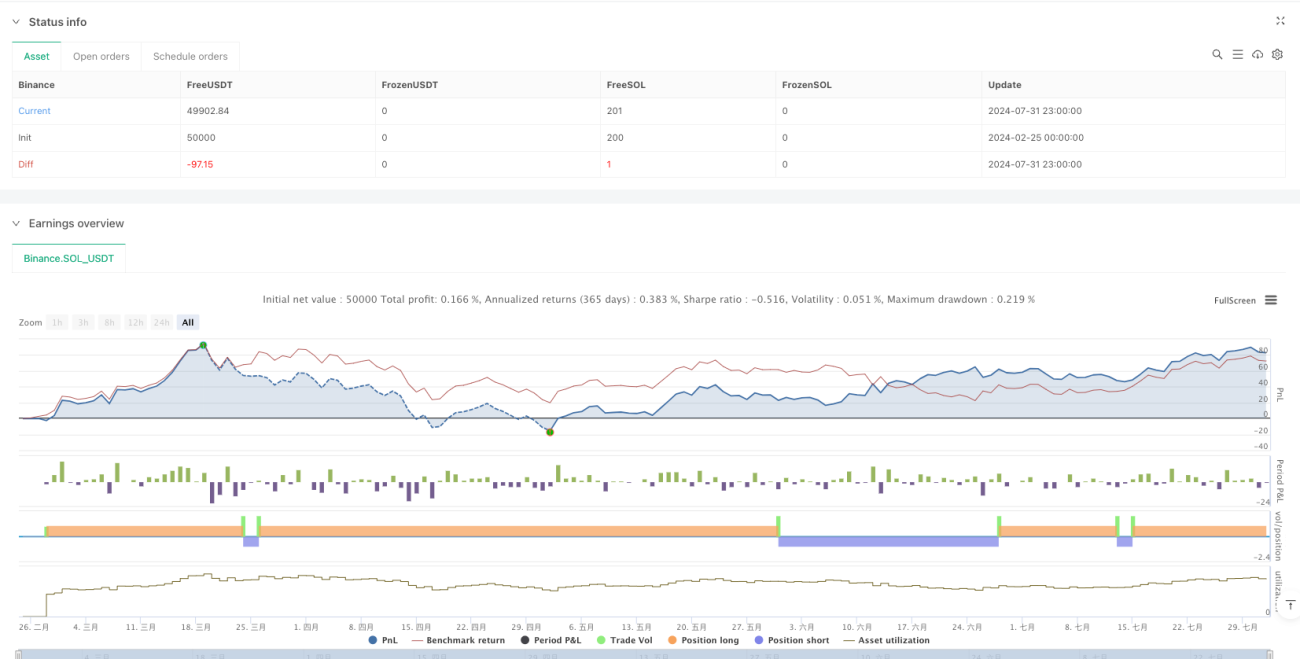
रणनीति एक बहु-तकनीकी सूचक-आधारित प्रवृत्ति ट्रैकिंग प्रणाली है, जो चलती औसत (ईएमए), औसत प्रवृत्ति सूचक (एडीएक्स) और अपेक्षाकृत मजबूत सूचक (आरएसआई) के लाभों को जोड़ती है। 50 और 200 दिन के सूचकांक के माध्यम से बाजार की प्रवृत्ति की पहचान करने के लिए 50 और 200 दिन की चलती औसत के साथ-साथ कमजोर प्रवृत्ति को फ़िल्टर करने के लिए एडीएक्स का उपयोग करें और आरएसआई का उपयोग करें ताकि ओवरबॉट या ओवरसोल्ड क्षेत्रों में व्यापार से बचा जा सके। रणनीति वास्तविक तरंगों (एटीआर) के आधार पर गतिशील स्टॉप-लॉस और रिटर्न लक्ष्य का उपयोग करती है, जो जोखिम नियंत्रण सुनिश्चित करती है और मुनाफे को अधिकतम करती है।
रणनीति सिद्धांत
रणनीति का मूल तर्क निम्नलिखित प्रमुख तत्वों पर आधारित है:
- प्रवृत्ति का निर्णयः बाजार की प्रवृत्ति की दिशा निर्धारित करने के लिए तेजी से ईएमए ((50 दिन) और धीमी गति से ईएमए ((200 दिन) के क्रॉसिंग का उपयोग करें। जब 50 दिन ईएमए पर 200 दिन ईएमए से गुजरता है, तो यह एक ऊपर की प्रवृत्ति में प्रवेश करने का संकेत देता है; जब 50 दिन ईएमए के नीचे 200 दिन ईएमए से गुजरता है, तो यह एक नीचे की प्रवृत्ति में प्रवेश करने का संकेत देता है।
- प्रवृत्ति की ताकत की पुष्टि करेंः प्रवृत्ति की ताकत को मापने के लिए ADX सूचक का उपयोग करें, केवल तभी प्रवेश पर विचार करें जब ADX 20 से अधिक हो, केवल मजबूत प्रवृत्ति में व्यापार सुनिश्चित करें।
- गतिशीलता फ़िल्टरिंगः आरएसआई सूचक के माध्यम से गतिशीलता फ़िल्टरिंग करें, केवल आरएसआई 30-70 के बीच स्थित होने पर ही स्थिति खोलें, ताकि ओवरबॉट या ओवरसोल्ड क्षेत्र व्यापार से बचा जा सके।
- जोखिम प्रबंधनः एटीआर-आधारित गतिशील स्टॉप-लॉस और रिटर्न लक्ष्य का उपयोग करें, स्टॉप-लॉस को 2 गुना एटीआर और रिटर्न लक्ष्य को 4 गुना एटीआर पर सेट करें।
रणनीतिक लाभ
- बहुआयामी प्रवृत्ति की पुष्टिः ट्रेडिंग सिग्नल की विश्वसनीयता में काफी सुधार हुआ है, जिसमें सम-रेखा क्रॉसिंग, एडीएक्स और आरएसआई ट्रिपल फ़िल्टरिंग शामिल हैं।
- गतिशील जोखिम प्रबंधनः एटीआर-आधारित गतिशील स्टॉप-लॉस और प्रॉफिट सेटिंग्स, जो बाजार की अस्थिरता के अनुसार अनुकूलित हो सकती हैं।
- कमजोर रुझानों को फ़िल्टर करनाः ADX सूचकांक की शुरूआत ने पारदर्शी बाजारों में लगातार व्यापार को प्रभावी ढंग से रोका।
- आरएसआई फ़िल्टरिंग तंत्र से चरम क्षेत्रों में व्यापार से बचा जा सकता है।
रणनीतिक जोखिम
- रुझान उलटा जोखिमः तेजी से उलटा ट्रेडों में, औसत रेखा प्रणाली की पिछड़ापन से बड़ी वापसी हो सकती है।
- बाजार में उतार-चढ़ाव का खतराः जब बाजार में उतार-चढ़ाव होता है, तो अक्सर झूठे ब्रेक सिग्नल उत्पन्न हो सकते हैं।
- पैरामीटर संवेदनशीलताः विभिन्न बाजार स्थितियों के लिए कई संकेतकों के लिए पैरामीटर सेटिंग्स को अनुकूलित करने की आवश्यकता होती है।
- स्लाइडिंग जोखिमः कम तरलता वाले बाजारों में, वास्तविक लेनदेन की कीमतें सिग्नल की कीमतों से अधिक विचलित हो सकती हैं।
रणनीति अनुकूलन दिशा
- लेन-देन की मात्रा के संकेतकों की शुरूआतः लेन-देन की मात्रा की पुष्टि करने के लिए एक तंत्र को जोड़ने पर विचार किया जा सकता है, केवल लेन-देन के लिए जब लेन-देन की मात्रा में वृद्धि होती है।
- स्टॉप लॉस को अनुकूलित करनाः ट्रैक किए गए स्टॉप लॉस का उपयोग करने पर विचार किया जा सकता है, जो रुझान के विकास के दौरान पहले से ही लाभदायक है।
- समय फ़िल्टरिंग जोड़ेंः समय फ़िल्टरिंग जोड़ें ताकि आप अधिक अस्थिर समय के दौरान व्यापार करने से बच सकें।
- बाजार परिदृश्य वर्गीकरणः विभिन्न बाजार परिदृश्यों के अनुसार रणनीति पैरामीटर को गतिशील रूप से समायोजित करना (प्रवृत्ति, झटके) ।
संक्षेप
इस रणनीति में कई तकनीकी संकेतकों का एकीकृत उपयोग करके एक पूर्ण प्रवृत्ति ट्रैकिंग ट्रेडिंग सिस्टम का निर्माण किया गया है। रणनीति का लाभ बहुआयामी संकेत पुष्टि तंत्र और गतिशील जोखिम प्रबंधन प्रणाली में है, लेकिन साथ ही साथ प्रवृत्ति उलट और अस्थिर बाजारों के जोखिम पर ध्यान देने की आवश्यकता है। निरंतर अनुकूलन और सुधार के माध्यम से, इस रणनीति को विभिन्न बाजार स्थितियों में स्थिर प्रदर्शन बनाए रखने की उम्मीद है।
Overview
This strategy is a trend-following system based on multiple technical indicators, combining the advantages of Exponential Moving Averages (EMA), Average Directional Index (ADX), and Relative Strength Index (RSI). It identifies market trends through the crossover of 50-day and 200-day EMAs, filters weak trends using ADX, and avoids trading in overbought or oversold areas using RSI. The strategy employs dynamic stop-loss and take-profit targets based on Average True Range (ATR), ensuring both risk control and profit maximization.
Strategy Principles
The core logic of the strategy is built on the following key elements:
- Trend Identification: Uses the crossover of fast EMA (50-day) and slow EMA (200-day) to determine market trend direction. A bullish trend is signaled when the 50-day EMA crosses above the 200-day EMA, and a bearish trend when it crosses below.
- Trend Strength Confirmation: Utilizes the ADX indicator to measure trend strength, only considering entry when ADX is above 20, ensuring trades only in strong trends.
- Momentum Filtering: Applies RSI indicator for momentum filtering, only entering positions when RSI is between 30-70, avoiding trades in overbought or oversold areas.
- Risk Management: Uses ATR-based dynamic stop-loss and take-profit levels, with stop-loss set at 2x ATR and take-profit at 4x ATR.
Strategy Advantages
- Multi-dimensional Trend Confirmation: Combines EMA crossover, ADX, and RSI triple filtering to significantly improve signal reliability.
- Dynamic Risk Management: ATR-based dynamic stop-loss and take-profit settings adapt to market volatility.
- Weak Trend Filtering: Introduction of ADX effectively avoids frequent trading in ranging markets.
- Prevention of Extreme Entries: RSI filtering mechanism prevents trading in extreme areas.
Strategy Risks
- Trend Reversal Risk: The lag in moving average systems may lead to significant drawdowns in quick reversal scenarios.
- Range-bound Market Risk: May generate frequent false breakout signals during sideways markets.
- Parameter Sensitivity: Multiple indicator parameters need optimization across different market conditions.
- Slippage Risk: Actual execution prices may significantly deviate from signal prices in less liquid markets.
Strategy Optimization Directions
- Volume Indicator Integration: Consider adding volume confirmation, only trading on volume breakouts.
- Stop-loss Mechanism Enhancement: Consider implementing trailing stops to protect profits during trend development.
- Time Filter Addition: Add trading time filters to avoid high-volatility periods.
- Market Environment Classification: Dynamically adjust strategy parameters based on different market conditions (trending, ranging).
Summary
The strategy constructs a comprehensive trend-following trading system through the integrated use of multiple technical indicators. Its strengths lie in multi-dimensional signal confirmation and dynamic risk management systems, while attention must be paid to risks from trend reversals and ranging markets. Through continuous optimization and refinement, the strategy has the potential to maintain stable performance across different market environments.
रणनीति स्रोत कोड
/*backtest
start: 2024-02-25 00:00:00
end: 2024-08-01 00:00:00
period: 1h
basePeriod: 1h
exchanges: [{"eid":"Binance","currency":"SOL_USDT"}]
*/
//@version=5
strategy("Trend Following Strategy with EMA, ADX & RSI", overlay=true)
// Define the EMAs
ema50 = ta.ema(close, 50) // 50 EMA (Short-term trend)
ema200 = ta.ema(close, 200) // 200 EMA (Long-term trend)
// ADX (Average Directional Index) to measure trend strength
adxLength = 14
adxSmoothing = 1 // ADX smoothing parameter (default is 1)
[plusDI, minusDI, adx] = ta.dmi(adxLength, adxSmoothing)
adxThreshold = 20 // Only trade when ADX is above 20 (strong trend)
// RSI (Relative Strength Index) to avoid overbought/oversold conditions
rsiLength = 14
rsi = ta.rsi(close, rsiLength)
rsiOverbought = 70
rsiOversold = 30
// Buy Condition: 50 EMA > 200 EMA (bullish trend) and ADX > 20 (strong trend) and RSI between 30 and 70
longCondition = ta.crossover(ema50, ema200) and adx > adxThreshold and rsi > rsiOversold and rsi < rsiOverbought
// Sell Condition: 50 EMA < 200 EMA (bearish trend) and ADX > 20 (strong trend) and RSI between 30 and 70
shortCondition = ta.crossunder(ema50, ema200) and adx > adxThreshold and rsi > rsiOversold and rsi < rsiOverbought
// Stop Loss and Take Profit levels based on recent swing highs and lows (for simplicity)
longStopLoss = low - (ta.atr(14) * 2) // Stop loss set 2x ATR below the recent low
longTakeProfit = close + (ta.atr(14) * 4) // Take profit set 4x ATR above entry
shortStopLoss = high + (ta.atr(14) * 2) // Stop loss set 2x ATR above the recent high
shortTakeProfit = close - (ta.atr(14) * 4) // Take profit set 4x ATR below entry
// Strategy Entry and Exit
if (longCondition)
strategy.entry("Long", strategy.long, stop=longStopLoss, limit=longTakeProfit)
if (shortCondition)
strategy.entry("Short", strategy.short, stop=shortStopLoss, limit=shortTakeProfit)
// Plot the EMAs on the chart
plot(ema50, color=color.blue, title="50 EMA")
plot(ema200, color=color.red, title="200 EMA")
// Plot ADX on a separate pane
hline(adxThreshold, "ADX Threshold", color=color.gray)
plot(adx, color=color.orange, title="ADX", linewidth=2)
// Plot RSI on a separate pane
hline(rsiOversold, "RSI Oversold", color=color.green)
hline(rsiOverbought, "RSI Overbought", color=color.red)
plot(rsi, color=color.blue, title="RSI", linewidth=2)