견고한 추세 추종 전략

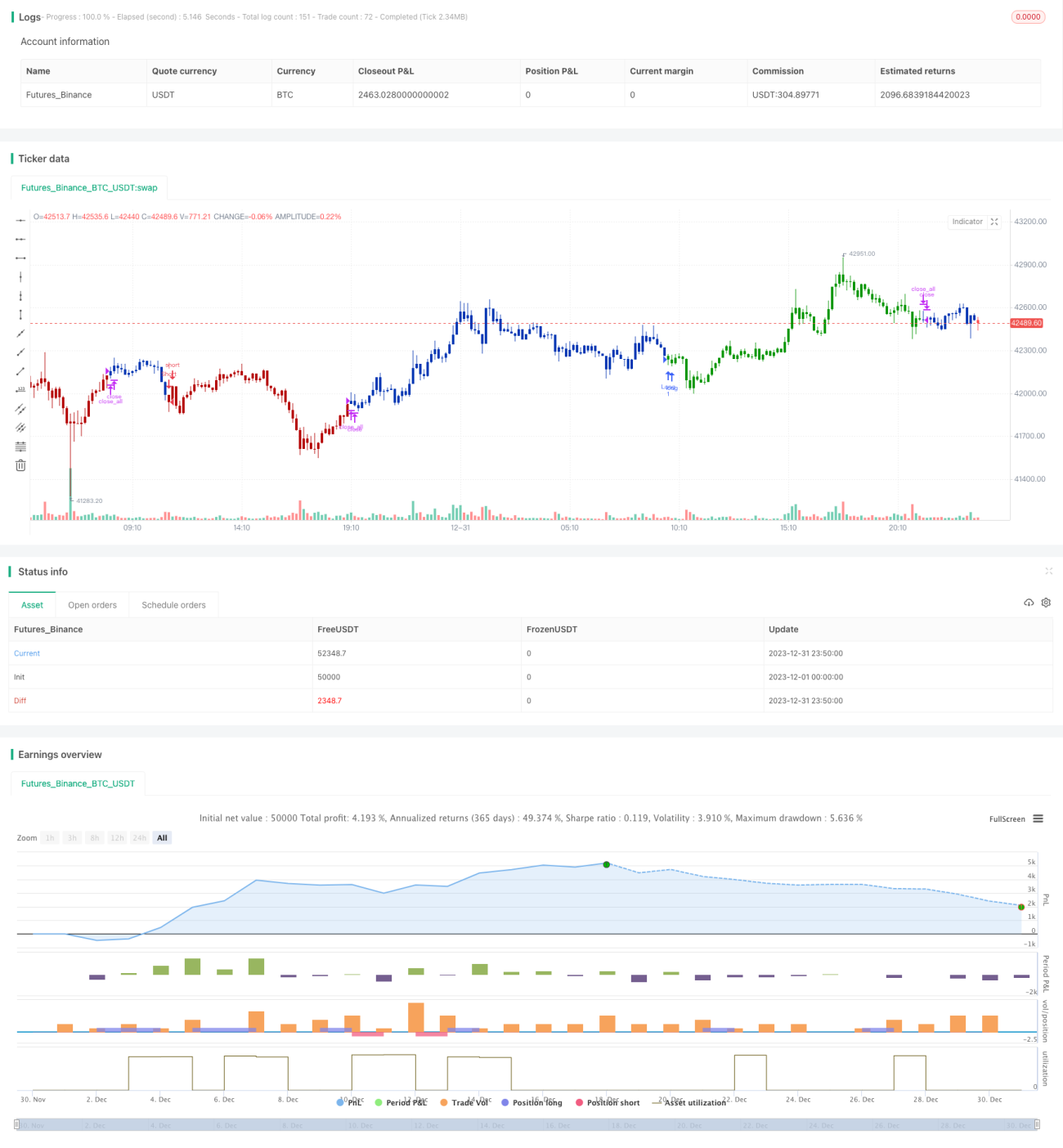
개요
이 전략의 핵심 아이디어는 123 반전 패턴과 스마트 머니 인덱스(SMI) 지표를 결합하여 안정적인 추세 추종 거래를 구현하는 것입니다. 두 신호가 동시에 매수 또는 매도 신호를 발생시킬 때만 해당 전략은 롱 또는 숏 포지션을 진입합니다.
전략 원리
이 전략은 두 부분으로 구성됩니다:
-
123 반전 전략: 이 전략은 주식의 종가와 9일 스토캐스틱(Stoch) 지표를 기반으로 반전 거래를 구현합니다. 구체적으로, 2일 연속 종가 관계가 반전될 때(즉, 전날 종가가 2일 전보다 높고, 당일 종가가 전날보다 낮음) 스토캐스틱의 고속선이 저속선보다 위에 있으면 숏(매도) 포지션을 취합니다. 반대로 2일 연속 종가 관계가 반전될 때(즉, 전날 종가가 2일 전보다 낮고, 당일 종가가 전날보다 높음) 스토캐스틱의 고속선이 저속선보다 아래에 있으면 롱(매수) 포지션을 취합니다.
-
SMI 전략: 이 전략은 스마트 머니 인덱스(SMI)를 기반으로 추세 추종을 구현합니다. SMI 지표는 기관 자금과 개인 자금 간의 각축전을 반영하며, SMI 상승은 기관 자금이 매집 중임을, 하락은 기관 자금이 매도 중임을 나타냅니다. SMI가 상승하면 롱, 하락하면 숏 포지션을 취합니다.
123 반전 패턴과 SMI 지표가 동시에 매수 신호를 내보낼 때만 전략은 롱 포지션을 취하고, 동시에 매도 신호를 내보낼 때만 숏 포지션을 취합니다.
전략 장점
이 전략은 반전 패턴과 추세 추종 지표를 결합하여 시장 반전 지점을 효과적으로 식별하고 추세를 추적함으로써 안정적인 수익을 실현합니다. 구체적인 장점은 다음과 같습니다:
-
123 반전 패턴은 상대적으로 높은 승률과 수익률을 가지며, 단기 반전 기회를 효과적으로 포착할 수 있습니다.
-
SMI 지표는 기관 자금의 흐름을 반영하므로, 기관 자금을 추적하면 비교적 안정적인 수익을 얻을 수 있습니다.
-
반전 패턴과 추세 추종 지표를 함께 사용하면 신호 품질이 개선되고 불필요한 거래가 줄어들며 리스크를 효과적으로 제어할 수 있습니다.
전략 리스크
이 전략은 또한 다음과 같은 몇 가지 리스크를 내포하고 있습니다:
-
123 반전 패턴은 가짜 신호의 위험이 있어 손실 거래를 완전히 피할 수 없습니다. 매개변수를 적절히 최적화하여 신호 품질을 개선할 수 있습니다.
-
SMI 지표는 어느 정도 지연이 있어 자금 흐름을 실시간으로 완전히 반영하지 못합니다. 다른 지표와 함께 검증하여 정확성을 높일 수 있습니다.
-
이중 신호로 인해 지나치게 보수적인 접근이 발생할 수 있으며, 강한 단방향 추세 기회를 놓칠 가능성이 있습니다. 신호 조건을 적절히 완화하여 필터 기준을 낮출 수 있습니다.
최적화 방향
이 전략은 다음과 같은 측면에서 추가 최적화가 가능합니다:
-
매개변수 최적화: 최적의 매개변수 조합을 찾아 전략의 수익성을 높입니다.
-
손절 메커니즘 추가: 개별 손실을 효과적으로 제어할 수 있습니다.
-
다른 지표나 패턴과 결합: 신호 품질을 추가로 검증하여 신호 정확도를 높입니다.
-
각 상품별로 매개변수를 개별 최적화하여 전략의 적응성을 향상시킵니다.
요약
이 전략은 전체적으로 명확한 논리를 가지고 있으며, 반전 패턴과 추세 추종 지표를 효과적으로 결합하여 단기 반전 기회를 안정적으로 포착하고 중장기 추세를 추적할 수 있습니다. 매개변수 최적화와 메커니즘 설계 개선을 통해 전략의 수익성 및 리스크 관리 능력을 더욱 강화할 수 있습니다.
Overview
The main idea of this strategy is to combine the 123 reversal pattern and the Smart Money Index (SMI) indicator to achieve stable trend tracking trading. The strategy will only establish corresponding long or short positions when both signals issue buy or sell signals at the same time.
Strategy Principle
The strategy consists of two parts:
-
123 reversal strategy: This strategy implements reversal trading based on the closing price of the stock and the 9-day Stoch indicator. Specifically, go short when the closing price relationship reverses for two consecutive days (i.e. the previous closing price is higher than the one before the previous day, and the next closing price is lower than the previous day), and Stoch fast line is above slow line; go long when the closing price relationship reverses for two consecutive days (i.e. the previous closing price is lower than the one before the previous day, and the next closing price is higher than the previous day), and Stoch fast line is below slow line.
-
SMI strategy: This strategy implements trend tracking based on the Smart Money Index. The SMI indicator can reflect the game between institutional funds and retail funds. The rise of SMI indicates that institutional funds are absorbing funds, while the fall indicates that institutional funds are selling out. Go long when SMI rises and go short when SMI falls.
The strategy will only take a long position when both the 123 reversal pattern and the SMI indicator issue a buy signal at the same time. It will only take a short position when both issue a sell signal at the same time.
Strategy Advantages
The strategy combines reversal patterns and trend tracking indicators to effectively identify market reversal points and track trends for steady profits. The specific advantages are as follows:
-
The 123 reversal pattern has a relatively high win rate and profit rate, which can effectively identify short-term reversal opportunities.
-
The SMI indicator can reflect the direction of institutional funds. Tracking institutional funds can obtain more steady profits.
-
The combined use of reversal patterns and trend tracking indicators can improve the quality of signals, reduce unnecessary trading, and effectively control risks.
Strategy Risks
The strategy also has some risks, mainly concentrated in the following areas:
-
The 123 reversal pattern has a certain risk of false signals and cannot completely avoid losing trades. Parameters can be optimized appropriately to improve signal quality.
-
The SMI indicator has a certain lag and cannot completely reflect the direction of funds in real time. Other indicators can be combined for verification to improve accuracy.
-
Double signals can lead to over-conservative problems, possibly missing stronger one-sided trending opportunities. Signal conditions can be appropriately relaxed to reduce filtering criteria.
최적화 방향
해당 전략은 다음과 같은 측면에서 더욱 최적화될 수 있습니다:
-
매개변수 최적화를 통해 최적의 매개변수 조합을 찾고 전략의 수익성을 향상시킵니다.
-
손절매 메커니즘을 추가하여 단일 손실을 효과적으로 통제합니다.
-
다른 지표나 패턴을 결합하여 신호 품질을 추가로 검증하고 신호 정확도를 높입니다.
-
다양한 종목에 대해 매개변수를 개별적으로 최적화하여 전략의 적응성을 개선합니다.
요약
전략의 전반적인 아이디어는 명확하며, 반전 패턴과 추세 추종 지표를 효과적으로 결합하여 단기 반전 기회를 안정적으로 식별하고 중장기 추세를 추적합니다. 매개변수 최적화와 메커니즘 설계를 개선함으로써 전략의 수익성과 리스크 관리 능력을 더욱 향상시킬 수 있습니다.
/*backtest
start: 2023-12-01 00:00:00
end: 2023-12-31 23:59:59
period: 10m
basePeriod: 1m
exchanges: [{"eid":"Futures_Binance","currency":"BTC_USDT"}]
*/

//@version=4
////////////////////////////////////////////////////////////
//  Copyright by HPotter v1.0 10/07/2021
// This is combo strategies for get a cumulative signal. - 1