Estratégia de rastreamento de movimentos de preços de curto prazo com indicador de momentum

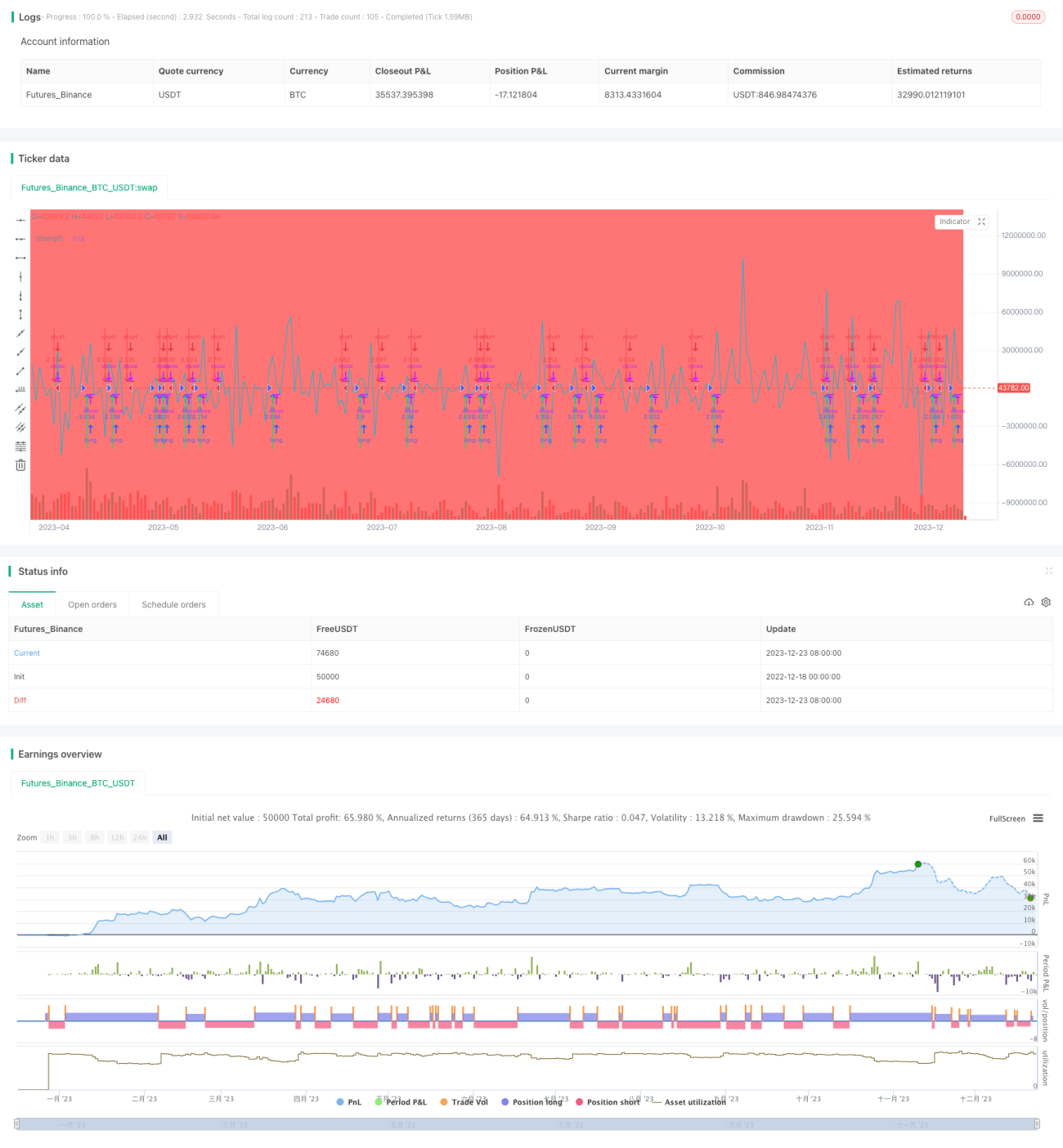
Visão Geral
Esta estratégia utiliza indicadores de momentum para acompanhar movimentos de preço de curto prazo, determinar a direção da tendência do mercado e executar operações de compra e venda. A estratégia é denominada "Price Volume Trend Strategy", refletindo a abordagem de usar variações de preço e volume para identificar tendências.
Princípio da Estratégia
A estratégia primeiro calcula o momentum do preço. Ao calcular a diferença entre o preço do período atual e o preço do período anterior, é possível refletir a variação absoluta do preço no período mais recente. Valores positivos indicam alta de preço, valores negativos indicam baixa. Em seguida, calcula-se a média móvel dessa diferença para suavizar os dados, obtendo o indicador de momentum médio.
Quando o preço mais recente é maior que o momentum médio, significa que o preço está subindo; quando o preço mais recente é menor que o momentum médio, significa que o preço está caindo. Com base nesse indicador, determina-se a direção da tendência do preço. Combinado com um filtro de volume para amplificação, apenas sinais com volume elevado são selecionados para negociação real.
Com base nas tendências de alta e baixa identificadas, são realizadas operações de compra e venda correspondentes.
Análise de Vantagens
- A estratégia identifica tendências rapidamente, capturando movimentos de preço de curto prazo, adequada para operações de curto prazo.
- Através do filtro de volume, evita ser enganada por falsos rompimentos.
- Implementa a lógica de acompanhar altas e vender em baixas (momentum trading).
- Alta frequência de negociação, ideal para investidores ativos.
Análise de Riscos
- Suscetível a flutuações anormais do mercado, apresentando certo risco de sinais falsos.
- Risco de slippage devido à alta frequência de negociações.
- Pode perder tendências de médio/longo prazo; a lucratividade no longo prazo precisa ser validada.
Direções de Otimização
- Ajustar os parâmetros do indicador de momentum para melhorar a precisão das decisões.
- Otimizar os parâmetros do filtro de volume para aumentar a qualidade dos sinais.
- Adicionar mecanismo de stop loss para controlar perdas individuais.
- Incorporar mais fatores de decisão para garantir uma abordagem multifatorial.
Resumo
No geral, esta estratégia acompanha as tendências de curto prazo dos preços por meio do indicador de momentum, identificando rapidamente momentos de compra e venda. Sua vantagem está na agilidade operacional e no acompanhamento de tendências; suas desvantagens são a qualidade dos sinais e a lucratividade de longo prazo, que precisam ser avaliadas. Com ajustes de parâmetros e aprimoramento de mecanismos de controle de risco, esta estratégia pode se tornar um componente importante de estratégias de alta frequência, combinada com outras estratégias de baixa frequência.
- 1