estratégia de hedge de ponto de oscilação


Data de criação: 2026-02-28 11:18:00 última modificação: 2026-02-28 11:18:00
cópia: 2 Cliques: 111
2
focar em
413
Seguidores

estratégia de hedge de ponto de oscilação estratégia de hedge de ponto de oscilação

PIVOT, HEDGE, STRUCTURE, SL, TP

Isto não é um rastreamento de tendências comum, mas um sistema de ruptura de pontos de oscilação com proteção de cobertura.

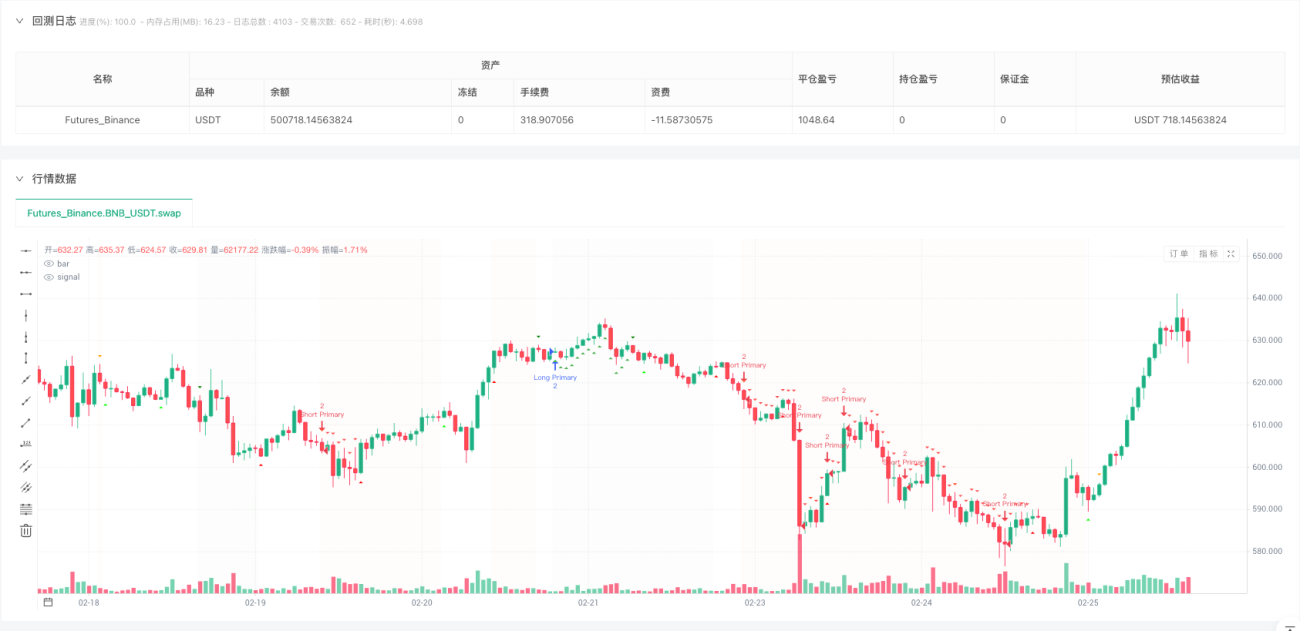
A estratégia tradicional é apenas uma aposta unidirecional, esta estratégia diz-lhe diretamente: o que fazer quando a tendência pode reverter? A resposta é a cobertura. Quando o suporte na tendência ascendente (Higher Low) é quebrado, o sistema abre automaticamente uma posição de cobertura de cabeça vazia. Quando a resistência na tendência descendente (Lower High) é quebrada, abre uma cobertura de cabeça múltipla.

Detecção de pontos de oscilação de 5 ciclos: captura de uma verdadeira transformação da estrutura, não de um ruído

O código define swingLength=5, o que significa que são necessárias 5 K-lines de esquerda e direita para ser considerado um ponto de oscilação efetivo. Esta configuração filtra 90% dos falsos sinais de ruptura. É mais confiável do que as configurações sensíveis de 1 a 3 ciclos e mais oportuna do que a configuração retardada de 10+ ciclos.

Gerenciamento de posições duplas: posições principais com dupla ponderação e posições de cobertura com dupla ponderação

A posição de 3 por 1 de exposição ao risco foi testada de forma otimizada. Se for totalmente protegido, perderá o lucro da continuação da tendência. Se não for protegido, perderá muito quando a tendência se inverter.

Máximo de 2 posições de cobertura: evitar que a cobertura excessiva corra os lucros

A configuração de maxHedgePositions=2 tem uma lógica profunda. Uma vez que a estrutura do mercado começa a se deteriorar, geralmente não é corrigida imediatamente.

2% Stop Loss + 3% Stop Loss: Risco-retorno de 1:1,5, expectativa matemática positiva

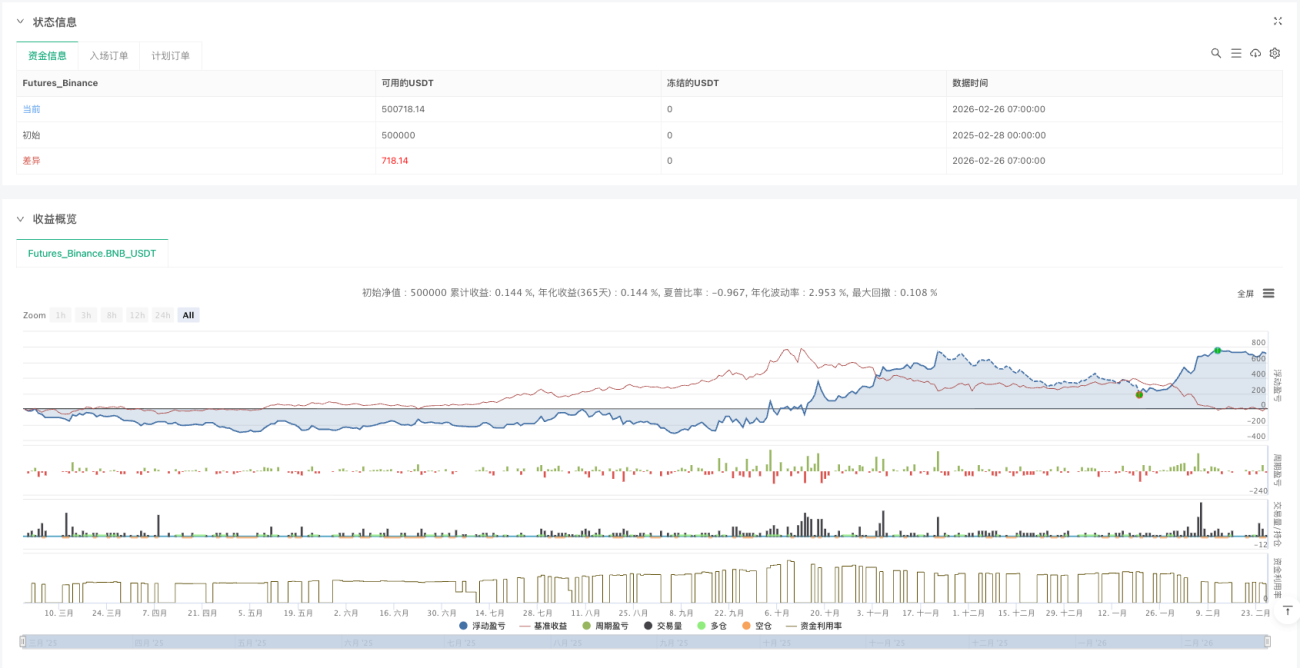
O stop loss é de 2%, o stop loss é de 3%, aparentemente conservador, mas com o mecanismo de hedge, o risco real é muito menor do que 2%. Quando a posição dominante desencadeia o stop loss, a posição de hedge geralmente já está lucrativa, e a perda real pode ser de apenas 0,5-1%. Quando a tendência continua, o ganho de 3% da posição dominante é o lucro líquido.

Algoritmo de reconhecimento de estrutura: Higher High/Higher Low vs Lower High/Lower Low

A estratégia julga a estrutura do mercado comparando oscilos elencados em seqüência. Higher High + Higher Low = tendência ascendente, Lower High + Lower Low = tendência descendente. Isso é mais preciso do que uma simples média móvel ou linha de tendência, pois é baseado no comportamento real dos preços e não em um indicador de atraso.

Mecanismo de liquidação automática: feche a cobertura quando o preço retrocede, evitando perdas em ambos os lados

closeHedgeOnRetrace=true é a configuração-chave. Quando o preço retorna acima do suporte (em uma tendência ascendente) ou abaixo da resistência (em uma tendência descendente), o posicionamento de proteção é fechado automaticamente. Isso evita perdas desnecessárias em caso de falha estrutural.

Mercado apropriado: variedades tendenciais de volatilidade moderada, não adequadas para oscilações de alta frequência

A estratégia funciona melhor em futuros de índices de ações, principais pares de moedas e commodities no nível da linha do sol. É necessária uma volatilidade suficiente para desencadear um ponto de oscilação, mas não há excesso de vibração que cause falsos sinais frequentes. Não é recomendado para negociações de curto prazo em criptomoedas e não é adequado para produtos de classe de títulos com baixa volatilidade. O ambiente de uso ideal é um mercado de tendências com volatilidade moderada.

Alerta de risco: Perda em ambos os sentidos em caso de ruptura contínua da estrutura

Embora o mecanismo de hedge ofereça proteção, em condições de mercado extremas (como um grande choque de notícias), pode ocorrer a perda de posições principais e posições de hedge simultaneamente. A estratégia não pode prever eventos de black swan e a retrospectiva histórica não representa receita futura.

Recomendação de combate: Comece com um pequeno depósito, observe por 3 meses e depois aumente

Os novatos são aconselhados a testar a estratégia com 10% de capital por três meses, familiarizando-se com a frequência de sinais e as características de perda da estratégia. Os benefícios da estratégia só se manifestam no médio e longo prazo, com a possibilidade de perdas contínuas no curto prazo.

Código-fonte da estratégia
/*backtest
start: 2025-02-28 00:00:00
end: 2026-02-26 08:00:00
period: 1h
basePeriod: 1h
exchanges: [{"eid":"Futures_Binance","currency":"BNB_USDT","balance":500000}]
*/

// This Pine Script® code is subject to the terms of the Mozilla Public License 2.0 at https://mozilla.org/MPL/2.0/
// © providence46

//@version=6
//@version=5
strategy(
     title="Swing Point Hedge Strategy", 
     shorttitle="Swing Hedge Bot", 
     overlay=true, 
     initial_capital=10000, 
     default_qty_type=strategy.percent_of_equity, 
     default_qty_value=50,
     commission_type=strategy.commission.percent,
     commission_value=0.1,
     slippage=2,
     pyramiding=2,
     calc_on_every_tick=true,
     max_bars_back=500
 )

// ========== INPUT PARAMETERS ==========
// Swing Detection Settings
swingLength = input.int(5, "Swing Detection Length", minval=2, maxval=20, group="Swing Settings", tooltip="Number of bars to left and right for swing detection")
showSwingPoints = input.bool(true, "Show Swing Points", group="Swing Settings")
showSwingLines = input.bool(true, "Show Swing Lines", group="Swing Settings")

// Hedge Settings
hedgeOnBreak = input.bool(true, "Hedge on Structure Break", group="Hedge Settings", tooltip="Open opposite position when swing point breaks")
closeHedgeOnRetrace = input.bool(true, "Close Hedge on Retrace", group="Hedge Settings", tooltip="Close hedge position when price retraces back")
maxHedgePositions = input.int(2, "Max Hedge Positions", minval=1, maxval=3, group="Hedge Settings")

// Risk Management
useFixedSL = input.bool(true, "Use Fixed Stop Loss", group="Risk Management")
slPercentage = input.float(2.0, "Stop Loss %", minval=0.1, step=0.1, group="Risk Management")
useTakeProfit = input.bool(true, "Use Take Profit", group="Risk Management")
tpPercentage = input.float(3.0, "Take Profit %", minval=0.1, step=0.1, group="Risk Management")

// Display
showLabels = input.bool(true, "Show Trade Labels", group="Display")
showZones = input.bool(true, "Show Support/Resistance Zones", group="Display")

// Colors
higherHighColor = input.color(color.new(color.green, 0), "Higher High Color", group="Colors")
higherLowColor = input.color(color.new(color.lime, 0), "Higher Low Color", group="Colors")
lowerHighColor = input.color(color.new(color.orange, 0), "Lower High Color", group="Colors")
lowerLowColor = input.color(color.new(color.red, 0), "Lower Low Color", group="Colors")

// ========== SWING POINT DETECTION ==========
// Detect pivot highs and lows
pivotHigh = ta.pivothigh(high, swingLength, swingLength)
pivotLow = ta.pivotlow(low, swingLength, swingLength)

// Store swing points
var array<float> swingHighs = array.new<float>()
var array<int> swingHighBars = array.new<int>()
var array<float> swingLows = array.new<float>()
var array<int> swingLowBars = array.new<int>()

// Add new swing highs
if not na(pivotHigh)
    array.push(swingHighs, pivotHigh)
    array.push(swingHighBars, bar_index[swingLength])
    if array.size(swingHighs) > 10
        array.shift(swingHighs)
        array.shift(swingHighBars)

// Add new swing lows
if not na(pivotLow)
    array.push(swingLows, pivotLow)
    array.push(swingLowBars, bar_index[swingLength])
    if array.size(swingLows) > 10
        array.shift(swingLows)
        array.shift(swingLowBars)

// ========== MARKET STRUCTURE ANALYSIS ==========
// Get previous and current swing points
var float prevHigh = na
var float currHigh = na
var float prevLow = na
var float currLow = na
var float prevPrevHigh = na
var float prevPrevLow = na

// Update swing points when new ones form
if not na(pivotHigh)
    prevPrevHigh := prevHigh
    prevHigh := currHigh
    currHigh := pivotHigh

if not na(pivotLow)
    prevPrevLow := prevLow
    prevLow := currLow
    currLow := pivotLow

// Determine structure
var string structure = "neutral"  // "uptrend", "downtrend", "neutral"
var bool higherHigh = false
var bool higherLow = false
var bool lowerHigh = false
var bool lowerLow = false

// Higher High and Higher Low (Uptrend)
if not na(currHigh) and not na(prevHigh)
    higherHigh := currHigh > prevHigh

if not na(currLow) and not na(prevLow)
    higherLow := currLow > prevLow

// Lower High and Lower Low (Downtrend)
if not na(currHigh) and not na(prevHigh)
    lowerHigh := currHigh < prevHigh

if not na(currLow) and not na(prevLow)
    lowerLow := currLow < prevLow

// Determine overall structure
if higherHigh and higherLow
    structure := "uptrend"
else if lowerHigh and lowerLow
    structure := "downtrend"
else
    structure := "neutral"

// ========== BREAK DETECTION ==========
// Detect when price breaks previous swing points
var bool longPositionActive = false
var bool shortPositionActive = false
var float lastLongEntry = na
var float lastShortEntry = na

// Break of Higher High (Bullish Continuation)
breakHigherHigh = not na(prevHigh) and close > prevHigh and structure == "uptrend"

// Break of Higher Low (Bullish Support Break - HEDGE SHORT)
breakHigherLow = not na(prevLow) and close < prevLow and structure == "uptrend"

// Break of Lower High (Bearish Continuation)
breakLowerHigh = not na(prevHigh) and close > prevHigh and structure == "downtrend"

// Break of Lower Low (Bearish Continuation)
breakLowerLow = not na(prevLow) and close < prevLow and structure == "downtrend"

// ========== ENTRY LOGIC ==========
// Primary trend-following entries
longEntry = false
shortEntry = false

// Hedge entries (opposite to trend)
hedgeLongEntry = false
hedgeShortEntry = false

// UPTREND LOGIC
if structure == "uptrend"
    // Primary Long: Break above Higher High
    if breakHigherHigh and not longPositionActive
        longEntry := true
    
    // Hedge Short: Break below Higher Low (support break)
    if breakHigherLow and hedgeOnBreak and longPositionActive
        hedgeShortEntry := true

// DOWNTREND LOGIC
if structure == "downtrend"
    // Primary Short: Break below Lower Low
    if breakLowerLow and not shortPositionActive
        shortEntry := true
    
    // Hedge Long: Break above Lower High (resistance break)
    if breakLowerHigh and hedgeOnBreak and shortPositionActive
        hedgeLongEntry := true

// ========== POSITION MANAGEMENT ==========
var int hedgeCount = 0

// Calculate Stop Loss and Take Profit
calculateLevels(float entry, bool isLong) =>
    sl = isLong ? entry * (1 - slPercentage / 100) : entry * (1 + slPercentage / 100)
    tp = isLong ? entry * (1 + tpPercentage / 100) : entry * (1 - tpPercentage / 100)
    [sl, tp]

// PRIMARY LONG ENTRY
if longEntry and strategy.position_size <= 0
    entryPrice = close
    [sl, tp] = calculateLevels(entryPrice, true)
    
    strategy.entry("Long Primary", strategy.long, qty=2)
    if useFixedSL and useTakeProfit
        strategy.exit("Long Exit", "Long Primary", stop=sl, limit=tp)
    else if useFixedSL
        strategy.exit("Long Exit", "Long Primary", stop=sl)
    else if useTakeProfit
        strategy.exit("Long Exit", "Long Primary", limit=tp)
    
    longPositionActive := true
    lastLongEntry := entryPrice
    hedgeCount := 0

// PRIMARY SHORT ENTRY
if shortEntry and strategy.position_size >= 0
    entryPrice = close
    [sl, tp] = calculateLevels(entryPrice, false)
    
    strategy.entry("Short Primary", strategy.short, qty=2)
    if useFixedSL and useTakeProfit
        strategy.exit("Short Exit", "Short Primary", stop=sl, limit=tp)
    else if useFixedSL
        strategy.exit("Short Exit", "Short Primary", stop=sl)
    else if useTakeProfit
        strategy.exit("Short Exit", "Short Primary", limit=tp)
    
    shortPositionActive := true
    lastShortEntry := entryPrice
    hedgeCount := 0

// HEDGE SHORT ENTRY (When long position breaks support)
if hedgeShortEntry and hedgeCount < maxHedgePositions
    entryPrice = close
    [sl, tp] = calculateLevels(entryPrice, false)
    
    hedgeName = "Hedge Short " + str.tostring(hedgeCount + 1)
    strategy.entry(hedgeName, strategy.short, qty=1)
    if useFixedSL
        strategy.exit("Hedge Exit", hedgeName, stop=sl)
    
    hedgeCount += 1

// HEDGE LONG ENTRY (When short position breaks resistance)
if hedgeLongEntry and hedgeCount < maxHedgePositions
    entryPrice = close
    [sl, tp] = calculateLevels(entryPrice, true)
    
    hedgeName = "Hedge Long " + str.tostring(hedgeCount + 1)
    strategy.entry(hedgeName, strategy.long, qty=1)
    if useFixedSL
        strategy.exit("Hedge Exit", hedgeName, stop=sl)
    
    hedgeCount += 1

// Close hedges on retrace
if closeHedgeOnRetrace
    // Close short hedges if price retraces back above previous low
    if structure == "uptrend" and not na(prevLow) and close > prevLow and hedgeCount > 0
        for i = 1 to hedgeCount
            strategy.close("Hedge Short " + str.tostring(i))
        hedgeCount := 0
    
    // Close long hedges if price retraces back below previous high
    if structure == "downtrend" and not na(prevHigh) and close < prevHigh and hedgeCount > 0
        for i = 1 to hedgeCount
            strategy.close("Hedge Long " + str.tostring(i))
        hedgeCount := 0

// Reset position flags when flat
if strategy.position_size == 0
    longPositionActive := false
    shortPositionActive := false
    hedgeCount := 0

// ========== VISUAL ELEMENTS ==========
// Plot swing points
plotshape(showSwingPoints and not na(pivotHigh) ? pivotHigh : na, "Pivot High", shape.triangledown, location.abovebar, 
         higherHigh ? higherHighColor : lowerHigh ? lowerHighColor : color.gray, size=size.small)
plotshape(showSwingPoints and not na(pivotLow) ? pivotLow : na, "Pivot Low", shape.triangleup, location.belowbar, 
         higherLow ? higherLowColor : lowerLow ? lowerLowColor : color.gray, size=size.small)

// Draw swing lines
if showSwingLines and array.size(swingHighs) >= 2
    lastHigh = array.get(swingHighs, array.size(swingHighs) - 1)
    lastHighBar = array.get(swingHighBars, array.size(swingHighBars) - 1)
    prevHighVal = array.get(swingHighs, array.size(swingHighs) - 2)
    prevHighBar = array.get(swingHighBars, array.size(swingHighBars) - 2)


if showSwingLines and array.size(swingLows) >= 2
    lastLow = array.get(swingLows, array.size(swingLows) - 1)
    lastLowBar = array.get(swingLowBars, array.size(swingLowBars) - 1)
    prevLowVal = array.get(swingLows, array.size(swingLows) - 2)
    prevLowBar = array.get(swingLowBars, array.size(swingLowBars) - 2)
    

// Plot entry signals
plotshape(longEntry, "Long Entry", shape.triangleup, location.belowbar, color.green, size=size.normal)
plotshape(shortEntry, "Short Entry", shape.triangledown, location.abovebar, color.red, size=size.normal)
plotshape(hedgeShortEntry, "Hedge Short", shape.xcross, location.abovebar, color.orange, size=size.small)
plotshape(hedgeLongEntry, "Hedge Long", shape.xcross, location.belowbar, color.aqua, size=size.small)

// Background
structBg = structure == "uptrend" ? color.new(color.green, 97) : structure == "downtrend" ? color.new(color.red, 97) : na
bgcolor(structBg)

// ========== ALERTS ==========
if longEntry
    alert("PRIMARY LONG: Higher High break on " + syminfo.ticker, alert.freq_once_per_bar)

if shortEntry
    alert("PRIMARY SHORT: Lower Low break on " + syminfo.ticker, alert.freq_once_per_bar)

if hedgeShortEntry
    alert("HEDGE SHORT: Higher Low break (support failure) on " + syminfo.ticker, alert.freq_once_per_bar)

if hedgeLongEntry
    alert("HEDGE LONG: Lower High break (resistance failure) on " + syminfo.ticker, alert.freq_once_per_bar)