Adaptive Moving Average Trading Strategy

Overview
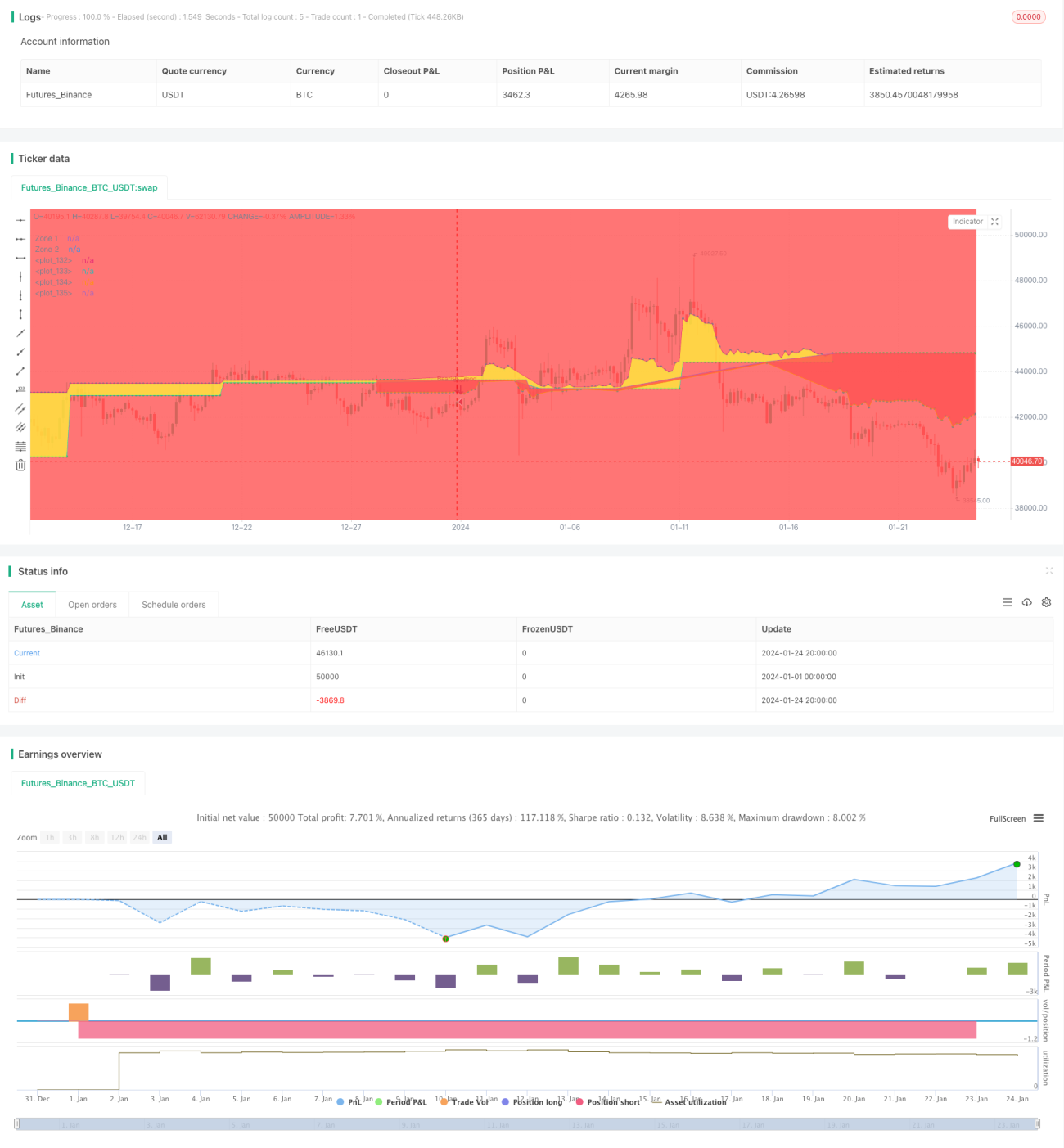
This strategy is a trend-following strategy based on adaptive moving averages. It uses two DEMA moving averages with different periods to generate trading signals. The strategy will automatically adapt the timeframe for analysis based on the current period, allowing multi-timeframe tracking.
Strategy Logic
The strategy uses a fast DEMA line and a slow DEMA line to construct trading signals. The fast line has a period of tf and the slow line has a period of tf*2. A buy signal is generated when the fast line crosses above the slow line. A sell signal is generated when the fast line crosses below the slow line. This allows the strategy to track mid-to-long term trends. In addition, the strategy also uses a Hull double moving average filter to reduce noisy trades. Signals are only generated when the Hull filter agrees on directionality.
Advantage Analysis
The biggest advantage of this strategy is that it can adapt to different periods automatically. It will choose the analysis timeframe from daily to weekly based on the current period. This makes the strategy suitable for a variety of market environments. In addition, the dual moving average structure can track trends effectively, and the dual filter increases signal quality. As a result, this strategy is very suitable for tracking mid-to-long term trends.
Risk Analysis
The main risk of this strategy comes from trend reversals. When the market transitions from a bull market to a bear market, the fast and slow lines may cross sharply downward, resulting in huge floating losses. In addition, the line filter may also miss out on some profitable opportunities. If the filter disagrees with the price directionality, those otherwise profitable signals will be skipped. As a result, this strategy mainly targets stable mid-to-long term trending markets.
Optimization Directions
The strategy can be optimized by adjusting the filter parameters or using other indicators as replacements. For example, MACD can be tested instead of HullMA, or the HullMA period parameters can be adjusted. Different parameter combinations can also be tested to find better fitted trading rules. In addition, volatility indicators can also be incorporated to control position sizing. Smaller positions can be taken when market volatility rises.
Conclusion
In conclusion, this is a very practical adaptive trend following strategy. It can automatically adjust the analysis timeframe for different periods and is suitable for trading across different time horizons. The dual moving average structure can steadily track trends, and the filter also improves signal quality. Overall, it is suitable for investors looking for steady mid-to-long term returns.
- 1