Multi-Dimensional Trend Analysis with ATR-Based Dynamic Stop Management Strategy

Overview
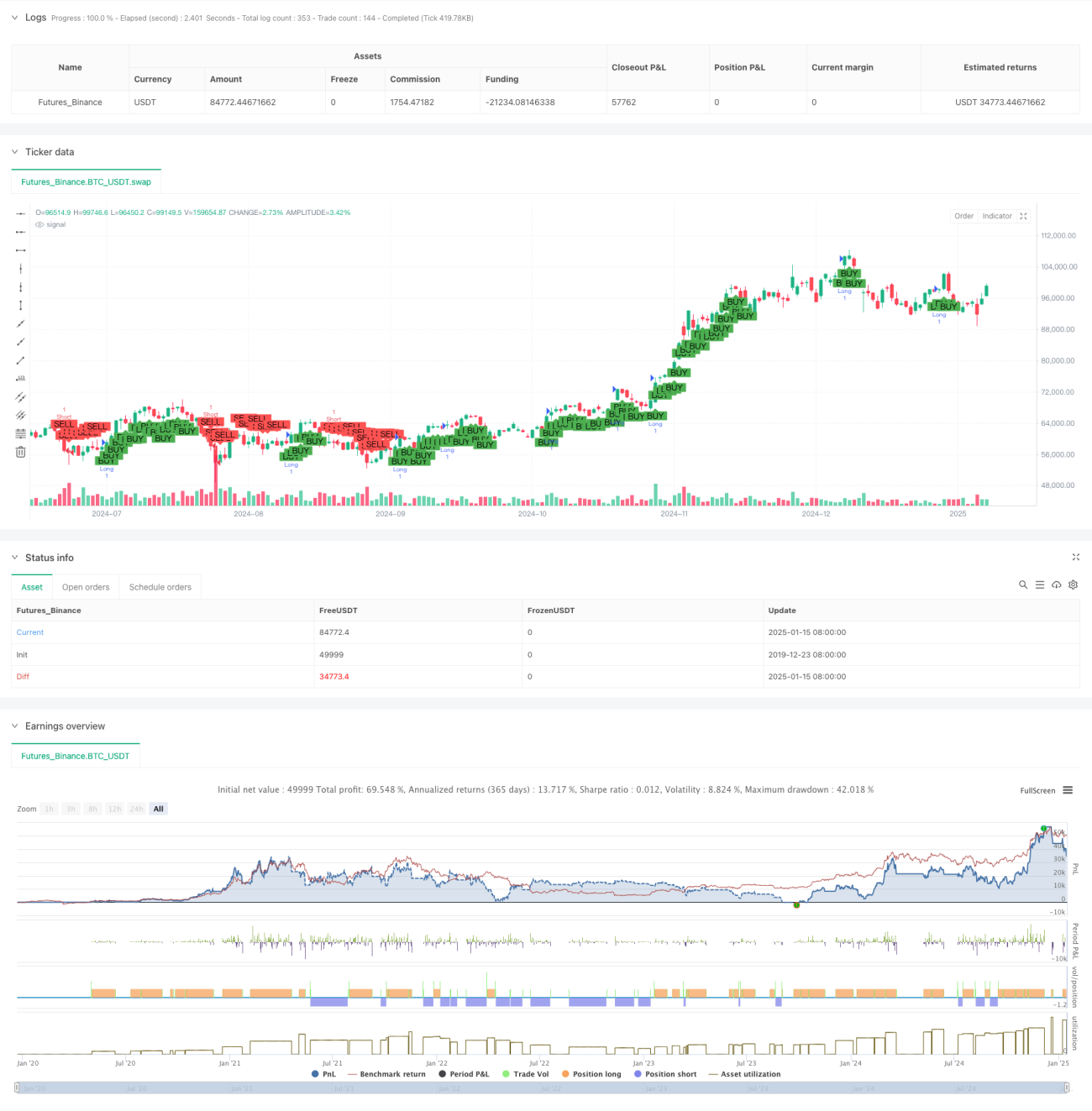
This strategy is a trend following system that combines multiple technical indicators, including Ichimoku Cloud, MACD indicator, and long-term moving average (EMA200). Through the coordination of these indicators, it forms a complete trading system that not only accurately captures market trends but also effectively controls risk through ATR-based dynamic stop management.
Strategy Principle
The strategy employs a triple confirmation mechanism to identify trading signals. First, it uses the Ichimoku Cloud to judge price position, favoring long positions when price is above the cloud and short positions when below. Second, it utilizes the MACD indicator, confirming trend direction through MACD line and signal line crossovers. Finally, it incorporates a 200-period EMA as a trend filter to ensure trade direction aligns with the long-term trend. For risk control, the strategy employs the ATR indicator to dynamically set stop-loss and take-profit levels, allowing them to adapt to market volatility.
Strategy Advantages
- Multi-dimensional trend confirmation mechanism significantly improves trading signal reliability
- Long-term moving average filtering prevents counter-trend trading
- ATR-based dynamic stop adjustment better adapts to market volatility
- Executing trades only after candle confirmation reduces false signals
- Combination of multiple mature technical indicators provides mutual verification, reducing misjudgment risk
Strategy Risks
- Multiple confirmation mechanisms may lead to delayed entry signals, missing some market moves
- May generate frequent entry and exit signals in ranging markets
- Reliance on technical indicators may underperform during extreme market volatility
- ATR-based stops may be triggered prematurely when volatility suddenly increases
Recommend adjusting ATR multipliers to balance risk-reward ratio and consider adding market environment filters.
Strategy Optimization Directions
- Introduce volatility indicators (such as ATR range assessment) for market environment identification
- Add volume analysis to improve trend confirmation reliability
- Optimize MACD parameters to better adapt to different market cycles
- Consider adding trend strength filters to avoid trading in weak trends
- Implement dynamically adjusted profit/loss ratios to adapt to different market phases
Summary
This strategy constructs a relatively complete trend following system through the combined application of multi-dimensional technical indicators. Its core advantages lie in its multiple signal confirmation mechanism and dynamic risk management method, though parameter optimization based on actual market conditions is still needed. The strategy's overall design is clear and practical, suitable for application in markets with obvious trends.
- 1