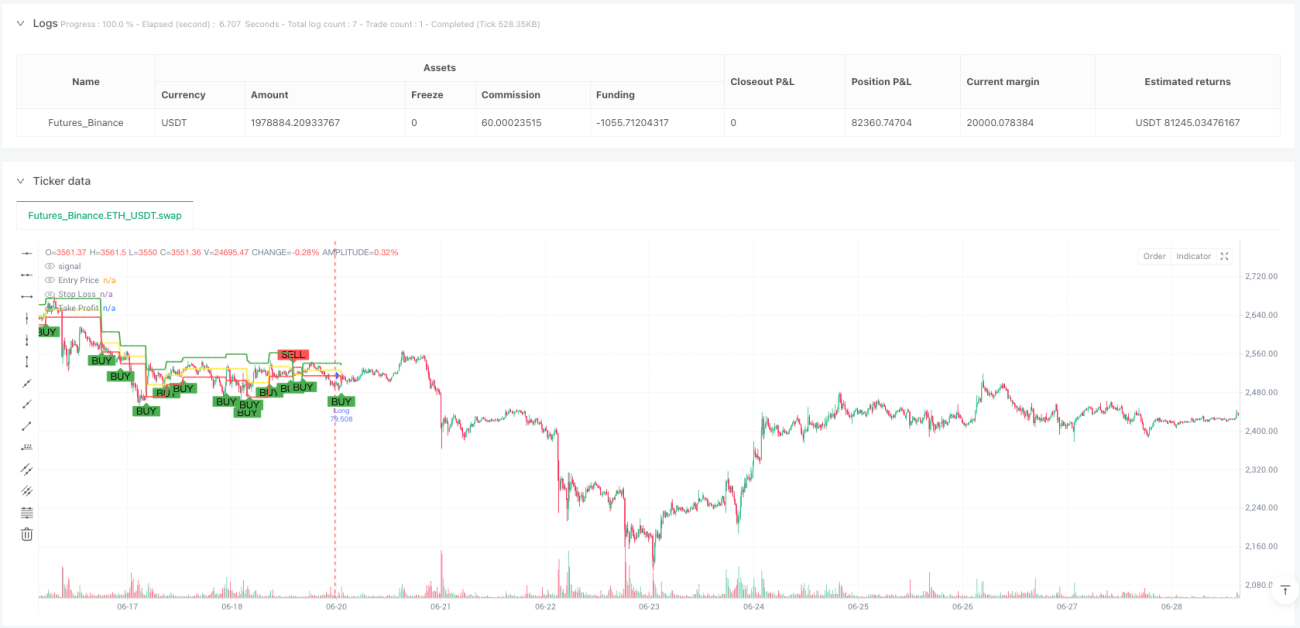
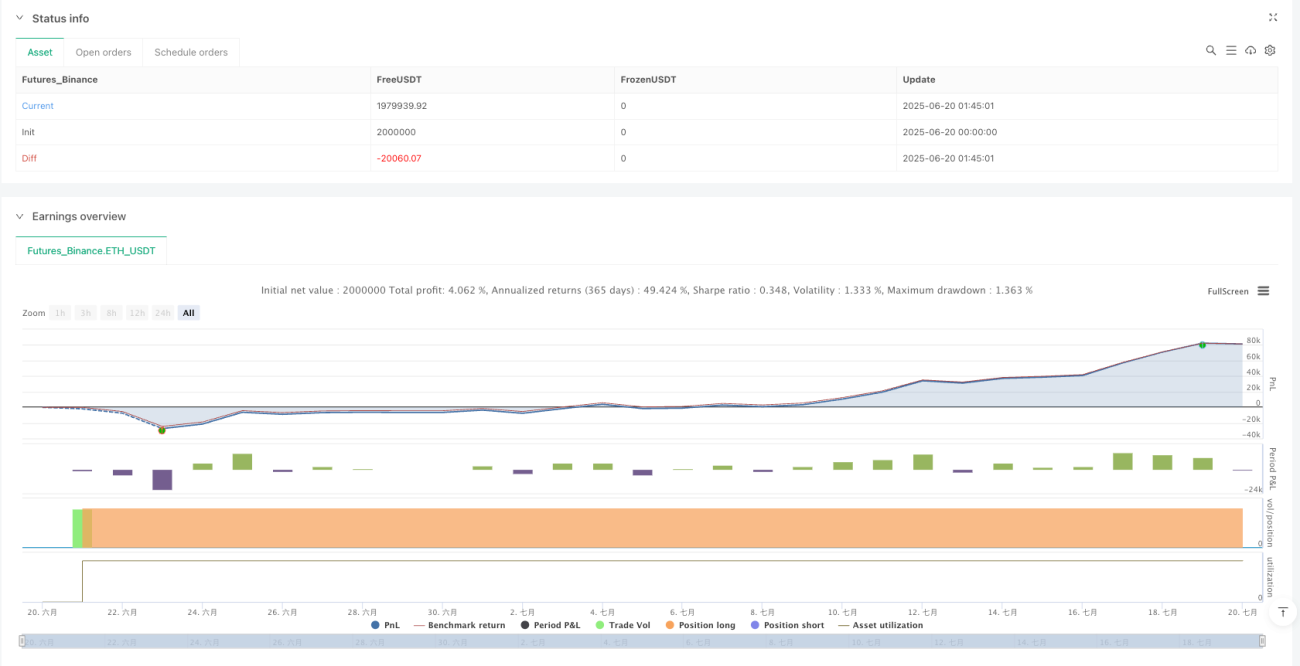
多级趋势动量交易策略与ATR风险管理系统是一个短期日内交易策略,专为15分钟时间框架设计。该策略巧妙地结合了蜡烛图反转形态的价格行为信号和MACD指标的动量确认,以识别高概率的交易入场点。策略采用基于ATR的动态止损和获利水平来管理风险并最大化回报,能够根据当前市场波动性进行调整。此外,策略还在图表上标注关键价格水平,使交易者能够清晰地了解入场点、止损点和目标获利点。
该策略的核心原理是通过结合价格形态和技术指标的双重确认系统,在市场趋势转变的早期阶段捕捉交易机会。具体而言,策略基于以下几个关键组件:
蜡烛图形态识别:
MACD动量确认:
交易信号生成:
风险管理:
这种多层确认机制确保了交易信号的可靠性,同时ATR风险管理系统根据市场实际波动性调整风险回报参数,使策略具有高度适应性。
深入分析该策略代码,可以总结出以下几个关键优势:
双重确认机制:结合价格行为(蜡烛图形态)和动量指标(MACD)可以显著减少假信号,提高交易成功率。只有当两个独立的分析方法同时给出一致信号时,策略才会触发交易。
动态风险管理:基于ATR的止损和获利水平能够根据市场波动性自动调整,避免了固定点数带来的不适应性问题。在波动较大时期,止损更宽松;在波动较小时期,止损更紧凑。
清晰的视觉反馈:策略在图表上绘制交易信号和关键价格水平(入场价、止损位、获利目标),使交易者能够直观了解交易逻辑和风险管理。
灵活的参数设置:策略允许用户调整MACD参数、ATR计算周期以及止损/获利乘数,可以根据个人风险偏好和特定市场环境进行优化。
资金管理整合:通过使用资产净值百分比来确定仓位大小,策略内置了基本的资金管理功能,有助于控制每笔交易的风险敞口。
尽管该策略设计合理,但仍然存在一些潜在风险和局限性:
震荡市场中的假信号:在无明显趋势的盘整市场中,MACD可能产生频繁的交叉信号,结合蜡烛图形态可能导致过度交易和连续亏损。
极端市场事件下的滑点风险:在重大新闻或黑天鹅事件期间,市场可能快速跳空,导致实际止损执行价格远低于预设水平。
参数优化的适应性问题:过度优化MACD参数和ATR乘数可能导致策略在历史数据上表现良好,但在未来市场环境中效果不佳。
连续信号缺乏处理机制:当连续出现多个交易信号时,策略没有明确的处理逻辑,可能导致过度交易或错过更优的入场点。
基于上述分析,该策略可以从以下几个方面进行优化:
增加趋势过滤器:引入趋势识别组件(如移动平均线方向或ADX指标),只在已确认趋势方向上交易,避免在震荡市场中产生过多信号。这样可以提高策略的精确性,减少假信号带来的亏损交易。
优化入场时机:当前策略在信号出现后的下一根K线开盘入场,可能错过价格的最佳水平。可以考虑使用限价单在特定价格区域入场,或设计更精细的入场机制。
实现部分获利机制:当价格达到一定盈利水平时(如1×ATR),可以考虑分批平仓,一部分继续持有至更高的目标价位。这样可以在保证基本盈利的同时,允许利润奔跑。
加入时间过滤:某些市场在特定交易时段波动性和流动性更佳。可以添加时间过滤条件,仅在最活跃的市场时段(如欧美市场重叠时段)寻找交易信号。
集成市场情绪指标:引入波动率指标(如VIX或ATR变化率)来评估当前市场环境,在极端波动时期自动调整止损水平或交易频率。
优化资金管理:实现更复杂的资金管理算法,如凯利准则或固定风险比例方法,根据策略历史胜率和盈亏比动态调整仓位大小。
多级趋势动量交易策略与ATR风险管理系统是一个设计良好的短期交易系统,通过结合蜡烛图形态分析和MACD动量确认,提供了一种可靠的交易信号生成方法。其基于ATR的动态风险管理系统使策略能够适应不同的市场波动条件,而清晰的视觉反馈和标注功能则有助于交易者更好地理解和执行交易计划。
尽管存在一些潜在风险,如震荡市场中的假信号和极端市场条件下的滑点,但通过建议的优化措施,如增加趋势过滤器、优化入场机制、实现部分获利策略以及集成市场情绪指标,这些问题可以得到有效缓解。此外,进一步完善资金管理系统将有助于控制总体风险并优化长期收益。
总体而言,该策略为日内短期交易者提供了一个结构化的交易框架,结合了技术分析、风险管理和执行可视化的关键元素。通过合理设置参数并实施建议的优化措施,交易者可以进一步提高策略的稳健性和盈利能力。
/*backtest
start: 2025-06-20 00:00:00
end: 2025-07-20 00:00:00
period: 15m
basePeriod: 15m
exchanges: [{"eid":"Futures_Binance","currency":"ETH_USDT","balance":2000000}]
*/
//@version=5
strategy("Gold 15m Candle + MACD Strategy with SL/TP & Price Levels", overlay=true, default_qty_type=strategy.percent_of_equity, default_qty_value=10)
// === MACD Settings ===
fastLength = input.int(12, title="MACD Fast Length")
slowLength = input.int(26, title="MACD Slow Length")
signalSmoothing = input.int(9, title="MACD Signal Smoothing")
[macdLine, signalLine, _] = ta.macd(close, fastLength, slowLength, signalSmoothing)
macdBullish = ta.crossover(macdLine, signalLine)
macdBearish = ta.crossunder(macdLine, signalLine)
// === Candlestick Patterns ===
// Bullish Engulfing
bullishEngulfing = close[1] < open[1] and close > open and close > open[1] and open < close[1]
// Bearish Engulfing
bearishEngulfing = close[1] > open[1] and close < open and close < open[1] and open > close[1]
// Hammer (bullish)
hammer = close > open and (high - low) > 2 * (open - close) and (close - low) / (0.001 + high - low) > 0.6
// Shooting Star (bearish)
shootingStar = open > close and (high - low) > 2 * (open - close) and (high - open) / (0.001 + high - low) > 0.6
// === Entry Signals ===
longSignal = (bullishEngulfing or hammer) and macdBullish
shortSignal = (bearishEngulfing or shootingStar) and macdBearish
// === ATR-Based SL/TP ===
atrLen = input.int(14, title="ATR Length")
atr = ta.atr(atrLen)
slMultiplier = input.float(1.5, title="Stop Loss (x ATR)")
tpMultiplier = input.float(2.0, title="Take Profit (x ATR)")
// Variables to hold current trade levels
var float entryPrice = na
var float stopLossPrice = na
var float takeProfitPrice = na
// === Execute Entry and calculate levels on next bar after signal ===
if longSignal
strategy.entry("Long", strategy.long)
entryPrice := close // Entry price at signal candle close (approximate next candle open)
stopLossPrice := entryPrice - slMultiplier * atr
takeProfitPrice := entryPrice + tpMultiplier * atr
strategy.exit("Long Exit", from_entry="Long", stop=stopLossPrice, limit=takeProfitPrice)
if shortSignal
strategy.entry("Short", strategy.short)
entryPrice := close
stopLossPrice := entryPrice + slMultiplier * atr
takeProfitPrice := entryPrice - tpMultiplier * atr
strategy.exit("Short Exit", from_entry="Short", stop=stopLossPrice, limit=takeProfitPrice)
// === Plot Signals ===
plotshape(longSignal, title="Buy Signal", location=location.belowbar, color=color.green, style=shape.labelup, text="BUY")
plotshape(shortSignal, title="Sell Signal", location=location.abovebar, color=color.red, style=shape.labeldown, text="SELL")
// === Plot Entry, SL, TP Levels ===
plot(entryPrice, title="Entry Price", color=color.yellow, style=plot.style_linebr, linewidth=2)
plot(stopLossPrice, title="Stop Loss", color=color.red, style=plot.style_linebr, linewidth=2)
plot(takeProfitPrice, title="Take Profit", color=color.green, style=plot.style_linebr, linewidth=2)
// === Labels for price levels on chart ===
if (strategy.position_size > 0)
label.new(bar_index, entryPrice, text="Entry: " + str.tostring(entryPrice, format.mintick), color=color.yellow, style=label.style_label_left, yloc=yloc.price, size=size.small)
label.new(bar_index, stopLossPrice, text="SL: " + str.tostring(stopLossPrice, format.mintick), color=color.red, style=label.style_label_left, yloc=yloc.price, size=size.small)
label.new(bar_index, takeProfitPrice, text="TP: " + str.tostring(takeProfitPrice, format.mintick), color=color.green, style=label.style_label_left, yloc=yloc.price, size=size.small)
else if (strategy.position_size < 0)
label.new(bar_index, entryPrice, text="Entry: " + str.tostring(entryPrice, format.mintick), color=color.yellow, style=label.style_label_left, yloc=yloc.price, size=size.small)
label.new(bar_index, stopLossPrice, text="SL: " + str.tostring(stopLossPrice, format.mintick), color=color.red, style=label.style_label_left, yloc=yloc.price, size=size.small)
label.new(bar_index, takeProfitPrice, text="TP: " + str.tostring(takeProfitPrice, format.mintick), color=color.green, style=label.style_label_left, yloc=yloc.price, size=size.small)